
















Gjør som tusenvis av andre bokelskere
Abonner på vårt nyhetsbrev og få rabatter og inspirasjon til din neste leseopplevelse.
Ved å abonnere godtar du vår personvernerklæring.Du kan når som helst melde deg av våre nyhetsbrev.

"I may have been like other boys, but there was a major difference -- my family included 80 to 100 single young men residing in a Filipino farm-labor camp. It was as a 'campo' boy that I first learned of my ancestral roots and the sometimes tortuous path that Filipinos took in sailing halfway around the world to the promise that was America. It was as a campo boy that I first learned the values of family, community, hard work, and education. As a campo boy, I also began to see the two faces of America, a place where Filipinos were at once welcomed and excluded, were considered equal and were discriminated against. It was a place where the values of fairness and freedom often fell short when Filipinos put them to the test.""-- Peter JameroPeter Jamero's story of hardship and success illuminates the experience of what he calls the "bridge generation" -- the American-born children of the Filipinos recruited as farm workers in the 1920s and 30s. Their experiences span the gap between these early immigrants and those Filipinos who owe their U.S. residency to the liberalization of immigration laws in 1965. His book is a sequel of sorts to Carlos Bulosan's America Is in the Heart, with themes of heartbreaking struggle against racism and poverty and eventual triumph.Jamero describes his early life in a farm-labor camp in Livingston, California, and the path that took him, through naval service and graduate school, far beyond Livingston. A longtime community activist and civic leader, Jamero describes decades of toil and progress before the Filipino community entered the sociopolitical mainstream. He shares a wealth of anecdotes and reflections from his career as an executive of health and human service programs in Sacramento, Washington, D.C., Seattle, and San Francisco.
Following the rise of Islam, many Jewish communities lived in predominantly Muslim lands. Muslim-Jewish co-existence was not seriously challenged until the modern period when European colonialism and the emergence of Zionism and Arab nationalism led to growing friction and conflict, resulting in the mass departures of Jews from these lands in the middle of the twentieth century.Jews and Muslims throws light on the history of these communities and on the developments that led to the snapping of ties between Jews and Muslims by focusing on the century before the end of Jewish life in these areas. It interweaves analysis with translations of primary documents drawn from the archives of a French-Jewish organization, the Alliance Israelite Universelle, that had an extensive Jewish school network around the Mediterranean basin and whose teachers reported extensively on local events and trends over the decades. It illuminates the political, socio-economic, and cultural changes that eroded the place of Jews in Middle Eastern societies and offers a unique perspective, from within, on the historical background of some of the most vexing problems of the modern Middle East.National Jewish Book Awards Honor Book
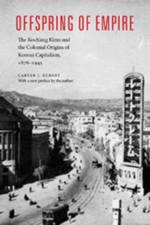
Carter J. Eckert is Yoon Se Young Professor of Korean History at Harvard University.
Jose van Dijck is professor of media and culture and chair of the Media Studies Department, University of Amsterdam. She is the author of Imagenation: Popular Images of Genetics and Manufacturing Babies and Public Consent: Debating the New Reproductive Technologies.
Jack Ward Thomas, an eminent wildlife biologist and U.S. Forest Service career scientist, was drafted in the late 1980s to head teams of scientists developingstrategies for managing the habitat of the northern spotted owl. That assignment led to his selection as Forest Service chief during the early years of the Clinton administration. It is history's good fortune that Thomas kept journals of his thoughts and daily experiences, and that he is a superb writer able to capture the moment with clarity and grace.The issues Thomas dealt with in office and noted in his journals lie at the heart of recent Forest Service policy and controversy, starting with President Clinton's Timber Summit in Portland, Oregon, dealing with the spotted owl issue, and the 1994 loss of fourteen firefighters in the Storm King Mountain fire in Colorado. Against a constant backdrop of partisan politics in the White House and Congress, Thomas discusses issues ranging from grazing in the national forests, long-term pulp timber sales in Alaska, and the Forest Service Law Enforcement Division to the New World Mine near Yellowstone National Park. He considers the timber salvage rider and its linkage to forest health, the Department of Justice and Counsel on Environmental Quality influence on Forest Service policies, and interagency management for the Columbia River Basin.Woven throughout these excerpts from his diary is Thomas's conviction that the effective, ethical management of wildlife depends on how the management effort is situated within the broader human context, with all its intransigence and unpredictability. Writing in 1995, Thomas says, "Things simply don't work the way that students are taught in natural resources policy classes--not even close. . . .There is simply no way that scholars of the subject can understand the ad hoc processes that go on within only loosely defined boundaries." Wildlife management, he says, is "90 percent about people and 10 percent about animals," and when it comes to learning about people, wildlife managers are on their own. This book is the record of how one man met that challenge.
Joseph S. Miller is a retired lobbyist living in Washington, D.C. Miller wrote and edited for the Lewiston Morning Tribune, Boise Daily Statesman, Oregon Journal, and Seattle Post-Intelligencer before beginning his career as a media consultant for political campaigns and a lobbyist for a variety of unions and associations.
Hyung-A Kim is associate professor of Korean politics at the Australian National University, and author of Korea's Development under Park Chung Hee: Rapid Industrialization, 1961-1979. Clark W. Sorensen is director of the Center for Korean Studies, University of Washington, and author of Over the Mountains Are Mountains: Korean Peasant Households and Their Adaptations to Rapid Industrialization. The other contributors are Myung-Koo Kang, Young-Jak Kim, Tadashi Kimiya, Hagen Koo, Gaven McCormack, Nak-Ch'ong Paik, James B. Palais, and Seok-Man Yoon.
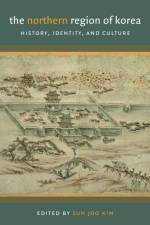
Through the use of storytelling, linguistic analysis, and journal entries from turn-of-the-century missionaries and traveling Russians in addition to many varieties of unconventional primary sources, the contributors creatively explore unfamiliar terrain while examining the culture, identity, and regional distinctiveness of the northern region and its people.
Seattle, with its spectacular natural beauty and rough frontier history, has inspired writers from its earliest days. This anthology spans seven decades and includes fiction, memoirs, histories, and journalism that define the city or use it as a setting, imparting the flavor of the city through a literary prism.Reading Seattle features classics by Horace R. Cayton, Richard Hugo, Betty MacDonald, Mary McCarthy, Murray Morgan, and John Okada as well as more recent works by Sherman Alexie, Lynda Barry, David Guterson, J. A. Jance, Jonathan Raban, and others. It includes cutting-edge work by emerging talents and reintroduces works by important Seattle writers who may have been overlooked in recent years.The writers featured in this volume explore a variety of neighborhoods and districts within the city, delineating urban spaces and painting memorable portraits of characters both historical and fictional.
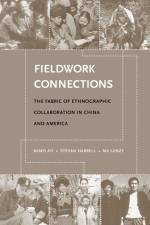
This tells the story of the intertwined research histories of three anthropologists, one American and two Chinese. As decades of mutual ethnographic research among the Nuosu in Liangshan Yi Autonomous Prefecture, Sichuan, unfold, the authors enter one another's narratives and challenge the reader to ponder the nature of ethnographic Â"truth.Â"
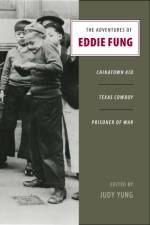
Eddie Fung has the distinction of being the only Chinese American soldier to be captured by the Japanese during World War II. He was then put to work on the Burma-Siam railroad, made famous by the film The Bridge on the River Kwai. In this moving and unforgettable memoir, Eddie recalls how he, a second-generation Chinese American born and raised in San Francisco's Chinatown, reinvented himself as a Texas cowboy before going overseas with the U.S. Army. On the way to the Philippines, his battalion was captured by the Japanese in Java and sent to Burma to undertake the impossible task of building a railroad through 262 miles of tropical jungle.Working under brutal slave labor conditions, the men completed the railroad in fourteen months, at the cost of 12,500 POW and 70,000 Asian lives. Eddie lived to tell how his background helped him endure forty-two months of humiliation and cruelty and how his experiences as the sole Chinese American member of the most decorated Texan unit of any war shaped his later life.
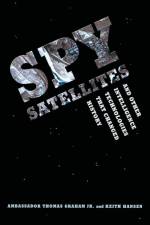
This book focuses instead on the central role that intelligence collection systems play in promoting arms control and disarmament. Graham and Hansen discuss the capabilities of technical systems and shed a much-needed light on the process of verifying how the world harnesses the proliferation of nuclear arms and the continual drive for advancements in technology.
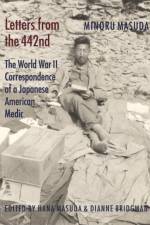
An edited collection of letters from a medic to his wife, sent while he was serving with the segregated 442nd Combat Team in Italy and France. The letters provide a comprehensive account of training, combat, postwar duties, and demobilization.
What exactly is culture? The authors of this volume suggest that the study of one of anthropology's central questions may be a route to developing a scientific paradigm for the field. The contributors - prominent scholars in anthropology, biology, and economics - approach culture from very different theoretical and methodological perspectives, through studies grounded in fieldwork, surveys, demography, and other empirical data. From humans to chimpanzees, from Taiwan to New Guinea, from cannibalism to marriage patterns, this volume directly addresses the challenges of explaining culture scientifically. The evolutionary paradigm lends itself particularly well to the question of culture; in these essays, different modes of inheritance - genetic, cultural, ecological, and structural - illustrate evolutionary patterns in a variety of settings.Explaining Culture Scientifically is divided into parts that address how to think about culture, modeling approaches to cultural influences on behavior, ethnographic case studies addressing the question of culture's influence on behavior, and challenges to the possibility of a scientific approach to culture. It is necessary reading for scholars and students in anthropology and related disciplines.
Universities and nations have long recognized the direct contribution of graduate education to the welfare of the economy by meeting a range of research and employment needs. With the burgeoning of a global economy in the twentieth and twenty-first centuries, the economic outcome of doctoral education reaches far beyond national borders. Many doctoral programs in the United States and throughout the world are looking for opportunities to equip students to work in transnational settings, with scientists and researchers located across the globe. Nations competing within this global economy often have different and not always compatible motives for supporting graduate training. In this volume, graduate education experts explore some of the tensions and potential for cooperation between nations in the realm of doctoral education.The contributors assess graduate education in different systems around the world, including Australia, Brazil, Canada, Germany, India, Japan, Mexico, the Nordic countries, South Africa, the United Kingdom, and the United States. Many factors motivate the need for a global understanding of doctoral education, including the internationalization of the labor market and global competition, the expansion of opportunities for doctoral education in smaller and developing nations, and a declining interest among international students in pursuing their graduate education in the United States.
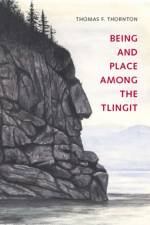
In Being and Place among the Tlingit, anthropologist Thomas F. Thornton examines the concept of place in the language, social structure, economy, and ritual of southeast Alaska's Tlingit Indians. Place signifies not only a specific geographical location but also reveals the ways in which individuals and social groups define themselves.The notion of place consists of three dimensions - space, time, and experience - which are culturally and environmentally structured. Thornton examines each in detail to show how individual and collective Tlingit notions of place, being, and identity are formed. As he observes, despite cultural and environmental changes over time, particularly in the post-contact era since the late eighteenth century, Tlingits continue to bind themselves and their culture to places and landscapes in distinctive ways. He offers insight into how Tlingits in particular, and humans in general, conceptualize their relationship to the lands they inhabit, arguing for a study of place that considers all aspects of human interaction with landscape.In Tlingit, it is difficult even to introduce oneself without referencing places in Lingit Aani (Tlingit Country). Geographic references are embedded in personal names, clan names, house names, and, most obviously, in k-waan names, which define regions of dwelling. To say one is Sheet'ka K-waan defines one as a member of the Tlingit community that inhabits Sheet'ka (Sitka).Being and Place among the Tlingit makes a substantive contribution to the literature on the Tlingit, the Northwest Coast cultural area, Native American and indigenous studies, and to the growing social scientific and humanistic literature on space, place, and landscape.
How Many Machine Guns Does It Take to Cook One Meal? explores the cultural forces that shaped two pivotal events affecting the entire West Coast: the 1919 Seattle General Strike and the 1934 San Francisco General Strike. In contrast to traditional approaches that downplay culture or focus on the role of socialists or communists, Victoria Johnson shows how strike participants were inspired by distinctly American notions of workplace democracy that can be traced back to the political philosophies of Thomas Jefferson and Thomas Paine.Johnson examines the powerful stories and practices from our own egalitarian traditions that resonated with these workers and that have too often been dismissed by observers of the American labor movement. Ultimately, she argues that organized labor's failure to draw on these traditions in later decades contributed to its decreasing capacity to mobilize workers as well as to the increasing conservatism of American political culture.This book will appeal to scholars of western and labor history, sociology, and political science, as well as to anyone interested in the intersection of labor and culture.
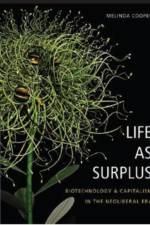
Focusing on the period between the 1970s and the present, Life as Surplus is a pointed and important study of the relationship between politics, economics, science, and cultural values in the United States today. Melinda Cooper demonstrates that the history of biotechnology cannot be understood without taking into account the simultaneous rise of neoliberalism as a political force and an economic policy. From the development of recombinant DNA technology in the 1970s to the second Bush administration's policies on stem cell research, Cooper connects the utopian polemic of free-market capitalism with growing internal contradictions of the commercialized life sciences.The biotech revolution relocated economic production at the genetic, microbial, and cellular level. Taking as her point of departure the assumption that life has been drawn into the circuits of value creation, Cooper underscores the relations between scientific, economic, political, and social practices. In penetrating analyses of Reagan-era science policy, the militarization of the life sciences, HIV politics, pharmaceutical imperialism, tissue engineering, stem cell science, and the pro-life movement, the author examines the speculative impulses that have animated the growth of the bioeconomy.At the very core of the new post-industrial economy is the transformation of biological life into surplus value. Life as Surplus offers a clear assessment of both the transformative, therapeutic dimensions of the contemporary life sciences and the violence, obligation, and debt servitude crystallizing around the emerging bioeconomy.
Free Boy is the story of a 13-year-old slave who escaped from Washington Territory to freedom in Canada on the West's underground railroad.When James Tilton came to Washington Territory as surveyor-general in the 1850s he brought with his household young Charles Mitchell, a slave he had likely received as a wedding gift from a Maryland cousin. The story of Charlie's escape in 1860 on a steamer bound for Victoria and the help he received from free blacks reveals how national issues on the eve of the Civil War were also being played out in the West.Written with young adults in mind, the authors provide the historical context to understand the lives of both Mitchell and Tilton and the time in which the events took place. The biography explores issues of race, slavery, treason, and secession in Washington Territory, making it both a valuable resource for teachers and a fascinating story for readers of all ages.A V Ethel Willis White Book
In 1931, a 12-year-old boy shot and killed the sheriff of Asotin, Washington. The incident stunned the small town and a mob threatened to hang him. Both the crime and Herbert Niccolls's eventual sentence of life imprisonment at the Washington State Penitentiary in Walla Walla drew national attention, only to be buried later in local archives.Journalist Nancy Bartley has conducted extensive research to construct a compelling narrative of the events and characters that make this a unique episode in the history of criminal justice in the United States. Niccolls became a cause for Father Flanagan of Boys Town, who took to the airwaves, imploring listeners to write Governor Hartley on the boy's behalf. The bitter campaign put Hartley in such a negative light that he lost his bid for reelection. Under a new and progressive warden, Niccolls thrived in prison. Inmates like physician Peter Miller and literary agent James Ashe became his tutors, finding that Niccolls had an insatiable appetite for knowledge. During the deadly 1934 prison riot at Walla Walla, several prisoners kept him from harm.Niccolls was finally released from prison in his early twenties. He went to work at 20th Century Fox in Hollywood, where he kept his secret for the rest of his long life. The Boy Who Shot the Sheriff explores this little-known story of a young boy's fate in the juvenile justice system during the bloodiest years in the nation's penitentiaries.Watch the trailer: http: //www.youtube.com/watch?v=jRKFFQDgW20&list=UUge4MONgLFncQ1w1C_BnHcw&index=6&feature=plcp
Nisei Soldiers Break Their Silence is a compelling story of courage, community, endurance, and reparation. It shares the experiences of Japanese Americans (Nisei) who served in the U.S. Army during World War II, fighting on the front lines in Italy and France, serving as linguists in the South Pacific, and working as cooks and medics. The soldiers were from Hood River, Oregon, where their families were landowners and fruit growers. Town leaders, including veterans' groups, attempted to prevent their return after the war and stripped their names from the local war memorial. All of the soldiers were American citizens, but their parents were Japanese immigrants and had been imprisoned in camps as a consequence of Executive Order 9066. The racist homecoming that the Hood River Japanese American soldiers received was decried across the nation.Linda Tamura, who grew up in Hood River and whose father was a veteran of the war, conducted extensive oral histories with the veterans, their families, and members of the community. She had access to hundreds of recently uncovered letters and documents from private files of a local veterans' group that led the campaign against the Japanese American soldiers. This book also includes the little known story of local Nisei veterans who spent 40 years appealing their convictions for insubordination.Watch the book trailer: http: //www.youtube.com/watch?v=hHMcFdmixLk
David Stradling is professor of history at the University of Cincinnati. He is the author of Making Mountains: New York City and the Catskills and The Nature of New York: An Environmental History of the Empire State and editor of Conservation in the Progressive Era.
This transnational view provides an understanding of the modern Pacific salmon crisis and reorients borderlands studies towards the Canada-US border while providing a new view of how Native Borders worked.
As a U.S. ambassador, Thomas Graham Jr. was involved in the negotiation of major arms control agreements over the course of nearly 30 years. His publications include Common Sense on Weapons of Mass Destruction, Cornerstones of Security: Arms Control Treaties in the Nuclear Era, Disarmament Sketches: Three Decades of Arms Control and International Law, and Spy Satellites and Other Intelligence Technologies That Changed History.
Abonner på vårt nyhetsbrev og få rabatter og inspirasjon til din neste leseopplevelse.
Ved å abonnere godtar du vår personvernerklæring.