

Gjør som tusenvis av andre bokelskere
Abonner på vårt nyhetsbrev og få rabatter og inspirasjon til din neste leseopplevelse.
Ved å abonnere godtar du vår personvernerklæring.Du kan når som helst melde deg av våre nyhetsbrev.

Poetry, Geography, Gender examines how questions of place, identity and creative practice intersect in the work of some of Wales' best known contemporary poets, including Gillian Clarke, Gwyneth Lewis, Ruth Bidgood and Sheenagh Pugh. Merging traditional literary criticism with cultural-political and geographical analysis, Alice Entwistle shows how writers' different senses of relationship with Wales, its languages, history and imaginative, as well as political, geography feeds the form as well as the content of their poetry. Her innovative critical study thus takes particular interest in the ways in which author, text and territory help to inform and produce each other in the culturally complex and confident small nation that is twenty-first century Wales.
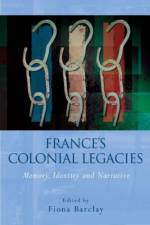
France's Colonial Legacies offers a timely intervention in the debates around the French empire and its place in the life of the contemporary nation, drawing on the expertise of researchers working in the fields of politics, media, cultural studies, literature and film, to offer a wide-ranging picture of remembrance in contemporary France.
This volume explores the changing nature of the settlement archaeology in north-west Wales over a period of almost two millennia, setting the region within wider discourses on the nature of the societies occupying Britain between 1150 BC and AD 1050.
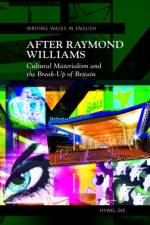
After Raymond Williams: Cultural Materialism and the Break-Up of Britain has two broad aims. The first is to re-examine the concept of cultural materialism, the term used by Raymond Williams to describe his theory of how writing and other cultural forms relate to general social and historical processes. Using this theory, the second objective is to explore the material ways in which contemporary British writing participates in one particular political process - that of the break-up of Britain. The general trajectory of the book is a matter of superseding Williams: the early chapters are devoted to extrapolating Williams's materialist theory of cultural forms, while later chapters are concerned with applying this theoretical material to a series of readings of books and films produced in the years since his death in 1988. This volume provides a detailed account of some of the writing produced in Scotland and Wales in the years surrounding political devolution, and also considers the ways in which different subcultural communities use fiction to renegotiate their relationships with the British whole.
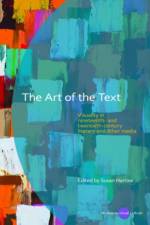
In this volume of essays, specialists explore the relations between modern literary text and visual image across a range of media - from novel, poetry and film to painting, fabric and print culture.
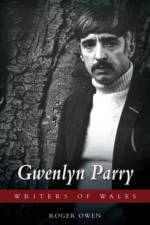
Gwenlyn Parry was one of the most important Welsh-language playwrights of the twentieth century and played a key role in the popularisation and flourishing of drama in the theatre and on television during the 1970s and 1980s. Parry's major stage plays - Saer Doliau, Ty ar y Tywod, Y Ffin and Y Twr - had a substantial impact, and were instrumental in solidifying a new relationship between drama and theatrical production in Welsh, bringing the theatricality of the Absurd to a popular audience for the first time. His plays have been the subject of much critical attention in Welsh, and have been reinterpreted in production on many occasions, both in their original form and in translation. This study is the first extended treatment of his life and work in English, and examines the complex and occasionally paradoxical relationship between the autobiographical aspects of his writing and his use of theatrical form.
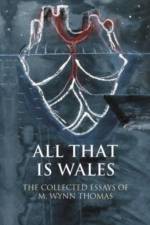
A collection of essays on a range of Welsh writers, both well-known and otherwise, by one of the leading specialists in the anglophone literary culture of Wales.
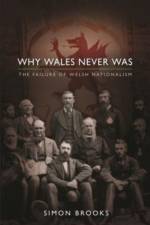
In the nineteenth century, the `Age of Nationalism', when nationalisms flowered in every small European country, no Welsh national movement emerged. Contrary to the popular view that Welsh radical politics was a boost for Welsh nationalism, Why Wales Never Was shows that this was the very reason for its failure.
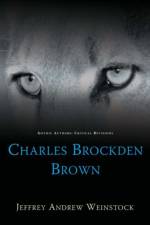
This study of the works of late eighteenth-century American Gothic author Charles Brockden Brown argues that Brown was a seminal figure in the development of four forms of Gothic fiction: the Frontier Gothic, the Urban Gothic, the Psychological Gothic, and the Female Gothic.
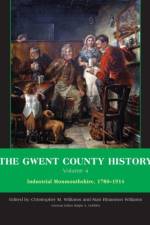
This fourth volume in the county history of Gwent/Monmouthshire deals with the explosion of industrial development from 1780 to the eve of the First World War, and as such is first authoritative treatment of the transformation of south-east Wales into a centre of the iron and coal industry.
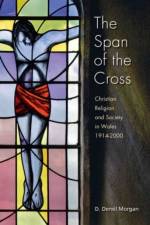
Presents a history of 20th-century Christianity in Wales. This title assesses the effect which the Great War made on people's spiritual convictions and on religious opinion and practise. It analyses the state of the disestablished church in Wales, an increasingly confident Catholicism and the growing inter-war crisis of Nonconformity.
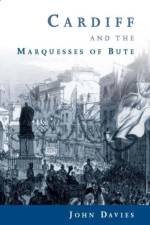
As late as 1980, a quarter of the population of Wales lived within the boundaries of what had once been the lordships of the Bute estate. Powerful landowners for centuries, the Stuarts of Bute were key drivers of the many social, political, and economic changes that transformed south Wales between the eighteenth and twentieth century. This volume explores the Butes and their influence, setting them in context of a long, interwoven history of landed proprietorship, economic development, and the rise of the industrial middle class throughout Britain.
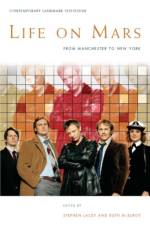
Life in Mars: from Manchester to New York is the first full account of this ground-breaking television drama, and uses textual analysis and cultural and contextual critique to explore the popular and critical success of the original UK series and the US remake.
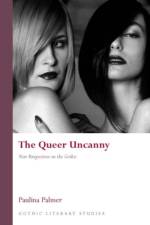
This volume investigates the roles played by the concept of the uncanny, as defined by Sigmund Freud and other theorists, in the representation of lesbian and male gay sexualities and transgender in a selection of contemporary British, American and Caribbean fiction published 1980-2007.
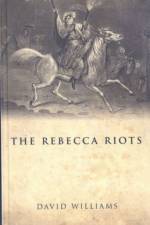
The Rebecca Riots in west Wales began in the summer of 1839. They ceased as suddenly as they had started, and for three and a half years the countryside was undisturbed. Then, in the winter of 1842, they broke out again with greater violence.
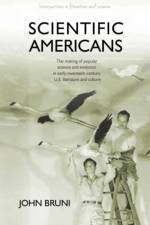
Demonstrating the timely relevance of Theodore Dreiser, Edith Wharton, Jack London and Henry Adams, this book shows how debates about evolution, identity, and a shifting world picture have uncanny parallels with the emerging global systems that shape our own lives. Tracing these systems' take-off point in the early twentieth century through the lens of popular science journalism, John Bruni makes a valuable contribution to the study of how biopolitical control over life created boundaries among races, classes, genders and species. Rather than accept that these writers get their scientific ideas about evolution second-hand, filtered through a social Darwinist ideology, this study argues that they actively determine what evolution means. Furthermore, the book, examines the ecological concerns that naturalist narratives reflect - such as land and water use, waste management, and environmental pollution - previously unaddressed in a book-length study.
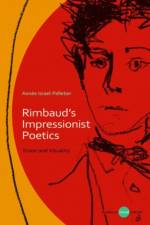
In the mid-nineteenth century, Arthur Rimbaud, the volatile genius of French poetry, invented a language that captured the energy and visual complexity of the modern world. This book explores some of the technical aspects of this language in relation to the new techniques brought forth by the Impressionist painters such as Monet, Morisot, and Pissarro.
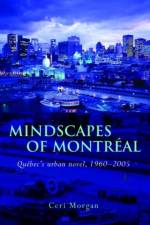
This innovative study of the Montreal novel in French looks at how imaginary and material landscapes come together to produce a city of neighbourhoods.
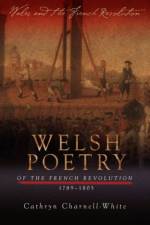
This anthology of Welsh poetry and English translations presents some of Wales's radical and reactionary responses to the French Revolution and its cultural legacy, 1789-1805.
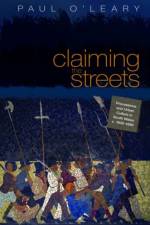
Street processions were a defining feature of life in the Victorian town, and this book examines how those events created new civic identities in the growing towns of nineteenth-century south Wales.
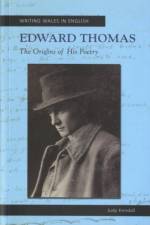
A critical study of the much-loved early twentieth century English poet Edward Thomas - the 'poet's poet'. It includes illuminating new readings of his poems, prose and letters. Topics covered include his close relation to nature, the land and landscape.
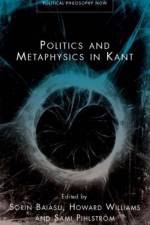
The past three decades have witnessed the emergence of several Kantian theories. Both the critical reaction to consequentialism inspired by Rawlsian constructivism and the universalism of more recent theories informed by Habermasian discourse ethics trace their main sources of inspiration back to Kant's writings.
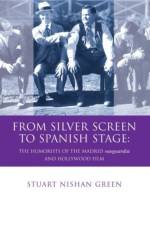
An English-language study of a group of five artists closely linked with the Spanish avant-garde in the 1920s and 1930s, known as the 'Other' Generation of 27. It demonstrates how these humorists drew on the humour of Chaplin, Keaton, Lubitsch and the Marx Brothers for their stage comedy.
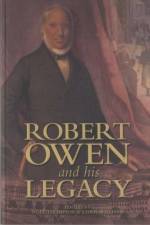
J. F. C. Harrison has written that 'for each age there is a new view of Mr Owen', which is proof of the fertility and continuing relevance of his ideas. Not just in Britain and America but today around the world anti-poverty campaigners, birth-controllers, collectivists, communitarians, co-operators, ecologists, educationalists, environmentalists, feminists, humanitarians, internationalists, paternalistic capitalists, secularists, campaigners for social justice, trade unionists, urban planners, utopians, welfare reformers can all find something to admire and inspire in the treasure trove that is the thought and actions of Robert Owen. Owen was a creative genius of global significance, a radical writer and activist of international reputation and reach who has inspired those seeking to change human society for the better. The contributors to this volume include not only many of the recognized experts on the life, work and legacy of Owen, but also work from younger scholars or scholars coming to the field afresh. The volume presents the most recent and original research on Owen. Owen notoriously (and impressively) dabbled in many spheres, and this is reflected in the its breadth of content. The unifying themes are Owen's profile in his own time, and the relevance of his ideas for the generations that followed. His importance for educational and social philosophy, for political economy and for the political theory of socialism are all discussed, as are his contribution as a philanthropic employer, his political activities and the specificities of his historical context.
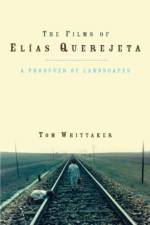
This book explores the work of Elias Querejeta, Spain's most important and political producer, through a particular emphasis on the representation of landscape in his films. In doing so, the book examines the ways in Spanish history has been shaped by geographical change since the 1960s.
Italian Crime Fiction is the first study in the English language to focus specifically on Italian detective and noir fiction from the 1930s to the present. The eight chapters include studies on some of the founding fathers of the Italian tradition, and mainstream writers. The volume has a particular focus on the new generation of crime writers.
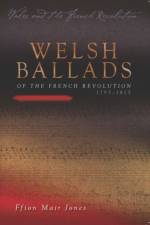
Welsh Ballads of the French Revolution provides for the first time an edition, with parallel English translations, of Welsh-language ballads composed in reaction to the momentous events of the Revolution in France and the two decades of war which followed. Ballad writers were first spurred to respond in 1793, when the French monarchs were executed, France declared war upon Britain, and paranoia regarding the possible threat of internal revolt in Britain reached a crisis point. As the decade proceeded, ballads were sung in thanks for the victory of British forces and local people against an invasion of Pembrokeshire by French troops, and in reaction to key naval battles and to the extensive mobilization of militia and volunteer forces. Scholars working on the British response to the Revolution have showed increasing interest in exploring the contents of ballads and songs. The ballad in particular is seen as a vital source of information, since it represents ordinary people's awareness of the developments of the period. Balladry is also subject to continued research within Welsh scholarship, and this volume, with its focus on a clearly defined historical period and its revelation of new voices within the canon of Welsh ballad writers, will drive this field of study forwards. Regional reactions to the Revolution within the British Isles are also now seen as crucially important, but Wales, partly because of the inaccessibility of material composed in the Welsh language, has repeatedly been omitted from the general picture. This volume aids in rectifying this situation, ensuring (by use of translation, copious contextualizing notes, and a lengthy introduction) that both the ballad genre and Welsh reactions receive the attention they deserve from the wider scholarly community.
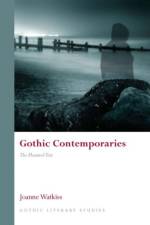
Gothic Contemporaries: The Haunted Text is the first of its kind to align selected 21st century fiction with a revised understanding of the gothic through themes such as signification, communication, ethics, inheritance and currency.
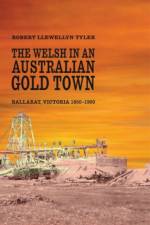
Works which have sought to look specifically at the Welsh in Australia have been few in number and characterised by a concentration on prominent individuals and cultural/religious societies, thus excluding many facets of immigrant life. This book provides an analysis of the Welsh immigrant community in the Ballarat/Sebastopol gold mining district of Victoria, Australia during the second half of the nineteenth century and considers all aspects of the Welsh immigrant experience. As its focus, the book has the Welsh migrant group as a whole, in one particular area, during one period of time, for ultimately it was the migrants themselves who were responsible for the strength or weakness of Welsh religious life, the success or failure of Welsh cultural institutions; they who decided whether or not to retain and transmit their national language if, indeed, they spoke it in the first place; they who chose whether or not to marry within their own group, to live amongst their own, to retain the ties of Welshness and pass on the values of the Old Country, or to attempt full and immediate integration; they who were miners or shop owners, abstainers or drunkards, law abiding or criminal. A true picture of Welsh immigrant life can only be obtained by considering the community in its entirety, to view it in the round, as it were. This work attempts to do just that and hopes to make some small contribution to the understanding of what it was to be one amongst the thousands of Welsh people who lived in a particular place at a certain time in a land so far from Wales.
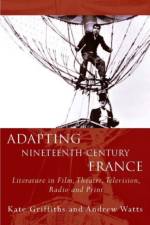
This book uses six canonical novelists and their recreations in a variety of media to argue a reconceptualisation of our approach to the study of adaptation. The works of Balzac, Hugo, Flaubert, Zola, Maupassant and Verne reveal themselves not as originals to be defended from adapting hands, but as works fashioned from the adapted voices of a host of earlier artists, moments and media. The text analyses reworkings of key nineteenth-century texts across time and media in order to emphasise the way in which such reworkings cast new light on many of their source texts, and how they reveal the probing analysis nineteenth-century novelists undertake in relation to notions of originality and authorial borrowing. Adapting Nineteenth-Century France charts such revision through a range of genres encompassing the modern media of radio, silent film, fiction, musical theatre, sound film and television.ContentsIntroduction, Kate GriffithsI Labyrinths of Voices: Emile Zola, Germinal and Radio, Kate GriffithsII Diamond Thieves and Gold Diggers: Balzac, Silent Cinema and the Spoils of Adaptation, Andrew WattsIII Fragmented Fictions: Time, Textual Memory and the (Re)Writing of Madame Bovary, Andrew WattsIV Les Miserables, Theatre and the Anxiety of Excess, Andrew WattsV Chez Maupassant: The (In)Visible Space of Television Adaptation, Kate GriffithsVI Le Tour du monde en quatre-vingts jours: Verne, Todd, Coraci and the Spectropoetics of Adaptation, Kate GriffithsConclusion, Andrew Watts
Abonner på vårt nyhetsbrev og få rabatter og inspirasjon til din neste leseopplevelse.
Ved å abonnere godtar du vår personvernerklæring.