



















Gjør som tusenvis av andre bokelskere
Abonner på vårt nyhetsbrev og få rabatter og inspirasjon til din neste leseopplevelse.
Ved å abonnere godtar du vår personvernerklæring.Du kan når som helst melde deg av våre nyhetsbrev.

In Russia, gothic fiction is often seen as an aside - a literary curiosity that experienced a brief heyday and then disappeared. In fact, its legacy is much more enduring, persisting within later Russian literary movements. Writing Fear explores Russian literature's engagement with the gothic by analysing the practices of borrowing and adaptation. Katherine Bowers shows how these practices shaped literary realism from its romantic beginnings through the big novels of the 1860s and 1870s to its transformation during the modernist period.Bowers traces the development of gothic realism with an emphasis on the affective power of fear. She then investigates the hybrid genre's function in a series of case studies focused on literary texts that address social and political issues such as urban life, the woman question, revolutionary terrorism, and the decline of the family. By mapping the myriad ways political and cultural anxiety take shape via the gothic mode in the age of realism, Writing Fear challenges the conventional literary history of nineteenth-century Russia.
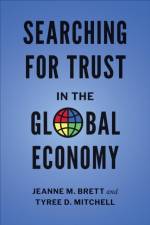
Trust is the foundation for strong working relationships, but the way people from different cultures search for and decide to trust varies. Searching for Trust in the Global Economy describes these cultural differences from the perspective of 82 managers from 33 different countries in four regions of the world. It addresses the current global business climate with insights from managers describing how the COVID-19 pandemic disrupted the process of searching for and deciding to trust new business partners.Jeanne M. Brett and Tyree D. Mitchell propose a simple framework that explains the cultural differences in deciding to trust new business partners. They suggest that the key to understanding cultural differences in the process lies in the interplay between cultural levels of trust and "e;tightness-looseness,"e; or the degree to which a culture strongly enforces its norms. They explain how searching for and deciding to trust is different in the high-trust, loose cultures of the West, the high-trust, tight cultures in East Asia, the low-trust, tight cultures in the Middle East/South Asia, and the low-trust, loose cultures in Latin America.Searching for Trust in the Global Economy is based on managers' experiences building new business relationships around the world, but its practical advice for searching for and deciding to trust is useful not only for business leaders but also for government, not-for-profit, and other leaders who are responsible for building new relationships in the global economy.
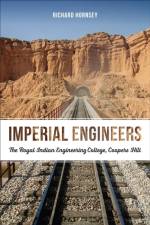
Established in 1871 on the outskirts of London, the Royal Indian Engineering College at Coopers Hill was arguably the first engineering school in Britain. For thirty-five years the college helped staff the government institutions of British India responsible for the railways, irrigation systems, telegraph network, and forests. Founded to meet the high demand for engineers in that country, it was closed thirty-five years later because its educational innovations had been surpassed by Britain's universities - on both occasions against the wishes of the Government of India.Imperial Engineers offers a complete history of the Royal Indian Engineering College. Drawing on the diaries of graduates working in India, the college magazine, student and alumni periodicals, and other archival documents, Richard Hornsey details why the college was established and how the students' education prepared them for their work. Illustrating the impact of the college and its graduates in India and beyond, Imperial Engineers illuminates the personal and professional experiences of British men in India as well as the transformation of engineering education at a time of social and technological change.
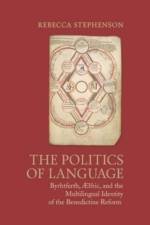
Comparing works by the two most prolific authors of the era, Byrhtferth of Ramsey and Ælfric of Eynsham, Rebecca Stephenson explains the politics that encouraged the simultaneous development of a simple English style and an esoteric Latin style.
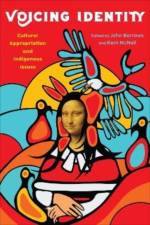
In this unique collection, Indigenous and non-Indigenous authors relate their own experiences with teaching and conducting research involving Indigenous peoples and their rights.
Breaking the Tongue examines the implementation of the Ukrainization of schools and children's organizations in the 1920s and early 1930s.
Analysing over twenty countries from 1990 to 2015, this book systematically investigates the extent to which immigrants are excluded from social programs.
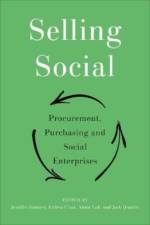
Drawing on Canadian case studies, Selling Social offers insight into the successes and challenges regarding social procurement and social purchasing from the perspective of social enterprises.
Abonner på vårt nyhetsbrev og få rabatter og inspirasjon til din neste leseopplevelse.
Ved å abonnere godtar du vår personvernerklæring.