


Gjør som tusenvis av andre bokelskere
Abonner på vårt nyhetsbrev og få rabatter og inspirasjon til din neste leseopplevelse.
Ved å abonnere godtar du vår personvernerklæring.Du kan når som helst melde deg av våre nyhetsbrev.

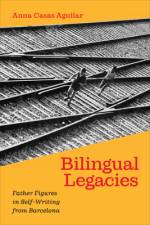
Bilingual Legacies examines fatherhood in the work of four canonical Spanish authors born in Barcelona and raised during the dictatorship of Francisco Franco. Drawing on the autobiographical texts of Juan Goytisolo, Carlos Barral, Terenci Moix, and Clara Janes, the book explores how these authors understood gender roles and paternal figures as well as how they positioned themselves in relation to Spanish and Catalan literary traditions.Anna Casas Aguilar contends that through their presentation of father figures, these authors subvert static ideas surrounding fatherhood. She argues that this diversity was crucial in opening the door to revised gender models in Spain during the democratic period. Moving beyond the shadow of the dictator, Casas Aguilar shows how these writers distinguished between the patriarchal "e;father of the nation"e; and their own paternal figures. In doing so, Bilingual Legacies sheds light on the complexity of Spanish conceptions of gender, language, and family and illustrates how notions of masculinity, authorship, and canon are interrelated.
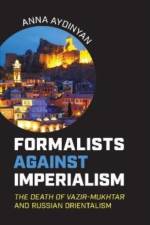
In January 1829, an angry mob in Tehran murdered Russian poet and diplomat Alexander Griboedov, author of the verse comedy Woe from Wit and architect of the Russian annexation of the north Caucasus from Persia after the Russo-Persian War. A century later, the Russian formalist writer Yury Tynianov wrote a historical novel about the event entitled The Death of Vazir-Mukhtar.In this wide-ranging study, Anna Aydinyan posits that The Death of Vazir-Mukhtar conceptualizes Orientalism fifty years before Edward Said coined the term. She argues that Tynianov parodied historical works on the Caucasus in his novel in order to critique the ways in which exoticizing the East enabled imperialism and colonization. Analysing literary and non-literary texts on Russia's relationship with Iran, along with the economic and cultural development of Transcaucasia after the Russo-Persian War, Formalists against Imperialism studies Russian culture within the framework of comparative colonialisms and examines the twentieth-century Russian reconsideration of the country's imperial past.
Inventive new methods of audio-visual mediation and aesthetic activism have been giving shape, since at least the mid-2000s, to feelings of despair, disappointment, and rage at the injustice that South Africa's colonial and apartheid histories continue to trail in their wake. Wayward Feeling reveals how racism, sexism, and other forms of structural disenfranchisement have continued to assert themselves in affective terms, and how these terms have been recast in spaces both public and intimate in "e;post-rainbow"e; times.Helene Strauss argues that the tension between aspiration and achievability has yielded modes of feeling that increasingly disrupt the thrall of post-apartheid nation-building and reconciliation myths, even as wide-spread attachment to the utopian ideals of the anti-apartheid struggle continues to shape dissenting political organising and cultural production. Drawing on a variety of audio-visual forms - including video installations, conceptual artwork, documentary film, live art, and sonic installations - Wayward Feeling examines some of the affective resources that people in contemporary South Africa have been drawing on to make difficult lives more bearable.
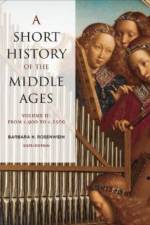
The sixth edition of this bestselling textbook offers a gorgeously illustrated guide to the last six hundred years of the Middle Ages.
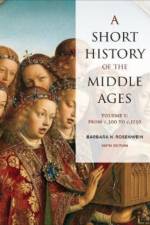
The sixth edition of this bestselling textbook offers a gorgeously illustrated guide to the first eight hundred years of the Middle Ages.
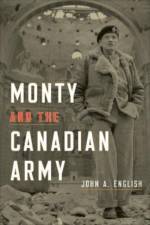
Monty and the Canadian Army details the lasting influence of General B.L. Montgomery, whose military competence shaped the Canadian Army in the Second World War.
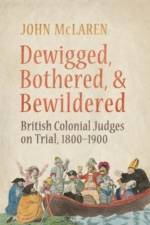
Throughout the British colonies in the nineteenth century, judges were expected not only to administer law and justice, but also to play a significant role within the governance of their jurisdictions. British authorities were consequently concerned about judges' loyalty to the Crown, and on occasion removed or suspended those who were found politically subversive or personally difficult. Even reasonable and well balanced judges were sometimes threatened with removal.Using the career histories of judges who challenged the system, Dewigged, Bothered, and Bewildered illuminates issues of judicial tenure, accountability, and independence throughout the British Empire. John McLaren closely examines cases of judges across a wide geographic spectrum — from Australia to the Caribbean, and from Canada to Sierra Leone — who faced disciplinary action. These riveting stories provide helpful insights into the tenuous position of the colonial judiciary and the precarious state of politics in a variety of British colonies.
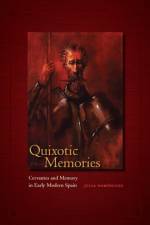
The work of Miguel de Cervantes - one of the most influential writers in early modern Europe - is a reflection of the rich culture of memory in which it was created. More than a theme, memory is a system of understanding in Cervantes's world, resulting from the major social, religious, and economic changes that epitomized Renaissance humanist culture and that informed the transition to modernity.Quixotic Memories offers insight into the plurality and complexity of memory and demonstrates how it plays an exceptionally critical role in Cervantes's Don Quixote. It acknowledges Cervantes's transition into modernity as he engaged with theories of memory that were developed in classical antiquity and adapted to the specific circumstances of his own time. Julia Domnguez explores the many spaces that memory created for itself in early modern Spain, particularly in the fields of philosophy, medicine, rhetoric, mnemotechnics, the visual arts, and pedagogy.Engaging with primary and archival sources, Quixotic Memories provides a new reading of Cervantes's famous novel by tracing the socio-historical and cultural prominence of memory throughout the author's lifetime.
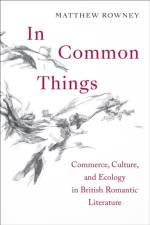
The hardness of stone, the pliancy of wood, the fluidity of palm oil, the crystalline nature of salt, and the vegetable qualities of moss - each describes a way of being in and understanding the world. These substances are both natural objects hailed in Romantic literature and global commodities within a system of extraction and exchange that has driven climate change, representing the paradox of the modern relation to materiality.In Common Things examines these five common substances - stone, wood, oil, salt, and moss - in the literature of Romantic period authors, excavating their cultural, ecological, and commodity histories. The book argues that the substances and their histories have shaped cultural consciousness, and that Romantic era texts formally encode this shaping. Matthew Rowney draws together processes, beings, and things, both from the Romantic period and from our current ecological moment, to re-invoke a lost heritage of cultural relations with common substances.Enabling a fresh reading of Romantic literature, In Common Things prompts a reevaluation of the simple, the everyday, and the common, in light of their contributions to our contemporary sense of ourselves and our societies.
In Spain, on 15 May 15, 2011, a movement against austerity measures began. In a time when representative democracies were under threat, 15M came to life as a virtuous and democratic response to the slide into far-right populism and authoritarianism. More than a social movement, 15M became a mode of being with transformative, democratizing potential.In Democracy Here and Now, Pablo Ouziel offers a grounded analysis of 15M. At the time of the movement and during the ensuing encampments, Ouziel travelled extensively, speaking to participants, and keeping an ongoing record of his conversations. Presenting an original participatory mode of research, the book reveals six types of intersubjective, "e;joining hands"e; relationships that 15M has brought into being and works to carry on in creative ways. The book shows how the movement's way of being and temporality persists in Spain following the square occupations, while 15M citizens continue to learn and move forward in less perceptible ways.Democracy Here and Now sheds light on a deeply relational, intersectional, and eco-social mode of democracy, and shows how 15M's ongoing democratization practices are exemplary of similar grassroots movements around the world, broadening our understandings of what it means to be democratic in the here and now.
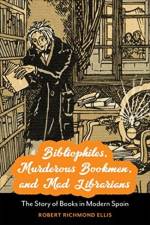
The word "e;bibliophilia"e; indicates a love of books, both as texts to be read and objects to be cherished for their physical qualities. Throughout the history of Iberian print culture, bibliophiles have attempted to explain the psychological experiences of reading and collecting books, as well as the social and economic conditions of book production.Bibliophiles, Murderous Bookmen, and Mad Librarians analyses Spanish bibliophiles who catalogue, organize, and archive books, as well as the publishers, artists, and writers who create them. Robert Richmond Ellis examines how books are represented in modern Spanish writing and how Spanish bibliophiles reflect on the role of books in their lives and in the histories and cultures of modern Spain. Through the combined approaches of literary studies, book history, and the book arts, Ellis argues that two strains of Spanish bibliophilia coalesce in the modern period: one that envisions books as a means of achieving personal fulfilment, and another that engages with politics and uses books to affirm linguistic, cultural, and regional and national identities.
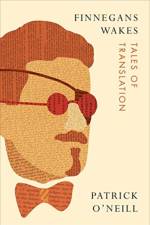
James Joyce's astonishing final text, Finnegans Wake (1939), is universally acknowledged to be entirely untranslatable. And yet, no fewer than fifteen complete renderings of the 628-page text exist to date, in twelve different languages altogether - and at least ten further complete renderings have been announced as underway for publication in the early 2020s, in nine different languages.Finnegans Wakes delineates, for the first time in any language, the international history of these renderings and discusses the multiple issues faced by translators. The book also comments on partial and fragmentary renderings from some thirty languages altogether, including such perhaps unexpected languages as Galician, Guarani, Chinese, Korean, Turkish, and Irish, not to mention Latin and Ancient Egyptian. Excerpts from individual renderings are analysed in detail, together with brief biographical notes on numerous individual translators.Chronicling renderings spanning multiple decades, Finnegans Wakes illustrates the capacity of Joyce's final text to generate an inexhaustible multiplicity of possible meanings among the ever-increasing number of its impossible translations.
Animal breeding has been complicated by persisting factors across species, cultures, geography, and time. In Made to Order, Margaret E. Derry explains these factors and other breeding concerns in relation to both animals and society in North America and Europe over the past three centuries.Made to Order addresses how breeding methodology evolved, what characterized the aims of breeding, and the way structures were put in place to regulate the occupation. Illustrated by case studies on important farm animals and companion species, the book presents a synthetic overview of livestock breeding as a whole. It gives considerable emphasis to genetics and animal breeding in the post-1960 period, the relationship between environmental and improvement breeding, and regulation of breeding as seen through pedigrees. In doing so, Made to Order shows how studying the ancient human practice of animal breeding can illuminate the ways in which human thinking, theorizing, and evolving characterize our interactions with all-natural processes.
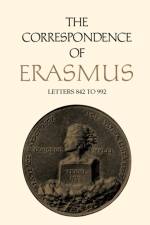
This volume comprises Erasmus' correspondence during the final two years of his life, June 1534-August 1536. In the public sphere it was a time of dramatic events: the reconquest of the duchy Wurttemberg from its Austrian occupiers; the siege and destruction of the Anabaptist "e;kingdom"e; at Munster; Charles V's great victory at Tunis; and the resumption of the Habsburg-Valois wars in Italy. In the private sphere, these were years of deteriorating health, thoughts of impending death, and the loss of close friends (including Thomas Fisher and Thomas More, both executed by Henry VIII). At the same time, however, Erasmus managed to publish his longest book, Ecclesiastes, and to make arrangements, in his final will, for his considerable wealth to be spent for charitable purposes after his death.
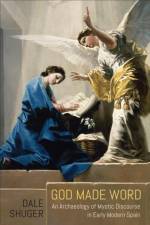
The Golden Age of Spanish mysticism has traditionally been read in terms of individual authors or theological traditions. God Made Word, however, considers early modern Spanish mysticism as a question of language and as a discourse that circulated in concrete social, institutional, and geographic spaces.Proposing a new reading of early modern Spanish mysticism, God Made Word traces the struggles over the representation of interiorized spiritual union - the tension between making it known and conveying its unknowability - far beyond the usual canon of mystic literature. Dale Shuger combines a study of genres that have traditionally been the object of literary study, including poetry, theatre, and autobiography, with a language-based analysis of other areas that have largely been studied by historians and theologians. Arguing that these generic separations grew out of an increasing preoccupation with the cultivation and control of interiorized spirituality, God Made Word shows that by tracing certain mystic representations we come to understand the emergence of different discursive rules and expectations for a wide range of representations of the ineffable.
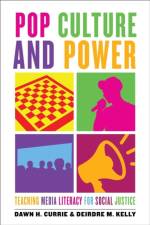
Literacy education has historically characterized mass media as manipulative towards young people who, as a result, are in need of close-reading "e;skills."e; By contrast, Pop Culture and Power treats literacy as a dynamic practice, shaped by its social and cultural context. It develops a framework to analysze power in its various manifestations, arguing that power works through popular culture, not as everyday media. Pop Culture and Power thus explores media engagement as an opportunity to promote social change.Seeing Deeming pop culture as a teaching n opportunity rather than as a threat, Dawn H. Currie and Deirdre M. Kelly worked with K-12 educators to investigate how pop culture can support teaching for social justice. Currie and Kelly began the research for this project with a teacher education seminar in media analysis where participants designed classroom activities using board games, popular film, music videos, and advertisements. These activities were later piloted in participants' classrooms, enabling the authors to identify and address practical issues encountered by student learners. Case studies describe the design, implementation, and retrospective assessment of activities engaging learners in media analysis and production. Following the case studies, the authors consider how their approach can foster ethical practices when engaging in the digital environment.Pop Culture and Power offers theoretically -informed yet practical tools that can help educators prepare youth for engagement in our increasingly complex world of mediated meaning making.
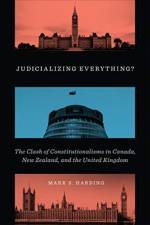
Nearly every common law jurisdiction in the world has adopted a charter or bill of rights. Yet adopting a new rights document creates, rather than resolves, many fundamental constitutional questions. Should constitutional rights be relevant in private disputes? Does every political question need a constitutional or judicial answer? Should courts and legislatures equally participate in addressing the scope of which issues are to be considered constitutional?Judicializing Everything? illustrates how debates surrounding these persistent judicial questions are best understood as part of an ongoing clash between distinct forms of constitutionalism on and off the bench. Mark S. Harding canvasses the perennial debates within the field of constitutional studies and provides novel ways of understanding key disagreements between judges and scholars alike. Despite important formal differences between rights documents in Canada, New Zealand, and the United Kingdom, Judicializing Everything? shows that there are also considerable similarities in the kinds of cases, arguments, and legal outcomes in the three countries. As political life becomes increasingly constitutionalized and judicialized, this important book sheds light on the persistence of debates over bills of rights and their interpretation.
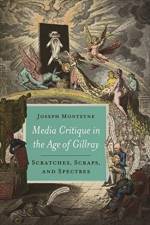
In the late 1790s, British Prime Minister William Pitt created a crisis of representation when he pressured the British Parliament to relieve the Bank of England from its obligations to convert paper notes into coin. Paper quickly became associated with a form of limitless reproduction that threatened to dematerialize solid bodies and replace them with insubstantial shadows.Media Critique in the Age of Gillray centres on printed images and graphic satires which view paper as the foundation for the contemporary world. Through a focus on printed, visual imagery from practitioners such as James Gillray, William Blake, John Thomas Smith, and Henry Fuseli, the book addresses challenges posed by reproductive technologies to traditional concepts of subjective agency.Joseph Monteyne shows that the late eighteenth-century paper age's baseless fabric set the stage for contemporary digital media's weightless production. Engagingly written and abundantly illustrated, Media Critique in the Age of Gillray highlights the fact that graphic culture has been overlooked as an important sphere for the production of critical and self-reflective discourses around media transformations and the visual turn in British culture.
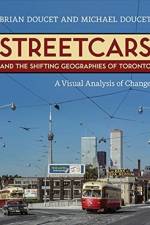
When looking at old pictures of Toronto, it is clear that the city's urban, economic, and social geography has changed dramatically over the generations. Historic photos of Toronto's streetcar network offer a unique opportunity to examine how the city has been transformed from a provincial, industrial city into one of North America's largest and most diverse regions.Streetcars and the Shifting Geographies of Toronto studies the city's urban transformations through an analysis of photographs taken by streetcar enthusiasts, beginning in the 1960s. These photographers did not intend to record the urban form, function, or social geographies of Toronto; they were "e;accidental archivists"e; whose main goal was to photograph the streetcars themselves. But today, their images render visible the ordinary, day-to-day life in the city in a way that no others did. These historic photographs show a Toronto before gentrification, globalization, and deindustrialization. Each image has been re-photographed to provide fresh insights into a city that is in a constant state of flux.With gorgeous illustrations, this unique book offers an understanding of how Toronto has changed, and the reasons behind these urban shifts. The visual exploration of historic and contemporary images from different parts of the city helps to explain how the major forces shaping the city affect its form, functions, neighbourhoods, and public spaces.
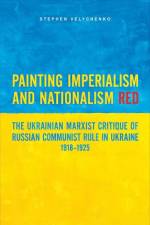
In Painting Imperialism and Nationalism Red, Stephen Velychenko traces the first expressions of national, anti-colonial Marxism to 1918 and the Russian Bolshevik occupation of Ukraine.
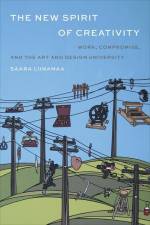
This book traces the many alignments between contemporary artistic creativity and its formal organization within higher education.
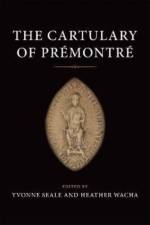
This volume presents the first transcription and edition of the thirteenth-century cartulary of Prémontré.
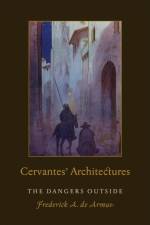
Cervantes' Architectures is the first book dedicated to architecture in Cervantes' prose fiction. At a time when a pandemic is sweeping the world, this book reflects on the danger outside by concentrating on the role of enclosed structures as places where humans may feel safe, or as sites of beauty and harmony that provide solace. At the same time, a number of the architectures in Cervantes trigger dread and claustrophobia as they display a kind of shapelessness and a haunting aura that blends with the narrative.This volume invites readers to discover hundreds of edifices that Cervantes built with the pen. Their variety is astounding. The narrators and characters in these novels tell of castles, fortifications, inns, mills, prisons, palaces, towers, and villas which appear in their routes or in their conversations, and which welcome them, amaze them, or entrap them. Cervantes may describe actual buildings such as the Pantheon in Rome, or he may imagine structures that metamorphose before our eyes, as we come to view one architecture within another, and within another, creating an abyss of space. They deeply affect the characters as they feel enclosed, liberated, or suspended or as they look upon such structures with dread, relief, or admiration. Cervantes' Architectures sheds light on how places and spaces are perceived through words and how impossible structures find support, paradoxically, in the literary architecture of the work.
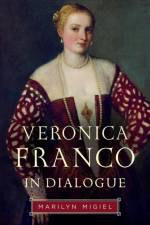
Since the late twentieth century, the Venetian courtesan Veronica Franco has been viewed as a triumphant proto-feminist icon: a woman who celebrated her sexuality, an outspoken champion of women and their worth, and an important intellectual and cultural presence in sixteenth-century Venice.In Veronica Franco in Dialogue, Marilyn Migiel provides a nuanced account of Franco's rhetorical strategies through a close analysis of her literary work. Focusing on the first fourteen poems in the Terze rime, a collection of Franco's poems published in 1575, Migiel looks specifically at back-and-forth exchanges between Franco and an unknown male author. Migiel argues that in order to better understand what Franco is doing in the poetic collection, it is essential to understand how she constructs her identity as author, lover, and sex worker in relation to this unknown male author.Veronica Franco in Dialogue accounts for the moments of ambivalence, uncertainty, and indirectness in Franco's poetry, as well as the polemicism and assertions of triumph. In doing so, it asks readers to consider their ideological investments in the stories we tell about early modern female authors and their cultural production.
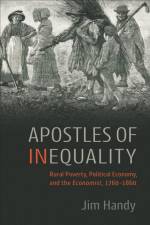
Between 1760 and 1860, the English countryside was subject to constant attempts at agricultural improvement. Most often these meant depriving cottagers and rural workers of access to land they could cultivate, despite evidence that they were the most productive farmers in a country constantly short of food.Drawing from a wide range of contemporary sources, Apostles of Inequality argues that such attempts, driven by a flawed faith in the wonders of capital, did little to increase agricultural productivity and instead led to a century of increasing impoverishment in rural England. Jim Handy rejects the assertions about the benefits that accompanied the transition to "e;improved"e; agriculture and details the abundant evidence for the efficiency of smallholder, peasant agriculture. He traces the development of both economic theory and government policy through the work of agricultural improver Arthur Young (1741-1820), government advisor Nassau William Senior (1790-1864), and the editors and writers of the Economist, as well as Adam Smith and Thomas Robert Malthus.Apostles of Inequality demonstrates how a fascination with capital - promoted by political economy and farmers' desires to have a labour force completely dependent on wage labour - fostered widespread destitution in rural England for over a century.
Abonner på vårt nyhetsbrev og få rabatter og inspirasjon til din neste leseopplevelse.
Ved å abonnere godtar du vår personvernerklæring.