













Gjør som tusenvis av andre bokelskere
Abonner på vårt nyhetsbrev og få rabatter og inspirasjon til din neste leseopplevelse.
Ved å abonnere godtar du vår personvernerklæring.Du kan når som helst melde deg av våre nyhetsbrev.

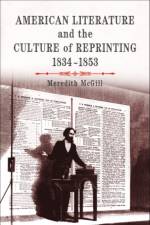
The antebellum period has long been identified with the belated emergence of a truly national literature. Restoring a political dimension to accounts of the economic grounds of antebellum literature, this book presents the arguments and struggles that produced an American "culture of reprinting" and held it in place for two crucial decades.
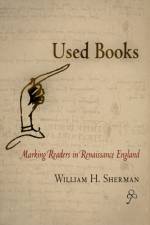
Based on a survey of early printed books, Used Books describes what readers wrote in and around their books and what we can learn from these marks by using the tools of archaeologists as well as historians and literary critics.
Marriage is often described as a melding of two people into one. But what-or who-must be lost, fragmented, or buried in that process? Dolan reveals the contradiction that lies at the very heart of modern marriage. We have inherited from early modern England a model of marriage, she contends, so flawed that its logical consequence is conflict.
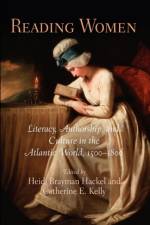
Reading Women brings into conversation the latest scholarship by early modernists and early Americanists on the role of gender in the production and consumption of texts during the expansion of female readership in the early modern period.
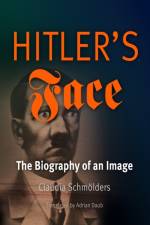
From his emergence on the German political scene in 1914 and subsequent public infatuation with him, to his fall in 1945 and the growing revulsion as his horrific acts were revealed to the world, Adolf Hitler's visage, Claudia Schmolders argues, was the first political image manufactured for the modern media.
"The first comprehensive history of the settlement of Germans in the 1700s and how they influenced the economy, politics, and ways of life in the New World."-Pennsylvania
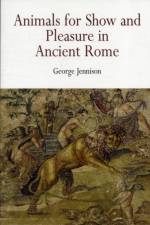
Animals for Show and Pleasure in Ancient Rome is a complete and comprehensive investigation of the rise, function, and pageantry of wild and domesticated animals as household pets and as fodder for entertainment in the Roman world.
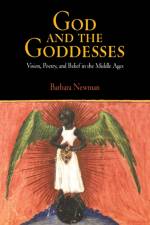
Explores the idea that the medieval religious imagination did not restrict itself to masculine images of God but envisaged the divine in multiple forms.
Explores the patterns of marriages of Asian women, including the legendary "mail-order bride."
In the summer of 1745, Charles Edward Stuart, the grandson of England''s King James II, landed on the western coast of Scotland intending to overthrow George II and restore the Stuart family to the throne. He gathered thousands of supporters, and the insurrection he led—the Jacobite Rising of 1745—was a crisis not only for Britain but for the entire British Empire. Rebellion and Savagery examines the 1745 rising and its aftermath on an imperial scale.Charles Edward gained support from the clans of the Scottish Highlands, communities that had long been derided as primitive. In 1745 the Jacobite Highlanders were denigrated both as rebels and as savages, and this double stigma helped provoke and legitimate the violence of the government''s anti-Jacobite campaigns. Though the colonies stayed relatively peaceful in 1745, the rising inspired fear of a global conspiracy among Jacobites and other suspect groups, including North America''s purported savages.The defeat of the rising transformed the leader of the army, the Duke of Cumberland, into a popular hero on both sides of the Atlantic. With unprecedented support for the maintenance of peacetime forces, Cumberland deployed new garrisons in the Scottish Highlands and also in the Mediterranean and North America. In all these places his troops were engaged in similar missions: demanding loyalty from all local inhabitants and advancing the cause of British civilization. The recent crisis gave a sense of urgency to their efforts. Confident that "a free people cannot oppress," the leaders of the army became Britain''s most powerful and uncompromising imperialists.Geoffrey Plank argues that the events of 1745 marked a turning point in the fortunes of the British Empire by creating a new political interest in favor of aggressive imperialism, and also by sparking discussion of how the British should promote market-based economic relations in order to integrate indigenous peoples within their empire. The spread of these new political ideas was facilitated by a large-scale migration of people involved in the rising from Britain to the colonies, beginning with hundreds of prisoners seized on the field of battle and continuing in subsequent years to include thousands of men, women and children. Some of the migrants were former Jacobites and others had stood against the insurrection. The event affected all the British domains.
"This is an important book that fills an important niche: a careful and comprehensive report to the field on the development and possibilities of online history."-Stephen Brier, Associate Provost and Dean for Interdisciplinary Studies, Graduate Center, CUNY
Explores the events in Byzantium and the Byzantine response to the actions of the Crusaders. This book includes a chapter on the sack of Constantinople and the election of its Latin emperor.
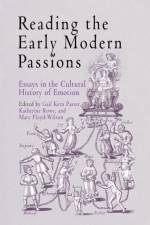
Authors here investigate specific emotions, such as sadness, courage, and fear. Others turn to emotions spread throughout society by contemporary events, such as a ruler's death, the outbreak of war, or religious schism, and discuss how such emotions have widespread consequences in both social practice and theory.
Original essays on the profound cultural impact of tourism in societies ranging form the American southwest to Tonga to Alaska to Iran.
"The book's embrace is gigantic... Not only will Human Rights of Women appeal to a wide audience, it should be read by everyone who has any interest in human rights."-Gender and Development
Calabria and Macrae provide the essence of Nightingale's spiritual philosophy by selecting and reorganizing her best-written treatments.
A philosophic grounding for textual criticism that shows how textual criticism is an integral part of the activity of reading.
Describing in detail weaponry and armor, daily life on the march or in camp, clothing, food, medical care, military law, and titles of the Byzantine army of the seventh century, this text offers insights into the Byzantine military ethos. It also provides data for the historian, and even for the ethnologist.
La Foce: A Garden and Landscape in Tuscany offers a rare look at the majestic, romantic, and personal aspects of one of the loveliest and most bewitching places on earth.
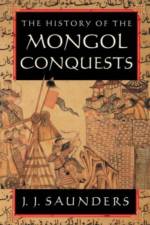
"By far the best modern narrative account of the most extensive land empire in the history of the world."-David Morgan, author of The Mongols
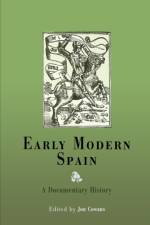
"It is difficult to think of a better way of introducing students to the rich diversity of Hispanic civilization in the Golden Age and Enlightenment than through the pages of this book."-History
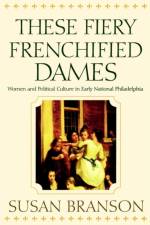
Susan Branson examines the avenues through which women's presence became central to the competition for control of the nation's political life in the post-Revolutionary era.
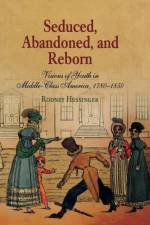
In attempting to steer young adults safely away from the dangers of market-driven society, reformers in early America created values that came to define the emerging urban middle class.
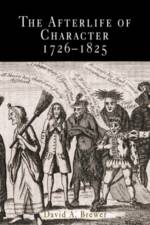
In its innovative methodology and its unprecedented attention to the productive interplay of audience and text, The Afterlife of Character, 1726-1825 offers a compelling new approach to eighteenth-century studies, the history of the book, and the very idea of character itself.
A collection of essays from one of the most renowned bibliographical scholars of our time.
How did Quakers reconcile their belief in plain living with their appreciation of fine material goods?
"This brilliant and infuriating book is the latest intriguing offering from one of the most original anthropologists working... It offers us unpredictable and illuminating interpretations of classical material."-Journal of the Royal Anthropological Institute
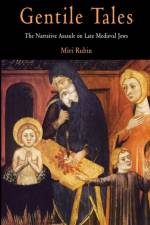
"Rubin raises . . . deep and disturbing questions about the nature of persecution and mass hysteria, and not least about the ways in which Christian beliefs have caused the deaths of Jews. . . . This is a courageous book, with implications far beyond medieval history."--Michael Clanchy,
Abonner på vårt nyhetsbrev og få rabatter og inspirasjon til din neste leseopplevelse.
Ved å abonnere godtar du vår personvernerklæring.