



Gjør som tusenvis av andre bokelskere
Abonner på vårt nyhetsbrev og få rabatter og inspirasjon til din neste leseopplevelse.
Ved å abonnere godtar du vår personvernerklæring.Du kan når som helst melde deg av våre nyhetsbrev.

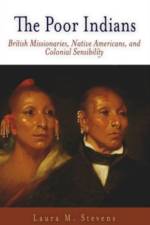
Missionary work, arising from a sense of pity, helped convince the British that they were a benevolent people. Stevens relates this to the rise of the cult of sensibility, when philosophers argued that humans were inherently good because they felt sorrow at the sign of suffering.
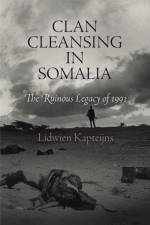
Clan Cleansing in Somalia deals with the transformative violence that helped cause the collapse of the Somali state in 1991. Kapteijns argues that public acknowledgment of the clan cleansing of this period is indispensable to social and moral repair and to the critical memory work required from Somalis on all sides of this conflict.
Human Rights in the Shadow of Colonial Violence explores the relationship between the human rights movement emerging after 1945 and the increasing violence of decolonization. Based on material previously inaccessible in the archives of the International Committee of the Red Cross and the United Nations Human Rights Commission, this comparative study uses the Mau Mau War (1952-1956) and the Algerian War (1954-1962) to examine the policies of two major imperial powers, Britain and France. Historian Fabian Klose considers the significance of declared states of emergency, counterinsurgency strategy, and the significance of humanitarian international law in both conflicts.Klose''s findings from these previously confidential archives reveal the escalating violence and oppressive tactics used by the British and French military during these anticolonial conflicts in North and East Africa, where Western powers that promoted human rights in other areas of the world were opposed to the growing global acceptance of freedom, equality, self-determination, and other postwar ideals. Practices such as collective punishment, torture, and extrajudicial killings did lasting damage to international human rights efforts until the end of decolonization.Clearly argued and meticulously researched, Human Rights in the Shadow of Colonial Violence demonstrates the mutually impacting histories of international human rights and decolonization, expanding our understanding of political violence in human rights discourse.
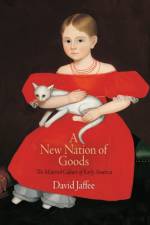
A New Nation of Goods highlights the significant role of provincial artisans in four crafts in the northeastern United States-chairmaking, clockmaking, portrait painting, and book publishing-to explain the shift from preindustrial society to an entirely new configuration of work, commodities, and culture.
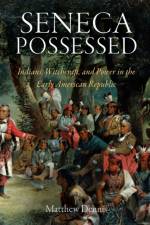
Seneca Possessed explores how the Seneca people and their homeland were "possessed"-culturally, spiritually, materially, and legally-in the wake of the American Revolution.
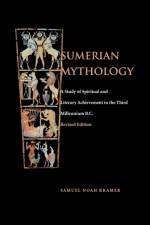
"A real addition to the body of world mythology."-American Anthropologist "No people has contributed more to the culture of mankind than the Sumerians, and yet it has been only in recent years that our knowledge of them has become at all accurate or extensive. [This book is] our first authoritative sketch of the great myths of the Sumerians, their myths of origins, of creation, the nether world, and the deluge. The book ... makes entrancing reading and for the general reader it opens up a whole new vista undreamed of before."-Theophile J. Meek
"A subversive and postmodern work about the town of Chadds Ford, Pennsylvania. The book considers Wyeth country-what kind of place it is and how it is constituted... Dorst asks questions about how the place represents itself to itself and to tourists."-Lingua Franca
Energy Politics provides a broad introduction to the ways in which energy affects domestic and regional political developments.
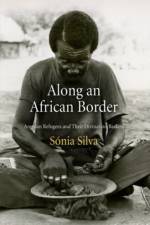
Anthropologist Sonia Silva examines how a community of Luvale people, Angolan refugees living in Zambia, use lipele divination baskets to cope with daily life in a new land and maintain connections to their past.
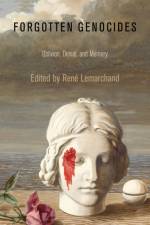
In eight case studies written by recognized experts this book offers a major contribution to the comparative analysis of genocidal phenomena. Besides tapping a rich vein of empirical data, this collective effort breaks new ground in analyzing how denial, oblivion, or manipulated memory tends to mask the hideous realities of mass killing.
In 1890, a delegation of African American activists formed the Afro-American League, the nation's first national civil rights organization. Over the course of nearly two decades, these activists fought to end disfranchisement and segregation, and to contest racial violence, creating the foundation for the NAACP and the modern civil rights movement.
"Encourages us to see historic Christianity as but one expression of a universalistic potential in Jewish monotheism. . . . In a fruitful career not yet nearly over, Border Lines, the culmination of many years of work, may well remain Daniel Boyarin's masterpiece."-Jack Miles, Commonweal
"Voice in Motion is a book of interdisciplinary reach, solid scholarship, and imaginative resonance."-Bruce Smith, University of Southern California
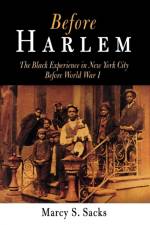
The period between 1880 and 1915 marked the first sustained migration of black people into New York City as blacks and whites, both together and in opposition, forged the contours of race relations that would affect the city for decades to come.
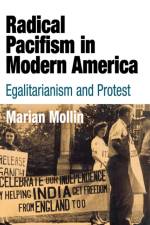
Radical Pacifism in Modern America illuminates the complex relationships between gender, race, activism, and political culture, identifying critical factors that simultaneously hindered and facilitated grassroots efforts at social and political change.
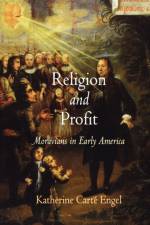
Catalysts in the birth of evangelicalism, the Moravians supported their religious projects through financial savvy, a distinctive communalism at Bethlehem, Pennsylvania, and transatlantic commercial networks. This book traces the Moravians' evolving projects, arguing that imperial war, not capitalism, transformed Moravian religious life.
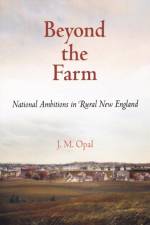
During the first half-century of American independence, a fundamental change in the meaning and morality of ambition emerged. Beyond the Farm blends biography, social history, and cultural history to describe and explain that change.
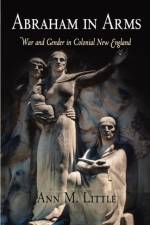
Reveals how ideas about gender and family life were central to the ways people in colonial New England, and their neighbors in New France and Indian Country, described their experiences in cross-cultural warfare. This book argues that English, French, and Indian people had broadly similar ideas about gender and authority.
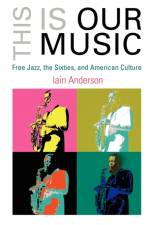
"Takes us back to that moment between the fifties and the sixties when a new music called free jazz took root in the coffeehouses and nightclubs of New York City, Chicago, and Los Angeles."-John Szwed, author of So What: The Life of Miles Davis
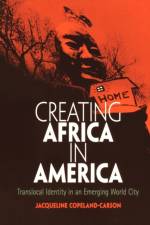
"'Who is 'African' in a global ecumene? Anthropologist Copeland Carson poses this challenging question in her study of cultural dynamics in Minneapolis-Saint Paul. . . . Highly recommended."-Choice
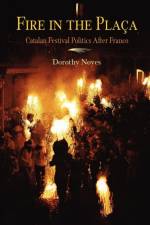
"This impressive contribution to the anthropology of Europe is the first full-length study in English of the Patum, a Corpus Christi fire festival unique to the town of Berga, in the foothills of the Catalan Pyrenees (Spain). It also marks the emergence of an important scholar... Highly recommended."-Choice
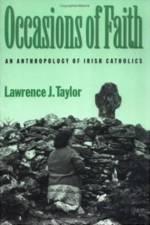
Presents devotional "occasions" or experiences by Irish Catholics. This is an anthropological study of Irish Catholicism. It includes ethnographical material, archival sources, cultural observations, accounts of individual experiences, and scrutiny of religious questions and theories which illuminates twenty years of ethnographic fieldwork.
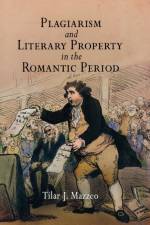
Were the Romantic poets plagiarists, and did plagiarism have the same meaning two hundred years ago as it has today? Tilar J. Mazzeo offers a major reassessment of the role of borrowing, textual appropriation, and narrative mastery in British Romantic literature and provides a new picture of the period and its central aesthetic contests.
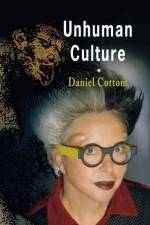
Through a wide-ranging study of literature, art, and philosophy, Daniel Cottom explains why ours is an unhuman culture and how this culture still gives us reason for hope.
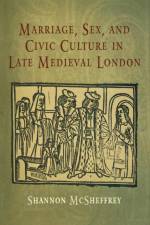
Using extensive evidence from archival documents from both the ecclesiastical court system and the records of city and royal government, as well as advice manuals, chronicles, moral tales, and liturgical texts, McSheffrey examines how marital and sexual relationships were woven into the fabric of late medieval London.
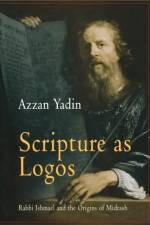
Presents a study of midrash - the biblical exegesis, parables, and anecdotes of the Rabbis. This work examines early, tannaitic legal midrash, focusing on the interpretive tradition associated with the figure of Rabbi Ishmael. It also locates the Rabbi Ishmael hermeneutic within the religious landscape of Second Temple and post-Temple literature.
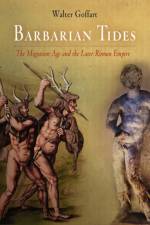
Barbarian Tides radically subverts the grand narrative of a "Germanic" migration and reinvents the role of barbarians in the Later Roman Empire. Goffart sets out how the fragmented foreign peoples once living on the edges of the Empire participated with the Romans in the larger stirrings of late antiquity.
"A remarkable achievement. Bartal presents the broad contours of nineteenth-century East European Jewish history even as he reworks them into a nontraditional narrative."-David Engel, New York University
Abonner på vårt nyhetsbrev og få rabatter og inspirasjon til din neste leseopplevelse.
Ved å abonnere godtar du vår personvernerklæring.