






Gjør som tusenvis av andre bokelskere
Abonner på vårt nyhetsbrev og få rabatter og inspirasjon til din neste leseopplevelse.
Ved å abonnere godtar du vår personvernerklæring.Du kan når som helst melde deg av våre nyhetsbrev.

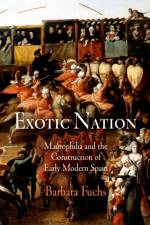
Barbara Fuchs examines the paradoxes in the construction of Spain in relation to its Moorish heritage through an analysis of Spanish literature, costume, language, architecture, and chivalric practices from 1492 to 1609.
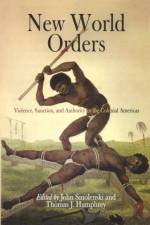
New World Orders juxtaposes case studies from Brazil to California to New York to explore the wide variety of legal and extralegal means by which social order was maintained in the early Americas.
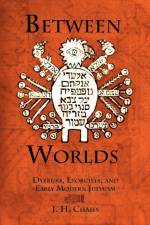
Adopting a comparative historical approach, J. H. Chajes uncovers a strain of Jewish belief to which scant attention has been paid. Between Worlds provides fascinating descriptions of cases of possession as well as analysis of the magical techniques deployed by rabbinic exorcists to expel the ghostly intruders.
Robert Darnton explores the scandalous literature of libel and the colorful lives of libelers in eighteenth-century France. By doing so he shows how an ideological current eroded authority under the Old Regime and became absorbed in a new, more radical, political culture under Robespierre.
Published in 1774, Essay on Gardens is one of the earliest texts showing the progressive shift in French taste from the classical model of the gardens at Versailles to the picturesque or natural style of garden design in the late eighteenth century.
What should historians do with the words of the dead? This work reformulates the historiography of heresy and the inquisition by focusing on depositions taken from the Cathars, a religious sect that opposed the Catholic church and took root in southern France during the twelfth century.
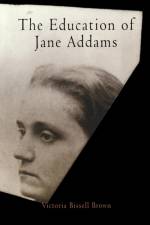
"Excellent. . . . The Education of Jane Addams provides a detailed, wonderfully complex analysis of Addams's ideas, life, and work."-Journal of American History
This new translation by poet Len Krisak of Virgil's classic of pastoral verse captures both the meaning and meter of the original. The text features the English and original Latin on facing pages and an introduction by Gregson Davis.
From Civil Rights to Human Rights examines King's lifelong commitments to economic equality, racial justice, and international peace. Drawing upon broad research in published sources and unpublished manuscript collections, Jackson positions King within the social movements and momentous debates of his time.
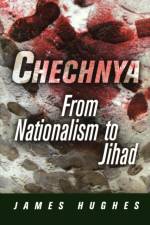
The conflict in Chechnya involves many of the most contentious issues in contemporary international politics. By providing us with a persuasive and challenging study, Hughes sets out the indispensable lessons for other conflicts involving the volatile combination of insurgency and counterinsurgency, most notably the wars in Iraq and Afghanistan.
"The ancient and modern question of what is the nature of man and his activity and what ought to be the directions pursued in this activity is once again being reaffirmed as a primary issue for reflective men."-from Praxis and Action
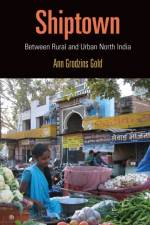
Ann Grodzins Gold weaves together an integrated series of ethnographic sketches depicting the distinctive nature of non-urban, non-rural places; the impact locality has on belonging; the negotiations of difference required in a pluralistic society; and the ways a changing environment permeates experiences of self and place.
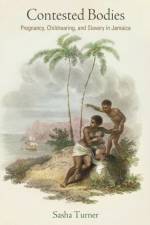
Contested Bodies explores how the end of the transatlantic trade impacted Jamaican slaves and their children. Examining the struggles for control over biological reproduction, Turner shows how central childbearing was to the organization of plantation work, the care of slaves, and the development of their culture.
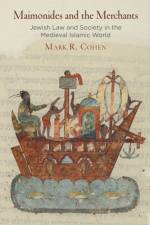
In Maimonides and the Merchants, Mark R. Cohen reveals the extent of pragmatic revisions to the halakha, or body of Jewish law, introduced by Moses Maimonides in his Mishneh Torah, the comprehensive legal code he compiled in the late twelfth century.
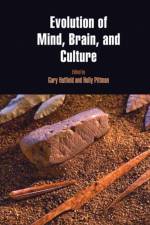
Evolution of Mind, Brain, and Culture draws together studies in archaeology, anthropology, psychology, philosophy, genetics, neuroscience, and environmental science to investigate the evolution of the human mind, the brain, and the human capacity for culture.
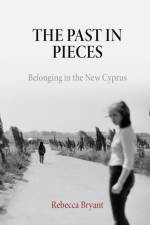
By examining oral history collected during two years of fieldwork, anthropologist Rebecca Bryant investigates why the 2003 opening of the ceasefire line dividing Cyprus has not led the country any closer to reunification, and how in many ways it has driven the two communities of the island farther apart.
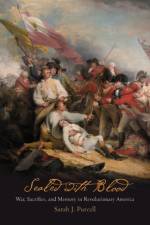
"An exemplary study of public memory because of its wide vision, its attentiveness to context, and its careful delineation of change over time."-David Waldstreicher, author of In the Midst of Perpetual Fetes: The Making of American Nationalism, 1776-1820
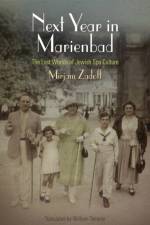
Next Year in Marienbad draws an engaging portrait of Jewish presence and cultural production in the spa towns of Carlsbad, Marienbad, and Franzensbad, from the last decades of the nineteenth century through the late 1930s.
Walk with landscape architect and scholar Ron Henderson through seventeen of Suzhou's classical Chinese garden masterpieces. This insightful guide is fully illustrated with newly drawn plans, maps, and original photographs.
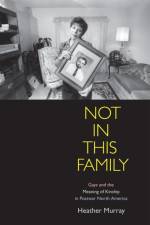
Not in This Family shows how gays and their heterosexual parents both have animated each other's sensibilities, consciousness, and even culture and politics. Author Heather Murray suggests a reciprocal family life and complicates the notion of gay banishment.
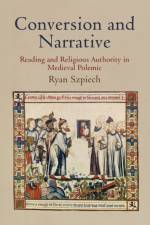
Szpiech draws on medieval Christian, Jewish, and Muslim polemics to investigate the role of narrative in the representation of conversion. By investigating conversion not as individual experience but as expression of communal visions of history, he shows how the narratives dramatize the conflict of ideas in disputational writing.
In Muslims in Global Politics, Mahmood Monshipouri examines the role identity plays in the political dynamics of six different Muslim nations-Egypt, Iraq, the United Arab Emirates, Turkey, Iran, and Indonesia-as well as in Muslim diaspora communities in Europe and North America.
This book offers the first comparative study of the historical role of writing in three languages, including two in non-Roman scripts, over a period of two and a half millennia, which provides an opportunity for reassessment of the work on literacy in English that has accumulated over the past half century.
Through a wide-ranging examination of antebellum images and literature, The Camera and the Press shows how Americans' first encounter with photography was more textual than visual. This thoroughly illustrated case study reexamines current theories on new media and reconnects print and visual culture in nineteenth-century America.
This book examines one of the most important axes of the book trade in Enlightenment Europe: the circulation of French books between France and German-speaking Europe. The first detailed study of the Franco-German trade, it shows how book dealers mediated the transmission of literature across the frontiers of nation, language, and culture.
Ways of Writing is about the making of texts in seventeenth-century New England, whether they were fashioned into printed books or disseminated in handwritten form. David D. Hall explores issues of authority and authenticity, the roles of intermediaries, and the political and social contexts of publication, among other issues.
For nearly eight centuries, the Iberian peninsula was remarkable for its religious, cultural, linguistic, and ethnic diversity. This expanded second edition of Medieval Iberia brings together original sources that testify to its rich and sometimes volatile mix of Christians, Muslims, and Jews.
Craft Specialization and Social EvolutionIn Memory of V. Gordon ChildeEdited by Bernard WailesV. Gordon Childe was the first scholar to attempt a broad and sustained socioeconomic analysis of the archaeology of the ancient world in terms that, today, could be called explanatory. To most, he was remembered only as a diligent synthesizer whose whole interpretation collapsed when its chronology was demolished. There was little recognition of his insistence that the emergence of craft specialists, and their very variable roles in the relations of production, were crucial to an understanding of social evolution. The interrelationship between sociopolitical complexity and craft production is a critical one, so critical that one might ask, just how complex would any society have become without craft specialization.This volume derives from the papers presented at a symposium at the American Anthropological Association meetings on the centenary of Childe's birth.University of Pennsylvania Museum of Archaeology and Anthropology1996 | 256 pages | 35 illus.ISBN 978-0-924171-43-7 | Cloth | $49.95s | £32.50 World Rights | Archaeology, Anthropology
Flora's Empire brings new light to the complex history of British imperialism in India and its post-Independence legacy. Aided by beautiful period illustrations, it focuses on three centuries of official, domestic, and botanical gardens, as well as on memorial gardens and restorations of Muslim and Hindu sites.
Abonner på vårt nyhetsbrev og få rabatter og inspirasjon til din neste leseopplevelse.
Ved å abonnere godtar du vår personvernerklæring.