








Gjør som tusenvis av andre bokelskere
Abonner på vårt nyhetsbrev og få rabatter og inspirasjon til din neste leseopplevelse.
Ved å abonnere godtar du vår personvernerklæring.Du kan når som helst melde deg av våre nyhetsbrev.

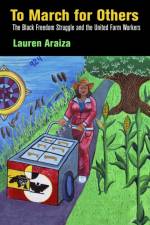
Through the relationships between the African American civil rights groups of the 1960s and 1970s and the United Farm Workers, a primarily Mexican American union, To March for Others examines the complexities of forming coalitions across racial, socioeconomic, and geographic divides in pursuit of justice and equality.
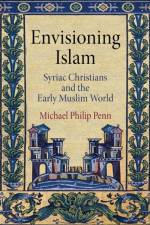
The earliest and largest corpus of Christian writings on Islam was written in the Aramaic dialect of Syriac. Envisioning Islam shows how these previously neglected texts problematize modern perceptions of an exclusively hostile Christian reaction to Islam and revolutionize our understanding of the early Islamic world.
A richly detailed account of the lived experiences of ordinary people in this multicultural city between 1992 and 1996, during the war in the former Yugoslavia. Exploring how civilians coped with desperate circumstances, it argues that ethnonational divisions were the result rather than the cause of the war.
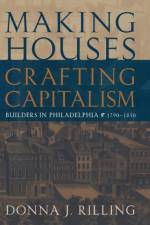
How entrepreneurial housebuilders fueled a rapid economy. "A well-written and easily read business book with a historical perspective, quite fit for a general readership interested in the history of American enterprise."-APT Bulletin
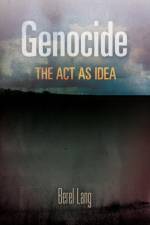
Berel Lang's Genocide: The Act as Idea analyzes and defends the distinctiveness of the concept of genocide as a notable advance in the history of moral and political thinking and practice.
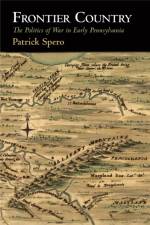
Synthesizing the tensions between high and low politics and eastern and western regions in Pennsylvania before the Revolution, Patrick Spero recasts the importance of frontiers, as eighteenth-century Pennsylvanians would have understood them, to the development of colonial America and the origins of American Independence.
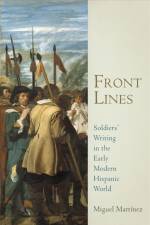
Front Lines documents the literary practices of imperial Spain's common soldiers. The epic poems, chronicles, ballads, and autobiographies that these soldiers wrote at the front provide a critical view from below on state violence and imperial expansion.
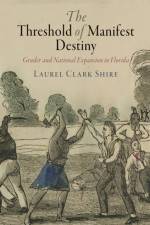
Among the many contentious frontier zones in nineteenth-century North America, Florida was an early and important borderland where the United States worked out how it would colonize new territories.
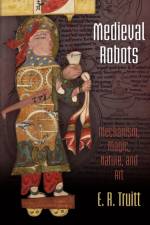
Medieval robots took such forms as talking statues, mechanical animals, or silent metal guardians; some served to entertain or instruct while others performed surveillance or discipline. Medieval Robots explores the forgotten history of real and imagined machines that captivated Europe from the ninth through the fourteenth centuries.
Human Rights or Global Capitalism examines the application of neoliberal policies from a human rights perspective and asks whether states, by outsourcing to the private sector many services with a direct impact on human rights, abdicate their responsibilities to uphold human rights and violate international law.
Counter Jihad provides a sweeping account of America's military campaigns in the Islamic world and fills a gaping void in our understanding of the War on Terror.
Tea Sets and Tyranny offers a political history of politeness in early America, from its origins in the late seventeenth century to its remaking in the age of the Revolution.
In Central Harlem, the symbolic and historic heart of black America, the violent unrest of July 1964 highlighted a new dynamic in the racial politics of the nation. The first "long, hot summer" of the Sixties had arrived.
The American Revolution Reborn parts company with the American Revolution of our popular imagination and renders it as a time of intense ambiguity and frightening contingency. With an introduction by Spero and a conclusion by Zuckerman, this volume heralds a substantial and revelatory rebirth in the study of the American Revolution.
Drawing from extensive archival research, Out of the Horrors of War demonstrates that disabled citizens in the World War II era organized a national movement for economic security and full citizenship, reshaping the U.S. welfare state and laying the foundation for the disability rights movement.
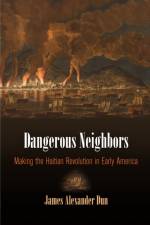
Dangerous Neighbors shows how the Haitian Revolution permeated early American print culture and had a profound impact on the young nation's domestic politics.
In Bodytalk, E. Jane Burns contends that female protagonists in medieval texts authored by men can be heard to talk back against the stereotyped and codified roles that their fictive anatomy is designed to convey.
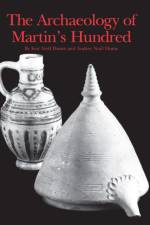
Martin's Hundred was a 20,000-acre tract of land in Tidewater Virginia, one of the most extensive English enterprises in the New World. Settled in 1618, all signs of its early occupation soon disappeared, leaving no trace above ground. More than three centuries later, archaeological explorations uncovered tantalizing evidence of the people who had lived, worked, and died there.
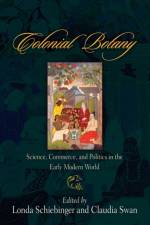
A wide-ranging collection of essays on plants as market forces.
Evan Haefeli demonstrates how convoluted and uncertain were the beginnings of religious tolerance in America, by giving them an international context.
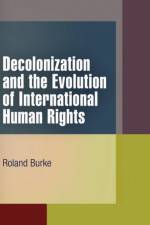
This book challenges traditional accounts of the Third World's contribution to international human rights. It demonstrates that diplomats from Third World countries helped both to radicalize the UN human rights agenda in the heyday of decolonization and to undermine that agenda by advancing cultural relativism as an excuse for abuses in the 1970s.
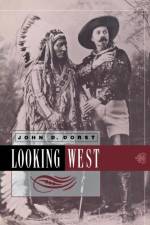
In Looking West, John D. Dorst examines a largely neglected pattern of seeing that stands in contrast to the universally familiar iconography.
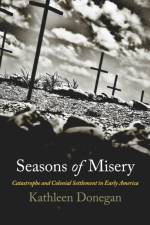
Seasons of Misery offers a boldly original account of early English settlement in American by placing catastrophe and crisis at the center of the story. Donegan argues that the constant state of suffering and uncertainty decisively formed the colonial identity and produced the first distinctly colonial literature.
Since the days of V. Gordon Childe, the study of the emergence of complex societies has been a central question in anthropological archaeology. However, archaeologists working in the Americanist tradition have drawn most of their models for the emergence of social complexity from research in the Middle East and Latin America. Bernard Wailes was a strong advocate for the importance of later prehistoric and early medieval Europe as an alternative model of sociopolitical evolution and trained generations of American archaeologists now active in European research from the Neolithic to the Middle Ages. Two centuries of excavation and research in Europe have produced one of the richest bodies of archaeological data anywhere in the world. The abundant data show that technological innovations such as metallurgy appeared very early, but urbanism and state formation are comparatively late developments. Key transformative process such as the spread of agriculture did not happen uniformly but rather at different rates in different regions.The essays in this volume celebrate the legacy of Bernard Wailes by highlighting the contribution of the European archaeological record to our understanding of the emergence of social complexity. They provide case studies in how ancient Europe can inform anthropological archaeology. Not only do they illuminate key research topics, they also invite archaeologists working in other parts of the world to consider comparisons to ancient Europe as they construct models for cultural development for their regions. Although there is a substantial corpus of literature on European prehistoric and medieval archaeology, we do not know of a comparable volume that explicitly focuses on the contribution that the study of ancient Europe can make to anthropological archaeology.
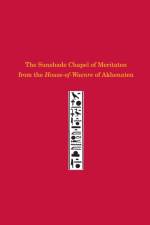
The quartzite architectural block E16230 has been on display in the Penn Museum for 115 years. E16230 is one of the few large architectural pieces in the world surviving from the much-debated reign of the "heretic" king Akhenaten. This block is one of the most historically significant objects on display in the Egyptian galleries, yet it has never been analyzed or published. This volume addresses that glaring gap and provides for the first time a translation and discussion of the important texts on the object, along with analysis of the architectural evidence it provides.The block is part of the once intensely ornamented façade of a solar chapel ("sunshade") dedicated to princess Meritaten, the eldest daughter of Akhenaten and Nefertiti. The large (1100 kg) block originates in a chapel that was part of a royal ceremonial palace of Akhenaten named Per-Waenre ("the house of the Unique-one-of-Re"). Later, after demolition of the building, the block was reused in the city of Heliopolis as the base for a sphinx of king Merenptah (Dynasty 19). Subsequently the block underwent a final stage of reuse in Cairo in the Islamic Period where it was found ca. 1898 in the Mousky district of central Cairo. Because the block is such a major architectural element it provides considerable detail in the reconstruction of the essential appearance, decoration, and other aspects of the Meritaten sunshade.The volume addresses the significance of the piece and the Meritaten sunshade in the context of Akhenaten''s monumental program. Major implications emerge from the analysis of E16230 providing further evidence on the royal women during Akhenaten''s reign. The book examines two possibilities for the original location of the Per-Waenre in which the Meritaten sunshade stood. It may be part of a large Amarna Period cult precinct at Heliopolis, which may, like the capital city at Tell el-Amarna, have born the wider name Akhet-Aten, "Horizon of the Aten." Alternatively it could derive from Tell el-Amarna itself, possibly belonging to a hitherto unidentified palatial complex at that site. The book is a contribution to the study of one of the most debated eras of ancient Egyptian history focused on this long-ignored treasure of the Penn Museum''s Egyptian collection.University Museum Monograph, 144
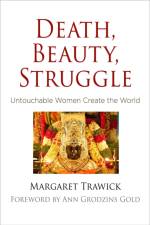
Death, Beauty, Struggle contains an original vision of gendered lives, poetry, devotion, and social hierarchy in Tamil Nadu.
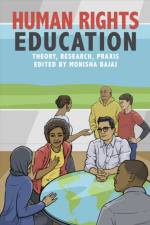
Bringing together the voices of those deeply engaged in the politics and possibilities of human rights education, Monisha Bajaj's Human Rights Education shapes our understanding of its practices and processes and demonstrates how it has come to be a meaningful field of scholarship, policy, curricular reform, and pedagogy.
Abonner på vårt nyhetsbrev og få rabatter og inspirasjon til din neste leseopplevelse.
Ved å abonnere godtar du vår personvernerklæring.