








Gjør som tusenvis av andre bokelskere
Abonner på vårt nyhetsbrev og få rabatter og inspirasjon til din neste leseopplevelse.
Ved å abonnere godtar du vår personvernerklæring.Du kan når som helst melde deg av våre nyhetsbrev.

How do nongovernmental organizations affect the world of human rights?
"This brilliant book, meticulously researched in the history of subnationalism and cultural politics in northeast India, is the best critique of general theories of agonistic democracy that I have encountered."-Gayatri Chakravorty Spivak
The original publication of the 114 seals and seal impressions excavated from Gordion in Turkey, this book is the first diachronic monograph on the ongoing excavations at Gordion and provides the first historical and archaeological overview of the entire site, with the most recent archaeological developments taken fully into account. The seals range in date from ca. 1800 BCE to 400 CE, from the Early Bronze Age through the Roman period, covering some of the most tumultuous and most interesting eras of Anatolian history.Dusinberre offers insights into the individuals living at Gordion, as well as sweeping developments in societal constructs at the Phrygian capital. In addition to detailed information about the seals and 237 meticulous illustrations of all related artifacts, this study examines their excavated contexts and considers the seals in light of associated finds and architecture. Interested audiences include scholars of seal art, Anatolian archaeology, and Near Eastern archaeology, along with those interested in early Christian history, empire studies, the Roman provinces, and Greek archaeology.Content of this book's CD-ROM may be found online at this location: http://core.tdar.org/project/376538.
In Democracy Disrupted, journalist and political scientist Ivan Krastev proposes a provocative interpretation of the "Occupy" movements that have surfaced in the United States, Great Britain, and Spain, as well as the more destabilizing forms of unrest in Eastern Europe, the Middle East, and Southeast Asia.
"A splendid volume . . . fused with political and philosophical insight into the fundamental concepts underlying the Declaration."-American Journal of International Law
The Road to Jerusalem traces the survival of the literature of pilgrimage as part of the broader literature of travel from the late fifteenth through the eighteenth centuries, a time when powerful forces, from navigation to theology, were redefining travel.
In The Economy of Hope, hope becomes not only a method of knowledge but also an essential framework for the sociocultural analysis of economic phenomena.
In Romantic Marks and Measures, Julia S. Carlson examines Wordsworth's poetry of "speech" and "nature" as a poetry of print, written and read in the midst of topographic and typographic experimentation and change.
This fascinating history examines the circumstances of two elderly New Englanders who were prosecuted and sentenced to death for bestiality at the turn of the eighteenth century. Their astonishing cases become a springboard to examine the Enlightenment Era political and religious turmoil of the region.
This collection of essays by leading American historians explains how and why the fight against unionism has long been central to the meaning of contemporary conservatism.
"Lori Landay tells a powerful story about woman's place and women's power during the sexual desegregation of American society."-ScreenSite
In 1823 Sir Henry Bunbury discovered an early edition of Hamlet that radically differs from the known and celebrated version of the play. Zachary Lesser examines how this improbable discovery forced readers to reexamine accepted truths about Shakespeare as an author and the nature of Shakespeare's texts.
Friends and Strangers offers a provocative new look at the transfer of English culture to North America. Setting Pennsylvania in the context of the broader Atlantic phenomenon of creolization, Smolenski's account of the Quaker colony's origins reveals the vital role this process played in creating early American society.
"Kinoshita has produced a book of major importance. Her command of the Francophone Middle Ages should exert an important critical influence on the greater field of Middle English and should also be recognized as an important contribution to the prehistory of postcolonial studies."-David Wallace, University of Pennsylvania
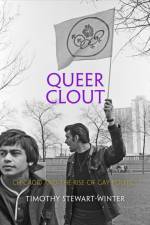
Queer Clout weaves together activism and electoral politics to trace the gay movement's path since the 1950s in Chicago. Stewart-Winter stresses gay people's and African Americans' shared focus on police harassment, highlighting how black political leaders enabled white gays and lesbians to join an emerging liberal coalition in city hall.
The book examines the building, mosaics, objects, and mosaic inscriptions found at the site of a sixth-century monastery at Beth-Shan. The mosaic floors are described in particular detail, with reference to comparable mosaics elsewhere in Palestine. Translations are given of the inscriptions within the mosaics.Publications of the Palestine Section of the University Museum, University of Pennsylvania Vol. IV
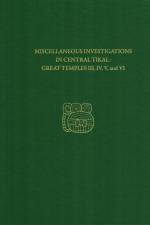
The Maya center of Tikal, in Guatemala, is famous for its well-preserved architecture. This book presents detailed descriptions of four of the six Great Temples that dominate Tikal''s city center. Whereas Great Temples I and II were published in 1990 in Tikal Report 14, the four structures presented here are Great Temples III, IV, V, and VI. All but Great Temple V represent Late Classic construction and can be associated with known rulers.It is tempting to think of these structures as funerary monuments, but this is only a supposition. Their relationship with rulers may have been much more complex. This report is the primary record of these important buildings in Tikal''s urban landscape. It provides clear, precise, and usable architectural analyses for Mayanists, archaeologists, art historians, architectural historians, urbanists, and those interested in construction techniques and in the uses of Maya buildings.University Museum Monograph, 146
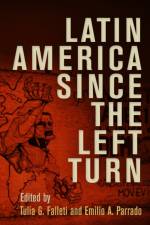
In the early twenty-first century, the citizens of many Latin American countries, such as Argentina, Bolivia, Brazil, Ecuador, and Venezuela, elected left-wing governments, explicitly rejecting and attempting to reverse the policies of neoliberal structural economic adjustment that had prevailed in the region during the 1990s. However, in other countries such as Chile, Colombia, Mexico, and Peru continuity and even extension of the neoliberal agenda have been the norm.What were the consequences of rejecting the neoliberal consensus in Latin America? Why did some countries stay on the neoliberal course? Contributors to Latin America Since the Left Turn address these questions and more as they frame the tensions and contradictions that currently characterize Latin American societies and politics. Divided into three sections, the book begins with an examination of the political economy, from models of development, to taxation and spending patterns, to regionalization of trade and human migration. The second section analyzes the changes in democracy and political identities. The last part explores the themes of citizenship, constitutionalism, and new forms of civic participation. With essays by the foremost scholars in the field, Latin America Since the Left Turn not only delves into the cases of specific countries but also surveys the region as a whole.Contributors: Isabella Alcañiz, Sandra Botero, Marcella Cerrutti, George Ciccariello-Maher, Tula G. Falleti, Roberto Gargarella, Adrian Gurza Lavalle, Juliet Hooker, Evelyne Huber, Ernesto Isunza Vera, Nora Lustig, Paulina Ochoa Espejo, Emilio A. Parrado, Claudiney Pereira, Thamy Pogrebinschi, Irina Carlota Silber, David Smilde, John D. Stephens, Maristella Svampa, Oscar Vega Camacho, Gisela Zaremberg.
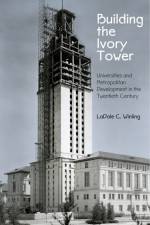
Building the Ivory Tower examines the role of American universities as urban developers and their changing effects on cities in the twentieth century. LaDale C. Winling explores philanthropy, real estate investments, architectural landscapes, and urban politics to reckon with the tensions of university growth in our cities.
The pen was as mighty as the musket during the American Revolution, as poets waged literary war against politicians, journalists, and each other. Drawing on hundreds of poems, Poetry Wars reconstructs the important public role of poetry in the early republic and examines the reciprocal relationship between political conflict and verse.
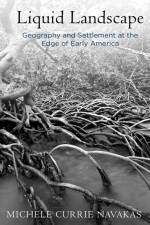
In Liquid Landscape, Michele Currie Navakas analyzes the history of Florida's incorporation alongside the development of new ideas of personhood, possession, and political identity within American letters, from early American novels, travel accounts, and geography textbooks, to settlers' guides, maps, natural histories, and land surveys.
In Ruling the Spirit, Claire Taylor Jones revises the narrative of women's involvement in the German Dominican order arguing that Dominican women did not lose their piety and literacy in the fifteenth century, as is commonly believed but, instead, were encouraged to reframe their practice around the observance of the Divine Office.
Reconnecting State and Kinship seeks to overcome the traditional dichotomy between state and kinship, asking whether concepts associated with one sphere surface in the other, tracking the evolution of these concepts through time and space, and exploring how this binary is reinforced within the social sciences.
Writing in beautiful prose and marshalling fascinating evidence, Gary B. Nash constructs a convincing case that Warner Mifflin belongs in the Quaker antislavery pantheon with William Southeby, Benjamin Lay, John Woolman, and Anthony Benezet.
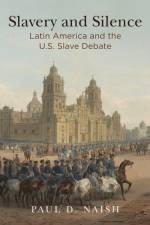
In the thirty-five years before the Civil War, as it became increasingly difficult for those outside the world of politics to have frank and open discussions about slavery, Paul D. Naish argues that many Americans displaced their most provocative criticisms and darkest fears about the institution onto Latin America.
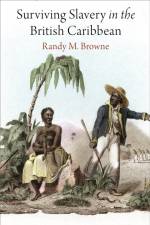
Surviving Slavery in the British Caribbean depicts the human drama in which enslaved Africans struggled against their enslavers and environment, and one another. The book reorients Atlantic slavery studies by revealing how social relationships, cultural practices, and political strategies reflected an unrelenting fight to survive.
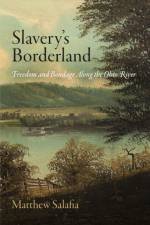
By centering the practical and figurative significance of the Ohio River as a political border, a cultural boundary, and an artery of movement and economy that gave form to the region, Matthew Salafia sheds light on peculiarities of labor and economy along the Ohio River.
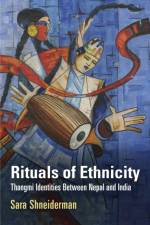
The first comprehensive ethnography of the Thangmi, a marginalized community who migrate between Himalayan border zones, Rituals of Ethnicity explores Thangmi cultural worlds and regional political histories to offer a new explanation for the persistence of enduring ethnic identities despite the realities of mobile, hybrid lives.
Based on interviews in Portland, Chicago, Miami, and Minneapolis/Saint Paul, How Real Estate Developers Think depicts the entrepreneurial personality of the developer, explores the meaning of "good design," and examines the economic risks and rewards of development.
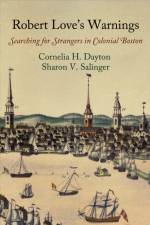
Robert Love's Warnings follows the walks of one otherwise obscure townclerk, Robert Love, as he warned itinerants and sojourners to depart the town in fourteen days. Love's meticulous records reveal the complex legal, social, and political landscape of New England in the decade before the Revolution.
Abonner på vårt nyhetsbrev og få rabatter og inspirasjon til din neste leseopplevelse.
Ved å abonnere godtar du vår personvernerklæring.