











Gjør som tusenvis av andre bokelskere
Abonner på vårt nyhetsbrev og få rabatter og inspirasjon til din neste leseopplevelse.
Ved å abonnere godtar du vår personvernerklæring.Du kan når som helst melde deg av våre nyhetsbrev.

This volume presents the complex evolutionary history of an ancient town, Tepe Gawra, located in present-day northeastern Iraq, over a thousand-year period, from the Terminal Ubaid period to the Late Chalcolithic or Uruk period, during the fourth millennium B.C. The site itself is a linchpin for the chronology and study of evolutionary trends.In examining Gawra's transformation, Mitchell S. Rothman analyzes local processes of change and the connection between changes at this small town and transformations of the general Mesopotamian region—southwestern Iran, the western Zagros, the northern Jazirah, and the upper Euphrates. He also carefully documents the raw data from the site and includes previously unpublished excavation records in the University of Pennsylvania Museum's archives (the excavation began in 1927 in cooperation with the Baghdad School of the American School of Oriental Studies), making major additions to our understanding of the stratigraphy of the site and the findspots of artifacts.Using this newly collated data and newly discovered stratigraphic notes from the original excavators, Rothman analyzes the economic, social, and political activities of the ancient residents by mapping artifact distributions onto the architectural and open spaces of each of the living towns and the graves of the dead, presenting an unusually complete picture.Anthropologists and historians will find these analyses of great interest because the levels analyzed here represent the beginning of a process that led to the formation of the earliest states in the world. An appendix by Brian Peasnall, on burials from Tepe Gawra, completes the analysis.University Museum Monograph, 112
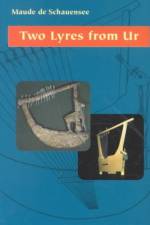
During the 1928-29 season at Ur, in the Great Death Pit of the Royal Cemetery, C. Leonard Woolley discovered two spectacular musical instruments—a silver Boat-shaped Lyre and a magnificent lyre with the head of a bull made of gold sheet and a lapis lazuli beard. This book chronicles their history, conservation, and reconservation. While little was known about mid-third millennium Mesopotamian archaeology early last century, it was clear that the Sumerians had developed a vigorous trade in luxury goods, with an economy that necessitated a highly structured government whose leaders could command rich and elaborate graves that included a full panoply of musical instruments.In meticulous detail, using both traditional methods and new X-ray and electronic imaging investigative techniques, Maude de Schauensee probes and analyzes the construction of the two lyres held by the University Museum while providing an economic, historical, and sociological context in which to better understand them. She examines the decorative motifs along with the materials and the techniques of the builders of these instruments. The illustrations—10 pieces of line art, 25 photographs, 6 CAT-scans, 5 X-rays, and 24 color plates—supply additional details. This book presents new information and conservation descriptions for the first time. Musicologists, art historians, Near East scholars and archaeologists, and general readers will find this book's new analysis of the instruments of an ancient culture of significant interest.
"The Southern Caucasus in Prehistory" is a major contribution to the archaeological literature of this part of the world. Written by one of the most important figures in Russian archaeology and meticulously translated, it summarizes the findings of the extensive archaeological excavations of the late 1980s at the important sites that have illuminated the Transcaucasian cultures of the Neolithic, Eneolithic, Early and Middle Bronze Ages.Because the Transcaucasus was located at the crossroads between the Middle East and the Near East, the book will be of interest to scholars of the cultures of those regions, as well as to those pursuing research in the Transcaucasus proper.
Hilprecht's collection is important because it was put together at the turn of the century by one of the great names in Near Eastern archaeology, because he had documented the provenance and nature of the pieces, and because so many of the objects were from Anatolia, thus providing evidence for provincial bronze production of a type that is not well known or published.The Hilprecht collection is not well known, yet it forms a cohesive group which this publication now makes available, taking advantage of the recent strides in the study of classical bronzes.
Coins, for reasons that do not always make sense, are often treated by field excavators as more reliable chronological indexes than other classes of artifacts. This always makes their discovery a welcome event, especially when they are silver or gold, which tend to survive in the ground in a more recognizable state than their bronze counterparts.The Red Figure pottery does not have quite the same chronological relevance as the coins but does on occasion contribute to the dating of archaeological contexts. Its often high quality and interesting variety of shapes has already generated commentary elsewhere in addition to what is presented here.
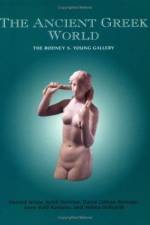
The collections of the Mediterranean Section of the University of Pennsylvania Museum are among the finest in the United States. This book presents an overview of the new permanent exhibition. The objects are discussed in the context of various aspects of Greek life—athletics, banqueting, education, trade, burial, etc. The many full-color photographs capture the vividness of Greek pottery and the subtle finish of the marble statuary.
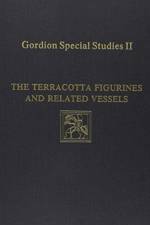
This book contains a detailed analytical catalogue of 171 terracotta figurines and figural vessels. These are represented in every period at Gordion from the Early Bronze Age. The majority dates from the Late Phrygian/Hellenistic period when there was a proliferation of imports from Greece. Gordion's long and rich history, from a Bronze Age center to a Phrygian capital to a market town and Graeco-Celtic center, makes it unique in the archaeological and historical record of central Turkey.University Museum Monograph, 86
Photographs, with extensive commentary, of 105 seals and seal impressions from Tepe Hasanlu in southwestern Azerbaijan, Iran, dating to about 800 B.C.
Kenneth L. Shropshire, Timothy Davis, and N. Jeremi Duru, experts in the fields of sports business and law, examine the history of the sports agent business and the rules and laws developed to regulate the profession, and consider recommendations for reform.
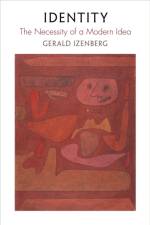
Identity: The Necessity of a Modern Idea is the first comprehensive history of the concept that answers the question, "who, or what, am I?" Gerald Izenberg contends that our most important identities, while historically conditioned, are rooted in permanent categories of human existence, such as sexuality, sociality, and labor.
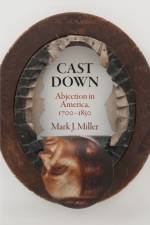
In Cast Down: Abjection in America, 1700-1850, Mark J. Miller argues that transatlantic Protestant discourses of abjection engaged with, and furthered the development of, concepts of race and sexuality in the creation of public subjects and public spheres.
Dick Allen is considered by some to be the best baseball player not in the Hall of Fame and by others to be the game's most destructive and divisive force-ever. God Almighty Hisself: The Life and Legacy of Dick Allen unveils the strange and maddening career of a man who fulfilled and frustrated expectations all at once.
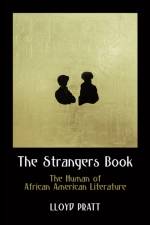
The Strangers Book explores how a constellation of nineteenth-century African American writers radically reframed the terms of humanism by redefining what it meant to be a stranger.
Liberty's Prisoners chronicles how the penitentiary, though initially designed as an alternative to corporal punishment for the most egregious of offenders, quickly became a holding tank for those who attempted to lay claim to the new nation's promise of liberty.
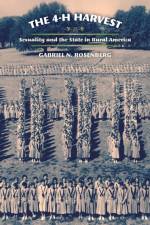
Gabriel N. Rosenberg argues that public acceptance of the political economy of agribusiness hinged on federal efforts to normalize rural heterosexuality.
Slavery and the Democratic Conscience explains how democratic subjects confronted and came to terms with slaveholder power in the early American Republic. Slavery was not an exception to the rise of American democracy, Padraig Riley argues, but was instead central to the formation of democratic institutions and ideals.
Designed for educational use in international relations, law, political science, economics, and philosophy classes, Human Rights in the World Community treats the full range of human rights issues, including implementation problems and processes involving international, national, and nongovernmental action. Now with online appendices.
Examining the production of books and the circulation of material texts between London and the provincial centers of Dublin, Edinburgh, and Philadelphia, Joseph Rezek claims that the publishing vortex of London inspired a dynamic array of economic and aesthetic practices that shaped an era in literary history.
A chronological collection of essays, America at the Ballot Box uses the history of presidential elections to illuminate both the fundamental character of American political democracy, and its evolution from the early Republic to the late twentieth century.
The Associational State argues that the relationship between state and civil society is fluid, and that the trajectory of American politics is not driven by ideological difference but by the ability to achieve public ends through partnerships forged between the state and voluntary organizations.
Anglicizing America revisits the theory of Anglicization and reconsiders its application to the lives and histories of the Atlantic world, from Britain to the Caribbean to the western wildernesses, at key moments before, during, and after the American Revolution.
Abonner på vårt nyhetsbrev og få rabatter og inspirasjon til din neste leseopplevelse.
Ved å abonnere godtar du vår personvernerklæring.