











Gjør som tusenvis av andre bokelskere
Abonner på vårt nyhetsbrev og få rabatter og inspirasjon til din neste leseopplevelse.
Ved å abonnere godtar du vår personvernerklæring.Du kan når som helst melde deg av våre nyhetsbrev.

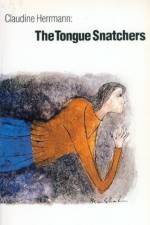
Examines the lives and selected writings of five major contemporary French women writers: Simone de Beauvoir, Nathalie Sarraute, Marguerite Duras, Monique Wittig, and Maryse Conde. Part literary criticism and part biography, this book seeks mainly to shed light on how these writers' works illustrate the fine line that separates fact from fiction.
Illuminates how men and women differ in their experiences of words, work, space, time, love, and sexuality.
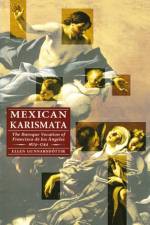
Chronicles the life of Francisca de los Angeles (1674-1744), the daughter of a poor Creole mother and mestizo father who became a renowned holy woman in her native city of Queretaro, Mexico.
A depiction of contemporary life in Native America. This book presents an Indian worldview in its holistic complexity and integrity, and is an addition to the literature of white-Indian cultural interrelationships. It presents an account of the author's life on the road, driving throughout Oklahoma and Arkansas teaching poetry in the schools.
A work about the voices, clashes, and traffic of Sao Paulo, a city in the middle of rapid change. It includes public documents as well as dialogue and narration, giving a panorama of the city in a sequence of colorful slices. It dramatizes the problems of exploitation, poverty, racial prejudice, prostitution, state repression, and neocolonialism.
Ever since American soldiers returned home after World War II with a passion for pate and escargots instead of pork and beans, our preferences have moved from cooked to raw, from canned to fresh, from bland to savory, from water to wine. This title includes more than two hundred recipes with chapters on appetizers, soups, salads, sauces, and more.
Explains theories and methods, starting with the basics of breaking - lunging, work in hand, and first mounting - and progressing to advanced work, including canter pirouette, tempi changes, piaffe, and passage. This title explains in detail the ways in which the author believed Baucher was mistaken in some of his methods.
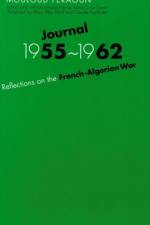
Gives an account of everyday life in Algeria during decolonization. This journal captures the heartbreak of a writer profoundly aware of the social and political turmoil of the time. It is suitable for those interested in the history of European colonialism and the tragedies of contemporary Algeria.
The Holocaust changed what it means to be a Jew, for Jew and non-Jew alike. This title decodes the shifts in anti-Semitism at the end of the Cold War, chronicles the impact of Israel's policies on European Jews, opposes arguments both for and against cultural assimilation, and reopens questions about Marx and Judaism.
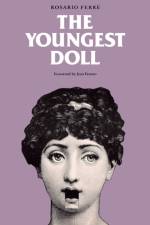
A gentle maiden aunt who has been victimized for years unexpectedly retaliates through her talent for making life-sized dolls filled with honey. The Youngest Doll, based on a family anecdote, is a stunning literary expression of Rosario Ferrs feminist and social concerns. It is the premier story in a collection that was originally published in Spanish in 1976.
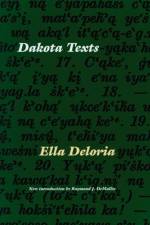
Offering a study of the Sioux tribes, this title contains 64 tales that present an array of Sioux folklore and history in its original language, along with a literal translation.
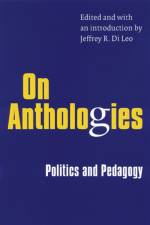
Over the years, anthologies have shifted from playing a relatively minor role in academic culture to a position of dominance. This title features essays that explore the significant intellectual, economic, political, pedagogical, and creative resonance of anthologies through many levels of academic life.
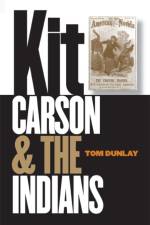
Often portrayed by past historians as an Indian fighter in the West, Kit Carson (1809-68) has become a historical pariah - a brutal murderer who betrayed the Navajos, an unwitting dupe of American expansion, and a racist. He was simply a man of the 19th century whose racial views and actions were like those of his contemporaries.
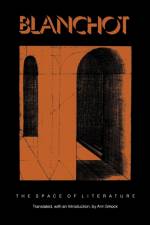
Explores the process of reading as well as the nature of artistic creativity, all the while considering the relation of the literary work to time, to history, and to death. This work reflects on literature and the unique demand it makes upon our attention.
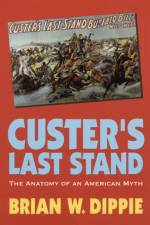
Defeat and death at the Little Bighorn gave General George Custer and his Seventh Cavalry a kind of immortality. This title investigates the body of legend surrounding that battle on a bloody Sunday in 1876.
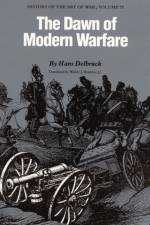
Considers developments including the use of gunpowder, the invention of firearms and iron balls. After reviewing the establishment of a European infantry, this work discusses the transformation of loose confederations of knights into cavalry, the organization of fighting mercenaries, and the changing of mercenary bands into standing armies.
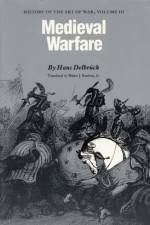
From the eighth century through the Middle Ages feudalism determined the nature of European warfare. Medieval Warfare is full of recreations of famous events such as the Battle of Hastings and movements like the Crusades; with the brightest flowers of knighthood, and with the mercenary grandeur of Byzantium.
Presenting an interpretation of the famous appendix to Husserl's "The Crisis of European Sciences and Transcendental Phenomenology", this title relates writing to such key concepts as differing, consciousness, presence, and historicity.
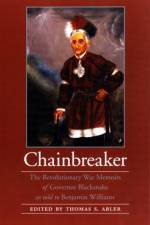
A memoir by an American Indian, this title presents the recollections of a Seneca chief, also known as Governor Blacksnake. A fighter in the American Revolution, Chainbreaker told his story as an old man in the 1840s to a fellow Seneca, Benjamin Williams, who translated it and committed it to paper. His account is available in this edition.
Early Christianity faced the problem of the human word versus Christ the Word. Could language accurately describe spiritual reality? The Mirror of Language brilliantly traces the development of one prominent theory of signs from Augustine through Anselm of Canterbury, Thomas Aquinas, and Dante. Their shared epistemology validated human language as an authentic but limited index of preexistent reality, both material and spiritual. This sign theory could thereby account for the ways men receive, know, and transmit religious knowledge, always mediated through faith.Marcia L. Colish demonstrates how the three theologians used different branches of the medieval trivium to express a common sign theory: Augustine stressed rhetoric, Anselm shifted to grammar (including grammatical proofs of God's existence), and Thomas Aquinas stressed dialectic. Dante, the one poet included in this study, used the Augustinian sign theory to develop a Christian poetics that culminates in the Divine Comedy. The author points out not only the commonality but also the sharp contrasts between these writers and shows the relation between their sign theories and the intellectual ferment of the times.When first published in 1968, The Mirror of Language was recognized as a pathfinding study. This completely revised edition incorporates the scholarship of the intervening years and reflects the refinements of the author's thought. Greater prominence is given to the role of Stoicism, and sharper attention is paid to some of the thinkers and movements surrounding the major thinkers treated. Concerns of semiotics, philosophy, and literary criticism are elucidated further. The original thesis, still controversial, is now even wider ranging and more salient to current intellectual debate.
After answering a classified ad placed by an import-export company looking for energetic young men willing to take on responsibilities for its African branches - no diploma required - Victor finds himself on The Will of God, a dilapidated boat heading into the heart of darkness as even Conrad couldn't have imagined.
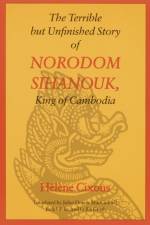
Vain when a prince, as king Sihanouk discovered his responsibility to his country and came to embody Cambodia. He used every means to keep his country growing, healthy, and out of the wars of Southeast Asia. This play begins with Sihanouk's abdication in 1955 and ends with his arrest by the Khmer Rouge two decades later.
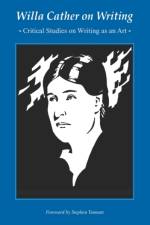
Presents a collection of essays and letters first published in 1949. This work concludes, "Art is a concrete and personal and rather childish thing after all - no matter what people do to graft it into science and make it sociological and psychological".
In this semiautobiographical novel, the young French Algerian author Nina Bouraoui introduces us to a girl who feels that Algeria is the country of men. Her childhood years spent in Algeria lead her to explore the borderland between genders as she tries to find her balance between nations, races, and identities.
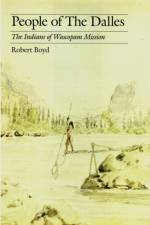
Tells the story of the Chinookan (Wasco-Wishram) and Sahaptin peoples of The Dalles area of the Columbia River, who encountered the Lewis & Clark expedition in 1805-6. This work reconstructs the early history and culture of these communities from the accounts of explorers, travelers, and the writings of the Methodist missionaries at Wascopam.
In "Without Proof or Evidence" O. K. Bouwsma weaves through the central topics of Western religion: the rationality of religious belief, the nature of Christianity, the promise of eternal life, the definition of faith, and proofs of the existence of God. When he works with the problems of Descartes or Moore or Wittgenstein, surveying the marketplace of language in which we all have commerce, he has the familiarity of an experienced trader. But in his work with the problems of Anselm or Nietzsche or Kierkegaard, in which the Scriptures move between background and foreground, there is another dimension, a concern with whether the Scriptures have been properly understood, what such an understanding might be, and how it affects someone who so understands them.
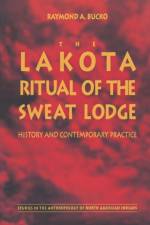
For centuries, a persistent and important component of Lakota religious life has been the Inipi, the ritual of the sweat lodge. The sweat lodge has changed little in appearance since its first recorded description in the late seventeenth century. This title looks at the history and significance of the Lakota sweat lodge.
A novel that takes place in the new 'free market' era of personal choices and relations: a chaotic, sometimes hopeful, often comic world that has supplanted the old order of political terror and clearly demarcated ideological divides. It draws upon the sentimentality and ephemera of popular culture.
Leading personalities, civilian and military, Mexican and American, are given incisive and fair evaluations. The coming of war is seen as unavoidable, given American expansion and Mexican resistance to loss of territory, compounded by the fact that neither side understood the other. This book deals with this topic.
Seeks the recovery of women's traditions in the analysis of Native American history, society and culture.
Abonner på vårt nyhetsbrev og få rabatter og inspirasjon til din neste leseopplevelse.
Ved å abonnere godtar du vår personvernerklæring.