



Gjør som tusenvis av andre bokelskere
Abonner på vårt nyhetsbrev og få rabatter og inspirasjon til din neste leseopplevelse.
Ved å abonnere godtar du vår personvernerklæring.Du kan når som helst melde deg av våre nyhetsbrev.

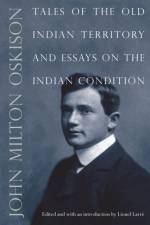
John Milton Oskison, born in the Indian Territory to a Cherokee mother and an immigrant English father, and was brought up engaging in his Cherokee heritage. Oskison left Indian Territory to attend college and went on to have a long career in New York City journalism. This is the first comprehensive collection of Oskison's writings.
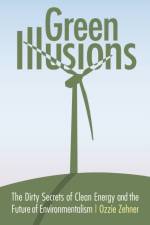
We don't have an energy crisis. We have a consumption crisis.
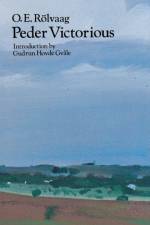
A sequel to "Giants in the Earth", this work tells the tale of Norwegian settlers in the Dakotas. Beret and their children, Syvert Tonseten and Kjersti, and Sorine struggle to adapt, and to become Americans. This is a novel of youth and youth's self-discovery. It is a story of Beret's pain and dismay at the Americanization of her children.
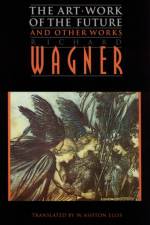
Includes works such as "The Art-Work of the Future", "Autobiographical Sketch," "Art and Climate"; "Wieland the Smith"; "Art and Revolution", and "A Communication to My Friends".
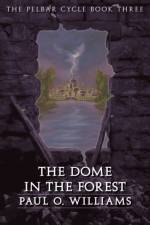
Several years in the future, the conservative borders of Pelbar society continue to crumble as the people conduct trade, form friendships, and intermarry with members of the tribes that have settled around the citadel of Northwall. This book is the third volume in the "Pelbar Cycle", a series of 7 postapocalyptic novels about the people of Pelbar.
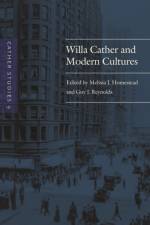
Divided into two sections, the essays in Cather Studies, Volume 9 examine Willa Cather as an author with an innovative receptivity to modern cultures and a powerful affinity with the visual and musical arts. The essays are unified by an understanding of Cather as a writer of transition whose fiction meditates on the cultural movement from Victorianism into the twentieth century.
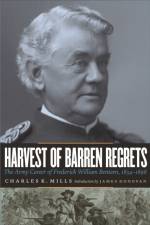
Frederick William Benteen (1834-98) was a military officer during the Civil War and the Black Hills War against the Lakotas and the Northern Cheyennes. In Harvest of Barren Regrets, Charles K. Mills explores Benteen's complex personality and life as a career army man during one of the most violent and compelling periods in US military history.
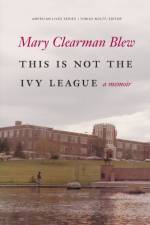
Mary Clearman Blew's education began at home, on a remote cattle ranch in Montana. She graduated to a one-room rural school, then escaped, via scholarship, to the University of Montana, where, still in her teens, she met and married her first husband. This Is Not the Ivy League is her account of what it was to be that girl, and then that woman.
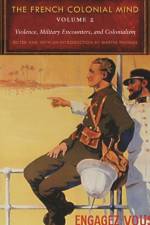
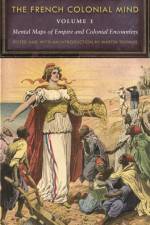
Violence was prominent in France's conquest of a colonial empire, and the use of force was integral to its control and regulation of colonial territories. What, if anything, made such violence distinctly colonial? And how did its practitioners justify or explain it? These are issues at the heart of The French Colonial Mind.
Considers French colonial experiences in Africa and Southeast Asia and identifies the processes that made Frenchmen and women into ardent imperialists
A surrealistic revisiting of the Cherokee Removal, Riding the Trail of Tears takes us to north Georgia in the near future, into a virtual-reality tourist compound where customers ride the Trail of Tears, and into the world of Tallulah Wilson, a Cherokee woman who works there.
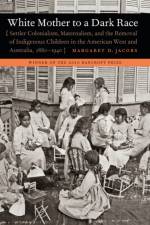
In the late nineteenth and early twentieth centuries, American Indians in the United States and Aboriginal people in Australia suffered a common experience at the hands of state authorities: the removal of their children to institutions in the name of assimilation. White Mother to a Dark Race examines the key roles white women played in these removal policies.
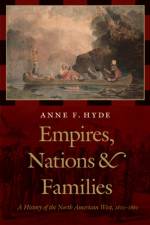
To most people living in the West, the Louisiana Purchase made little difference: the United States was just another imperial overlord to be assessed and manipulated. However, this was not, as Empires, Nations, and Families makes clear, virgin wilderness discovered by virtuous Anglo entrepreneurs. Rather, the United States was a newcomer in a place already complicated by vying empires.
West Greenlandic Eskimo, a part of the Eskimo-Aleut language family spoken all across the Arctic, is primarily found among the Native peoples of central west Greenland. In this highly nuanced study of West Greenlandic, linguist Anna Berge examines how the speaker's role affects syntactic structures within discourse. Also included are transcripts of conversations with fluent Native speakers.
Nearly forty years passed between the Apollo moon landings, the grandest accomplishment of a government-run space programme, and the Ansari X PRIZE-winning flights of SpaceShipOne, the greatest achievement of a private space programme. As we hover on the threshold of commercial spaceflight, authors Chris Dubbs and Emeline Paat-Dahlstrom look back at how we got to this point.
In this interdisciplinary and groundbreaking collection of essays, distinguished scholars examine trends in the representation of consciousness in English-language narrative discourse from 700 to the present. Tracing commonalities and differences in the portrayal of fictional minds, The Emergence of Mind will have a lasting impact on literary studies, narratology, and other fields.
Presents 213 documents on the theory, planning, and execution of, and reaction and resistance to, the Nazi plan to exterminate European Jews, from the 1920s through the closing days of World War II, and focuses on the experience of eastern Europe.
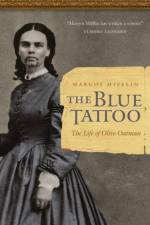
In 1851 Olive Oatman was a thirteen-year old pioneer traveling west toward Zion, with her Mormon family. Within a decade, she was a white Indian with a chin tattoo, caught between cultures. The Blue Tattoo tells the harrowing story of this forgotten heroine of frontier America.
We were wealthy from the water"", Mitch Smallsalmon says, and like all the tribal elders, he speaks to our understanding of the natural world and the consequences of change. In this book the wisdom of the elders is passed on to the young as the story of the Jocko River, the home of the bull trout, unfolds for a group of schoolchildren on a field trip.
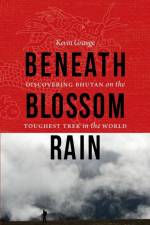
In a remote kingdom hidden in the Himalayas, there is a trail said to be the toughest trek in the world - twenty-four days, 216 miles, eleven mountain passes, and enough ghost stories to scare an exorcist. In 2007 Kevin Grange decided to acquaint himself with the country of Bhutan by taking on this infamous trail. Beneath Blossom Rain is Grange's account of his journey.
Creek (or Muskogee) is a Muskogean language spoken by several thousand members of the Muscogee (Creek) and Seminole nations of Oklahoma and by several hundred members of the Seminole Tribe of Florida. This volume is the first modern grammar of Creek, compiled by a leading authority on the languages of the southern United States.
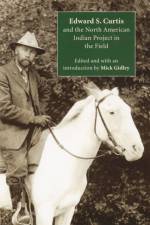
Provides an intimate and informative glimpse of photographer Edward S. Curtis (1868-1952) and his associates as they embarked on their epic quest to document through word and picture the traditional cultures of Native Americans in the western United States - cultures that Curtis believed were inevitably doomed.
Ana Maria Shua's brilliantly dark satire transports readers to a dystopic future Argentina where gangs of ad hoc marauders and professional thieves roam the streets while the wealthy purchase security behind fortified concrete walls and the elderly cower in their apartments in fear of being whisked off to state-mandated ""convalescent"" homes, never to return.
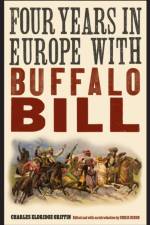
A memoir written by a performer and manager of Buffalo Bill Cody's Wild West tour in Europe
Tells the story of a shy black child from a poor family in a segregated city; of the superstar who, at the height of his career, became the president of the National Basketball Players Association to try to improve conditions for all players. It is the story of the man forced from the game at thirty-four and blacklisted from coaching and broadcasting.
The essays in Cather Studies, Volume 8 explore the many locales and cultures informing Willa Cather's fiction. This new volume pairs Cather innovatively with additional influences - theological, aesthetic, even gastronomical - and examines her as tourist and traveller cautiously yet assiduously exploring a diverse range of places, ethnicities, and professions.
In the latter half of the twentieth century, tens of thousands of Native American families moved to cities across the US, some via the government relocation program and some on their own. In this study, Stephen Kent Amerman focuses on the educational experiences of Native students in urban schools in Phoenix, Arizona, a city with one of the largest urban Indian communities in America.
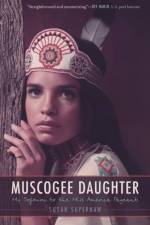
The life of a young Native American woman who overcame a childhood of poverty, physical disability, and abuse to become Miss Oklahoma and eventually earn her Native American name.
Calls on scientists and engineers to polish their writing and speaking skills in order to communicate more clearly about their work to the public, policy makers, and reporters who cover science. In this long-overdue volume, scientists, engineers, and journalists will find both a convincing rationale for communicating well about science and many practical methods for doing so.
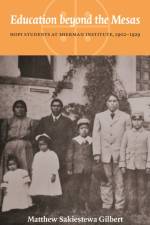
Tells the fascinating story of how generations of Hopi schoolchildren from northeastern Arizona "turned the power" by using compulsory federal education to affirm their way of life and better their community. Matthew Sakiestewa Gilbert draws on interviews, archival records, and his own experiences growing up in the Hopi community to offer a powerful account of a quiet, enduring triumph.
Abonner på vårt nyhetsbrev og få rabatter og inspirasjon til din neste leseopplevelse.
Ved å abonnere godtar du vår personvernerklæring.