






Gjør som tusenvis av andre bokelskere
Abonner på vårt nyhetsbrev og få rabatter og inspirasjon til din neste leseopplevelse.
Ved å abonnere godtar du vår personvernerklæring.Du kan når som helst melde deg av våre nyhetsbrev.

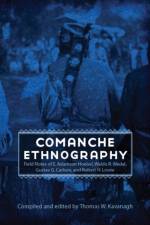
Offers traditional cultural information on Comanches. This work presents the Comanches' earlier world - religious stories, historical accounts, autobiographical remembrances, cosmology, the practice of war, everyday games, birth rituals, funerals, kinship relations, the organization of camps, material culture, and relations with other tribes.
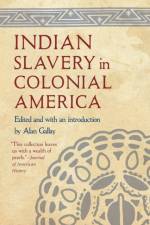
European enslavement of American Indians began with Christopher Columbus's arrival in the New World. Although central to the process of colony building in what became the United States, this phenomena has received scant attention from historians. Indian Slavery in Colonial America examines how and why Indians became both slaves of the Europeans and suppliers of slavery's victims.
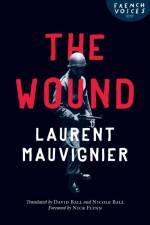
"Where is your wound?" asks Jean Genet in the lines Laurent Mauvignier uses as an epigraph to The Wound. By the time we have finished this four-part novel, we realise that for many the wound lies four decades back in "the Events" that people have tried not to talk about ever since: the Algerian War.
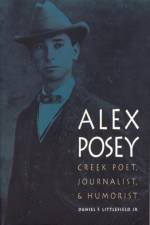
Most of Alexander Posey's short and remarkable life was devoted to literary pursuits. Through a widely circulated satirical column published under the pseudonym Fus Fixico, he did much to document and draw attention to conditions in Indian Territory. This book tells his story.
An anthology of eighteenth- and early-nineteenth-century German women's writing in English translation. It goes far toward filling a major gap in literary history by recovering for a wide audience the works of women who were as famous during their lifetime as Wieland, Schiller, and Goethe.
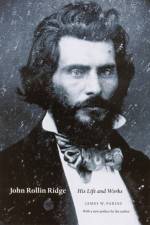
John Rollin Ridge was a controversial, celebrated, and self-cast exile. He was born to a prominent Cherokee Indian family in 1827. This biography places Ridge in the circle of his family and recreates the circumstances surrounding the assassination of his father and his grandfather and uncle by rival Cherokees, led by John Ross.
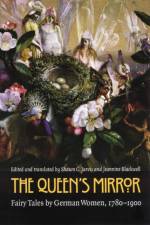
An anthology of German women's fairy tales in English. It presents a variety of published and archival fairy tales from 1780 to 1900. It includes fairy tales to explain the authors' own lives, to teach children, to examine history, and to critique society and the status quo.
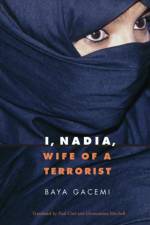
The Algerian journalist Baya Gacemi takes a dangerous political step in writing the ""autobiography"" of a young Algerian woman whom she met through a program for female victims of Islamist violence in Algiers. Gacemi provides a human face to the cultural wars that have torn Algeria and the Middle East apart, revealing the roots of terrorism.
A novelistic memoir that explores the psychological and physical effects of the narrator's transition into a life in exile: the splintering of her identity, the difficulties of incorporating herself into a host culture, her physical illness, and the haunting memories of her past and the loved ones she left behind.
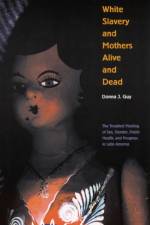
Brings together a diverse set of essays exploring topics ranging from public health and child welfare to criminality and industrialisation. What these essays have in common is their gendered connection to work, family, and the rise of increasingly interventionist nation-states in Latin America, and particularly in Argentina.
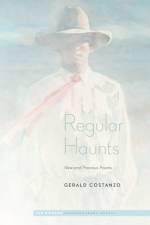
Gerald Costanzo, long known as one of the best contemporary poets of satire, focuses specifically on American themes that, though presented as parables, fables, jokes, and put-ons, remain darkly serious in tone. His subject is the mythic landscape of America itself: the transitory, popular, consumer culture of late twentieth- and early twenty-first-century life.
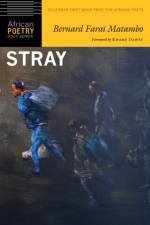
Winner of the Sillerman First Book Prize for African Poets, Zimbabwean writer Bernard Farai Matambo's poems in Stray favour a prose-shaped line as they uncover the contradictory impulses in search of emotional and intellectual truth.
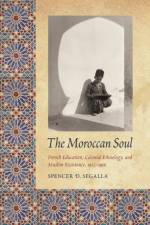
Following the French conquest of Morocco in 1911 the French established a network of colonial schools for Moroccan Muslims designed to further the agendas of the conquerors. This book examines the history of the French educational system in colonial Morocco, the development of French conceptions about the ""Moroccan soul,"" and the effect these ideas had on pedagogy, policy making, and politics.
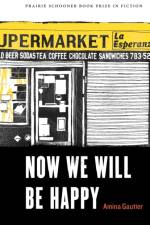
Presents a prize-winning collection of stories about Afro-Puerto Ricans, US-mainland-born Puerto Ricans, and displaced native Puerto Ricans who are living between spaces while attempting to navigate the unique culture that defines Puerto Rican identity. Amina Gautier's characters deal with the difficulties of bicultural identities in a world that wants them to choose only one.
Explores Herta Muller's writings from different literary, cultural, and historical perspectives. Part 1 features Muller's Nobel lecture, five new collage poems, and an interview with Ernest Wichner. Parts 2 and 3 address the political and poetical aspects of Muller's texts. Contributors discuss life under the Romanian Communist dictatorship while also stressing key elements of Muller's poetics.
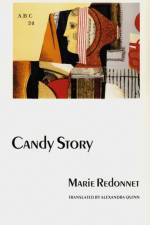
Recounts a turbulent year in the life of Mia, a young woman whose apparent calm is threatened by inner doubts and outer catastrophe. Her modest dreams of happiness are dashed by the deaths of her mother, old friends, and her lover. Assailed by calamity and misfortune, she struggles with writer's block, confounded by the senseless world around her.
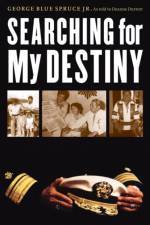
The first American Indian dentist in the United States, George Blue Spruce Jr's life story reaches back to the ancient Pueblo culture cherished by his grandparents and parents and extends to state-of-the-art dentistry and the current needs of the American Indian people.
How can you imagine the worst when you are young and life is sunny? This novel reveals suffering at its most pure and most volatile as the affected people wonder, in the wake of tragedy, whether they should subsist with the living or with the dead.
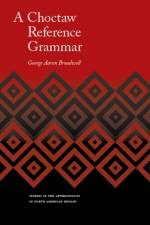
A comprehensive reference grammar of Choctaw, an American Indian language spoken by approximately eleven thousand people located primarily in Mississippi and Oklahoma. It contains the most complete description to date of the morphology of the language as well as a thorough treatment of phrase structure, word order, case marking, and complementation.
In August of 1838 the United States Exploring Expedition set sail from Norfolk Navy Yard with six ships and more than seven hundred crewmen, including technicians and scientists. This title argues that the nineteenth-century explorers shared the attributes that characterize the discipline of anthropology in any age.
Rife with arresting and poignant images, fleeting and daring in presentation, weighty and provocative in their messages, these stories demonstrate the power of one of the most compelling writers in Native North America today.
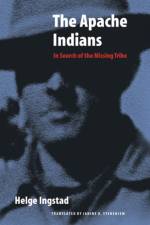
Tells the story of the Norwegian explorer Helge Ingstad's sojourn among the Apaches near the White Mountain Reservation in Arizona and his epic journey to locate the "lost" group of their brethren in the Sierra Madres in the 1930s
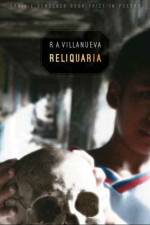
In this prize-winning poetry collection, R. A. Villanueva embraces liminal, in-between spaces in considering an ever-evolving Filipino American identity. Languages and cultures collide; mythologies and faiths echo and resound. Part haunting, part prayer, part prophecy, these poems resonate with the voices of the dead and those who remember them.
While plot is among the integral aspects of storytelling, it is perhaps the least studied aspect of narrative. Using plot theory to chart the development of narrative fiction from the Renaissance to the present, this title demonstrates how the novel has evolved over time and how writers have developed increasingly complex narrative strategies.
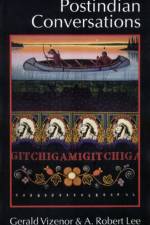
A collection of interviews with Gerald Vizenor, one of the most powerful and provocative voices in the Native world today. These conversations with the novelist and cultural critic reveal much about the man, his literary creations, and his critical perspectives on important issues affecting Native peoples in the late twentieth century.
A memoir that guides us through the New York of the 1960s. Caught between his uncle Fred, a man-about-town, and his aunt Linda, a secretary at Paramount Pictures, 16-year-old John Skoyles finds himself exploring everything from the bars and swank apartments of Manhattan's Upper East Side to the flophouses and haunts of Forty-second Street.
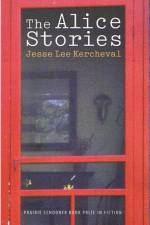
Wisconsin is not where Alice, a girl raised in Florida, meant to end up. But when she falls in love with Anders Dahl, the son of Norwegian farmers born for generations in the same stone farmhouse, she realizes that to love Anders is to settle into a life in Wisconsin in the small house they buy before their daughter, Maude, is born.
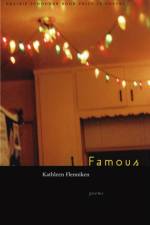
"A little voice sings/from the back of the auditorium/of my throat. Aren't all of us/waiting to be discovered?" Here, the poet's answer is sometimes grave, sometimes comic, but tuned to the incidental music of daily life.
Abonner på vårt nyhetsbrev og få rabatter og inspirasjon til din neste leseopplevelse.
Ved å abonnere godtar du vår personvernerklæring.