




















Gjør som tusenvis av andre bokelskere
Abonner på vårt nyhetsbrev og få rabatter og inspirasjon til din neste leseopplevelse.
Ved å abonnere godtar du vår personvernerklæring.Du kan når som helst melde deg av våre nyhetsbrev.

The integration of immigrants into a larger society begins at the local level. "Turkish Berlin "reveals how integration has been experienced by second-generation Turkish immigrant women in two neighborhoods in Berlin, Germany. While the neighborhoods are similar demographically, the lived experience of the residents is surprisingly different
A master class in organic farming, a lesson in entrepreneurship, a love story, and a legal thriller
Because today's DNA testing seems so compelling and powerful, increasing numbers of Native Americans have begun to believe their own metaphors: "in our blood" is giving way to "in our DNA." In Native American DNA, Kim TallBear shows how Native American claims to land, resources, and sovereignty that have taken generations to ratify may be seriously--and permanently--undermined.
"Is there any such thing as political philosophy?" So begins this provocative book by one of the foremost figures in Continental thought. Here, Jacques Ranci re brings a new and highly useful set of terms to the vexed debate about political effectiveness and "the end of politics." What precisely is at stake in the relationship between "philosophy" and the adjective "political"? In Disagreement, Ranci re explores the apparent contradiction between these terms and reveals the uneasy meaning of their union in the phrase "political philosophy"--a juncture related to age-old attempts in philosophy to answer Plato''s devaluing of politics as a "democratic egalitarian" process. According to Ranci re, the phrase also expresses the paradox of politics itself: the absence of a proper foundation. Politics, he argues, begins when the "demos" (the "excessive" or unrepresented part of society) seeks to disrupt the order of domination and distribution of goods "naturalized" by police and legal institutions. In addition, the notion of "equality" operates as a game of contestation that constantly substitutes litigation for political action and community. This game, Ranci re maintains, operates by a primary logic of "misunderstanding." In turn, political philosophy has always tried to substitute the "politics of truth" for the politics of appearances. Disagreement investigates the various transformations of this regime of "truth" and their effects on practical politics. Ranci re then distinguishes what we mean by "democracy" from the practices of a consensual system in order to unravel the ramifications of the fashionable phrase "the end of politics." His conclusions will be of interest to readers concerned with political questions from the broadest to the most specific and local.
Here is a rich compendium of hundreds of legends, stories, beliefs, and magic collected from oral sources in preindustrial Scandinavia. In this rural society, the people lived close to nature and believed themselves an integral part of it. This volume focuses on beliefs that illustrate the central aspects of a traditional worldview, rather than on prose narratives considered for their literary value.
Cinema and photography are both intimately associated with time-cinema with timein passing, the photograph with the lost moment. In Photography, Cinema, Memory, Damian Sutton explores time in both media to present a radical new understanding of the photographic image as always coming into being.
This second volume presents the director's work as a radical collage of images and absences, letters and numbers, citations and sounds that together mark Hitchcock as a knowing figure who was entirely aware of this - and cinema's place at the dawn of a global media culture, as well as the cinema's revolutionary impact on perception and memory.
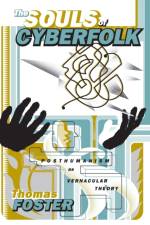
Considers the construction of race, gender, and sexuality in virtual reality.
Time is money, Benjamin Franklin once said, and in a reading of European philosophy, this text shows how true this adage is. A history of philosophy of time, this work attempts to unravel the theoretical frameworks that have given time its shape in Western civilization.
Helen Hoover and her husband, Adrian, were trailblazers in the American back-to-the-land movement. Well ensconced in their professional lives in Chicago, they made the decision to follow their dream of a simple existence, pulling up their stakes and plunging into the wilds of northern Minnesota.A Place in the Woods, first published in 1969, describes how the Hoovers gradually adapted to the rigors of wilderness survival, relating events that occurred prior to those Helen Hoover described in her bestselling The Girl of the Deer. This is a tale of starting out, of the pitfalls of beginning a new life -- one punctuated by near disasters but also by moments of rare beauty.A Place in the Woods is enlivened by warm, humorous anecdotes showing both the struggle and reward involved in joining this small community of rabbits, deer, and distant neighbors. This volume, now available in paperback for the first time, conveys the special joy of each small victory in the wilderness.
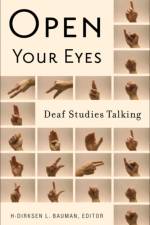
This groundbreaking volume introduces readers to the key concepts and debates in deaf studies, offering perspectives on the relevance and richness of deaf ways of being in the world. In Open Your Eyes, leading and emerging scholars, the majority of whom are deaf, consider physical and cultural boundaries of deaf places and probe the complex intersections of deaf identities with gender, sexuality, disability, family, and race. Together, they explore the role of sensory perception in constructing community, redefine literacy in light of signed languages, and delve into the profound medical, social, and political dimensions of the disability label often assigned to deafness. Moving beyond proving the existence of deaf culture, Open Your Eyes shows how the culture contributes vital insights on issues of identity, language, and power, and, ultimately, challenges our culture’s obsession with normalcy. Contributors: Benjamin Bahan, Gallaudet U; Douglas C. Baynton, U of Iowa; Frank Bechter, U of Chicago; MJ Bienvenu, Gallaudet U; Brenda Jo Brueggemann, Ohio State U; Lennard J. Davis, U of Illinois, Chicago; Lindsay Dunn, Gallaudet U; Lawrence Fleischer, California State U, Northridge; Genie Gertz, California State U, Northridge; Hilde Haualand, FAFO Institute; Robert Hoffmeister, Boston U; Tom Humphries, U of California, San Diego; Arlene Blumenthal Kelly, Gallaudet U; Marlon Kuntze, U of California, Berkeley; Paddy Ladd, U of Bristol; Harlan Lane, Northeastern U; Joseph J. Murray, U of Iowa; Carol Padden, U of California, San Diego. H-Dirksen L. Bauman is professor and director of the graduate program in Deaf Studies at Gallaudet University. He is coeditor of Signing the Body Poetic: Essays in American Sign Language Literature, executive editor of the Deaf Studies Digital Journal, and executive producer and codirector of the documentary film Audism Unveiled.
Abonner på vårt nyhetsbrev og få rabatter og inspirasjon til din neste leseopplevelse.
Ved å abonnere godtar du vår personvernerklæring.