



























Gjør som tusenvis av andre bokelskere
Abonner på vårt nyhetsbrev og få rabatter og inspirasjon til din neste leseopplevelse.
Ved å abonnere godtar du vår personvernerklæring.Du kan når som helst melde deg av våre nyhetsbrev.

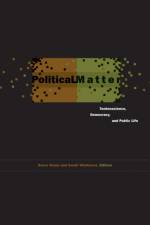
Significantly advancing our notion of what constitutes a network, Philip Armstrong proposes a rethinking of political public space that specifically separates networks from the current popular discussion of globalization and information technology.
\u201cDucks in a stream, the bridge at St. Anthony Falls, streets of cities and towns, a fish in a net, the glittering lakes seen under low skies. The Face of Minnesota is a fresh, simple, unpretentious statement of a place and time by people who know what Minnesota is because they live there.\u201d —Minor White, Aperture, 1958┬á\u201cJohn Szarkowski is the single most important curator that photography has ever had. Looking at his photographs created over the last fifty years makes me want to weep. They are truly American pictures; one feels his desire to show not just what America was but what it still can be.\u201d —Ingrid Sischy, Vanity Fair, 2005┬áOriginally commissioned to commemorate Minnesota\u2019s centennial in 1958 and out of print for nearly forty years, The Face of Minnesota is a lost masterpiece of photography and an eloquent tribute to the people and places of the North Star state. Republished in celebration of the state\u2019s sesquicentennial, this beautifully produced edition includes contemporary essays about John Szarkowski\u2019s impact on American photography and introduces his work to new generations of Minnesotans. ┬áFeaturing more than 175 arresting photographs as well as essays filled with wit and affection, The Face of Minnesota opens with this statement: \u201cThis book is about Minnesota now. But as a mature man carries on his face and in his bearing the history of his past, so does the look of a place today show its past-what it has been and what it has believed in.\u201d Though Minnesota has changed dramatically during the past fifty years, The Face of Minnesota reveals the simple beauty of the imprint of the past and its deep resonance today.┬áJohn Szarkowski (1925–2007) was director of the photography program at the Museum of Modern Art in New York, where he transformed our understanding of the art of photography through influential exhibitions and books, including Looking at Photographs (1973). In 2005 his work was surveyed in a traveling exhibition, accompanied by the book John Szarkowski: Photographs.┬áVerlyn Klinkenborg joined the editorial board of the New York Times in 1997. He is the author of several works, including The Rural Life. ┬áRichard Benson has worked as a photographer and printer since 1966. He teaches at Yale University and is the coauthor, with John Szarkowski, of A Maritime Album: 100 Photographs and Their Stories.
The essays in Small Tech investigate the cultural impact of digital tools and provide fresh perspectives on mobile technologies such as iPods, digital cameras, and PDAs and software functions like cut, copy, and paste and WYSIWYG. Together they advance new thinking about digital environments.
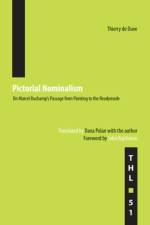
Reveals the invention of the readymade as a critical point in contemporary art. Arguing that the readymade belongs to that moment in the history of painting when both figuration and the practice of painting become "impossible," this book presents a psychoanalytically informed account of the birth of abstraction.
Considers the video game as a distinct cultural form that demands a unique interpretive framework. This book analyzes video games as something to be played rather than as texts to be read, and traces how the "algorithmic culture" created by video games intersects with theories of visuality, realism, allegory, and the avant-garde.
Explores the "avisual" and its effect on the visual world. Dreams, x-rays, atomic radiation, and "invisible men" are phenomena that are visual in nature but unseen. Revealing these hidden interiors of cultural life, this book focuses on historical moments in which the modes of avisuality came into being.
"Don''t start an art collective until you read this book."—Guerrilla Girls "Ever since Web 2.0 with its wikis, blogs and social networks the art of collaboration is back on the agenda. Collectivism after Modernism convincingly proves that art collectives did not stop after the proclaimed death of the historical avant-gardes. Like never before technology reinvents the social and artists claim the steering wheel!"—Geert Lovink, Institute of Network Cultures, Amsterdam "This examination of the succession of post-war avant-gardes and collectives is new, important, and engaged."— Stephen F. Eisenman, author of The Abu Ghraib Effect "Collectivism after Modernism crucially helps us understand what artists and others can do in mushy, stinky times like ours. What can the seemingly powerless do in the face of mighty forces that seem to have their act really together? Here, Stimson and Sholette put forth many good answers."—Yes Men Spanning the globe from Europe, Japan, and the United States to Africa, Cuba, and Mexico, Collectivism after Modernism explores the ways in which collectives function within cultural norms, social conventions, and corporate or state-sanctioned art. Together, these essays demonstrate that collectivism survives as an influential artistic practice despite the art world''s star system of individuality. Collectivism after Modernism provides the historical understanding necessary for thinking through postmodern collective practice, now and into the future. Contributors: Irina Aristarkhova, Jesse Drew, Okwui Enwezor, Rubén Gallo, Chris Gilbert, Brian Holmes, Alan Moore, Jelena Stojanovib́, Reiko Tomii, Rachel Weiss. Blake Stimson is associate professor of art history at the University of California Davis, the author of The Pivot of the World: Photography and Its Nation, and coeditor of Visual Worlds and Conceptual Art: A Critical Anthology.  Gregory Sholette is an artist, writer, and cofounder of collectives Political Art Documentation/Distribution and REPOhistory. He is coeditor of The Interventionists: Users'' Manual for the Creative Disruption of Everyday Life. "To understand the various forms of postwar collectivism as historically determined phenomena and to articulate the possibilities for contemporary collectivist art production is the aim of Collectivism after Modernism. The essays assembled in this anthology argue that to make truly collective art means to reconsider the relation between art and public; examples from the Situationist International and Group Material to Paper Tiger Television and the Congolese collective Le Groupe Amos make the point. To construct an art of shared experience means to go beyond projecting what Blake Stimson and Gregory Sholette call the "imagined community"d: a collective has to be more than an ideal, and more than communal craft; it has to be a truly social enterprise. Not only does it use unconventional forms and media to communicate the issues and experiences usually excluded from artistic representation, but it gives voice to a multiplicity of perspectives. At its best it relies on the participation of the audience to actively contribute to the work, carrying forth the dialogue it inspires."—BOMB
Using Robert Reich's "The Work of Nations" as a springboard, the text argues that globalism coupled with disparities of wealth and power, changes the work of nations and the role of communities. It examines local entrepreneurial policy choices in the context of economic and political restructuring.
The definitive biography of American filmmaker Nicholas Ray
The rediscovery of a major voice in modern gay poetry and twentieth-century letters.
An engaging collection that explores the politics of material objects.
Nick Dyer-Witheford is associate professor and associate dean in the Faculty of Information and Media Studies at the University of Western Ontario. Greig de Peuter is a doctoral candidate in the School of Communication at Simon Fraser University.
Explores the symbiosis of philosophy and literature in understanding negativity.
Abonner på vårt nyhetsbrev og få rabatter og inspirasjon til din neste leseopplevelse.
Ved å abonnere godtar du vår personvernerklæring.