














Gjør som tusenvis av andre bokelskere
Abonner på vårt nyhetsbrev og få rabatter og inspirasjon til din neste leseopplevelse.
Ved å abonnere godtar du vår personvernerklæring.Du kan når som helst melde deg av våre nyhetsbrev.

Jennifer M. Hazen is a political scientist who has worked with International Crisis Group, the United Nations, the Small Arms Survey, and BAE Systems in support of U.S. Africa Command.Dennis Rodgers is professor of urban social and political research in the School of Social and Political Sciences at the University of Glasgow.¿Sudhir Venkatesh is Williams B. Ransford Professor of Sociology at Columbia University and the author of, among several other books, Gang Leader for a Day.
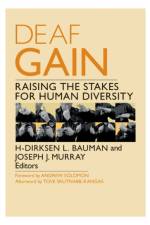
Deaf people are usually regarded by the hearing world as having a lack, as missing a sense. Yet a definition of deaf people based on hearing loss obscures a wealth of ways in which societies have benefited from the significant contributions of deaf people. In this bold intervention into ongoing debates about disability and what it means to be human, experts from a variety of disciplines—neuroscience, linguistics, bioethics, history, cultural studies, education, public policy, art, and architecture—advance the concept of Deaf Gain and challenge assumptions about what is normal.Through their in-depth articulation of Deaf Gain, the editors and authors of this pathbreaking volume approach deafness as a distinct way of being in the world, one which opens up perceptions, perspectives, and insights that are less common to the majority of hearing persons. For example, deaf individuals tend to have unique capabilities in spatial and facial recognition, peripheral processing, and the detection of images. And users of sign language, which neuroscientists have shown to be biologically equivalent to speech, contribute toward a robust range of creative expression and understanding. By framing deafness in terms of its intellectual, creative, and cultural benefits, Deaf Gain recognizes physical and cognitive difference as a vital aspect of human diversity.Contributors: David Armstrong; Benjamin Bahan, Gallaudet U; Hansel Bauman, Gallaudet U; John D. Bonvillian, U of Virginia; Alison Bryan; Teresa Blankmeyer Burke, Gallaudet U; Cindee Calton; Debra Cole; Matthew Dye, U of Illinois at Urbana–Champaign; Steve Emery; Ofelia García, CUNY; Peter C. Hauser, Rochester Institute of Technology; Geo Kartheiser; Caroline Kobek Pezzarossi; Christopher Krentz, U of Virginia; Annelies Kusters; Irene W. Leigh, Gallaudet U; Elizabeth M. Lockwood, U of Arizona; Summer Loeffler; Mara Lúcia Massuti, Instituto Federal de Santa Catarina, Brazil; Donna A. Morere, Gallaudet U; Kati Morton; Ronice Müller de Quadros, U Federal de Santa Catarina, Brazil; Donna Jo Napoli, Swarthmore College; Jennifer Nelson, Gallaudet U; Laura-Ann Petitto, Gallaudet U; Suvi Pylvänen, Kymenlaakso U of Applied Sciences; Antti Raike, Aalto U; Päivi Rainò, U of Applied Sciences Humak; Katherine D. Rogers; Clara Sherley-Appel; Kristin Snoddon, U of Alberta; Karin Strobel, U Federal de Santa Catarina, Brazil; Hilary Sutherland; Rachel Sutton-Spence, U of Bristol, England; James Tabery, U of Utah; Jennifer Grinder Witteborg; Mark Zaurov.
"Originally published as Restlosigkeit. Weltprojekte um 1900. Copyright 2006 Fischer Taschenbuch Verlag in der S. Fisher Verlag HmbH, Frankfurt am Main"--Title page verso.
Carisa R. Showden is associate professor of political science at the University of North Carolina–Greensboro. She is the author of Choices Women Make: Agency in Domestic Violence, Assisted Reproduction, and Sex Work (Minnesota, 2011). Samantha Majic is assistant professor of political science at John Jay College/CUNY. She is the author of Sex Work Politics: From Protest to Service Provision.
According to thirteen-year-old Ben Ward’s father, lumberjacks look forward to two things: mealtime and springtime. In the winter of 1898, Ben leaves school for a job as a cook’s assistant to his father at the Blackwater Logging Camp. As Ben spends long hours peeling potatoes and frying flapjacks, he dreams of working in the woods with the other men, felling trees, driving a team, and skidding timber. While enduring a long, cold winter in a camp filled with outlandish characters, as well as an orphan boy named Nevers, Ben comes to understand himself and his family’s past. Peppered throughout with heart and humor—and including a glossary and afterword with facts about logging—Blackwater Ben paints a vivid picture of the north woods of Minnesota at the end of the nineteenth century.
Off the Network is a fresh and authoritative examination of how the hidden logic of the Internet, social media, and the digital network is changing users' understanding of the world-and why that should worry us. Ulises Ali Mejias suggests how we might begin to rethink the logic of the network and question its ascendancy.
Minneapolis Madams is the surprising and riveting account of the Minneapolis red-light district and the powerful madams who ran it. Penny Petersen brings to life this nearly forgotten chapter of Minneapolis history, tracing the story of how these "houses of ill fame" rose to prominence in the late nineteenth century and were finally shut down in the early twentieth century.
Abonner på vårt nyhetsbrev og få rabatter og inspirasjon til din neste leseopplevelse.
Ved å abonnere godtar du vår personvernerklæring.