



Gjør som tusenvis av andre bokelskere
Abonner på vårt nyhetsbrev og få rabatter og inspirasjon til din neste leseopplevelse.
Ved å abonnere godtar du vår personvernerklæring.Du kan når som helst melde deg av våre nyhetsbrev.

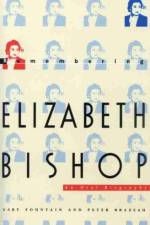
This work interweaves about 120 interviews with relatives, friends, colleagues, and students of Elizabeth Bishop (1911-1979), one of America's finest poets. Among the interviewees are John Ashbery, Robert Fitzgerald, Robert Giroux, Clement Greenberg, Thom Gunn, John Hollander, and Mary McCarthy.
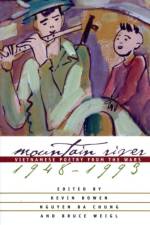
This bilingual collection affirms the importance of poetry in the formation and perpetuation of Vietnamese national identity. The poems testify to the centrality of war in Vietnamese history and experience over the past 50 years, beginning with Ho Chi Minh in the 1940s.
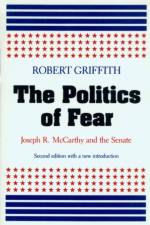
Originally published in 1970 and now a classic in its field, The Politics of Fear traces the rise and fall of one of America's most notorious political demagogues. Robert Griffith concludes that McCarthy's was the product, not the progenitor, of the post-war politics of anticommunism.
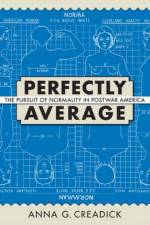
Investigates how and why "normality" reemerged as a potent homogenizing category in postwar America. Working with scientific studies, material culture, literary texts, film, fashion, and the mass media, the author charts the pursuit of the "normal" throug
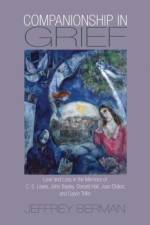
Focuses on what is a life-changing event for many people-the death of a spouse. Using some of the most acclaimed memoirs of the past fifty years (C. S. Lewis, John Bayley, Donald Hall, Joan Didion and Calvin Trillin) Berman explores the nature of spousal bereavement.
Keen observation and vivid imagery mark this collection of poems by a Chickasaw Indian. Linda Hogan's subjects are often drawn from events of everyday life--gathering wood, watching her daughters sleep, witnessing changes in the weather, awaiting nightfall. But beneath the surface of these daily happenings runs a powerful undercurrent, a sureness of life's basic rhythms and a sensitivity to the pressures of survival.
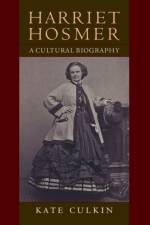
Harriet Hosmer (1830-1908) was celebrated as one of the America's most respected artists, credited with opening the field of sculpture to women. In this biographical study, Culkin explores Hosmer's life and work and places her in the context of a notable group of expatriate writers and artists who gathered in Rome in the mid-nineteenth century.
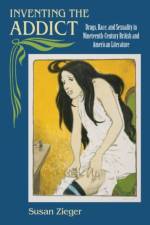
Tells the story of how the addict, a person uniquely torn between disease and desire, emerged from a variety of figures such as drunkards, opium-eating scholars, vicious slave masters, dissipated New Women, and queer doctors. This book traces the evolution of the concept of addiction through a series of recurrent metaphors.
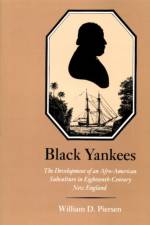
This book examines the development of an Afro-American subculture in eighteenth-century New England. Piersen concerns himself not with the machinery of slave control or the political and social disabilities of bondage, but with the processes of cultural change and creation from the black bondsman's point of view. What was it like to be an African immigrant in colonial New England? What attitudes and assumptions underlay the Afro-American response to Yankee culture? What does the development within the confines of a predominantly white and ethnocentric New England of an Afro-American folk culture in religion, public rituals, folk arts and crafts, social mores, and daily behavior say about the creation of American culture? On the face of it, the master class called the tunes and slaves danced the beat. Blacks who were taken into New England's bondage were clearly engulfed in a pervasive, narrow-minded Euro-American society that had no interest in fostering Afro-American autonomy. The New England experience was often cruel, and the numbers alone suggest it was among the most unequal of black/white cultural contacts in the New World. Nonetheless, despite the strictures of bondage, the black Yankees of eighteenth-century New England created a sustaining folk culture of their own.
Provides an informal social history of immigrant mobility, prostitution, Jewish life in New York, police dishonesty, the ""white slavery"" scare of the early twentieth century, and political corruption. This book brings women's lives and problems to the forefront.
Why don't we read novels as if they were histories and histories as if they were novels? Postmodern theorists have argued that since history is a narrative art, it must be understood as a form of narrative representation analogous to fiction. This work reconsiders the relationship between history and fiction in the context of postmodernism.
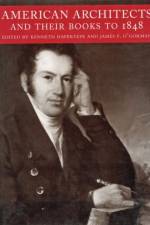
Since the Renaissance, books and drawings have been a primary means of communication among architects and their colleagues and clients. In this volume, 12 historians explore the use of books by architects in America in the late 18th and early 19th centuries.
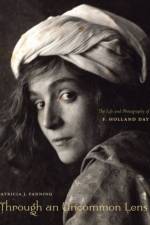
F Holland Day (1864-1933) was a central figure in artistic circles on both sides of the Atlantic. Day was best known for his brilliantly executed, and sometimes controversial photographic images of blacks, children, and allegorical subjects. This biography covers the historical and cultural contexts in which Day lived and worked.
James Jesus Angleton served as the chief of counterintelligence for the Central Intelligence Agency from the early 1950s to the early 1970s. This title employs his biography to detail the history of the CIA from its founding in the late 1940s to the mid-1970s.
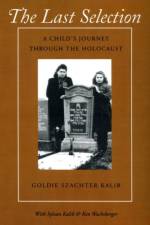
By contrasting her pleasant Polish childhood with the horror of the Holocaust that followed, the author seeks to provide a first-hand view of pre-war Poland and the effect that the Nazi occupation had on the Polish people.
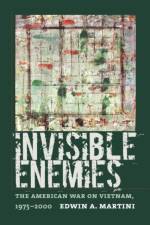
Drawing on a range of sources, from White House documents and congressional hearings to comic books and feature films, this work shows how the United States continued to wage war on Vietnam ""by other means"" for another twenty-five years.
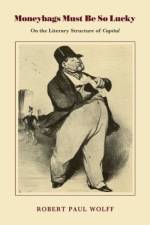
In this book Robert Paul Wolff dispels much of the mystery surrounding Karl Marx's Capital by providing literary-philosophica analysis of the text and of Marx's intentions. The book solves lasting puzzles about "Capital, such as why it lacks proper scientific sobriety and why it speaks on many levels."
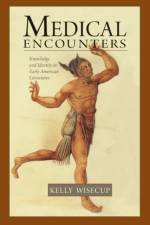
The conquest and colonisation of the Americas resulted in all kinds of exchanges, including the transmission of diseases and the sharing of medicines to treat them. In this book, Kelly Wisecup examines how European settlers, Native Americans, and New World Africans communicated medical knowledge in early America, and how the colonists represented what they learned in their literatures.
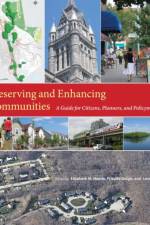
Based on the premise that each community chooses its future every day, through the incremental decisions made by planning and zoning boards and other citizen volunteers. This work shows how residents can be empowered to become involved in local decision-making, building coalitions and expressing their views on a range of issues.
In 1987 Bernard W. Bell published ""The Afro-American Novel and Its Tradition"", a comprehensive interpretive history of more than 150 novels written by African Americans from 1853 to 1983. This is a sequel and companion to the earlier work, expanding the coverage to 2001.
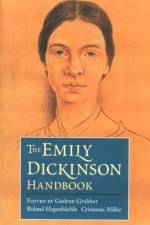
A source of quick reference containing basic and up-to-date information on the poet's life, her art, the manuscripts, and the current state of Dickinson scholarship in general. Unlike encyclopaedic entries, each of the several essays reflects the authors own perspective, presenting a distinct point of view, at times a controversial one.
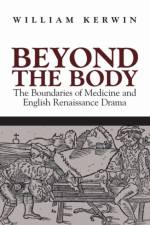
This is a book about two things: medical instability and Renaissance drama. Medical stories are always also social stories, and William Kerwin presents five case studies of how the fragile and dynamic relationship between the medical and the nonmedical played out in Renaissance England. Renaissance drama richly staged that process, presenting medical practitioners in ways that undermined any attempt to imagine them as self-defining. Playwrights consistently unmasked fictions of medical autonomy, emphasizing that a variety of social narratives competed in the shaping of the medical culture. Drawing on research in the social history of medicine as well as a wide-ranging collection of primary narratives of medical encounters, Kerwin pursues the stories of several medical groups. Specifically, he examines women healers in terms of the changing place of women in the public sphere; the connections between drug sellers--apothecaries and alchemists--and an emerging modern economy; the role barbers and surgeons played in early modern concerns for protecting a new sense of privacy and interiority; the ways physicians defined their professional primacy through the language of theaters and actors; and the ways individual patients employed rhetorics of diagnosis as a way of participating in sectarian religious battles. The study moves from the dynamics of medical politics to the work drama does in exposing those dynamics. In addition to offering astute readings of works by Shakespeare and Ben Jonson, the book pays substantial attention to plays by Samuel Daniel, John Fletcher, John Ford, Thomas Heywood, John Lyly, Philip Massinger, and John Webster. Beyond the Body complements the wealth of recentcritical attention given to the body. Kerwin attends to a different sort of material politics; as the book's title suggests, he asks a reader interested in the politics of medicine to look not at the practitioner treating the body but at the social forces influencing the pra
These essays set out to explore the connections between autobiography and postmodernism. They examine the response of various writers to the culturally specific pressures of genre; how these constraints are negotiated; and what self-representation reveals about the politics of identity.
Examines the way we perceive landscape, the effect of gardens and cities of the past on the landscapes of the present, and the way American architecture has broken with tradition. The discussion relates the importance of space to relativism throughout time.
The Silk Road, which linked imperial Rome and distant China, was once the greatest thoroughfare on earth. Along it traveled precious cargoes of silk, gold and ivory, as well as revolutionary new ideas. Its oasis towns blossomed into thriving centers of Buddhist art and learning. In time it began to decline. The traffic slowed, the merchants left and finally its towns vanished beneath the desert sands to be forgotten for a thousand years; however, legends grew up of lost cities filled with treasures and guarded by demons. In the early years of the last century foreign explorers began to investigate these legends, and very soon an international race began for the art treasures of the Silk Road. Huge wall paintings, sculptures and priceless manuscripts were carried away, literally by the ton, and are today scattered through the museums of a dozen countries. Peter Hopkirk tells the story of the intrepid men who, at great personal risk, led these long-range archaeological raids, incurring the undying wrath of the Chinese.
In this work, Barbara Rosen has gathered and edited a collection of documents - pamphlets, reports, trial accounts and other material - that describes the experiences, interpretation and punishment of witchcraft in England in the late 16th and early 17th centuries.
Abonner på vårt nyhetsbrev og få rabatter og inspirasjon til din neste leseopplevelse.
Ved å abonnere godtar du vår personvernerklæring.