












Gjør som tusenvis av andre bokelskere
Abonner på vårt nyhetsbrev og få rabatter og inspirasjon til din neste leseopplevelse.
Ved å abonnere godtar du vår personvernerklæring.Du kan når som helst melde deg av våre nyhetsbrev.

As American troops became bogged down first in Iraq and then Afghanistan, a key component of U.S. strategy was to build up local police and security forces in an attempt to establish law and order. This approach, Jeremy Kuzmarov shows, is consistent with practices honed over more than a century in developing nations within the expanding orbit of the American empire.
Revises notions of what transcendentalism and pantheism mean and how they relate to each other. Hardack's close analysis of pantheism and its influence on major works and lesser known writing of the nineteenth century opens up a new perspective on American culture during this key moment in the country's history.
Over the course of the twentieth century, African Americans in New Orleans helped define the genres of jazz, rhythm and blues, soul, and funk. In recent decades, younger generations of New Orleanians have created a rich and dynamic local rap scene, which has revolved around a dance-oriented style called bounce.
Explores a transformation in the cultural meaning of Stowe's influential book by addressing changes in reading practices and a shift in widely shared cultural assumptions. These changes reshaped interpretive conventions and generated new meanings for Stowe's text in the wake of the Civil War.
Traces the interaction of notions of gender, the practice of religion, and the conduct of warfare in colonial America. It shows how Native and Anglo-American ideas of manhood developed in counterpoint, in the context of Christian evangelization, colonial expansion, and recurrent armed conflict.
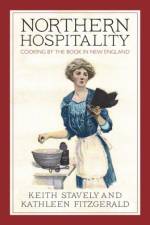
Going beyond reprints of single cookbooks and bland adaptations of historic recipes, this richly contextualized critical anthology puts the New England cooking tradition on display in all its unexpected and delicious complexity. This book will equip readers with all the tools they need for both historical understanding and kitchen adventure.
Brings to life the influenza epidemic of 1918 by tracing its path through the town of Norwood, Massachusetts. This close analysis of one town's struggle illuminates how even well-intentioned elite groups may adopt and implement strategies that can exacerbate rather than relieve a medical crisis.
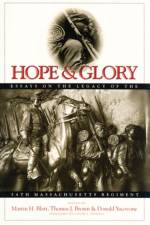
The monument by Augustus Saint-Gaudens to Robert Gould Shaw and the 54th Massachusetts Regiment, located on Boston Common, stands at a symbolic crossroads of American history. This volume looks at the ways Americans have responded to the story of the regiment and the Saint-Gaudens monument. It also examines race and community in the United States.
Sweeping through two centuries of American culture and military history, this work traces the evolution of superweapons from Robert Fulton's eighteenth-century submarine through the strategic bomber, atomic bomb, and ""Star Wars"" to a twenty-first century dominated by ""weapons of mass destruction,"" real and imagined.
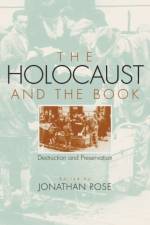
Between 1933 and 1945, Nazi Germany systematically destroyed an estimated 100 million books throughout occupied Europe, an act that was inextricably bound up with the murder of 6 million Jews. This book examines this bleak chapter in the history of printing, reading, censorship, and libraries. It also includes an annotated bibliography.
Recounts the history of Henry Ford's efforts to shift the production of Ford cars and trucks from the large-scale factories he had pioneered in the Detroit area to nineteen decentralized, small-scale plants within sixty miles of Ford headquarters in Dearborn. This title presents the development of the plants, their fate after Ford's death.
One of the film critics, a speechwriter on his own and for President Franklin D Roosevelt, a propagandist during World War II, and a producer on Broadway, Robert E Sherwood scripted some of the popular plays and films of his day. This biography traces his obsession with the world of politics and its effects on his life and art.
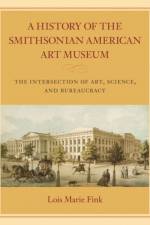
Dedicated to the art of the United States, the Smithsonian American Art Museum contains works by more than 7,000 artists. This work recounts its history from 1846 to 1980. It also unravels the various levels of institutional authority, power, governance, and bureaucracy and shows how people at each level influenced the fortunes of the collection.
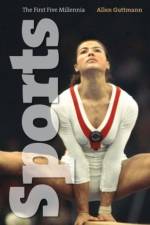
From ancient Egyptian archery and medieval Japanese football to contemporary American baseball, sports have been shaped by - and in turn have helped shape - the culture of which it is part. This work traces this evolution across continents, cultures, and historical epochs to construct a single comprehensive narrative of the world's sports.
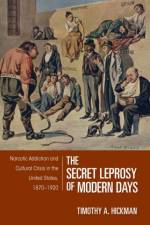
Resituates the idea of addiction within its original late nineteenth- and early twentieth-century context. Through readings of a range of literary, medical, and legal texts, the author shows how Americans of that era conceptualized the dangers of drug addiction in terms of other preoccupations and fears.
In the post - September 11 world, therapeutic writing has become a topic of interest in academic circles and the press. This work investigates the relationship between writing and trauma, examines how we process difficult experiences and how writing can help us to integrate them, and provides a pedagogy to deal with the difficult life stories.
Much of Boston's heritage of Victorian buildings dates from the mid-nineteenth century when Gridley James Fox Bryant (1816-1899) dominated the profession of architecture in the city. This work focuses on representative projects by Bryant, that illuminate the trajectory of his career and creates a portrait of the profession of architecture.
Abonner på vårt nyhetsbrev og få rabatter og inspirasjon til din neste leseopplevelse.
Ved å abonnere godtar du vår personvernerklæring.