
Gjør som tusenvis av andre bokelskere
Abonner på vårt nyhetsbrev og få rabatter og inspirasjon til din neste leseopplevelse.
Ved å abonnere godtar du vår personvernerklæring.Du kan når som helst melde deg av våre nyhetsbrev.

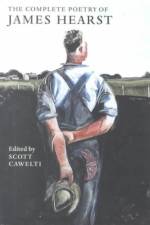
James Hearst helped to create what an Iowa novelist called ""a poetry of place"". A lifelong Iowa farmer, Hearst began to write poetry at 19 and eventually wrote 13 books of poems, a novel, short stories, cantatas and essays. Here is the distinct voice of rural life, with all its joys and conflicts.
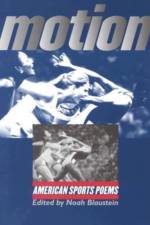
Forged from the basic elements of sport - energy, movement and rhythm - the poems in this anthology reflect something universal; sport as metaphor, sport as a struggle, and sport as the battleground for mythic figures and local heroes.
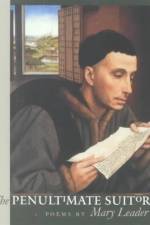
These poems rush the reader into the urgency of feelings - lovelorn, bawdy, grieving, pleading - but, never self-pitying. Each poem turns upon and returns to the infuriating and glorious correlations between love and art (learning to love, trying to make beauty or art, trying to be a beauty).
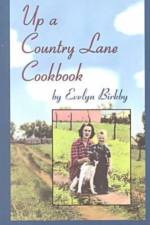
For over 50 years Birkby has written a weekly column for her hometown paper containing recipes, stories of friends and family, and her personal philosophy of life. This volume contains the best of these recipes and stories from the 1940s and 1950s.
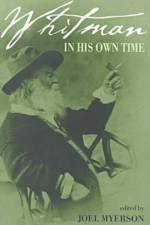
This volume contains interviews with and recollections of Walt Whitman from his early days as a school teacher to the moment of his death. The selections demonstrate a wide range of attitudes towards the poet. Myerson's introduction places these accounts within the context of the time.
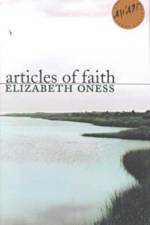
This is a collection of short stories about silence and the complications thar arise when a silence is kept too long or suddenly broken. Subjects addressed include the loss of innocence, sexual betrayal, and the helplessness of parents before their children.
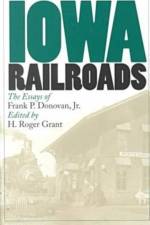
Frank P. Donovan was one of the first writers to provide a complete exploration of the major steam railways that served Iowa. This collection of Donovan's essays describes the history of the state railroad systems and the companies who ran them.
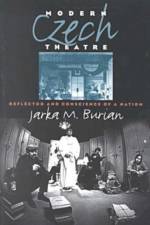
Following a brief historical background, this book provides a chronological series of perspectives and observations on the evolving nature of Czech theatre production during the 20th century, in relation to their similarly evolving social and political contexts.
This text contains seven short stories by Carrie Young.
Early in the 20th century, Hohannes Gillhoff created the composite character of Juernjakob Swehn: the archetype of the upright, honest mensch who personified the German immigrant, on his way to a better life through ambition and hard work. This is an English translation of that book.
This text's three sections mingle myth and history with style, grace and humour. The first essays are given over to memories of Paul Engle in his heyday. The second group focuses on the teachers who made the workshop hum on a daily basis, and the third section is devoted to storytelling.
The poems in this book explore the intersection of writing with the visual arts, particularly late medieval and early Reniassance paintings. They also explore writing as a visual vehicle, both as a pattern across a field and as a catalyst for imagery.
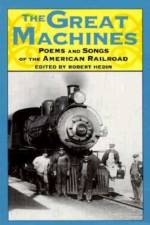
Here, for the first time, is a feast for anyone who has ever been beguiled by the trains that formerly thrummed through the landscapes of our lives. This entertaining and evocative anthology presents the amazing variety of poems and songs written about the American railroad in the last century and a half. Comprised of selections from both oral and written traditions, the volume celebrates the historical and cultural significance of this marvel of engineering skills. Hedin's anthology allows all readers, from the most avid railroad buff to anyone who has fond memories of train travel, to enjoy the romance of trains.
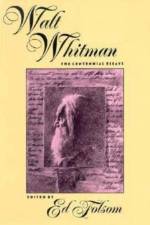
In 1992, the year of the hundredth anniversary of Walt Whitman's death, a major gathering of international scholars took place at the University of Iowa. Over 150 participants heard papers by 20 of the world's most eminent critics of Whitman. Three generations of scholars offered new essays that brilliantly tracked the course of past and present Whitman scholarship. So significant was this historic celebration of the great American poet that the opening session was covered by CBS Sunday Morning, National Public Radio's Morning Edition, the New York Times, and other newspapers across the country. Musical and theatrical performances, art exhibitions, slide shows, readings, songs, and even a recently discovered recording of Whitman's voice were presented during the three days of the conference. But the heart of the conference was this series of original essays by some of the most innovative scholars working in the field of American literature. There has never been a more important collection of Whitman criticism. In these essays, readers will find the most suggestive recent approaches to Whitman alongside the most reliable traditional approaches. Walt Whitman: The Centennial Essays captures Whitman's energy and vitality, which have only increased in the century after his death.
Essays describe life in small towns, farming communities, and suburbs in states from Ohio to North Dakota.
Ten stories tell of an elderly South American woman, a teenage suicide, a divorced couple, and two lovers listening to sounds from a neighbor's apartment.
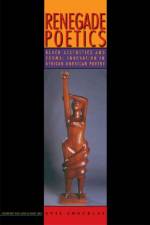
Beginning with a deceptively simple question--What do we mean when we designate behaviors, values, or forms of expression as "black"?--Evie Shockley's Renegade Poetics separates what we think we know about black aesthetics from the more complex and nuanced possibilities the concept has long encompassed. The study reminds us, first, that even among the radicalized young poets and theorists who associated themselves with the Black Arts Movement that began in the mid-1960s, the contours of black aesthetics were deeply contested and, second, that debates about the relationship between aesthetics and politics for African American artists continue into the twenty-first century. Shockley argues that a rigid notion of black aesthetics commonly circulates that is little more than a caricature of the concept. She sees the Black Aesthetic as influencing not only African American poets and their poetic production, but also, through its shaping of criteria and values, the reception of their work. Taking as its starting point the young BAM artists' and activists' insistence upon the interconnectedness of culture and politics, this study delineates how African American poets--in particular, Gwendolyn Brooks, Sonia Sanchez, Harryette Mullen, Anne Spencer, Ed Roberson, and Will Alexander--generate formally innovative responses to their various historical and cultural contexts. Out of her readings, Shockley eloquently builds a case for redefining black aesthetics descriptively, to account for nearly a century of efforts by African American poets and critics to name and tackle issues of racial identity and self-determination. In the process, she resituates innovative poetry that has been dismissed, marginalized, or misread because its experiments were not "recognizably black"--or, in relation to the avant-garde tradition, because they were.
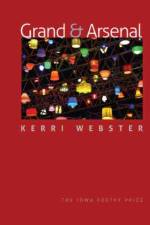
From the intersection of public and private fear, Kerri Webster's award-winning collection speaks of anxiety and awe, vanishings and reappearances. A city both rises and falls; worlds are simultaneously spoken into being and torn down by words.
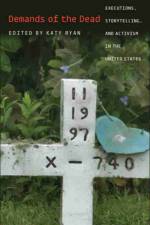
Gathering personal essays, scholarly articles, and creative writings on the death penalty in American culture, this striking collection brings human voices and literary perspectives to a subject that is often overburdened by statistics and angry polemics. Contributors include death-row prisoners, playwrights, poets, activists, and literary scholars.
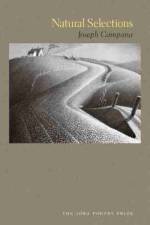
Whether wandering the paths of the imagination, driving through sparsely populated countryside, or listening for the voices of animals, Joseph Campana's poems attend to the ways we are indelibly marked by habitat. Shot full of accidental attachments and reluctant transience, Natural Selections produces from vibrant contradiction potent song.
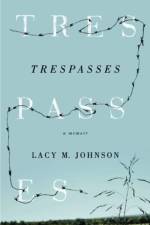
A series of vividly rendered personal narratives, Trespasses: A Memoir recounts the coming of age of three generations in the rural Great Plains. In examining how class, race, and gender play out in the lives of two farm families who simultaneously love and hate the place they can't escape, Lacy Johnson presents rural whiteness as an ethnicity worthy of study.
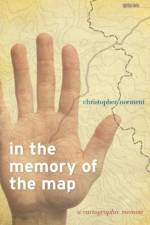
Offers a loving ode to the prairies of the Midwest, to west central Iowa, and to family connections that stretch from the authors's Swedish ancestors to his parents to his wife and children. Throughout he embraces "the opportunity, as always, to settle, to remember, and be ready".
Abonner på vårt nyhetsbrev og få rabatter og inspirasjon til din neste leseopplevelse.
Ved å abonnere godtar du vår personvernerklæring.