
















Gjør som tusenvis av andre bokelskere
Abonner på vårt nyhetsbrev og få rabatter og inspirasjon til din neste leseopplevelse.
Ved å abonnere godtar du vår personvernerklæring.Du kan når som helst melde deg av våre nyhetsbrev.

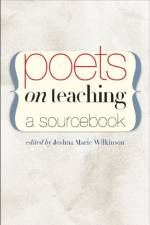
A collection of ninety-nine micro-essays for poets, critics, and scholars who teach and for students who wish to learn about the many ways poets think about how a poem comes alive from within - and beyond - a classroom. The essays in this fresh and innovative volume address both reading and writing and give teachers and students useful tools for the classroom and beyond.
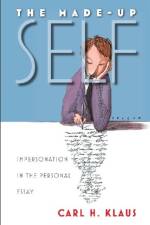
In this first book-length study of the personal essay, Carl Klaus unpacks the writer's made-up self and the manifold ways in which a wide range of essayists and essay have brought it to life. By reconceiving the most fundamental aspect of the personal essay--the I of the essayist--Klaus demonstrates that this seemingly uncontrived form of writing is inherently problematic, not wilfully devious but bordering upon the world of fiction. He develops this key idea by explaining how structure, style, and voice determine the nature of a persona and our perception of it in the works of such essayists as Michel de Montaigne, Charles Lamb, E. B. White, Virginia Woolf, James Baldwin, George Orwell, Joan Didion, Richard Rodriquez, Alice Walker, and Leslie Marmon Silko.
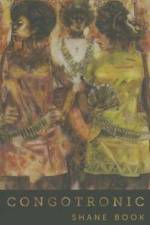
At once original, strange, funny, and unnerving, Shane Book's Congotronic takes the reader into unstable territory, where multiple layers of voice, diction, and music collide. Some of these poems have the sparse directness of a kind of bleak prayer; others mingle the earthbound rhythms of hip-hop with the will-to-transcendence of high Romanticism.
Presents an insightful collection of literary interviews with innovative female poets, with a selection of their poems and prefaced by short introductions. This work provides important cultural and historical contexts that help define notions of innovation and contribute to an understanding of these experimental poems.
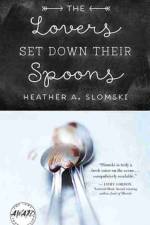
Winner oF The 2014 Iowa short fiction award, Heather A. Slomski's debut story collection The Lovers Set Down Their Spoons brings us a fresh new voice in literary fiction. In prose spare and daring, elegant yet startling, these stories drop their roots in reality, but take intermittent leaps into the surreal.
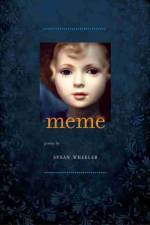
Acclaimed poet Susan Wheeler, whose last individual collection predicted the spiritual losses of the economic collapse, turns her attention to the most intimate of subjects: the absence or loss of love.
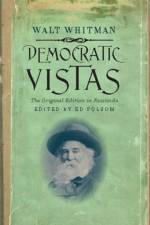
Written in the aftermath of the American Civil War during the ferment of national Reconstruction, this title offers a diagnosis of democracy's failures and lays out its vast possibilities. It also includes an assessment of the ongoing social experiment known as the United States.
The author expands the notion of the young adult novel as a coming-of-age story. She chronicles the dynamics of power and repression revealing that characters in these novels must learn to negotiate the levels of power that exist in the myriad social institution in which adolescents function.
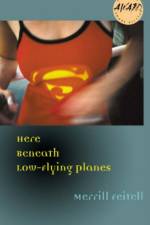
The stories in Merrill Feitell's collection examine the fleeting and unexpected moments of human connection, reminding us of the indelible impact we have on one another no matter how insignificant or anonymous we might feel under our huge, collective sky.
Originally published in the June 11, 1984, New Yorker, this long essay is a sharp-edged inquiry into the generational institutions of US national life. George Trow's story of the Harvard Black Rock Forest is ultimately a symbolic tale that bears upon some of the most significant institutions, professions, and legacies in contemporary American life.
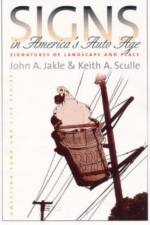
Cultural geographer John Jakle and historian Keith Sculle explore the ways in which we take meaning from outdoor signs and assign meaning to our surroundings. With an emphasis on how to use signs the authors consider the vast array of signs that have evolved since the beginning of the 20th century.
A guide to America's last remaining prairies, the book includes information about size, management, phone numbers and outstanding characteristics for each together with recommended readings, web sites and maps.
In essays with settings that range from the Wind River Mountains of Wyoming, to the mountain town of Leadville, Colorado, Trudy Dittmar weaves personal experience with diverse threads of subject matter to create unexpected connections between human nature and nature at large.
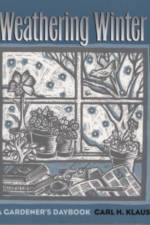
The author reminds readers that the season of brown twigs and icy gales is just as much a part of the year as the time when the tulips open and tomatoes thrive. He keeps track of snow falling, birds flocking, soups simmering, garden catalogues arriving, buds swelling and seed trays coming to life.
The chipped stone projectile points that Native Americans fastened to the ends of their spears, darts and arrow shafts are the most common relics of the 12,000-year occupancy of the Upper Mississippi River Valley. This guide offers a detailed key to identifying the various styles of points.
This poetry is about the people and events that pass through a life, leaving a void; about finding a presence in that absence, and waking up to the realities of the moment. It is concerned with discovery and confrontation, and uncovering and witnessing.
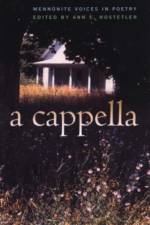
Persecuted by Protestants and Catholics alike throughout history and largely misunderstood by the rest of the world, Mennonites have found it difficult to make their voices heard or respected. In this anthology however, 24 poets challenge our assumptions and confront issues from identity to God.
This anthology of poems, by 50 contemporary American poets, cuts to the heart of our theological and spiritual underpinnings. From deathbed spirituals to initiation songs and transformative ballads, they help us realize we are not alone.
Reprinted in this work are the most important adulatory and critical first-hand accounts by many major and minor literary figures in Britain and the United States as well as by Emerson's children. Each entry is prefaced by an essay that provides contextual and historical information.
In this collection, 65 nurses from places as diverse as California and Alaska, South America and Europe, tell us in tough, revealing poems and prose what it's like to be on the front lines of health care.
Each of the 75 black-and-white images featured in this book captures the glory and demise of one of rural America's most enduring icons. From square to round, wood to brick, Dutch to Swedish, the barns documented here are a testament to a passing way of life in Iowa and the Midwest.
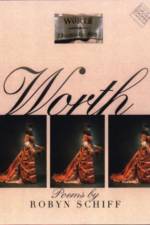
Robyn Schiff's poems enquire about making, buying, selling and stealing in the material world, the natural landscape and the human soul. Schiff moves from Cartier and Tiffany to the Shedd Aquarium, from Marie Antoinette to the Civil War and from Mary Pickford to Marilyn Monroe.
Like the ancient medical text by Hippocrates that gives this collection of poetry its title, ""Airs, Waters, Places"" looks with intensity and purpose at the elemental world to understand the possibility of an expanded notion of health in an often disconnected and disconnecting social order.
Covering a variety of subjects - from the plague and the first ""danse macabre"" to the development of perspective and recipes for pigments - the poems in this collection are set in 15th-century France. They explore the end of the mediaeval world and its transition into the Renaissance.
Abonner på vårt nyhetsbrev og få rabatter og inspirasjon til din neste leseopplevelse.
Ved å abonnere godtar du vår personvernerklæring.