






Gjør som tusenvis av andre bokelskere
Abonner på vårt nyhetsbrev og få rabatter og inspirasjon til din neste leseopplevelse.
Ved å abonnere godtar du vår personvernerklæring.Du kan når som helst melde deg av våre nyhetsbrev.

In 1987, photographer Sandra Dyas moved to Iowa City and began documenting the area's vibrant live music scene. This work contains sixty photos which capture her twenty years of photographing live music venues and shooting portraits of musicians in and around the city.
Defines and explores the ramifications of a character type in twentieth-century American literature - the ugly woman - whose roots can be traced to the old maid/spinster figure of the nineteenth century. This book concludes that the ugly woman character enables authors to explore the ironies and inequalities inherent in the beauty system.
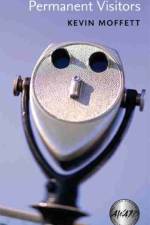
Settled amid the seasonal amusements and condominium-lined beaches of the Florida coast, the characters who inhabit in these stories reach out of their lives to find that something unexpected has replaced what used to be familiar. Some are stalled in the present and some move towards the future heartened by what they learn from those around them.
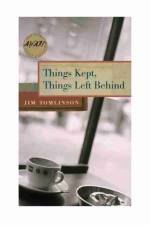
Features stories that explore the ambiguities of kept secrets, the tangles of abandoned pasts, and uneasy accommodations. The characters face the desire to reclaim dreams left behind, along with something of the dreamer that was also lost. In each story, they face conflict, sometimes within themselves, sometimes with each other.
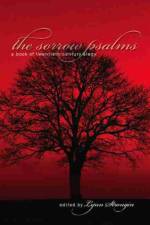
Presents a collection of twentieth-century elegies, which depict the inevitable struggle between love and death. Divided into five sections, the elegies convey the impact of death and its aftermath; and also focus on the loss of family, lovers, and dear friends. This title is useful for those who personally grieve the passing of loved ones.
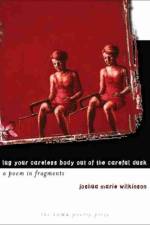
Drawing from the paintings of Susan Rothenberg, Gwyneth Scally, and Eric Fischl, this is a book-length poem written in small fragments. It is formed as much by the poet's travels through Turkey, the Baltics, and Eastern Europe as it is by the movies of Rainer Werner Fassbinder, Krzysztof Kieslowski, and Bill Morrison.
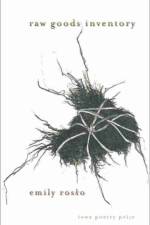
Gives us a poetic inventory in a display of voices and accents. These poems contain the scattered bric-a-brac of the imagination, with goods that range from a dud egg to genetic hybrids, from Marian iconography to pigs at a state fair.
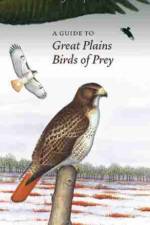
Part of the Iowa's series of laminated guides, this title aids to identifying the many challenging raptors of the Great Plains, from northern Minnesota to northern Texas. It creates fourteen panels, showing twenty-six species perched and in flight with plumage variations - dark phases, light phases, and juvenile and adult male and female forms.
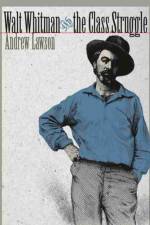
By reconsidering Walt Whitman not as the proletarian voice of American diversity, but as a historically specific poet with roots in the antebellum lower middle class, this book defines the tensions and ambiguities about culture, class, and politics that underlie his poetry. It also reveals a class-conscious and conflicted Whitman.
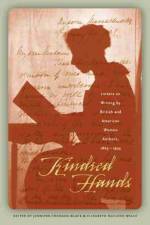
Presenting a collection of letters by women writers, this book explores the act and art of writing from diverse perspectives and experiences. The letters illuminate such issues as authorship, aesthetics, collaboration, inspiration, and authorial intent; and also initiate discussions on race, class, sexuality, ethnicity, and gender.
In this biography of the man regarded by his enthralled fans as God's unconventional messenger to a sinful world, the curator of the Billy Sunday Historic Site Museum recreates Sunday's life through a material culture lens.
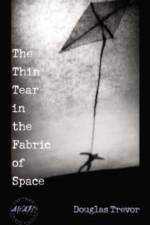
The Thin Tear in the Fabric of Space gathers stories about coping with grief, trying to love people who have died, and - more broadly - leaving old versions of the self behind, sometimes by choice and sometimes out of necessity.
American poets in On the Wing explore aviation and space flight. Olsen's introduction traces the prehistory of flight literature from the Bible to the 19th century and sketches the evolution of 20th-century response. The book includes a short history of flight in the US and includes 116 poems.
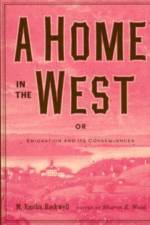
First printed in 1858, this was written to recruit emigrants to Iowa. A Home in the West tells of Walter and Annie Judson who one March night decide to move to the West in search of a better life. It portrays the challenges and transformations of the period and includes the Panic of 1857, the Mormon Handcart Expedition and Native Americans in Iowa.
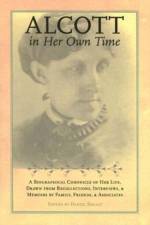
Collected here are the reminiscences of people who knew Louisa May Alcott (1832-1888) . Many of the printed recollections in this book appeared after Alcott became famous and showcase her as a literary lion, but others focus on her teen years, when she was living the life of Jo March.
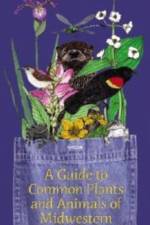
Wetlands in Your Pocket celebrates the plants and animals that call the wetlands of the Midwest home. This laminated pocket guide illustrates a hundred of the most common plants and animals to be found in wetlands six inches to six feet deep.
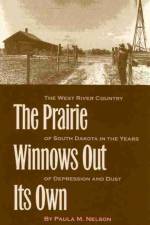
"Nelson's story, which is told largely through the west river settlers' own words, reveals a bond between people and the land so strong that only the most overwhelming adversity could finally break it. It is a fascinating tale of hopes raised and dreams shattered within a single generation. One cannot help being moved. The book should be required reading for all who seek to understand human persistence in a zone that outsiders have been too willing to dismiss as submarginal." - John C. Hudson, Northwestern University; "Highly readable.... The term 'wide open spaces' takes on new meaning in Nelson's book....A marvelous job of presenting the lives of west river South Dakotans during times of extreme stress in a way that should touch all readers' emotions regardless of where they live." - Dorothy Schwieder, Iowa State University"
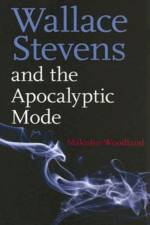
Wallace Stevens and the Apocalyptic Mode focuses on Stevens' stance toward the apocalyptic past: his use of and resistance to apocalyptic language. It explores the paradoxical roles of apocalyptic and anti-apocalyptic rhetoric in modernist and postmodernist poetry and theory, particularly as these emerge in the poetry of Stevens and Jorie Graham.
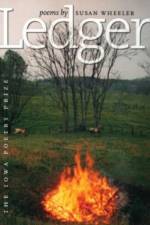
The many meanings of ""economy"" are the ground for the mediation and lament of Ledger. It places an individual's crisis of spirituality and personal stewardship, or management of her resources, against a backdrop of a culture that has focused its ""economy"" on financial gain and has misspent its own tangible and intangible resources.
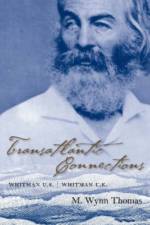
This book explores Whitman's ability to appeal across distances and centuries. It focuses on both Whitman in his time and place, and within UK culture from the late 19th to the late 20th century.
In a startling and original poetic voice, Megan Johnson in The Waiting reveals a vigilant young person who has suffered an unmentionable loss and who dismantles and reconstitutes lyric modes in a relentless search for solace. A lyric adventure of grief and search, The Waiting reinvents language from raw materials, driven by intense emotional need.
Early in 1958, instruments on the space satellites Explorer I and Explorer III revealed the presence of radiation belts, enormous populations of energetic particles trapped in the magnetic field of the earth. This work tells the story of this dramatic and hugely transformative period in scientific and cold war history.
This collection features emerging poets who combine a commitment to innovation and experimentation with a love for the lyric tradition, whose poetry transcends ""mainstream"" and avant garde practice to create new and exciting poetic territories.
The author tells of the excavation of Rivas, a great ceremonial centre at the foot of the Talamanca Mountain range which flourished between AD900 and 1300. He discusses Rivas' builders and users, theories on chiefdom societies and the daily interactions and surprises of modern archeology.
Reading like one long odyssey, the author takes the reader on his many adventures which range from the ludicrous to the life-threatening with Carlyle flying into the light and carrying the reader with him on his perplexing and fanciful journey.
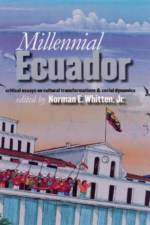
Since the 1980s, Ecuador has seen the development of numerous significant indigenous and ethnic movements and organizations, leading to a new president and constitution for 2003, reflecting these changes. These essays explore the cultural, political and social developments.
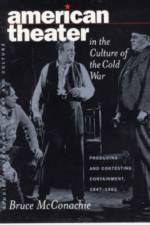
In this study, Bruce McConachie uses the primary metaphor of containment - what happens when we categorize a play, a television show, or anything we view as having an inside, an outside and a boundary between the two - as the dominant metaphor of Cold War theatre-going.
From 1900 until the early 1920s, an unusual community existed in America's heartland. It was the largest unincorporated coal-mining community in Iowa and the majority of its 5000 residents were African Americans - unusual for a state which was over 90 per cent white.
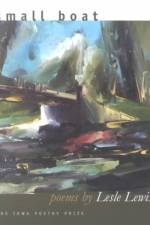
In these poems, Lesle Lewis's craft rides the waves of the New England landscape, both internal and external. If her world is a collage, as she says, then her poems provide the glue that anchors everything from shifts in the weather to world events to a cacophony of thoughts.
How do you thank the person who gave you a vantage from which to see the world? The opening question of this volume of essays reflects its central theme: the connections between fathers, fathering and nature. It offers personal stories of the important roles of fathers and nature.
Abonner på vårt nyhetsbrev og få rabatter og inspirasjon til din neste leseopplevelse.
Ved å abonnere godtar du vår personvernerklæring.