














Gjør som tusenvis av andre bokelskere
Abonner på vårt nyhetsbrev og få rabatter og inspirasjon til din neste leseopplevelse.
Ved å abonnere godtar du vår personvernerklæring.Du kan når som helst melde deg av våre nyhetsbrev.

Bawdy material has always been integral to cowboy culture... Logsdon, with great skill and humor, corrects this long-bowdlerized occupational record. -- Archie Green
Focusing on the immigrant family, this title brings together documents and commentary that is suitable for teaching United States history survey courses as well as immigration history and introductory sociology courses. It includes an introduction and epilogue.
One of the ethnomusicologists takes the reader along for a tour of his workplace.
Salome of the Tenements shocked many critics and writers when first published in 1923, but its author was immediately hailed as a major new talent. A love story of a working-class Salome and her "highborn" John the Baptist, the novel is based on the real-life story of Jewish immigrant Rose Pastor's fairytale romance with the millionaire socialist Graham Stokes. It also reflects Yezierska's own aborted romance with the famous educator John Dewey. Yezierska's passionate but cynical novel poses oppositions such as cultural type/stereotype, passion/reason, and ethnic identity/assimilation, and it resonates powerfully to the contemporary reader.
Reprints stories from Mrs. Spring Fragrance by the first published Asian North American fiction writer
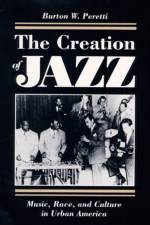
Explains how jazz was shaped by urbanization, the 'great migration' of southern blacks northward, and the 'jazz image' - dress code, jargon, and use of drugs. This book places jazz in its rich social context.
Berman traces the conceptual lineage of modernism, examining its evolution in Western art and literature through empiricism, idealism, and romanticism. Using modernist literary and visual movements as examples, Berman demonstrates how modern social, political, and scientific developments--including capitalism, socialism, humanism, psychoanalysis, fascism, and modernism itself--have altered attitudes toward time, space, self, creativity, the natural world, and community.
'Still Waiting for Prime Time, ' the afterword to this remarkable account of women's struggle to succeed in television news, makes it clear that women continue to face discrimination in the broadcast media.
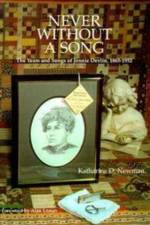
Focuses on the centrality of folksong in the life of Jennie Devlin (1865-1952), a woman who had worked for years as a 'bound-out girl' along the New York-Pennsylvania border. This biography compiles information about the older woman's life and music.
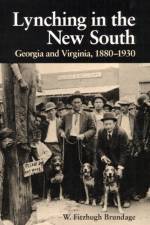
In 1905, the sociologist James Cutler observed, "It has been said that our country's national crime is lynching". If lynching was a national crime, it was a southern obsession. Based on an analysis of nearly six hundred lynchings, this volume offers a new, full appraisal of the complex character of lynching. In Virginia, the southern state with the fewest lynchings, W. Fitzhugh Brundage found that conditions did not breed endemic mob violence. The character of white domination in Georgia, however, was symbolized by nearly five hundred lynchings and became the measure of race relations in the Deep South. By focusing on these two states, Brundage addresses three central questions ignored by previous studies: How can the variation in lynching over space and time be explained? To what extent was lynching a social ritual that affirmed traditional values? What were the causes of the decline of lynching? An original aspect of the work is that it demonstrates the role blacks played in combatting lynching, whether by flight, overt protest, or other strategies. The most lasting of these were efforts to organize opposition to lynching, efforts that culminated in the expansion of the NAACP throughout the South. The book's multidisciplinary approach and the significant issues it addresses will interest historians of African-American history, the South, and American violence. At the same time, it will remind a more general audience of a tradition of violence that poisoned American life, and especially southern life.
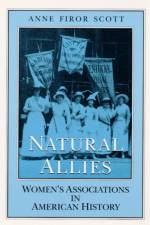
Suitable for not only historians and sociologists but also to those working with or studying voluntary organizations.
A book at the intersection of business, labor, and women's history.
Abonner på vårt nyhetsbrev og få rabatter og inspirasjon til din neste leseopplevelse.
Ved å abonnere godtar du vår personvernerklæring.