











Gjør som tusenvis av andre bokelskere
Abonner på vårt nyhetsbrev og få rabatter og inspirasjon til din neste leseopplevelse.
Ved å abonnere godtar du vår personvernerklæring.Du kan når som helst melde deg av våre nyhetsbrev.

In 1877, John Girardeau Legare of Adams Run, South Carolina, arrived in Darien on the Georgia tidewater. Legare managed Darien-area rice plantations, first at Generals Island, then at Champneys. His journal contains many observations on contemporary national events. Buddy Sullivan has placed the Journal in context with an introduction and comprehensive endnotes identifying people and events.
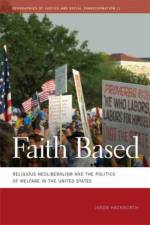
Explores how the Religious Right has supported neoliberalism in the US, bringing a particular focus to welfare - an arena where conservative Protestant politics and neoliberal economic ideas come together most clearly.
Newfont examines the environmental history of the Blue Ridge Commons over the course of three hundred years. Incorporating deep archival work and years of interviews and conversations with Appalachian residents, she reveals a tradition of people building robust forest protection movements on their own terms.
In the last decade the world has witnessed a rise in women's participation in terrorism. Women, Gender, and Terrorism explores women's relationship with terrorism, with a keen eye on the political, gender, racial, and cultural dynamics of the contemporary world.
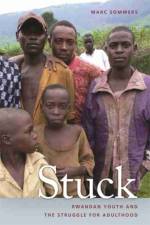
Young people are transforming the global landscape. As the human popu-lation today is younger and more urban than ever before, prospects for achieving adulthood dwindle while urban migration soars. Stuck demonstrates how the Central African nation of Rwanda provides a compelling setting for grasping new challenges to the world's youth.
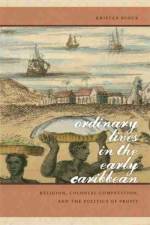
Examines the entangled histories of Spain and England in the Caribbean during the seventeenth century, focusing on the search for profit and the call to Christian dominance. Using the stories of ordinary people, Kristen Block illustrates how engaging with the powerful rhetoric and rituals of Christianity was central to survival.
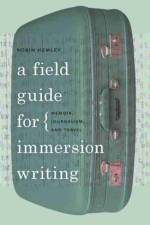
Recalibrates and redefines the way writers approach their relationship to their subjects. Suitable for beginners and advanced writers, the book provides an enlightening, provocative, and often amusing look at the ways in which nonfiction writers engage with the world around them.
First published in 1970, not long after the term ""soul food"" gained common use. While critics were quick to categorize her as a proponent of soul food, Smart-Grosvenor wanted to keep the discussion of her cookbook/memoir focused on its message of food as a source of pride and validation of black womanhood and black ""consciousness raising"".
Historians have engaged in little discussion about the specific methodological, political, and ethical issues related to writing about the recent past. The twelve essays in this collection explore the challenges of writing histories of recent events where visibility is inherently imperfect, hindsight and perspective are lacking, and historiography is underdeveloped.
During the Civil War, cities, houses, forests, and soldiers' bodies were transformed into "dead heaps of ruins," novel sights in the southern landscape. This is the first book to bring together environmental and cultural histories to consider the evocative power of ruination as an imagined state, an act of destruction, and a process of change.
Eva Sheppard Wolf uses the story of Samuel Johnson, a free black man from Virginia attempting to free his family, to add detail and depth to our understanding of the lives of free blacks in the South. Wolf argues that despite the many obstacles Johnson and others faced, race relations were more flexible during the early American republic than is commonly believed.
Explores the war through chapters on its vocabulary, music, literature, and film. This work contains a catalog of soldier slang that reveals how finely a tour of Vietnam could hone one's sense of absurdity.
In this first book-length environmental history of the American Civil War, Lisa M. Brady argues that ideas about nature and the environment were central to the development and success of Union military strategy. Deftly combining environmental and military history, this book explores an intriguing side of America's greatest conflict.
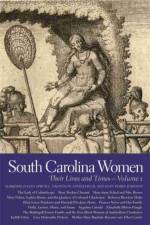
Part of the three volumes on South Carolina women, this title spans the long period from the sixteenth century through the Civil War era. It features the religious, racial, ethnic, and class diversity of the women. It contains essays on plantation mistresses, overseers' wives, nonslaveholding women from the upcountry and slave women.
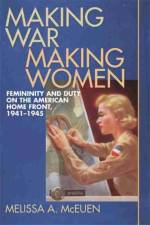
Using perspectives of cultural studies and feminist theory and drawing on war propaganda, popular advertising, government records, and hundreds of accounts written by women in the 1940s, McEuen examines how extensively women's bodies and minds became "battlegrounds" in the U.S. fight for victory in World War II.
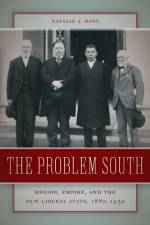
For most historians, the late nineteenth and early twentieth centuries saw the hostilities of the Civil War and the dashed hopes of Reconstruction give way to the nationalising forces of cultural reunion. In truth, says Natalie Ring, this buoyant mythology competed with an equally powerful representation of the backward Problem South.
The Supreme Court's 1857 Dred Scott decision denied citizenship to African Americans and enabled slavery's westward expansion. The author tracks arguments made by Taney Court justices in the two decades prior to Dred Scott and in its immediate aftermath. He reveals that Dred Scott was an outgrowth of Jacksonian jurisprudence.
In 1983 Calvin Johnson Jr was handed down a life sentence for rape and related crimes. He spent sixteen years behind bars before he was freed in 1999 after DNA testing conclusively proved him not guilty. This book tells the unforgettable story of Johnson's unrelenting quest for justice against incredible odds and offers many lessons about freedom.
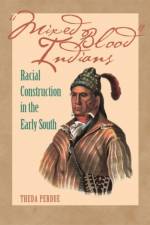
Mixed Blood Indians looks at an array of issues as they were misunderstood and exploited by Native and European cultures. The book discusses the assimilation of non-Indians into Native societies; their descendants' participation in tribal life, and the white cultural assumptions conveyed in the designation ""mixed blood.
Spanning the era from the American Revolution to the Civil War, these nine original essays explore the unexpected, competing or contradictory ways in which southerners made sense of manhood.
The author writes of the Americas, the Caribbean, and other sites of conquest and colonization, mingling the personal and the political, the present and the past on pages filled with the language of parting, remembering, promise and loss.
The Freedmen's Bureau was established by Congress in 1865 to protect and provide for the South's emancipated slaves. This case study looks beyond the obvious hostility of white Georgians to show that the Bureau's failure was also due to its ideology, limited resources and temporary status.
In this study David Kirby addresses the making and consuming of literature by redefining the four components of the act of reading: writer, reader, critic and book. He covers a range of writers, from Emerson, Poe and Melville to James Dickey, Charles Wright, Richard Howard and Susan Montez.
This work focuses on a particular place and time to explore how environment and human culture transform each other. It shows how each successive community on the Georgia coast forged unique relationships with the environment, which in turn created unique landscapes.
Jonathan S. Addleton was born in Pakistan to Baptist missionaries from rural Georgia. This volume tells an unusual coming-of-age story that has as much to do with the intersection of cultures as it does with the intimate details of one man's personal and family history.
This work is an institutional history of the federal War Manpower Commission and a social history of the southern labour force within the commission's province. It discusses conflicts between racial groups within labour unions, for example.
This volume of seven essays and a late lecture by Henry David Thoreau makes available important material written both before and after ""Walden"". Rossi's introduction puts the essays in the context of Thoreau's other major works, both chronologically and intellectually.
In this collection of essays, Mariani brings to light issues surrounding spirituality and poetry. By infusing scholarly criticism with a personal voice, Mariani allows us to see the relationship between poetry and a sublime presence in the universe.
A philosophical, tough and often funny inquiry into 21st-century selfhood, this collection takes shape in the shadow of Dante's ""dark wood"". The poems are sonorous, sly and sexy. They are political in their address of gender through reference to pop songs, poems and personal experience.
Abonner på vårt nyhetsbrev og få rabatter og inspirasjon til din neste leseopplevelse.
Ved å abonnere godtar du vår personvernerklæring.