

















Gjør som tusenvis av andre bokelskere
Abonner på vårt nyhetsbrev og få rabatter og inspirasjon til din neste leseopplevelse.
Ved å abonnere godtar du vår personvernerklæring.Du kan når som helst melde deg av våre nyhetsbrev.

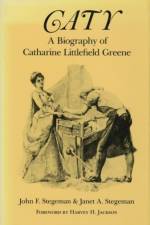
The Stegemans follow the life of a woman whose spirit and determination led her far beyond the domestic concerns of most women of her day. The wife of Revolutionary War general Nathanael Greene, Caty was a close friend of George and Martha Washington, a business partner of Eli Whitney, and mistress of two Georgia plantations.
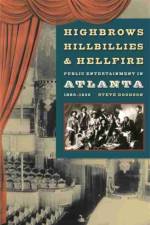
Presents the social and cultural history of the New South's ""Gate City"", which looks at the variety of public amusements available to Atlantans from the end of Reconstruction to the eve of the Great Depression, including theater, vaudeville, dime museums, movies, radio, and classical, blues, and country music.
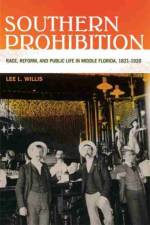
Southern Prohibition examines political culture and reform through the evolving temperance and prohibition movements in Middle Florida. Scholars have long held that liquor reform was largely a northern and mid-Atlantic phenomenon before the Civil War. Lee L. Willis takes a close look at the Florida plantation belt to reveal that the campaign against alcohol had a dramatic impact on public life in this portion of the South as early as the 1840s.Race, class, and gender mores shaped and were shaped by the temperance movement. White racial fears inspired prohibition for slaves and free blacks. Stringent licensing shut down grog shops that were the haunts of common and poor whites, which accelerated gentrification and stratified public drinking along class lines. Restricting blacks access to alcohol was a theme that ran through temperance and prohibition campaigns in Florida, but more affluent African Americans also supported prohibition, indicating that the issue was not driven solely by white desires for social control. Women in the plantation belt played a marginal role in comparison to other locales and were denied greater political influence as a result.Beyond alcohol, Willis also takes a broader look at psychoactive substances to show the veritable pharmacopeia available to Floridians in the nineteenth century. Unlike the campaign against alcohol, however, the tightening regulations on narcotics and cocaine in the early twentieth century elicited little public discussion or concerna quiet beginning to the states war on drugs.
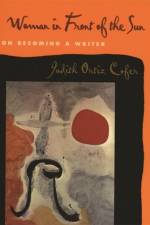
A collection of essays interwoven with poems and folklore. Judith Ortiz Cofer tells the story of how she became a poet and writer and explores her love of words, her discovery of the magic of language, and her struggle to carve out time to practise her art.
Focusing on the impact of the Savannah River Plant on the communities it created, rejuvenated, or displaced, this book explores the parallel militarisation and modernisation of the Cold War-era American South.
Although Indians in film have long been studied, especially as characters in Hollywood westerns, Indian film itself has received relatively little scholarly attention. In Imagic Moments Lee Schweninger examines films in which the major inspiration, the source material, and the acting are essentially Native.
A collection of 14 short stories which provoke, illuminate and startle as they explore our perception of nature and the conflict between wildness and civilization within each of us. The authors include Barry Lopez, Rick Bass, Margaret Atwood, E.L. Doctorow, Linda Hogan and Chris Offutt.
Among Nashville's many slogans, the one that best reflects its decorum is the Nashville Way, a phrase coined by boosters to tout the city's amicable race relations. Houston offers the first scholarly book on the history of civil rights in Nashville, providing new insights and critiques of its moderate progressivism.
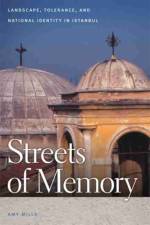
Examines what it means to live in a place that once was, but no longer is, ethnically and religiously diverse. This study of memories of interethnic relationships in a local place examines why the cultural memory of tolerance has become so popular and raises questions regarding the nature and meaning of cosmopolitanism in the contemporary Middle East.
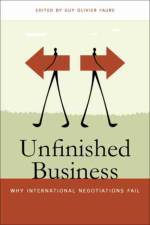
Most studies of international negotiations take successful talks as their subject. With a few notable exceptions, analysts have paid little attention to negotiations ending in failure. The essays in Unfinished Business show that as much, if not more, can be learned from failed negotiations as from successful negotiations with mediocre outcomes.
In this collection, which features both formal and free-verse poems, Major Jackson renders visible the spirit of resilience, courage and creativity he witnessed among his family, neighbours and friends while growing up in Philadelphia.
Thomas Howard became the third duke of Norfolk during the reign of Henry VIII and was intimately involved in many of the most controversial episodes of that era. This biography of Norfolk confronts the central paradox of Norfolk's career - one that lies in his unpleasant personality, marked by vain and tyrannical behavior.
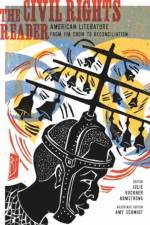
Offers perspectives on civil rights. This anthology gathers works by some of the influential writers to engage issues of race and social justice in America, including James Baldwin, Flannery O'Connor, Amiri Baraka, and Nikki Giovanni.
Provides in-depth, objective analysis of current nuclear disarmament dynamics. Examining the political, state-level factors that drive and stall progress, contributors highlight the challenges and opportunities faced by proponents of disarmament.
Offers the first critical examination of the experience of imprisonment in early America. These interdisciplinary essays investigate several carceral institutions to show how confinement shaped identity, politics, and the social imaginary both in the colonies and in the new nation.
Offers the first critical examination of the experience of imprisonment in early America. These interdisciplinary essays investigate several carceral institutions to show how confinement shaped identity, politics, and the social imaginary both in the colonies and in the new nation.
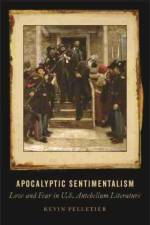
Focusing on a range of important antislavery figures, including David Walker, Nat Turner, Maria Stewart, Harriet Beecher Stowe, and John Brown, Apocalyptic Sentimentalism illustrates how antislavery discourse worked to redefine violence and vengeance as the ultimate expression (rather than denial) of love and sympathy.
The first literary history of the Civil War South. Covering criticism, fiction, poetry, popular song, and memoir, Hutchinson reminds us of the Confederacy's once-great expectations. Before their defeat--before apples turned to ashes in their mouths--many Confederates thought they were creating a nation and a national literature that would endure.
Provides in-depth, objective analysis of current nuclear disarmament dynamics. Examining the political, state-level factors that drive and stall progress, contributors highlight the challenges and opportunities faced by proponents of disarmament.
While traditional industries like textile or lumber mills have received a majority of the scholarly attention devoted to southern economic development, Faith in Bikinis presents an untold story of the New South, one that explores how tourism played a central role in revitalizing the southern economy and transforming southern culture after the Civil War.
Focusing on a community and the changing nature of tradition, this work presents, through word, photographs, artwork and music, the world of southern folk culture in the Lower Chattahoochee Valley. The book includes two compact discs containing 36 traditional folk songs.
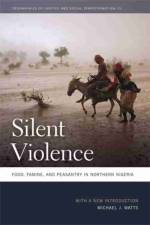
Why do famines occur and how have their effects changed through time? Why are those who produce food so often the casualties of famines? Looking at the food crisis that struck the West African Sahel during the 1970s, Michael J. Watts examines the relationships between famine, climate, and political economy.
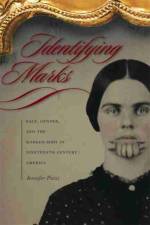
Looks at the presence of marked men and women in an array of canonical and lesser-known works, including exploration narratives, romances, and frontier novels. This study shows how tattoos, scars, and brands can function both as stigma and as emblem of healing and survival, thus blurring the borderline between the biological and social.
Abonner på vårt nyhetsbrev og få rabatter og inspirasjon til din neste leseopplevelse.
Ved å abonnere godtar du vår personvernerklæring.