


















Gjør som tusenvis av andre bokelskere
Abonner på vårt nyhetsbrev og få rabatter og inspirasjon til din neste leseopplevelse.
Ved å abonnere godtar du vår personvernerklæring.Du kan når som helst melde deg av våre nyhetsbrev.

Demonstrates how many of the most influential novels from the 1960s onwards are united by the dramatic opposition they draw between a debased and untrustworthy conventional language, on the one hand, and a violence that appears to be prelinguistic and unquestionable, on the other.
As a young man, John B. Prentis (1788-1848) expressed outrage over slavery, but by the end of his life he had transported thousands of enslaved persons from the upper to the lower South. Kari J. Winter's life-and-times portrayal of a slave trader illuminates the clash between two American dreams: one of wealth, the other of equality.
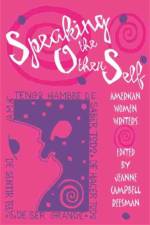
Exploring a variety of writers over an array of time periods, subject matter, race and ethnicity, sexual preference, tradition, genre, and style, this volume collects the voices of distinguished feminist critics who explore the fruits of the dramatic and celebrated growth of American women writers today.
Offers stories of survival and experience, of the tenacity of social justice in the face of a natural disaster, and of how recovery from Camille worked for some but did not work for others.
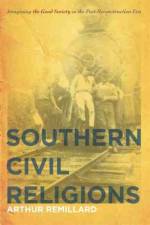
The Lost Cause gave white southerners a new collective identity anchored in the stories of the defeated Confederacy. Historians have used the idea of civil religion to explain how this memory gave the white South a sense of national meaning. This book investigates the civil religious perspectives of a wide array of groups.
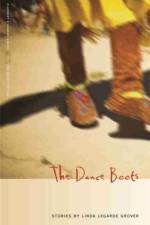
In this stirring collection of linked stories, Linda LeGarde Grover portrays an Ojibwe community struggling to follow traditional ways of life in the face of a relentlessly changing world.In the title story an aunt recounts the harsh legacy of Indian boarding schools that tried to break the indigenous culture. In doing so she passes on to her niece the Ojibwe tradition of honoring elders through their stories. In Refugees Living and Dying in the West End of Duluth, this same niece comes of age in the 1970s against the backdrop of her forcibly dispersed family. A cycle of boarding schools, alcoholism, and violence haunts these stories even as the characters find beauty and solace in their large extended families.With its attention to the Ojibwe language, customs, and history, this unique collection of riveting stories illuminates the very nature of storytelling. The Dance Boots narrates a centurys evolution of Native Americans making choices and compromises, often dictated by a white majority, as they try to balance survival, tribal traditions, and obligations to future generations.
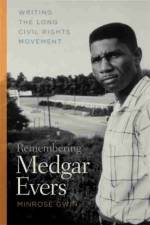
As the first NAACP field secretary for Mississippi, Medgar Wiley Evers put his life on the line to investigate racial crimes and to organise boycotts and voter registration drives. In this compelling study of collective memory and artistic production, Minrose Gwin engages the powerful body of work that has emerged in response to Evers's life and death - fiction, poetry, memoir, drama, and songs.
Provides a meditation on the sensual and spiritual aspects of gardening. McHatton believes gardening is an art-a method of expression analogous to sculpture or dance. He carefully dissects the delicate components of a garden, explaining how one can pinpoint the intricate and harmonious tastes, sounds, and odors flowing freely among the plants.
Roland McMillan Harper (1878-1966) had perhaps 'the greatest store of field experience of any living botanist of the Southeast,' according to Bassett Maguire, the renowned plant scientist of the New York Botanical Garden. This book provides a biography of the accomplished botanist, documentary photographer, and explorer.
Illustrates how reformers used the instruments of mass media to create a freestanding culture of reform that enabled voices disfranchised by church or state to speak as equals in public debates. This book presents Emersonian self-reliance as an effort to transform the partisan nature of reform discourse into a model of sincere public speech.
Glenn Feldman examines the 1901 referendum in Alabama to introduce a constitution that would effectively disenfranchise the majority of African Americans in the state. The property qualification would also disenfranchise many poor whites, yet the poor white community was deeply divided on the issue.
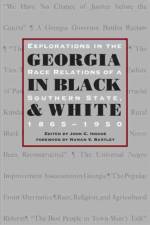
Explores the variety of ways in which whites and blacks in Georgia interacted from the end of the Civil War to the dawn of the civil rights movement. It reveals the extent to which racial matters infused politics, religion, education, gender relationships, kinship structure, and community dynamics.
Baudelaire was practically unknown in Spain until the last two decades of the nineteenth century when the first important criticism of his work was published by two famous critics, Juan Valera and Clarin.
Brings together virtually every known communication exchanged between the writer and the twelve girls he called his ""angelfish"", a group of schoolgirls who became his surrogate grandchildren. It also includes a number of Clemens's notebook entries, autobiographical dictations, short manuscripts, and other relevant materials that further illuminate this fascinating story.
Published in 1949, Florida's Flagler was the first biography of Henry Morrison Flagler (1830-1913), tracing his life from his heritage and youth through his early dealings in grain, his association with John D. Rockefeller, and his later activities in Florida. It presents a colourful and authoritative account of the accomplishments and failures of this controversial figure.
Andy Robbins concludes, in Au bout de l'anglais, that 'Art and life are not the same. Never'. He challenges the nature of both with this volume of highly personal, sensual, searching poetry that treats life as a work in progress, with love, in all its aspects, as its driving force.
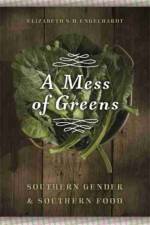
Combining the study of food culture with gender studies, and using perspectives from historical, literary, environmental, and American studies, Elizabeth S. D. Engelhardt examines what southern women's choices about food tell us about race, class, gender, and social power.
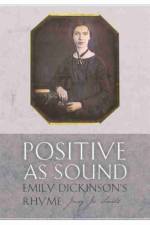
The strange rhymes of Emily Dickinson's verse have offended some readers, attracted others, and proved a stumbling block for editors and critics. This book offers a thorough analysis of the poet's rhyming practice, and reveals the vital aesthetic and semantic value of her rhymes.
Abonner på vårt nyhetsbrev og få rabatter og inspirasjon til din neste leseopplevelse.
Ved å abonnere godtar du vår personvernerklæring.