













Gjør som tusenvis av andre bokelskere
Abonner på vårt nyhetsbrev og få rabatter og inspirasjon til din neste leseopplevelse.
Ved å abonnere godtar du vår personvernerklæring.Du kan når som helst melde deg av våre nyhetsbrev.

Examines raids on Spanish shipping conducted from the United States during the early 1800s. These activities were conducted on behalf of republics in Spanish America aspiring to independence. The book also offers a new perspective on the diplomatic and Atlantic history of the early American republic.
Writers of the modern essay can trace their chosen genre all the way back to Michel de Montaigne (1533-92). But save for the recent notable best seller How to Live, Montaigne is largely ignored. After Montaigne corrects this collective lapse of memory and introduces modern readers and writers to their stylistic forebear.
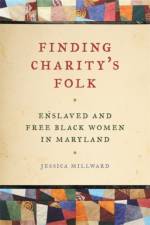
Highlights the experiences of enslaved Maryland women who negotiated their own freedom, many of whom have been largely lost to historical records. Based on more than fifteen hundred manumission records, Jessica Millward brings together African American social and gender history to provide a new means of using biography as a historical genre.
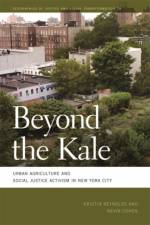
Realizing social and environmental justice requires moving beyond food production to address deeper issues such as structural racism, gender inequity, and economic disparities, Beyond the Kale argues that urban agricultural projects focused on dismantling oppressive systems have the greatest potential to achieve substantive social change.
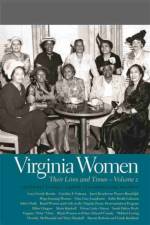
This second of two volumes continues the exploration of the history of Virginia women through the lives of exemplary and remarkable individuals. Seventeen essays recover the stories and voices of a diverse group of women, from the transition from slavery to freedom in the period following the Civil War to the struggle to secure rights for gay and lesbian women in the late twentieth century.
From 1798 to 1801, during the Haitian Revolution, President John Adams and Toussaint Louverture, forged diplomatic relations that empowered white Americans to embrace freedom and independence for people of color in Saint-Domingue, helping to bring forth a new nation: Haiti. This is the first book on the Adams-Louverture alliance.
An unusual collection of Civil War essays as seen through the lens of noted environmental scholars, this book's provocative historical commentary explores how nature--disease, climate, flora and fauna, etc.--affected the war and how the war shaped Americans' perceptions, understanding, and use of nature.
The first of its kind, this anthology of eighty international primary literary texts illuminates environmental justice as a concept and a movement worldwide in a way that is accessible to students, scholars, and general readers. Also included are historical selections that ground contemporary pieces in a continuum of activist concern for the earth and human justice.
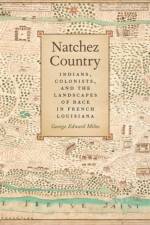
Provides a comprehensive history of the Lower Mississippi Valley and the Natchez. From La Salle's first encounter with what would become Louisiana to the ultimate dispersal of the Natchez by the close of the 1730s, George Edward Milne also analyses the ways in which French attitudes about race and slavery influenced native North American Indians.
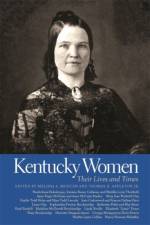
Introduces a history as dynamic and diverse as Kentucky itself. Covering the Appalachian region in the east to the Pennyroyal in the west, the essays highlight women whose aspirations, innovations, activism, and creativity illustrate Kentucky's role in political and social reform, education, health care, the arts, and cultural development.
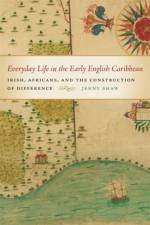
The everyday lives of Irish and Africans are obscured by sources constructed by elites. Through her research, Shaw overcomes the constraints such sources impose by pushing methodological boundaries to fill in the gaps, silences, and absences that dominate the historical record.
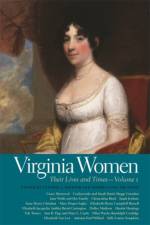
The first of two volumes exploring the history of Virginia women through the lives of exemplary and remarkable individuals. This collection of seventeen essays, written by established and emerging scholars, recovers the stories and voices of a diverse group of women, from the seventeenth century through the Civil War era.
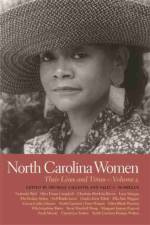
By the twentieth century, North Carolina's progressive streak had strengthened, thanks in part to a growing number of women who engaged in and influenced state and national policies and politics. This is the second of two volumes that together explore the diverse and changing patterns of North Carolina women's lives.
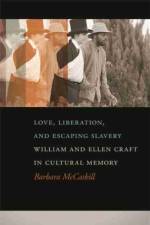
The spectacular 1848 escape of William and Ellen Craft from slavery in Macon, Georgia, is a dramatic story in the annals of American history. In Love, Liberation, and Escaping Slavery, Barbara McCaskill revisits this dual escape and examines the collaborations and partnerships that characterized the Crafts' activism for the next thirty years.
Explores the changing food culture of the urban American South during the Jim Crow era by examining how race, ethnicity, class, and gender contributed to the development and maintenance of racial segregation in public eating places.
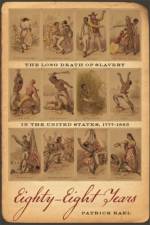
Why did it take so long to end slavery in the US, and what did it mean that the nation existed eighty-eight years as a ""house divided against itself""? Rael immerses readers in the mix of social, geographic, economic, and political factors that shaped this unique American experience.
A description of the inner life of a paranoid schizophrenic, Robby Wilde, who, from the age of nine, heard a man's voice saying ""I've got you"". At the age of 53 he asked his friend, Elizabeth Kytle, to write about his affliction.
In the first undertaking of its kind in Percy criticism, John F. Desmond traces - through Walker Percy's six published novels - the writer's central and enduring concerns with community. These concerns, Desmond argues, were grounded in the realism of such Scholastics as Aquinas and Duns Scotus - realism as updated by the semiotic theory of Charles Sanders Peirce, the American philosopher.
A biography of a country music legend and a portrait of a long-gone Nashville. Richly illustrated with black-and-white photos of Anderson interacting with the superstars of American roots music.
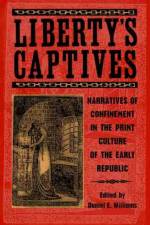
A variety of captivity narratives emerged in the fifty years following the American Revolution. This book brings together various types of captivity narratives, and shows how the captivity narrative, in the nation-building years from 1770 to 1820, helped to shape national debates about American liberty and self-determination.
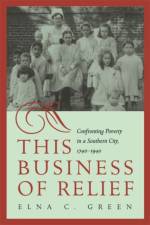
Using Richmond as a case study, the author looks at issues and trends related to two centuries of relief for the needy and dependent in the urban south, linking her findings to the larger narrative of welfare history in the United States.
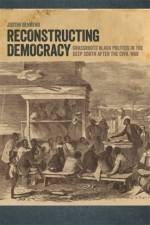
Within a few short years after emancipation, freedpeople of the Natchez District created a new democracy in the Reconstruction era, replacing the oligarchic rule of slaveholders and Confederates with a grassroots democracy that transformed the South after the Civil War.
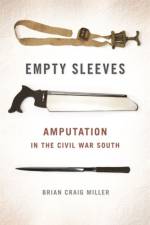
The US Civil War acted like a battering ram on human beings, shattering both flesh and psyche. Brian Craig Miller shows in Empty Sleeves, the hospital emerged as the first arena where southerners faced the stark reality of what amputation would mean in southern society after the war.
Based on a decade of research, The Empires' Edge examines the tremendous damage the militarization of the Pacific has wrought and contends that the great political contest of the twenty-first century is about the choice between domination or the pursuit of a more egalitarian and cooperative future.
Working at the intersections of cultural anthropology, human geography, and material culture, Tina Harris explores the social and economic transformations taking place along one trade route that winds its way across China, Nepal, Tibet, and India.
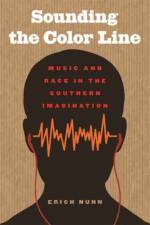
Explores how competing understandings of the US South in the first decades of the twentieth century have led us to experience musical forms, sounds, and genres in racialized contexts. A critical disjuncture exists between actual interracial musical and cultural forms on the one hand and racialized structures of feeling on the other.
The role of faith in the lives of the twelve presidents who have served since World War II. Holmes examines the beliefs professed by each president and the influence of their faiths on policies concerning abortion, the death penalty, Israel, and other controversial issues.
Through much of history, humanity's relationship with the earth has been plagued by ambivalence - while enjoying and appreciating the forces of nature, we have also sought to plunder, alter and control them. The author of this study uncovers the cultural roots of our ecological crisis.
Abonner på vårt nyhetsbrev og få rabatter og inspirasjon til din neste leseopplevelse.
Ved å abonnere godtar du vår personvernerklæring.