













Gjør som tusenvis av andre bokelskere
Abonner på vårt nyhetsbrev og få rabatter og inspirasjon til din neste leseopplevelse.
Ved å abonnere godtar du vår personvernerklæring.Du kan når som helst melde deg av våre nyhetsbrev.

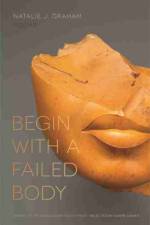
This collection of poems begins rooted in the landscape of the U.S. South as it voices singular lives carved out of immediate and historical trauma. While these poems dwell in the body, often meditating on its frailty and desire, they also question the weight that literary, historical, and religious icons are expected to bear. Within the vast scope of this volume, the poems arc from a pig farmer's funeral to Georges de la Tour's paintings and Toni Morrison's Beloved. With an ear tuned to the lift and lilt of speech, they wring song from sorrow and plant in every dirge a seed of jubilation. Rich in clarity and decisive in her attention to image, Natalie J. Graham writes resonant, lush poetry.
Morrissey explores CENTCOM's Cold War origins and evolution, before addressing key elements of the command's grand strategy, including its interventionary rationales and use of the law in war. Engaging a wide range of scholarship, he then looks in-depth at the military interventions CENTCOM has spearheaded.
Conflict Dynamics presents case studies of six nation-states: Sierra Leone, the Republic of Congo, Sri Lanka, Myanmar, Indonesia, and Peru. In the book, Alethia H. Cook and Marie Olson Lounsbery examine the evolving nature of violence in intrastate conflicts, as well as the governments and groups involved.
The history of the black lawyer in South Carolina, writes W. Lewis Burke, is one of the most significant untold stories of the long and troubled struggle for equal rights in the state. All for Civil Rights is the first book-length study devoted to those lawyers' struggles and achievements in the state that had the largest black population in the country, by percentage, until 1930.
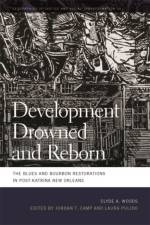
Offers a ""Blues geography"" of New Orleans, one that compels readers to return to the history of the Black freedom struggle there to reckon with its unfinished business. Clyde Woods explores how Hurricane Katrina brought long-standing structures of domination into view. In so doing, he delineates the roots of neoliberalism in the region.
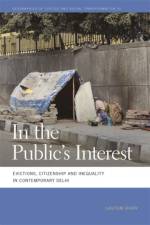
Studies the recent legacy of basti "evictions" in Delhi - mass clearings of some of the city's poorest neighbourhoods as a way to understand how the urban poor are disenfranchised in the name of "public interest" and, in the case of Delhi, by the very courts meant to empower and protect them.
Scholars of second-wave feminism often centre their research on northern thought and political activity. In Remapping Second-Wave Feminism, Janet Allured attempts to reshape the narrative by focusing on the grassroots women's movement in the American South, particularly in Louisiana.
Hospitality as a cultural trait has been associated with the South for well over two centuries, but the origins of this association and the reasons for its perseverance often seem unclear. Anthony Szczesiul looks at how and why we have taken something so particular as the social habit of hospitality and so generalized it as to make it a cultural trait of an entire region of the United States.
These eighteen essays, centred on art and memory, offer an investigation into form and content and the language of innocence, experience, and loss. Four sections frame a series of meditations that consider the boundaries of the discernible world and the extremes of the body and the self.
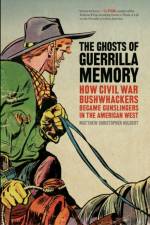
In the first accounting of its kind, Matthew Christopher Hulbert's book analyzes the cultural politics behind how Americans have remembered, misremembered, and re-remembered guerrilla warfare.
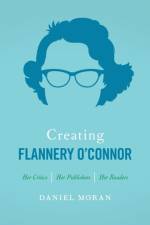
Flannery O'Connor may now be acknowledged as the "Great American Catholic Author", but this was not always the case. With Creating Flannery O'Connor Daniel Moran explains how O'Connor attained that status, and how she felt about it.
In these wondrously strange and revealing stories, Tom Kealey chronicles the struggles and triumphs of the young and marginalized as they discover many ways of growing up. Thieves I've Known is a collection of powerful, moving stories about the lives of a redemptive and peculiar cast of young characters who become easy to know and difficult to forget.
An exploration of perfection. Study in Perfect winds its way around and through the many permutations of this most hermetic and exalted concept and proceeds with the full consciousness that perfection's exact definition is subjective, reliant on who is speaking, and easily unmoored by time, geography, and the vagaries of taste.
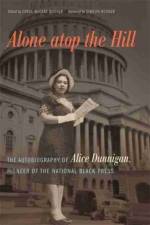
In 1942 Alice Allison Dunnigan, a sharecropper's daughter from Kentucky, made her way to the nation's capital and a career in journalism that eventually led her to the White House. With Alone Atop the Hill, Carol McCabe Booker has condensed Dunnigan's 1974 self-published autobiography to appeal to a general audience and has added scholarly annotations that provide historical context.
Explores the interaction among ideas of love, narrative innovation, and reader response in Toni Morrison's seven later novels. Jean Wyatt analyses the stylistic and structural innovations of each novel, showing how disturbances in narrative chronology, surprise endings, and gaps mirror the dislocated temporality and distorted emotional responses of the novels' troubled characters.
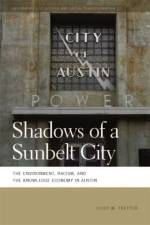
Austin, Texas, is often depicted as one of the past half century's great urban success stories - a place that has grown enormously through "creative class" strategies emphasizing tolerance and environmental consciousness. Eliot Tretter reinterprets this familiar story by exploring the racial and environmental underpinnings of the postindustrial knowledge economy.
Paying homage to the hardboiled crime-noir writing of Raymond Chandler, Diann Blakely's second collection of poetry plays on the dark desires and lusty appetites that motivate and move us. Originally published in 2000, Farewell, My Lovelies delivers unflinching truths harnessed in musical eloquence.
"A Sarah Mills Hodge Fund publication"--Title page verso.
Presents forty-seven early houses of worship from all areas of Georgia. Nearly three hundred stunning colour photographs capture the simple elegance of these sanctuaries and their surrounding grounds and cemeteries.
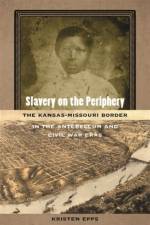
Focuses on nineteen counties on the Kansas-Missouri border, tracing slavery's rise and fall from the earliest years of American settlement through the Civil War along this critical geographical, political, and social fault line.
Moving chronologically from the colonial period to the present, this collection of seventeen biographical essays provides a window into the social, cultural, and geographic milieu of women's lives in the state. The contributors look at ways in which the women they profile either abided by prevailing gender norms or negotiated new models of behaviour for themselves and other women.
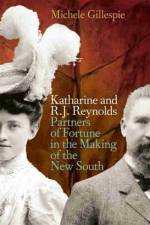
Separately they were formidable - together they were unstoppable. Despite their intriguing lives and the impact they had on their community, the story of R.J. Reynolds and Katharine Smith Reynolds has never been fully told. Michele Gillespie provides a sweeping account of how R. J. and Katharine succeeded in realizing their American dreams.
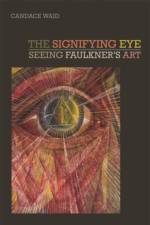
The Signifying Eye shows Faulkner's art take shape in sweeping arcs of social, labor, and aesthetic history. Steeped in history, this book locates a heightened reality that goes beyond representation to bring Faulkner's novels, stories, and drawings into visible form through Whistler, Beardsley, Gorky, and de Kooning.
The long-awaited biography of an unsung literary legend who informed the major 1960s cultural and political movements: Black Arts, Black Power, and Civil Rights. Leak offers a full examination of both Dumas's life and his creative development.
Studies of urban neoliberalism have been surprisingly inattentive to gender. Brenda Parker begins to remedy this by looking at the effect of new urbanism, "creative class", and welfare reform discourses on women in Milwaukee, a traditionally progressive city with a strong history of political organising.
Using the Arab Spring uprising as a springboard, the essays analyze the challenges of uprisers and emerging governments in building a new state on the ruins of a liberated state; the negotiations that lead either to sustainable democracy or sectarian violence; and coalition building between former political and military adversaries.
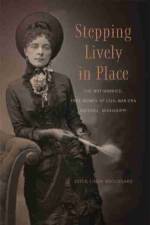
Enlivened with profiles and vignettes of some of the remarkable people whose histories inform this study, Stepping Lively in Place shows how single, free women navigated life in a busy slave-encrusted river-port town before, during, and after the Civil War. It examines how single women coped with life unencumbered, or unprotected, by husbands.
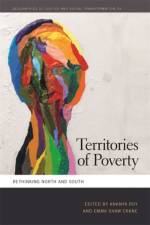
Challenges the conventional North-South geographies through which poverty scholarship is organised. Staging theoretical interventions that traverse social histories of the American welfare state and critical ethnographies of international development regimes, these essays confront how poverty is constituted as a problem.
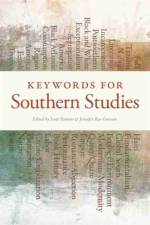
Offers an eclectic collection of new essays that address the fluidity of southern studies by adopting a transnational, interdisciplinary focus. The essays are structured around critical terms pertinent both to the field and to modern life in general. The nonbinary, nontraditional approach of Keywords unmasks and refutes standard binary thinking.
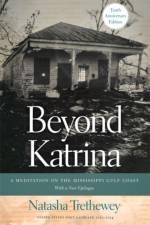
A collection of essays, poems, and letters, chronicling the effects of Hurricane Katrina on the Mississippi Gulf Coast.
Abonner på vårt nyhetsbrev og få rabatter og inspirasjon til din neste leseopplevelse.
Ved å abonnere godtar du vår personvernerklæring.