






















Gjør som tusenvis av andre bokelskere
Abonner på vårt nyhetsbrev og få rabatter og inspirasjon til din neste leseopplevelse.
Ved å abonnere godtar du vår personvernerklæring.Du kan når som helst melde deg av våre nyhetsbrev.

In January 1961, following eighteen months of litigation that culminated in a federal court order, Hamilton Holmes and Charlayne Hunter became the first black students to enter the University of Georgia. Calvin Trillin, then a reporter for Time Magazine, attended the court fight that led to the admission of Holmes and Hunter and covered their first week at the university-a week that began in relative calm, moved on to a riot and the suspension of the two students "e;for their own safety,"e; and ended with both returning to the campus under a new court order.Shortly before their graduation in 1963, Trillin came back to Georgia to determine what their college lives had been like. He interviewed not only Holmes and Hunter but also their families, friends, and fellow students, professors, and university administrators. The result was this book-a sharply detailed portrait of how these two young people faced coldness, hostility, and occasional understanding on a southern campus in the midst of a great social change.
Reflecting a new commitment by American anthropologists to engage in what has been called the anthropology of racism, this book examines racism, class stratification and sexism as they bear on the African-American struggle for social justice, equality and cultural identity in the South.
In this book, the author recreated the South of her childhood and recorded the journey she took from her early instruction as a daughter of the 'Lost Cause' to the liberal viewpoints she championed as an adult.
In The Nature of Copyright L. Ray Patterson and Stanley W. Lindberg present an extended analysis of the fair-use doctrine and articulate a new concept that they demonstrate is implicit in copyright law: the rule of personal use.
Examines traditional attitudes toward nature and the degree to which these attitudes enable people to cope with modern ecological problems. It looks particularly at the Judaeo-Christian heritage of belief in man's dominion, the tradition of stewardship and the more recent belief in progress.
A biography of Katherine Anne Porter, described as ""the first lady of American letters"", who lived a life of drama and passion that spanned nine decades and witnessed some of this century's most tumultuous events.
Set in the 1950s and 1960s, The Line of the Sun moves from a rural Puerto Rican village to a tough immigrant housing project in New Jersey, telling the story of a Hispanic family's struggle to become part of a new culture without relinquishing the old.
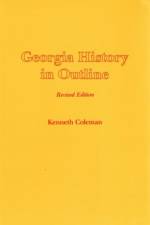
This standard history of the state of Georgia was first published in 1977. Documenting events from the earliest discoveries by the Spanish to the rapid changes undergone during the civil rights era, the book gives broad coverage to the state's social, political, economic and cultural history.
Based solidly on primary sources and the author's fifteen years of experience in land surveying and title abstracting, this book is an exhaustively researched and scholarly reference that will be useful to surveyors, title attorneys, title abstractors, real estate professionals, geographers, cartographers, historians, and genealogists.
Covering basketry, musical instruments, wood carving, quilting, pottery, boatbuilding, blacksmithing, architecture, and graveyard decoration, the author seeks to trace and substantiate African influences in the traditional arts and crafts of black Americans.
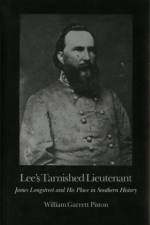
Reconstructing the military career of one of the Confederacy's most competent but also one of its most vilified corps commanders, this book reveals how Longstreet became, in the years after Appomattox, the Judas of the Lost Cause, the scapegoat for Lee's and the South's defeat.
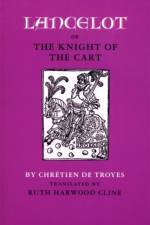
In this verse translation of Chrtien de Troyess Lancelot, Ruth Harwood Cline revives the original story of the immortal love affair between Sir Lancelot and Queen Guinevere, a tale that has spawned interpretations ranging from Malorys Le Morte dArthur to Lerner and Lowes Camelot.By remaining faithful to Chrtiens highly structured form, Cline preserves the pace, the pungency of proverbial expressions, and the works poetical devices and word play in translating this archetypal tale of courtly love from Old French into modern English. Clines introductioncontaining a description of Arthur in history and literature, a discussion of courtly love, and an account of the continuations of the story of Lancelot and Guineveremakes Lancelot an ideal classroom text.
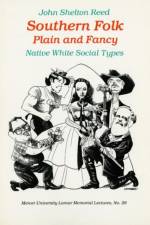
Creating a sort of periodic table of the southern populace, Southern Folk, Plain and Fancy catalogs and describes the several social types--gentleman and lady, 'lord of the lash' and cunning belle, fun-loving 'good old boy, ' depraved redneck, and other figures--that have animated the region since antebellum times.
The first book to present a clear overview of gubernatorial leadership in Georgia during the critical period between 1943 and 1983. Based on a meeting of scholars and politicians held in 1985, this book brings together historical assessments of the post-World War II administrations and reactions to those assessments by the governors themselves.
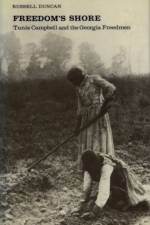
Tells of the efforts of Tunis Campbell, a black carpetbagger and fellow abolitionist and friend of Frederick Douglass, to lift his race to equal participation in American society. Duncan focuses on Campbell's determined work to push radical reforms, draft a new constitution for Georgia, and pass laws designed to ensure equality for all.
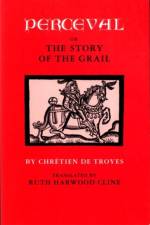
In this verse translation of Perceval; or, The Story of the Grail, Ruth Harwood Cline restores to life the thematically crucial Arthurian tale of the education of a knight in his search for the Holy Grail.
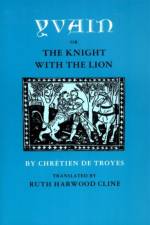
This verse translation of Yvain; or, The Knight with the Lion brings to life a fast-paced yet remarkably subtle work often considered to be the masterpiece of the twelfth-century French writer Chretien de Troyes.
Exploring America's material culture, Common Places reveals the history, culture, and social and class relationships that are the backdrop of the everyday structures and environments of ordinary people. These articles reflect the variety and vibrancy of the growing field of vernacular architecture.
The importance of history and its relevance to the present have seldom gone unquestioned in modern times. This is particularly true in the United States, born as the quintessentially modern nation, where the image of a vast open frontier and the unofficial state creed of limitless progress have diminished the importance of the past, and where the writings of Ralph Waldo Emerson proclaimed that nature and personal experience made tradition irrelevant for the self-reliant American.
Since it first appeared in 1956, Mrs. Vanstory's rich narrative of the barrier islands from Ossabaw to Cumberland-and the mainland towns along the way-has become the standard popular history of Georgia's golden coast.
The 2001 invasion of Afghanistan by the United States and coalition forces was followed by a flood of aid representing well over two thousand organizations--each with separate policy initiatives, geopolitical agendas, and socioeconomic interests. This book examines the everyday actions of people associated with this international effort.
Details how the development and maturation of New Negro politics and thought were shaped not only by New York-based intellectuals and revolutionary transformations in Europe, but also by people, ideas, and organisations rooted in the American South.
The death of Georgia governor-elect Eugene Talmadge in late 1946 launched a constitutional crisis that ranks as one of the most unusual political events in US history: the state had three active governors at once. This is the first full-length examination of the episode.
Abonner på vårt nyhetsbrev og få rabatter og inspirasjon til din neste leseopplevelse.
Ved å abonnere godtar du vår personvernerklæring.