










Gjør som tusenvis av andre bokelskere
Abonner på vårt nyhetsbrev og få rabatter og inspirasjon til din neste leseopplevelse.
Ved å abonnere godtar du vår personvernerklæring.Du kan når som helst melde deg av våre nyhetsbrev.

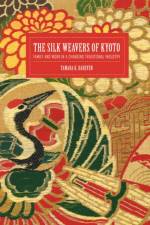
The makers of obi, the elegant and costly sash worn over kimono in Japan, belong to an endangered species. These families of manufacturers, weavers, and other craftspeople centered in the Nishijin weaving district of Kyoto have practiced their demanding craft for generations. In recent decades, however, as a result of declining markets for kimono, they find their livelihood and pride harder to sustain. This book is a poignant exploration of a vanishing world. Tamara Hareven integrates historical research with intensive life history interviews to reveal the relationships among family, work, and community in this highly specialized occupation.Hareven uses her knowledge of textile workers' lives in the United States and Western Europe to show how striking similarities in weavers' experiences transcend cultural differences. These very rich personal testimonies, taken over a decade and a half, provide insight into how these men and women have juggled family and work roles and coped with insecurities. Readers can learn firsthand how weavers perceive their craft and how they interpret their lives and view the world around them. With rare immediacy, The Silk Weavers of Kyoto captures a way of life that is rapidly disappearing.
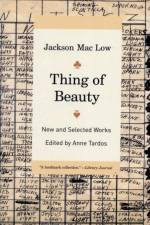
This landmark collection brings together poetry, performance pieces, "e;traditional"e; verse, prose poems, and other poetical texts from Jackson Mac Low's lifetime in art. The works span the years from 1937, beginning with "e;Thing of Beauty,"e; his first poem, until his death in 2004 and demonstrate his extraordinary range as well as his unquenchable enthusiasm. Mac Low is widely acknowledged as one of the major figures in twentieth-century American poetry, with much of his work ranging into the spheres of music, dance, theater, performance, and the visual arts. Comparable in stature to such giants as Robert Creeley, John Ashbery, and Allen Ginsberg, Mac Low is often associated with composer John Cage, with whom he shared a delight in work derived from "e;chance operations."e; This volume, edited by Anne Tardos, his wife and frequent collaborator, offers a balanced arrangement of early, middle, and late work, designed to convey not just the range but also the progressions and continuities of his writings and "e;writingways."e;
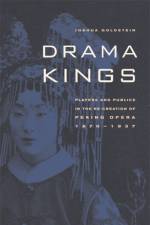
In this colorful and detailed history, Joshua Goldstein describes the formation of the Peking opera in late Qing and its subsequent rise and re-creation as the epitome of the Chinese national culture in Republican era China. Providing a fascinating look into the lives of some of the opera's key actors, he explores their methods for earning a living; their status in an ever-changing society; the methods by which theaters functioned; the nature and content of performances; audience make-up; and the larger relationship between Peking opera and Chinese nationalism. Propelled by a synergy of the commercial and the political patronage from the Qing court in Beijing to modern theaters in Shanghai and Tianjin, Peking opera rose to national prominence. The genre's star actors, particularly male cross-dressing performers led by the exquisite Mei Lanfang and the "e;Four Great Female Impersonators"e; became media celebrities, models of modern fashion and world travel. Ironically, as it became increasingly entrenched in modern commercial networks, Peking opera was increasingly framed in post-May fourth discourses as profoundly traditional. Drama Kings demonstrates that the process of reforming and marketing Peking opera as a national genre was integrally involved with process of colonial modernity, shifting gender roles, the rise of capitalist visual culture, and new technologies of public discipline that became increasingly prevalent in urban China in the Republican era.
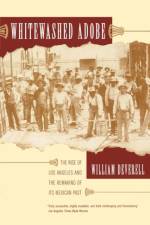
Chronicling the rise of Los Angeles through shifting ideas of race and ethnicity, William Deverell offers a unique perspective on how the city grew and changed. Whitewashed Adobe considers six different developments in the history of the city-including the cementing of the Los Angeles River, the outbreak of bubonic plague in 1924, and the evolution of America's largest brickyard in the 1920s. In an absorbing narrative supported by a number of previously unpublished period photographs, Deverell shows how a city that was once part of Mexico itself came of age through appropriating-and even obliterating-the region's connections to Mexican places and people. Deverell portrays Los Angeles during the 1850s as a city seething with racial enmity due to the recent war with Mexico. He explains how, within a generation, the city's business interests, looking for a commercially viable way to establish urban identity, borrowed Mexican cultural traditions and put on a carnival called La Fiesta de Los Angeles. He analyzes the subtle ways in which ethnicity came to bear on efforts to corral the unpredictable Los Angeles River and shows how the resident Mexican population was put to work fashioning the modern metropolis. He discusses how Los Angeles responded to the nation's last major outbreak of bubonic plague and concludes by considering the Mission Play, a famed drama tied to regional assumptions about history, progress, and ethnicity. Taking all of these elements into consideration, Whitewashed Adobe uncovers an urban identity-and the power structure that fostered it-with far-reaching implications for contemporary Los Angeles.
Accelerating seismic activity in late Meiji Japan climaxed in the legendary Great Nobi Earthquake of 1891, which rocked the main island from Tokyo to Osaka, killing thousands. Ironically, the earthquake brought down many "e;modern"e; structures built on the advice of foreign architects and engineers, while leaving certain traditional, wooden ones standing. This book, the first English-language history of modern Japanese earthquakes and earthquake science, considers the cultural and political ramifications of this and other catastrophic events on Japan's relationship with the West, with modern science, and with itself. Gregory Clancey argues that seismicity was both the Achilles' heel of Japan's nation-building project-revealing the state's western-style infrastructure to be surprisingly fragile-and a new focus for nativizing discourses which credited traditional Japanese architecture with unique abilities to ride out seismic waves. Tracing his subject from the Meiji Restoration to the Great Kant Earthquake of 1923 (which destroyed Tokyo), Clancey shows earthquakes to have been a continual though mercurial agent in Japan's self-fashioning; a catastrophic undercurrent to Japanese modernity. This innovative and absorbing study not only moves earthquakes nearer the center of modern Japan change-both materially and symbolically-but shows how fundamentally Japan shaped the global art, science, and culture of natural disaster.
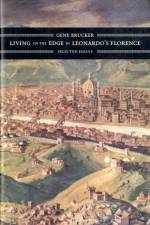
In Living on the Edge in Leonardo's Florence, an internationally renowned master of the historian's craft provides a splendid overview of Italian history from the Black Death to the rise of the Medici in 1434 and beyond into the early modern period. Gene Brucker explores those pivotal years in Florence and ranges over northern Italy, with forays into the histories of Genoa, Milan, and Venice. The ten essays, three of which have never before been published, exhibit Brucker's graceful intelligence, his command of the archival sources, and his ability to make history accessible to anyone interested in this place and period. Whether he is writing about a case in the criminal archives, about a citation from Machiavelli, or the concept of modernity, the result is the same: Brucker brings the pulse of the period alive. Five of these essays explore themes in the premodern period and delve into Italy's political, social, economic, religious, and cultural development. Among these pieces is a lucid, synoptic view of the Italian Renaissance. The last five essays focus more narrowly on Florentine topics, including a fascinating look at the dangers and anxieties that threatened Florence in the fifteenth century during Leonardo's time and a mini-biography of Alessandra Strozzi, whose letters to her exiled sons contain the evidence for her eventful life.
Trees hold a powerful place in American constructions of what is good in nature and the environment. As we attempt to cope with environmental crises, trees are increasingly enlisted with great fervor as agents of our stewardship over nature. In this innovative and impassioned book, Shaul E. Cohen exposes the way that environmental stewardship is undermined through the manipulation of trees and the people who plant them by a partnership of big business, the government, and tree-planting groups. He reveals how positive associations and symbols that have been invested in trees are exploited by an interlocking network of government agencies, private timber companies, and nongovernmental organizations to subvert the power of people who think that they are building a better world. Planting Nature details the history of tree planting in the United States and the rise of popular sentiment around trees, including the development of the Arbor Day holiday and tree-planting groups such as the National Arbor Day Foundation and American Forests. Drawing from internal papers, government publications, advertisements, and archival documents, Cohen illustrates how organizations promote tree planting as a way of shifting attention away from the causes of environmental problems to their symptoms, masking business-as-usual agendas. Ultimately, Planting Nature challenges the relationships between a "e;green"e; public, the organizations that promote their causes, and the "e;powers that be,"e; providing a cautionary tale of cooperation and deception that cuts across the political spectrum.
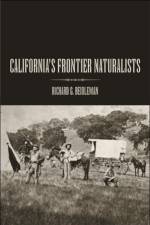
This book chronicles the fascinating story of the enthusiastic, stalwart, and talented naturalists who were drawn to California's spectacular natural bounty over the decades from 1786, when the La Perouse Expedition arrived at Monterey, to the Death Valley expedition in 1890-91, the proclaimed "e;end"e; of the American frontier. Richard G. Beidleman's engaging and marvelously detailed narrative describes these botanists, zoologists, geologists, paleontologists, astronomers, and ethnologists as they camped under stars and faced blizzards, made discoveries and amassed collections, kept journals and lost valuables, sketched flowers and landscapes, recorded comets and native languages. He weaves together the stories of their lives, their demanding fieldwork, their contributions to science, and their exciting adventures against the backdrop of California and world history.California's Frontier Naturalists covers all the major expeditions to California as well as individual and institutional explorations, introducing naturalists who accompanied boundary surveys, joined federal railroad parties, traveled with river topographical expeditions, accompanied troops involved with the Mexican War, and made up California's own geological survey. Among these early naturalists are famous names-David Douglas, Thomas Nuttall, John Charles Fremont, William Brewer-as well as those who are less well-known, including Paolo Botta, Richard Hinds, and Sara Lemmon.
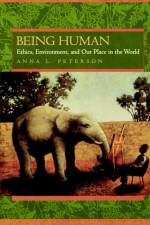
Being Human examines the complex connections among conceptions of human nature, attitudes toward non-human nature, and ethics. Anna Peterson proposes an "e;ethical anthropology"e; that examines how ideas of nature and humanity are bound together in ways that shape the very foundations of cultures. Peterson discusses mainstream Western understandings of what it means to be human, as well as alternatives to these perspectives, and suggests that the construction of a compelling, coherent environmental ethics will revise our ideas not only about nature but also about what it means to be human.
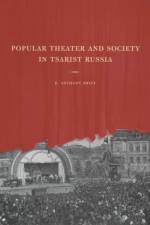
This is the most comprehensive study available of the popular theater that developed during the last decades of tsarist Russia. Swift examines the origins and significance of the new "e;people's theaters"e; that were created for the lower classes in St. Petersburg and Moscow between 1861 and 1917. His extensively researched study, full of anecdotes from the theater world of the day, shows how these people's theaters became a major arena in which the cultural contests of late imperial Russia were played out and how they contributed to the emergence of an urban consumer culture during this period of rapid social and political change.Swift illuminates many aspects of the story of these popular theaters-the cultural politics and aesthetic ambitions of theater directors and actors, state censorship politics and their role in shaping the theatrical repertoire, and the theater as a vehicle for social and political reform. He looks at roots of the theaters, discusses specific theaters and performances, and explores in particular how popular audiences responded to the plays.
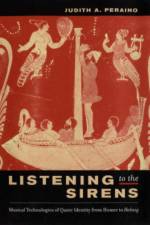
In this fresh and innovative study, Judith A. Peraino investigates how music has been used throughout history to call into question norms of gender and sexuality. Beginning with a close examination of the mythology surrounding the sirens-whose music seduced Ulysses into a state of mind in which he would gladly sacrifice everything for the illicit pleasures promised in their song-Peraino goes on to consider the musical creatures, musical gods and demigods, musical humans, and music-addled listeners who have been associated with behavior that breaches social conventions. She deftly employs a sophisticated reading of Foucault as an organizational principle as well as a philosophical focus to survey seductive and transgressive queerness in music from the Greeks through the Middle Ages and to the contemporary period. Listening to the Sirens analyzes the musical ways in which queer individuals express and discipline their desire, represent themselves, build communities, and subvert heterosexual expectations. It covers a wide range of music including medieval songs, works by Handel, Tchaikovsky and Britten, women's music and disco, performers such as Judy Garland, Melissa Etheridge, Madonna, and Marilyn Manson, and the movies The Rocky Horror Picture Show and Hedwig and the Angry Inch.
With the originality and energy that have marked his earlier works, Eric Wolf now explores the historical relationship of ideas, power, and culture. Responding to anthropology's long reliance on a concept of culture that takes little account of power, Wolf argues that power is crucial in shaping the circumstances of cultural production. Responding to social-science notions of ideology that incorporate power but disregard the ways ideas respond to cultural promptings, he demonstrates how power and ideas connect through the medium of culture.Wolf advances his argument by examining three very different societies, each remarkable for its flamboyant ideological expressions: the Kwakiutl Indians of the Northwest Pacific Coast, the Aztecs of pre-Hispanic Mexico, and National Socialist Germany. Tracing the history of each case, he shows how these societies faced tensions posed by ecological, social, political, or psychological crises, prompting ideological responses that drew on distinctive, historically rooted cultural understandings. In each case study, Wolf analyzes how the regnant ideology intertwines with power around the pivotal relationships that govern social labor. Anyone interested in the history of anthropology or in how the social sciences make comparisons will want to join Wolf in Envisioning Power.
While much has been written on the ramifications of Newton's dynamics, until now the details of Newton's solution were available only to the physics expert. The Key to Newton's Dynamics clearly explains the surprisingly simple analytical structure that underlies the determination of the force necessary to maintain ideal planetary motion. J. Bruce Brackenridge sets the problem in historical and conceptual perspective, showing the physicist's debt to the works of both Descartes and Galileo. He tracks Newton's work on the Kepler problem from its early stages at Cambridge before 1669, through the revival of his interest ten years later, to its fruition in the first three sections of the first edition of the Principia.
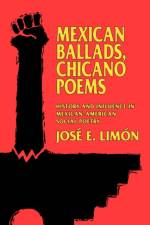
Mexican Ballads, Chicano Poems combines literary theory with the personal engagement of a prominent Chicano scholar. Recalling his experiences as a student in Texas, Jose Limon examines the politically motivated Chicano poetry of the 60s and 70s. He bases his analyses on Harold Bloom's theories of literary influence but takes Bloom into the socio-political realm. Limon shows how Chicano poetry is nourished by the oral tradition of the Mexican corrido, or master ballad, which was a vital part of artistic and political life along the Mexican-U.S. border from 1890 to 1930.Limon's use of Bloom, as well as of Marxist critics Raymond Williams and Fredric Jameson, brings Chicano literature into the arena of contemporary literary theory. By focusing on an important but little-studied poetic tradition, his book challenges our ideas of the American canon and extends the reach of Hispanists and folklorists as well.
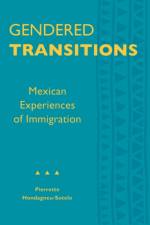
The momentous influx of Mexican undocumented workers into the United States over the last decades has spurred new ways of thinking about immigration. Pierrette Hondagneu-Sotelo's incisive book enlarges our understanding of these recently arrived Americans and uncovers the myriad ways that women and men recreate families and community institutions in a new land.Hondagneu-Sotelo argues that people do not migrate as a result of concerted household strategies, but as a consequence of negotiations often fraught with conflict in families and social networks. Migration and settlement transform long-held ideals and lifestyles. Traditional patterns are reevaluated, and new relationships-often more egalitarian-emerge. Women gain greater personal autonomy and independence as they participate in public life and gain access to both social and economic influence previously beyond their reach.Bringing to life the experiences of undocumented immigrants and delineating the key role of women in newly established communities, Gendered Transitions challenges conventional assumptions about gender and migration. It will be essential reading for demographers, historians, sociologists, and policymakers."e;I've opened my eyes. Back there, they say 'no.' You marry, and no, you must stay home. Here, it's different. You marry, and you continue working. Back in Mexico, it's very different. There is very much machismo in those men."e;-A Mexican woman living in the United States
This first complete history of Israel's occupation of the West Bank and the Gaza Strip allows us to see beyond the smoke screen of politics in order to make sense of the dramatic changes that have developed on the ground over the past forty years. Looking at a wide range of topics, from control of water and electricity to health care and education as well as surveillance and torture, Neve Gordon's panoramic account reveals a fundamental shift from a politics of life-when, for instance, Israel helped Palestinians plant more than six-hundred thousand trees in Gaza and provided farmers with improved varieties of seeds-to a macabre politics characterized by an increasing number of deaths. Drawing attention to the interactions, excesses, and contradictions created by the forms of control used in the Occupied Territories, Gordon argues that the occupation's very structure, rather than the policy choices of the Israeli government or the actions of various Palestinian political factions, has led to this radical shift.
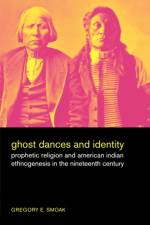
This innovative cultural history examines wide-ranging issues of religion, politics, and identity through an analysis of the American Indian Ghost Dance movement and its significance for two little-studied tribes: the Shoshones and Bannocks. The Ghost Dance has become a metaphor for the death of American Indian culture, but as Gregory Smoak argues, it was not the desperate fantasy of a dying people but a powerful expression of a racialized "e;Indianness."e; While the Ghost Dance did appeal to supernatural forces to restore power to native peoples, on another level it became a vehicle for the expression of meaningful social identities that crossed ethnic, tribal, and historical boundaries. Looking closely at the Ghost Dances of 1870 and 1890, Smoak constructs a far-reaching, new argument about the formation of ethnic and racial identity among American Indians. He examines the origins of Shoshone and Bannock ethnicity, follows these peoples through a period of declining autonomy vis-a-vis the United States government, and finally puts their experience and the Ghost Dances within the larger context of identity formation and emerging nationalism which marked United States history in the nineteenth century.
In this provocative analysis of screen industries in China, Hong Kong, Taiwan, and Singapore, Michael Curtin delineates the globalizing pressures and opportunities that since the 1980s have dramatically transformed the terrain of Chinese film and television, including the end of the cold war, the rise of the World Trade Organization, the escalation of democracy movements, and the emergence of an East Asian youth culture. Reaching beyond national frameworks, Curtin examines the prospect of a global Chinese audience that will include more viewers than in the United States and Europe combined. He draws on in-depth interviews with a diverse array of media executives plus a wealth of historical material to argue that this vast and increasingly wealthy market is likely to shake the very foundations of Hollywood's century-long hegemony.Playing to the World's Biggest Audience profiles the leading Chinese commercial studios and telecasters, and delves into the operations of Western conglomerates extending their reach into Asia. Advancing a dynamic and integrative theory of media capital, this innovative book explains the histories and strategies of screen enterprises that aim to become central players in the Global China market and offers an alternative perspective to recent debates about cultural globalization.
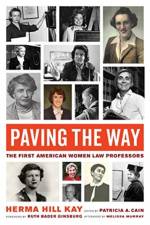
"In person, I quickly comprehended, Herma has a quality that cannot be conveyed in words. There is a certain chemistry involved when one meets her, something that magically makes you want to be on her side."--Ruth Bader Ginsburg, from the Foreword "If you admired Justice Ruth Bader Ginsburg, you should love this book by Herma Hill Kay, the woman law professor whom RBG used as her own model for her life in the law."--Nina Totenberg, Legal Affairs Correspondent, National Public Radio "Legendary professor, dean, law reformer, and mentor, Herma Hill Kay has written a lively and memorable book about the first women to become American law professors and their legacies. Shining a light on three women who joined law faculties before World War II and eleven more pioneers during the civil rights and women's movements, Paving the Way illuminates how uniquely extraordinary individuals and social contexts changed law schools, law, and America. Come for the 'firsts, ' stay for the individual portraits of remarkable and pathbreaking women, and emerge with a biography of law and society during pivotal times."--Martha Minow, professor and former dean, Harvard Law School "A lively and important history of the legal world which Herma Hill Kay entered a half century ago--and had a substantial role in transforming. Readers are likely to be surprised by what they find here. Paving the Way is a major contribution to our understanding of professional life in our own time."--Linda K. Kerber, author of No Constitutional Right to Be Citizens: Women and the Obligations of Citizenship "Born under a lucky star, I had the good fortune to experience Herma Hill Kay's brilliant teaching, to rely on her as mentor and role model, to work with her in countless meetings of the American Law Institute, and to enjoy her loyal friendship. She spoke passionately about the project that became this remarkable book. Herma's decades-long efforts to document and share these trailblazers' stories give us one more reason to celebrate her own commitment to changing the world for lawyers of all genders."--Susan Frelich Appleton, Washington University School of Law in St. Louis "No one else has written about the first women law professors in the U.S. The fact that the author was the fifteenth, and the fact that she was able to interview nine of these women, makes this work so valuable. I think it is crucial for women law professors to know about our foremothers and their contributions to the profession and to law in general."--Laura Gasaway, University of North Carolina School of Law
"This book is highly original and addresses a topic of central importance to understanding Chinese family life and the limits of a party-state's regulatory power over the society and individual citizens. Original and systematic fieldwork is expertly used to illustrate core arguments. To my knowledge there is no competing ethnography."--Deborah Davis, Professor Emerita of Sociology, Yale University "The Funeral of Mr. Wang is a vivid portrait of how the transition from life to death is negotiated in the midst of a rapidly transforming urban Chinese society. Showing how death in contemporary China generates interconnected processes of cultural recombination among family members, funeral service providers, bureaucratic regulators, strangers, and ghosts, this book will be critical reading for all students of China and of death in contemporary societies."--David A. Palmer, coauthor of The Religious Question in Modern China
"This book offers an intriguing perspective on Ravel, one that places the composer in dialogue with cultural trends not previously explored. The detailed and engaging discussion of specific passages in Ravel's works frequently proves enchanting."--W. Anthony Sheppard, author of Revealing Masks: Exotic Influences and Ritualized Performance in Modernist Music Theater "A tremendously rich book, filled with extraordinary insights on Ravel's music and the intellectual climate in which it was created. Through the lenses of magic, machinery, science, and technology, we begin to appreciate Ravel's innovations from new perspectives."--Gurminder K. Bhogal, author of Details of Consequence: Ornament, Music, and Art in Paris and Claude Debussy's Clair de Lune
"This book is a major contribution to South Asian Studies, sound and music studies, anthropology, and film and media studies, offering original research and new theoretical insights to each of these disciplines. There is no other scholarly work that approaches voice and technology in a way that is both as theoretically wide-ranging and as locally specific."--Neepa Majumdar, author of Wanted Cultured Ladies Only! Female Stardom and Cinema in India, 1930s-1950s "Brought to Life by the Voice provides a detailed and highly convincing historical and ethnographic exploration of the varying links between the singing voice and the body in the Tamil film industry since the mid-twentieth century. Amanda Weidman demonstrates how the affordances of playback technology were deployed in different ways that often run counter to the assumption of body-voice unity that is widespread in North Atlantic contexts, highlighting the fragmentation of body and voice instead. The historical and ethnographic analysis the book presents is meticulous and excellent."--Patrick Eisenlohr, author of Sounding Islam: Voice, Media, and Sonic Atmospheres in an Indian Ocean World
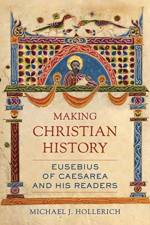
"Known as the "Father of Church History," Eusebius was bishop of Caesarea in Palestine and the leading Christian scholar of his day. His Ecclesiastical History is an irreplaceable chronicle of Christianity's early development, from its origin in Judaism, through two and a half centuries of illegality and occasional persecution, into a new era of tolerance and favor under the Emperor Constantine. In this book, Michael J. Hollerich recovers the reception of this text across time. As he shows, Eusebius adapted classical historical writing for a new "nation," the Christians, with a distinctive theo-political vision. Eusebius's book left its mark on Christian historical writing from late antiquity to the early modern period, across linguistic, cultural, political, and religious boundaries, until its encounter with modern historicism and postmodernism. Making Christian History demonstrates Eusebius's vast influence throughout history, not simply in shaping Christian culture but also as his work itself has become contested territory as that culture has been constantly reevaluated, reformed, and resisted over the past 1,700 years"--
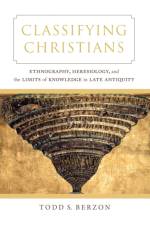
Classifying Christians investigates late antique Christian heresiologies as ethnographies that catalogued and detailed the origins, rituals, doctrines, and customs of the heretics in explicitly polemical and theological terms. Oscillating between ancient ethnographic evidence and contemporary ethnographic writing, Todd S. Berzon argues that late antique heresiology shares an underlying logic with classical ethnography in the ancient Mediterranean world. By providing an account of heresiological writing from the second to fifth century, Classifying Christians embeds heresiology within the historical development of imperial forms of knowledge that have shaped western culture from antiquity to the present.
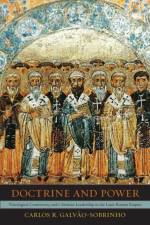
During the fourth century A.D., theological controversy divided Christian communities throughout the Eastern half of the Roman Empire. Not only was the truth about God at stake, but also the authority of church leaders, whose legitimacy depended on their claims to represent that truth. In this book, Galvao-Sobrinho argues that out of these disputes was born a new style of church leadership, one in which the power of the episcopal office was greatly increased. The author shows how these disputes compelled church leaders repeatedly to assert their orthodoxy and legitimacy-tasks that required them to mobilize their congregations and engage in action that continuously projected their power in the public arena. These developments were largely the work of prelates of the first half of the fourth century, but the style of command they inaugurated became the basis for a dynamic model of ecclesiastical leadership found throughout late antiquity.
In the wake of the conquests of Alexander the Great, the ancient world of the Bible-the ancient Near East-came under Greek rule, and in the land of Israel, time-old traditions and Greek culture met. But with the accession of King Antiochos IV, the soft power of culture was replaced with armed conflict, and soon the Jews rebelled against their imperial masters, as recorded in the Biblical books of the Maccabees. Whereas most scholars have dismissed the biblical accounts of religious persecution and cultural clash, Sylvie Honigman combines subtle literary analysis with deep historical insight to show how their testimony can be reconciled with modern historical analysis by conversing with the biblical authors, so to speak, in their own language to understand the way they described their experiences. Honigman contends that these stories are not mere fantasies but genuine attempts to cope with the massacre that followed the rebellion by giving it new meaning. This reading also discloses fresh political and economic factors.
Abonner på vårt nyhetsbrev og få rabatter og inspirasjon til din neste leseopplevelse.
Ved å abonnere godtar du vår personvernerklæring.