













Gjør som tusenvis av andre bokelskere
Abonner på vårt nyhetsbrev og få rabatter og inspirasjon til din neste leseopplevelse.
Ved å abonnere godtar du vår personvernerklæring.Du kan når som helst melde deg av våre nyhetsbrev.

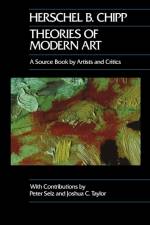
Offering a collection of texts from letters, manifestos, notes and interviews, this book offers an insight into the way artists think and work.
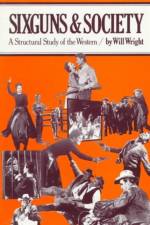
Explains the Western's popularity. This study deals with the question of the Western as an American myth, will lead us into abstract structural theory as well as economic and political history. It takes you into the movies, and sagebrush of the cinema.
Brings together a broad community of scholars to explore the history of illicit and alternative sexualities in Latin America's colonial and early national periods. This title examines how "the unnatural" came to inscribe certain sexual acts and desires as criminal and sinful, including acts officially deemed to be "against nature" and more.
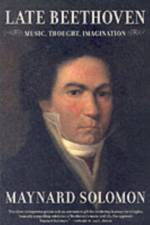
Traces Beethoven's attraction to a constellation of heterogeneous ideas, drawn from Romanticism, Freemasonry, comparative religion, Eastern initiatory ritual, Mediterranean mythology, aesthetics, and classical and contemporary thought.
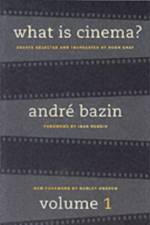
"Although Andre Bazin died shortly before the onset of what we now regard as the modern cinema, our understanding of this cinema wouldn't be the same without him. He's also one of the most scrupulous humanists and polemicists we've had, on a par with George Orwell, and these essays map out the busy highways we're all still navigating."--Jonathan Rosenbaum, film critic for the "Chicago Reader"
The editors of this text have assembled a variety of essays examining the built environment and human dynamics of the city of Los Angeles, emphasizing the dramatic changes that have occurred since 1960. Together the essays seek to create a new kind of urban analysis.
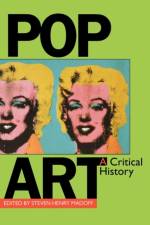
A chronical of one of the most controversial art movements of the 20th century. A broad range of articles trace the emergence of the movement in England and America and then focus on the major pop artists Roy Lichtenstein, Claes Oldenburg, James Rosenquist and Andy Warhol.
An exploration of the border between medical and social problems, the boundary between health and social change, and a study of the body as the mediator between individual and collective experience. The author argues for an ethnographic approach to moral practice in medicine.
Incorporating exciting new material that has come to light since the last German edition of 1980, Herwig Wolfram places Gothic history within its proper context of late Roman society and institutions. He demonstrates that the barbarian world of the Goths was both a creation of and an essential element of the late Roman Empire.
Selects some of the important work analyzing popular culture. Drawing upon developments in cultural theory and the techniques of critical analysis, this title includes essays that break down disciplinary boundaries in a fresh fashion. It touches on a variety of features of popular culture, from photography to fashion, romance novels to television.
A comprehensive guide to William Langland's fourteenth-century masterpiece, "Piers Plowman".
Originally published with records, this edition does not include the records.
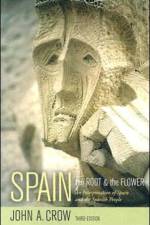
This is the late John A. Crow's classic study of the cultural history of Spain and its people, which he last updated in 1985 but which seems as fresh and pertinent as when he first wrote it. Crow devoted a lifetime to Hispanic studies and here provides a historical interpretation of Spanish civilization from its earliest beginnings to the present. The scope of this study is remarkable and includes chapters on Roman Spain, the Jews in Spain, the Moors, life in medieval towns, and the Golden Age of Spain, plus a view of Franco's legacy.
The momentous changes which are transforming American life call for a new exploration of the economic and cultural landscape. In this book, the author links our expanding need to consume with two fundamental shifts: places of production have given way to spaces for services, and the competitive edge has moved from industrial to cultural capital.
This is an illustrated study of the representation of the body and clothing in Western art, from Greek sculpture and vase painting, through medieval and Renaissance portraits, to contemporary films and fashion photography.
Michelangelo Antonioni is one of the great visual artists of the cinema. This book shows how difficult it was for the filmmaker to liberate his art from the conventional means of rendering narrative, especially dialogue, conventional sound effects, and commentative music.
Features essays that apply the method to the broader question of differences between regular canons and monks and the narrower question of differences between one kind of monk - the Cistercians - and other religious groups, monastic and nonmonastic, of the twelfth century.
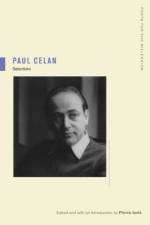
"Paul Celan is one of the essential poets--not just of the twentieth century, but of all time. Pierre Joris's selections from the remarkable, heart-shattering work provide what is surely the best one-volume introduction to Celan ever published in English."--Paul Auster"No twentieth-century poet pierces the heart of language with such an exquisite blade as Paul Celan. With Pierre Joris & company's translations of key poems, poetics, letters, and exemplary commentary, it is as if we are reading Celan for the last time, once again."--Charles Bernstein, author of "With Strings"Joris has dwelled during the better part of his life in Celan's words and silences and, as his brilliant introduction demonstrates, he has journeyed through the work's intricacies like very few others."--Michael Palmer, author of "The Promises of Glass"A beautiful--and necessary--book. Celan's charred radiance shines through every page."--Richard Sieburth, translator of "Hymns and Fragments
This volume leads the reader through the maze of social, cultural, economic and political changes in 12 Central and Eastern European countries, showing how every path ended in dictatorship and despotism by the start of World War II.
"Social Suffering" takes in the human consequences of war, famine, depression, disease and torture, problems that result from what political, economic and institutional power does to people. Experts have joined together to investigate the cultural representations of human suffering.
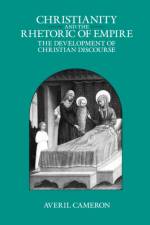
Asking how Christianity succeeded in becoming the dominant ideology in the unpromising circumstances of the Roman Empire, the author turns to the development of Christian discourse over the first to sixth centuries AD, investigating its essential characteristics, its effects on existing forms of communication, and its eventual preeminence.
Focuses on the power of film and photography to make sense of ourselves and others. This work deals with issues of representation and the construction of visual meaning across cultures. It addresses the way the 'real' on film creates fantasy, news, and 'science', and considers this problematic process as cultural boundaries are crossed.
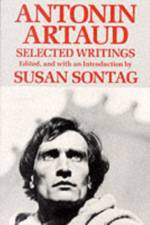
"Artaud remains one of the significant and influential theorists of modern theatre."--Gerald Rabkin, Rutgers University
Considering the formidable theoretical, ethical, and practical issues that confront ethnomusicologists who direct such ensembles, this volume discusses problems of public performance and the pragmatics of pedagogy and learning processes.
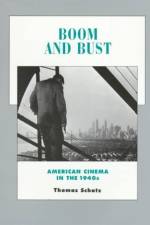
Traces the movie industry through the momentous decade of the 1940s. This title discusses changes in the structure of the studio system - including the shift to independent production - and the dominant stars, genres, and production trends through the period.
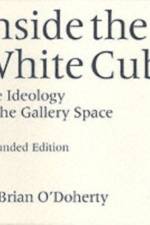
Concerned with the complex and sophisticated relationship between economics, social context, and aesthetics as represented in the contested space of the art gallery, the author raises the question of how artists must construe their work in relation to the gallery space and system.
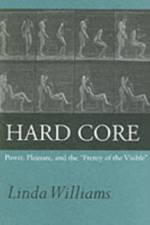
In this study, the author moves beyond the impasse of the anti-porn/anti-censorship debate to analyze what hard-core film pornography is and does - as a genre with a history, as a specific cinematic form, and as part of contemporary discourse on sexuality.
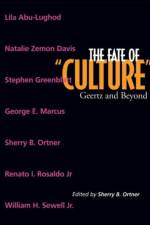
Clifford Geertz is one of the foremost figures in the reconfiguration of the boundary between the social sciences and the humanities in the second half of the twentieth century. This book takes a fresh look at Geertz's work, and considers the continuing implications of his work in the contemporary context.
Abonner på vårt nyhetsbrev og få rabatter og inspirasjon til din neste leseopplevelse.
Ved å abonnere godtar du vår personvernerklæring.