










Gjør som tusenvis av andre bokelskere
Abonner på vårt nyhetsbrev og få rabatter og inspirasjon til din neste leseopplevelse.
Ved å abonnere godtar du vår personvernerklæring.Du kan når som helst melde deg av våre nyhetsbrev.

Acknowledging no god but the corporate good, the shoshamen-high-powered professionals within Japan's integrated trading companies-serve as the unrelenting cogs of an economic machine. Or do they?Shoshaman takes us inside the world of Japan Inc. to explore the daily lives of the people who inhabit it. Written by a senior executive in a major sogo shosha, this absorbing novel reveals, as no textbook can, the strategies required to win the race to the top. It also makes painfully clear the ethical and psychological choices that such a race demands. The cast of characters is as varied as the corporate world itself, from the devoted Ojima, who has been passed over by the company, to the spirited Masako, who strikes out on her own. The hero, Nakasato Michio, finds that the road to success is long and perilous, as he tries to satisfy his ambitions while remaining faithful to his values.First published as Kigyoka sarariman in 1986 and made into a prize-winning television miniseries in 1988, the book has been acclaimed in Japan for the verisimilitude of its characters and situations. It offers a clear understanding of what it is like-in human terms-to survive and perhaps succeed within the confines of the Japanese corporation.
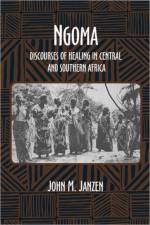
Ngoma, in Bantu, means drum, song, performance, and healing cult or association. A widespread form of ritual healing in Central and Southern Africa, ngoma is fully investigated here for the first time and interpreted in a contemporary context. John Janzen's daring study incorporates drumming and spirit possession into a broader, institutional profile that emphasizes the varieties of knowledge and social forms and also the common elements of "e;doing ngoma."e;Drawing on his recent field research in Kinshasa, Dar-es-Salaam, Mbabane, and Capetown, Janzen reveals how ngoma transcends national and social boundaries. Spoken and sung discourses about affliction, extended counseling, reorientation of the self or household, and the creation of networks that link the afflicted, their kin, and their healers are all central to ngoma-and familiar to Western self-help institutions as well. Students of African healing and also those interested in the comparative and historical study of medicine, religion, and music will find Ngoma a valuable and thought-provoking book.
Originally published in 1966 and now recognized as a classic, Norman O. Brown's meditation on the condition of humanity and its long fall from the grace of a natural, instinctual innocence is available once more for a new generation of readers. Love's Body is a continuation of the explorations begun in Brown's famous Life Against Death. Rounding out the trilogy is Brown's brilliant Apocalypse and/or Metamorphosis.
The essays assembled here represent forty years of reflection about the European cultural past by an eminent historian. The volume concentrates on the Renaissance and Reformation, while providing a lens through which to view problems of perennial interest. A Usable Past is a book of unusual scope, touching on such topics as political thought and historiography, metaphysical and practical conceptions of order, the relevance of Renaissance humanism to Protestant thought, the secularization of European culture, the contributions of particular professional groups to European civilization, and the teaching of history.The essays in A Usable Past are unified by a set of common concerns. William Bouwsma has always resisted the pretensions to science that have shaped much recent historical scholarship and made the work of historians increasingly specialized and inaccessible to lay readers. Following Friedrich Nietzsche, he argues that since history is a kind of public utility, historical research should contribute to the self-understanding of society.
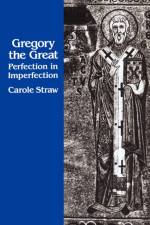
Gregory I (590-604) is often considered the first medieval pope and the first exponent of a truly medieval spirituality. Carole Straw places Gregory in his historical context and considers the many facets of his personality-monk, preacher, and pope-in order to elucidate the structure of his thought and present a unified, thematic interpretation of his spiritual concerns.
While it is often acknowledged that we live in a "e;postindustrial"e; age, our economic concepts have lagged far behind our postmodern sensibility. In this incisive new work, the well-known sociologist, Fred Block, sheds obsolete and shopworn economic analysis by presenting a bold, sweeping reconceptualization of the economy. Postindustrial Possibilities provides a fresh understanding of the dynamics of postindustrial change while offering a roadmap for future economic thinking.Block takes as his point of departure the tired concepts of neo-classical economics which, while still dominant, fall short as tools for comprehending contemporary economic forces. In Block's mind, the failure to revise the concepts of industrial economics means that the reality of today's economy is increasingly understood as "e;through a glass darkly."e; Intent on reinvigorating thinking in this area, Block masterfully critiques the central categories of neo-classical economics, such as the market, labor, and capital.Block argues that the neo-classical tradition has obscured the fact that capitalist prosperity has been built not on "e;free markets"e; but rather on systematic constraints on market freedom. He further suggests that measurements of capital have become increasingly problematic and that the concept obscures the critical sources of productivity within organizations. In his far-reaching analysis of the Gross National Product, Block shows that there is a growing divergence between the factors that determine people's well-being and trends in measured GNP.Postindustrial Possibilities sets forth a new intellectual paradigm that might be called "e;Qualitative Growth."e; One of its primary foci is a shift toward improved product quality and greater priority for various non-commodity satisfactions such as leisure, interesting work, economic security and a safe and clean environment. It also promotes a recognition that greater economic efficiency rests not on infusions of capital but on cooperative labor relations and on institutional reform.Wide-ranging, intellectually vibrant and lucid, Postindustrial Possibilities will engender controversy and debate. It is an enormous contribution that social scientists and policymakers will need to come to terms with.
The thousands of ritual bronze vessels discovered by China's archaeologists serve as the major documentary source for the Western Zhou dynasty (1045-771 B.C.). These vessels contain long inscriptions full of detail on subjects as diverse as the military history of the period, the bureaucratic structure of the royal court, and lawsuits among the gentry. Moreover, being cast in bronze, the inscriptions preserve exactly the contemporary script and language.Shaughnessy has written a meticulous and detailed work on the historiography and interpretation of these objects. By demonstrating how the inscriptions are read and interpreted, Shaughnessy makes accessible in English some of the most important evidence about life in ancient China.
Historically, one of the recurring arguments in psychiatry has been that heredity is the root cause of mental illness. In Inheriting Madness, Ian Dowbiggin traces the rise in popularity of hereditarianism in France during the second half of the nineteenth century to illuminate the nature and evolution of psychiatry during this period.In Dowbiggin's mind, this fondness for hereditarianism stemmed from the need to reconcile two counteracting factors. On the one hand, psychiatrists were attempting to expand their power and privileges by excluding other groups from the treatment of the mentally ill. On the other hand, medicine's failure to effectively diagnose, cure, and understand the causes of madness made it extremely difficult for psychiatrists to justify such an expansion. These two factors, Dowbiggin argues, shaped the way psychiatrists thought about insanity, encouraging them to adopt hereditarian ideas, such as the degeneracy theory, to explain why psychiatry had failed to meet expectations. Hereditarian theories, in turn, provided evidence of the need for psychiatrists to assume more authority, resources, and cultural influence.Inheriting Madness is a forceful reminder that psychiatric notions are deeply rooted in the social, political, and cultural history of the profession itself. At a time when genetic interpretations of mental disease are again in vogue, Dowbiggin demonstrates that these views are far from unprecedented, and that in fact they share remarkable similarities with earlier theories. A familiarity with the history of the psychiatric profession compels the author to ask whether or not public faith in it is warranted.
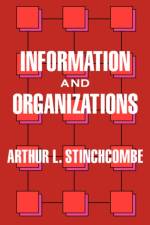
An ambitious new work by a well-respected sociologist, Information and Organizations provides a bold perspective of the dynamics of organizations. Stinchcombe contends that the "e;information problem"e; and the concept of "e;uncertainty"e; provide the key to understanding how organizations function. In a delightful mix of large theoretical insights and vivid anecdotal material, Stinchcombe explores the ins and outs of organizations from both a macro and micro perspective. He reinterprets the work of the renowned scholars of business, Alfred Chandler, James March and Oliver Williamson, and looks in depth at corporations like DuPont and General Motors. Along the way, Stinchcombe explores subjects as varied as class consciousness, innovation, contracts and university administration. All of these analyses are distinguished by incisive thinking and creative new approaches to issues that have long confronted business people and those interested in organizational theory.A tour de force, Information and Organizations is a must-read for business people and scholars of many stripes. It promises to be a widely discussed and debated work.
Using cases of plant migration documented by both historical and fossil evidence, Jonathan D. Sauer provides a landmark assessment of what is presently known, and not merely assumed, about the process.
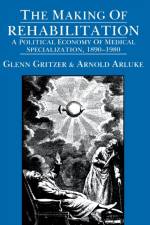
Focusing on the history of one medical field-rehabilitation medicine-this book provides the first systematic analysis of the underlying forces that shape medical specialization, challenging traditional explanations of occupational specialization.
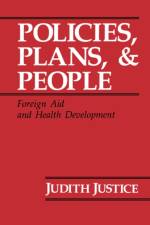
Judith Justice uses an interdisciplinary approach to show how anthropologists and planners can combine their expertise to make health care programs culturally compatible with the populations they serve.
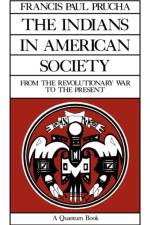
American Indian affairs are much in the public mind today-hotly contested debates over such issues as Indian fishing rights, land claims, and reservation gambling hold our attention. While the unique legal status of American Indians rests on the historical treaty relationship between Indian tribes and the federal government, until now there has been no comprehensive history of these treaties and their role in American life.Francis Paul Prucha, a leading authority on the history of American Indian affairs, argues that the treaties were a political anomaly from the very beginning. The term "e;treaty"e; implies a contract between sovereign independent nations, yet Indians were always in a position of inequality and dependence as negotiators, a fact that complicates their current attempts to regain their rights and tribal sovereignty.Prucha's impeccably researched book, based on a close analysis of every treaty, makes possible a thorough understanding of a legal dilemma whose legacy is so palpably felt today.
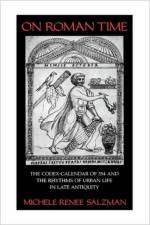
Because they list all the public holidays and pagan festivals of the age, calendars provide unique insights into the culture and everyday life of ancient Rome. The Codex-Calendar of 354 miraculously survived the Fall of Rome. Although it was subsequently lost, the copies made in the Renaissance remain invaluable documents of Roman society and religion in the years between Constantine's conversion and the fall of the Western Empire.In this richly illustrated book, Michele Renee Salzman establishes that the traditions of Roman art and literature were still very much alive in the mid-fourth century. Going beyond this analysis of precedents and genre, Salzman also studies the Calendar of 354 as a reflection of the world that produced and used it. Her work reveals the continuing importance of pagan festivals and cults in the Christian era and highlights the rise of a respectable aristocratic Christianity that combined pagan and Christian practices. Salzman stresses the key role of the Christian emperors and imperial institutions in supporting pagan rituals. Such policies of accomodation and assimilation resulted in a gradual and relatively peaceful transformation of Rome from a pagan to a Christian capital.
Why does tuberculosis, a disease which is both curable and preventable, continue to produce over 50,000 new cases a year in South Africa, primarily among blacks? In answering this question Randall Packard traces the history of one of the most devastating diseases in twentieth-century Africa, against the background of the changing political and economic forces that have shaped South African society from the end of the nineteenth century to the present. These forces have generated a growing backlog of disease among black workers and their families and at the same time have prevented the development of effective public health measures for controlling it. Packard's rich and nuanced analysis is a significant contribution to the growing body of literature on South Africa's social history as well as to the history of medicine and the political economy of health.
Drawing on the evidence of anthropology as well as ancient literature and inscriptions, Gagarin examines the emergence of law in Greece from the 8th through the 6th centuries B.C., that is, from the oral culture of Homer and Hesiod to the written enactment of codes of law in most major cities.
Every foreign traveler in Japan is delighted by the verdant forest-shrouded mountains that thrust skyward from one end of the island chain to the other. The Japanese themselves are conscious of the lush green of their homeland, which they sometimes refer to as "e;the green archipelago."e; Yet, based on its fragile geography and centuries of extremely dense human occupation, Japan today should be an impoverished, slum-ridden, peasant society subsisting on a barren, eroded moonscape characterized by bald mountains and debris-strewn lowlands.In fact, as Conrad Totman argues in this pathbreaking work based on prodigious research, this lush verdue is not a monument to nature's benevolence and Japanese aesthetic sensibilities, but the hard-earned result of generations of human toil that have converted the archipelago into one great forest preserve. Indeed, the author shows that until the late 1600s Japan was well on her way to ecological disaster due to exploitative forestry. During the Tokugawa period, however, an extraordinary change took place resulting in a system of "e;regenerative forestry"e; that averted the devastation of Japan's forests. The Green Archipelago is the only major Western-language work on this subject and a landmark not only in Japanese history, but in the history of the environment.
This book is not meant to be a definitive exploration of the whole of the two churches in any case. The attempt would be absurd. But the book is not meant, either, to be an intense exploration of certain aspects of the two churches. It is meant rather to be an extended essay about the connected differences between the two churches, to use aspects as touchstones for comparison. It is meant to be a comparison of two total styles. These are not architectural styles, although there is a marked and significant difference between English and Italian ecclesiastical architecture in the thirteenth century. The nonarchitectural style of the thirteenth-century Italian church might in fact be called sustained Romanesque, or perhaps sustained Burgundian.Comparing England (or Britain) with Italy in order to expose more fully one or both is not a new idea. Historians, like Tacitus and Collingwood, have made the comparison, and so have poets, like Browning and, with superb intellectuality, Clough. This is, at least locally, where angels feared to tread. The famous Venetian Anonymous wrote from the other side in his Relation (of about 1500), and condensed for us his comparison in the observation that unlike the Italians the English felt no real love, only lust. The spring bough and the melon-flower, Collingwoods city and fieldthe long continuity of the difference is startlingly apparent. Explaining the continuity (and perhaps there is no more difficult sort of historical explanationits difficulty is painful to the mind) is not the job that this book sets itself. But it would be dull and dishonest to ignore the fact that the continuity exists. All that this book has to say may be no more than that the thirteenthcentury Italian church was in fact, as Browning warned, a melon-flower. The book may be only a gloss on amore. The symbol is more inclusive, more evocative, less guilty of excluding the essential but undefined, than detailed description can be. Melon-flower and amore, however, fortunately for the purpose of this book, say very little about the intricate, connected detail of administrative history. Collingwoods (after Tacituss) city against field presses less deeply but says more. The general difference between the styles of the English and Italian churches has a great deal to do, and very directly, with the fact that the inhabitants of Italy were continually city-dwellers and the inhabitants of Britain were essentially not.Although this book is about both England and Italy, it approaches them differently. The thirteenth-century Italian church is, particularly in English and French, practically unknown. Before it can be explained or analyzed, it must be recreated, formed again in detail. The job is in part really archaeological. The outline of past existence must be uncovered. This is not at all true of the thirteenth-century English church. It has been well explored. This disparity in past observation forces my book to talk much more of Italy than of England; but, if it is a book about one church rather than the other, it is a book about England. England is meant to be seen, for a change, against what it was not. In this sort of profile it has a different look. England may no longer seem a country in the frozen North, incapable, in the distance, of responding fully to Lateran enthusiasm. Its full response to ecclesiastical government may seem clearly connected with its, of course relatively, full response to secular government.
This title reexamines and reconsiders the model of empirical research underlying most empirical work. The goal is neither a whitewash nor capital punishment, but rather it is to reform and mold empirical research into an activity that contributes as much as possible to a rigorous understanding of society. Without worrying about defining science or even determining the essence of the scientific enterprise, the goal is one that pools together logical thinking and empirically determined information.One of the fundamental issues to be addressed in this volume: Are there questions currently studied that are basically unanswerable even if the investigator had ideal nonexperimental data? If so, what are the alternative questions that can be dealt with successfully by empirical social research, and how should they be approached? In the chapters ahead, it will be important to keep in mind this doctrine of the undoable. Of course, one cannot simply mutter undoable when a difficult obstacle is encountered, turn off the computer, and look in the want ads for a new jobor at least a new task. Instead, it means considering if there is some inherent logical reason or sociological force that makes certain empirical questions unanswerable. There are four types of undoable questions to consider: those that are inherently impossible; those that are premature; those that are overly complicated; and those that empirical and theoretical knowledge have nullified.
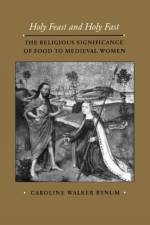
In the period between 1200 and 1500 in western Europe, a number of religious women gained widespread veneration and even canonization as saints for their extraordinary devotion to the Christian eucharist, supernatural multiplications of food and drink, and miracles of bodily manipulation, including stigmata and inedia (living without eating). The occurrence of such phenomena sheds much light on the nature of medieval society and medieval religion. It also forms a chapter in the history of women. Previous scholars have occasionally noted the various phenomena in isolation from each other and have sometimes applied modern medical or psychological theories to them. Using materials based on saints' lives and the religious and mystical writings of medieval women and men, Caroline Walker Bynum uncovers the pattern lying behind these aspects of women's religiosity and behind the fascination men and women felt for such miracles and devotional practices. She argues that food lies at the heart of much of women's piety. Women renounced ordinary food through fasting in order to prepare for receiving extraordinary food in the eucharist. They also offered themselves as food in miracles of feeding and bodily manipulation. Providing both functionalist and phenomenological explanations, Bynum explores the ways in which food practices enabled women to exert control within the family and to define their religious vocations. She also describes what women meant by seeing their own bodies and God's body as food and what men meant when they too associated women with food and flesh. The author's interpretation of women's piety offers a new view of the nature of medieval asceticism and, drawing upon both anthropology and feminist theory, she illuminates the distinctive features of women's use of symbols. Rejecting presentist interpretations of women as exploited or masochistic, she shows the power and creativity of women's writing and women's lives.
It is not the purpose of this work to propose a specific format for the settlement of the citys current difficulties with the valley, to resolve the environmental questions associated with Los Angeless proposed groundwater pumping program, or to promote any cause associated with the developing situation in the Owens Valley. But by performing the essential historical task of separating what happened from what did not, and by distinguishing in this way the choices which have been made from those which have yet to be decided, it is my hope that this effort will help to establish that common basis for understanding which is essential for the debate over specific issues to proceed most effectively. This book, then, is scarcely the last word on the Owens Valley conflict: the final chapter, after all, has yet to be written.The story that has emerged here is at once very different and more troubling than the conventional treatments of the conflict as a simplistic political morality play. Any attempt to deal with so controversial a subject, however, is almost certain to spark controversy itself. For that reason, with the exception of a small collection of private letters, this work is constructed entirely from the published documents and other materials available to the general public, anchoring the narrative in sources the reader can consult to trace the line of my argument on any point with which he or she may disagree. In addition, the work as a whole has been reviewed for technical accuracy by officials of the Los Angeles Department of Water and Power, although the department is in no way responsible for the content of this study or the conclusions drawn from it.
How do women choose between work and family commitments? And what are the causes, limits, and consequences of the "e;subtle revolution"e; in women's choices over the 1960s and 1970s? To answer these questions, Kathleen Gerson analyzes the experiences of a carefully selected group of middle-class and working-class women who were young adults in the 1970s. Their informative life histories reveal the emerging social forces in American society that have led today's women to face several difficult choices.
Laudan constructs a fresh approach to a longtime problem for the philosopher of science: how to explain the simultaneous and widespread presence of both agreement and disagreement in science. Laudan critiques the logical empiricists and the post-positivists as he stresses the need for centrality and values and the interdependence of values, methods, and facts as prerequisites to solving the problems of consensus and dissent in science.
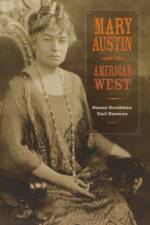
Mary Austin (1868-1934)-eccentric, independent, and unstoppable-was twenty years old when her mother moved the family west. Austin's first look at her new home, glimpsed from California's Tejon Pass, reset the course of her life, "e;changed her horizons and marked the beginning of her understanding, not only about who she was, but where she needed to be."e; At a time when Frederick Jackson Turner had announced the closing of the frontier, Mary Austin became the voice of the American West. In 1903, she published her first book, The Land of Little Rain, a wholly original look at the West's desert and its ethnically diverse peoples. Defined in a sense by the places she lived, Austin also defined the places themselves, whether Bishop, in the Sierra Nevada, Carmel, with its itinerant community of western writers, or Santa Fe, where she lived the last ten years of her life. By the time of her death in 1934, Austin had published over thirty books and counted as friends the leading literary and artistic lights of her day. In this rich new biography, Susan Goodman and Carl Dawson explore Austin's life and achievement with unprecedented resonance, depth, and understanding. By focusing on one extraordinary woman's life, Mary Austin and the American West tells the larger story of the emerging importance of California and the Southwest to the American consciousness.
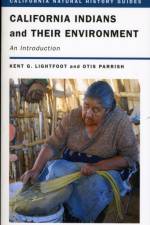
Capturing the vitality of California's unique indigenous cultures, this major new introduction incorporates the extensive research of the past thirty years into an illuminating, comprehensive synthesis for a wide audience. Based in part on new archaeological findings, it tells how the California Indians lived in vibrant polities, each boasting a rich village life including chiefs, religious specialists, master craftspeople, dances, feasts, and ceremonies. Throughout, the book emphasizes how these diverse communities interacted with the state's varied landscape, enhancing its already bountiful natural resources through various practices centered around prescribed burning. A handy reference section, illustrated with more than one hundred color photographs, describes the plants, animals, and minerals the California Indians used for food, basketry and cordage, medicine, and more. At a time when we are grappling with the problems of maintaining habitat diversity and sustainable economies, we find that these native peoples and their traditions have much to teach us about the future, as well as the past, of California.
This engrossing memoir brings to vivid life the behind-the-scenes struggles of Marcia Tucker, the first woman to be hired as a curator at the Whitney Museum of American Art and the founder of the New Museum of Contemporary Art in New York City. Tucker came of age in the 1960s, and this spirited account of her life draws the reader directly into the burgeoning feminist movement and the excitement of the New York art world during that time. Her own new ways of thinking led her to take principled stands that have changed the way art museums consider contemporary art. As curator of painting and sculpture at the Whitney, she organized major exhibitions of the work of Lee Krasner, Joan Mitchell, Robert Morris, Bruce Nauman, and Richard Tuttle, among others. As founder of the New Museum of Contemporary Art, she organized and curated groundbreaking exhibitions that often focused on the nexus of art and politics. The book highlights Tucker's commitment to forging a new system when the prevailing one proved too narrow for her expansive vision.
Personal, anecdotal, and highly engaging, Watching Giants opens a window on a world that seems quite like our own, yet is so different that understanding it pushes the very limits of our senses. Elin Kelsey's colorful first-person account, drawing from her rich, often humorous, everyday experiences as a mother, a woman, and a scientist, takes us to the incredibly productive waters of the Gulf of California and beyond, to oceans around the world. Kelsey brings us along as she talks to leading cetacean researchers and marine ecologists about their intriguing discoveries. We encounter humpback whales that build nets from bubbles, gain a disturbing maternal perspective on the dolphin-tuna issue, uncover intimate details about whale sex, and contemplate the meaning of the complex social networks that exist in the seas. What emerges alongside these fascinating snapshots of whale culture is a dizzying sense of the tremendous speed with which we are changing the oceans' ecosystems-through overfishing, noise pollution, even real estate development. Watching Giants introduces a world of immense interconnectivity and beauty-one that is now facing imminent peril.
The War Comes Home is the first book to systematically document the U.S. government's neglect of soldiers returning from Iraq and Afghanistan. Aaron Glantz, who reported extensively from Iraq during the first three years of this war and has been reporting on the plight of veterans ever since, levels a devastating indictment against the Bush administration for its bald neglect of soldiers and its disingenuous reneging on their benefits. Glantz interviewed more than one hundred recent war veterans, and here he intersperses their haunting first-person accounts with investigations into specific concerns, such as the scandal at the Walter Reed Army Medical Center. This timely book does more than provide us with a personal connection to those whose service has cost them so dearly. It compels us to confront how America treats its veterans and to consider what kind of nation deifies its soldiers and then casts them off as damaged goods.
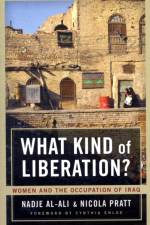
In the run-up to war in Iraq, the Bush administration assured the world that America's interest was in liberation-especially for women. The first book to examine how Iraqi women have fared since the invasion, What Kind of Liberation? reports from the heart of the war zone with dire news of scarce resources, growing unemployment, violence, and seclusion. Moreover, the book exposes the gap between rhetoric that placed women center stage and the present reality of their diminishing roles in the "e;new Iraq."e; Based on interviews with Iraqi women's rights activists, international policy makers, and NGO workers and illustrated with photographs taken by Iraqi women, What Kind of Liberation? speaks through an astonishing array of voices. Nadje Al-Ali and Nicola Pratt correct the widespread view that the country's violence, sectarianism, and systematic erosion of women's rights come from something inherent in Muslim, Middle Eastern, or Iraqi culture. They also demonstrate how in spite of competing political agendas, Iraqi women activists are resolutely pressing to be part of the political transition, reconstruction, and shaping of the new Iraq.
The Street Stops Here offers a deeply personal and compelling account of a Catholic high school in central Harlem, where mostly disadvantaged (and often non-Catholic) African American males graduate on time and get into college. Interweaving vivid portraits of day-to-day school life with clear and evenhanded analysis, Patrick J. McCloskey takes us through an eventful year at Rice High School, as staff, students, and families make heroic efforts to prevail against society's expectations. McCloskey's riveting narrative brings into sharp relief an urgent public policy question: whether (and how) to save these schools that provide the only viable option for thousands of poor and working-class students-and thus fulfill a crucial public mandate. Just as significantly, The Street Stops Here offers invaluable lessons for low-performing urban public schools.
Abonner på vårt nyhetsbrev og få rabatter og inspirasjon til din neste leseopplevelse.
Ved å abonnere godtar du vår personvernerklæring.