






Gjør som tusenvis av andre bokelskere
Abonner på vårt nyhetsbrev og få rabatter og inspirasjon til din neste leseopplevelse.
Ved å abonnere godtar du vår personvernerklæring.Du kan når som helst melde deg av våre nyhetsbrev.

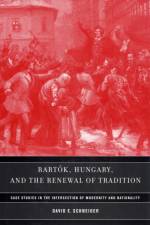
It is well known that Bela Bartok had an extraordinary ability to synthesize Western art music with the folk music of Eastern Europe. What this rich and beautifully written study makes clear is that, contrary to much prevailing thought about the great twentieth-century Hungarian composer, Bartok was also strongly influenced by the art-music traditions of his native country. Drawing from a wide array of material including contemporary reviews and little known Hungarian documents, David Schneider presents a new approach to Bartok that acknowledges the composer's debt to a variety of Hungarian music traditions as well as to influential contemporaries such as Igor Stravinsky. Putting representative works from each decade beginning with Bartok's graduation from the Music Academy in 1903 until his departure for the United States in 1940 under critical lens, Schneider reads the composer's artistic output as both a continuation and a profound transformation of the very national tradition he repeatedly rejected in public. By clarifying why Bartok felt compelled to obscure his ties to the past and by illuminating what that past actually was, Schneider dispels myths about Bartok's relationship to nineteenth-century traditions and at the same time provides a new perspective on the relationship between nationalism and modernism in early-twentieth century music.
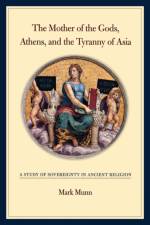
Among maternal deities of the Greek pantheon, the Mother of the Gods was a paradox. She is variously described as a devoted mother, a chaste wife, an impassioned lover, and a virgin daughter; she is said to be both foreign and familiar to the Greeks. In this erudite and absorbing study, Mark Munn examines how the cult of Mother of the Gods came from Phrygia and Lydia, where she was the mother of tyrants, to Athens, where she protected the laws of the Athenian democracy. Analyzing the divergence of Greek and Asiatic culture at the beginning of the classical era, Munn describes how Kybebe, the Lydian goddess who signified fertility and sovereignty, assumed a different aspect to the Greeks when Lydia became part of the Persian empire. Conflict and resolution were played out symbolically, he shows, and the goddess of Lydian tyranny was eventually accepted by the Athenians as the Mother of the Gods, and as a symbol of their own sovereignty.This book elegantly illustrates how ancient divinities were not static types, but rather expressions of cultural systems that responded to historical change. Presenting a new perspective on the context in which the Homeric and Hesiodic epics were composed, Munn traces the transformation of the Asiatic deity who was the goddess of Sacred Marriage among the Assyrians and Babylonians, equivalent to Ishtar. Among the Lydians, she was the bride to tyrants and the mother of tyrants. To the Greeks, she was Aphrodite. An original and compelling consideration of the relations between the Greeks and the dominant powers of western Asia, The Mother of the Gods, Athens, and the Tyranny of Asia is the first thorough examination of the way that religious cult practice and thought influenced political activities during and after the sixth and fifth centuries B.C.
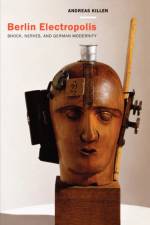
Berlin Electropolis ties the German discourse on nervousness in the late nineteenth and early twentieth centuries to Berlin's transformation into a capital of the second industrial revolution. Focusing on three key groups-railway personnel, soldiers, and telephone operators-Andreas Killen traces the emergence in the 1880s and then later decline of the belief that modernity caused nervous illness. During this period, Killen explains, Berlin became arguably the most advanced metropolis in Europe. A host of changes, many associated with breakthroughs in technologies of transportation, communication, and leisure, combined to radically alter the shape and tempo of everyday life in Berlin. The resulting consciousness of accelerated social change and the shocks and afflictions that accompanied it found their consummate expression in the discourse about nervousness. Wonderfully researched and clearly written, this book offers a wealth of new insights into the nature of the modern metropolis, the psychological aftermath of World War I, and the operations of the German welfare state. Killen also explores cultural attitudes toward electricity, the evolution of psychiatric thought and practice, and the status of women workers in Germany's rapidly industrializing economy. Ultimately, he argues that the backlash against the welfare state that occurred during the late Weimar Republic brought about the final decoupling of modernity and nervous illness.
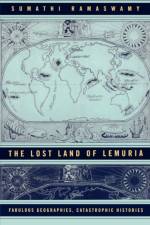
During the nineteenth century, Lemuria was imagined as a land that once bridged India and Africa but disappeared into the ocean millennia ago, much like Atlantis. A sustained meditation on a lost place from a lost time, this elegantly written book is the first to explore Lemuria's incarnations across cultures, from Victorian-era science to Euro-American occultism to colonial and postcolonial India. The Lost Land of Lemuria widens into a provocative exploration of the poetics and politics of loss to consider how this sentiment manifests itself in a fascination with vanished homelands, hidden civilizations, and forgotten peoples. More than a consideration of nostalgia, it shows how ideas once entertained but later discarded in the metropole can travel to the periphery-and can be appropriated by those seeking to construct a meaningful world within the disenchantment of modernity. Sumathi Ramaswamy ultimately reveals how loss itself has become a condition of modernity, compelling us to rethink the politics of imagination and creativity in our day.
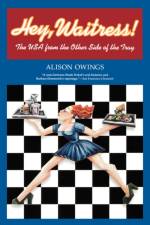
Most of us have sat across the tray from a waitress, but how many of us know what really is going on from her side? Hey, Waitress! aims to tell us. Containing lively, personal portraits of waitresses from many different walks of life, this book is the first of its kind to show the intimate, illuminating, and often shocking behind-the-scenes stories of waitresses' daily shifts and daily lives.Alison Owings traveled the country-from border to border and coast to coast-to hear firsthand what waitresses think about their lives, their work, and their world. Part journalism and part oral history, Hey, Waitress! introduces an eclectic cast of characters: a ninety-five-year-old Baltimore woman who may have been the oldest living waitress, a Staten Island firebrand laboring at a Pizza Hut, a well-to-do runaway housewife, a Native American proud of her financial independence, a college student loving her diner more than her studies, a Cajun grandmother of twenty-two, and many others.The book also offers vivid slices of American history. The stories describe the famous sit-in at the Woolworth's counter in Greensboro, North Carolina, which helped spark the civil rights movement; early struggles for waitress unions; and battles against sexually discriminatory hiring in restaurants.A superb and accessible means of breaking down stereotypes, this book reveals American waitresses in all their complexity and individuality, and will surely change the way we order, tip, and, most of all, behave in restaurants.
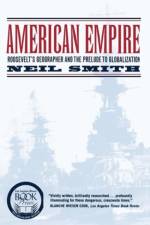
An American Empire, constructed over the last century, long ago overtook European colonialism, and it has been widely assumed that the new globalism it espoused took us "e;beyond geography."e; Neil Smith debunks that assumption, offering an incisive argument that American globalism had a distinct geography and was pieced together as part of a powerful geographical vision. The power of geography did not die with the twilight of European colonialism, but it did change fundamentally. That the inauguration of the American Century brought a loss of public geographical sensibility in the United States was itself a political symptom of the emerging empire. This book provides a vital geographical-historical context for understanding the power and limits of contemporary globalization, which can now be seen as representing the third of three distinct historical moments of U.S. global ambition.The story unfolds through a decisive account of the career of Isaiah Bowman (1878-1950), the most famous American geographer of the twentieth century. For nearly four decades Bowman operated around the vortex of state power, working to bring an American order to the global landscape. An explorer on the famous Machu Picchu expedition of 1911 who came to be known first as "e;Woodrow Wilson's geographer,"e; and later as Frankin D. Roosevelt's, Bowman was present at the creation of U.S. liberal foreign policy. A quarter-century later, Bowman was at the center of Roosevelt's State Department, concerned with the disposition of Germany and heightened U.S. access to European colonies; he was described by Dean Acheson as a key "e;architect of the United Nations."e; In that period he was a leader in American science, served as president of Johns Hopkins University, and became an early and vociferous cold warrior. A complicated, contradictory, and at times controversial figure who was very much in the public eye, he appeared on the cover of Time magazine. Bowman's career as a geographer in an era when the value of geography was deeply questioned provides a unique window into the contradictory uses of geographical knowledge in the construction of the American Empire. Smith's historical excavation reveals, in broad strokes yet with lively detail, that today's American-inspired globalization springs not from the 1980s but from two earlier moments in 1919 and 1945, both of which ended in failure. By recharting the geography of this history, Smith brings the politics-and the limits-of contemporary globalization sharply into focus.
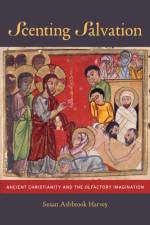
This book explores the role of bodily, sensory experience in early Christianity (first - seventh centuries AD) by focusing on the importance of smell in ancient Mediterranean culture. Following its legalization in the fourth century Roman Empire, Christianity cultivated a dramatically flourishing devotional piety, in which the bodily senses were utilized as crucial instruments of human-divine interaction. Rich olfactory practices developed as part of this shift, with lavish uses of incense, holy oils, and other sacred scents. At the same time, Christians showed profound interest in what smells could mean. How could the experience of smell be construed in revelatory terms? What specifically could it convey? How and what could be known through smell? Scenting Salvation argues that ancient Christians used olfactory experience for purposes of a distinctive religious epistemology: formulating knowledge of the divine in order to yield, in turn, a particular human identity. Using a wide array of Pagan, Jewish, and Christian sources, Susan Ashbrook Harvey examines the ancient understanding of smell through religious rituals, liturgical practices, mystagogical commentaries, literary imagery, homiletic conventions; scientific, medical, and cosmological models; ascetic disciplines, theological discourse, and eschatological expectations. In the process, she argues for a richer appreciation of ancient notions of embodiment, and of the roles the body might serve in religion.
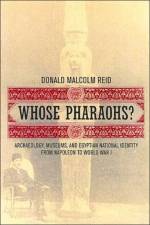
Egypt's rich and celebrated ancient past has served many causes throughout history--in both Egypt and the West. Concentrating on the era from Napoleon's conquest and the discovery of the Rosetta Stone to the outbreak of World War I, this book examines the evolution of Egyptian archaeology in the context of Western imperialism and nascent Egyptian nationalism. Traditionally, histories of Egyptian archaeology have celebrated Western discoverers such as Champollion, Mariette, Maspero, and Petrie, while slighting Rifaa al-Tahtawi, Ahmad Kamal, and other Egyptians. This exceptionally well-illustrated and well-researched book writes Egyptians into the history of archaeology and museums in their own country and shows how changing perceptions of the past helped shape ideas of modern national identity.Drawing from rich archival sources in Egypt, the United Kingdom, and France, and from little-known Arabic publications, Reid discusses previously neglected topics in both scholarly Egyptology and the popular "e;Egyptomania"e; displayed in world's fairs and Orientalist painting and photography. He also examines the link between archaeology and the rise of the modern tourist industry. This richly detailed narrative discusses not only Western and Egyptian perceptions of pharaonic history and archaeology but also perceptions of Egypt's Greco-Roman, Coptic, and Islamic eras. Throughout this book, Reid demonstrates how the emergence of archaeology affected the interests and self-perceptions of modern Egyptians. In addition to uncovering a wealth of significant new material on the history of archaeology and museums in Egypt, Reid provides a fascinating window on questions of cultural heritage--how it is perceived, constructed, claimed, and contested.
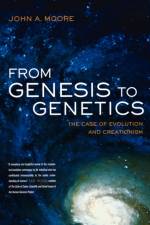
The clash between evolution and creationism is one of the most hotly contested topics in education today. This book, written by one of America's most distinguished science educators, provides essential background information on this difficult and important controversy. Giving a sweeping and balanced historical look at both schools of thought, John A. Moore shows that faith can exist alongside science, that both are essential to human happiness and fulfillment, but that we must support the teaching of science and the scientific method in our nation's schools. This highly informative book will be an invaluable aid for parents, teachers, and lawmakers, as well as for anyone who wants a better understanding of this debate. From Genesis to Genetics shows us why we must free both science and religion to do the good work for which each is uniquely qualified. Using accessible language, Moore describes in depth these two schools of thought. He begins with an analysis of the Genesis story, examines other ancient creation myths, and provides a nuanced discussion of the history of biblical interpretation. After looking at the tenets and historical context of creationism, he presents the history of evolutionary thought, explaining how it was developed, what it means, and why it is such a powerful theory. Moore goes on to discuss the relationship of nineteenth-century religion to Darwinism, examine the historic Scopes trial, and take us up to the current controversy over what to teach in schools. Most important, this book also explores options for avoiding confrontations over this issue in the future. Thoughtfully and powerfully advocating that the teaching of science be kept separate from the teaching of religion, Moore asks us to recognize that a vigorous and effective scientific community is essential to our nation's health, to our leadership role in the world, and to the preservation of a healthy environment.
Part armchair travelogue, part guide book, this projected three-volume series-divided into the western, central, and eastern United States-will introduce readers to all 155 national forests across the country. This Land is the only comprehensive field guide that describes the natural features, wildernesses, scenic drives, campgrounds, and hiking trails of our national forests, many of which-while little known and sparsely visited-boast features as spectacular as those found in our national parks and monuments. Each entry includes logistical information about size and location, facilities, attractions, and associated wilderness areas. For about half of the forests, Robert H. Mohlenbrock has provided sidebars on the biological or geological highlights, drawn from the "e;This Land"e; column that he has written for Natural History magazine since 1984. Superbly illustrated with color photographs, botanical drawings, and maps, this book is loaded with information, clearly written, and easy to use. This volume covers national forests in: Arkansas, Colorado, Louisiana, Minnesota Missouri, Montana, Nebraska, New Mexico, Oklahoma, South Dakota, Texas, Wyoming
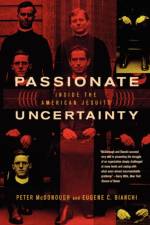
Founded by Ignatius Loyola in 1540, the Society of Jesus remains the largest and most controversial religious order of men in Catholicism. Since the 1960s, however, Jesuits in the United States have lost more than half of their members, and they have experienced a massive upheaval in what they believe and how they work and live. In this groundbreaking book, Peter McDonough and Eugene C. Bianchi draw on interviews and statements gathered from more than four hundred Jesuits and former Jesuits to provide an intimate look at turmoil among Catholicism's legendary best-and-brightest. Priests and former priests speak candidly about their reasons for joining (and leaving) the Jesuits, about their sexual development and orientation, about their spiritual crises and their engagement with other religious traditions. They discuss issues ranging from celibacy to the ordination of women, homosexuality, the rationale of the priesthood, the challenges of community life, and the divinity of Jesus.Passionate Uncertainty traces the transformation of the Society of Jesus from a fairly unified organization into a smaller, looser community with disparate goals and an elusive corporate identity. From its role as a traditional subculture during the days of immigrant Catholicism, the order has changed into an amalgam of countercultures shaped around social mission, sexual identity, and an eclectic spirituality. The story of the Jesuits reflects the crisis of clerical authority and the deep ambivalence surrounding American Catholicism's encounter with modernity.
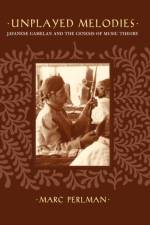
The gamelan music of Central Java is one of the world's great orchestral traditions. Its rich sonic texture is not based on Western-style harmony or counterpoint, but revolves around a single melody. The nature of that melody, however, is puzzling. In this book, Marc Perlman uses this puzzle as a key to both the art of the gamelan and the nature of musical knowledge in general. Some Javanese musicians have suggested that the gamelan's central melody is inaudible, an implicit or "e;inner"e; melody. Yet even musicians who agree on its existence may disagree about its shape. Drawing on the insights of Java's most respected musicians, Perlman shows how irregularities in the relationships between the melodic parts have suggested the existence of "e;unplayed melodies."e; To clarify the differences between these implicit-melody concepts, Unplayed Melodies tells the stories behind their formulation, identifying each as the creative contribution of an individual musician in a postcolonial context (sometimes in response to Western ethnomusicological theories). But these stories also contain evidence of the general cognitive processes through which musicians find new ways to conceptualize their music. Perlman's inquiry into these processes illuminates not only the gamelan's polyphonic art, but also the very sources of creative thinking about music.
This book illuminates one of the world's most troubled regions from a unique perspective-that of a prominent Russian intellectual. Valery Tishkov, a leading ethnographer who has also served in several important political posts, examines the evolution of the war in Chechnya that erupted in 1994, untangling the myths, the long-held resentments, and the ideological manipulations that have fueled the crisis. In particular, he explores the key themes of nationalism and violence that feed the turmoil there. Forceful, original, and timely, his study combines extensive interview material, historical perspectives, and deep local knowledge. Tishkov sheds light on Chechnya in particular and on how secessionist conflicts can escalate into violent conflagrations in general. With its balanced assessments of both Russian and Chechen perspectives, this book will be essential reading for people seeking to understand the role of Islamic fundamentalist nationalism in the contemporary world.
The Zinfandel grape-currently producing big, rich, luscious styles of red wine-has a large, loyal, even fanatical following in California and around the world. The grape, grown predominantly in California, has acquired an almost mythic status-in part because of the caliber of its wines and its remarkable versatility, and in part because of the mystery surrounding its origins. Charles Sullivan, a leading expert on the history of California wine, has at last written the definitive history of Zinfandel. Here he brings together his deep knowledge of wine with the results of his extensive research on the grape in the United States and Europe in a book that will entertain and enlighten wine aficionados and casual enthusiasts. In this lively book, Sullivan dispels the false legend that has obscured Zinfandel's history for almost a century, reveals the latest scientific findings about the grape's European roots, shares his thoughts on the quality of the wines now being produced, and looks to the future of this remarkable grape. Sullivan reconstructs Zinfandel's journey through history-taking us from Austria to the East Coast of the U.S. in the 1820s, to Gold Rush California, and through the early days of the state's wine industry. He considers the ups and downs of the grape's popularity, including its most recent and, according to Sullivan, most brilliant "e;up."e; He also unravels the two great mysteries surrounding Zinfandel: the myth of Agoston Haraszthy's role in importing Zinfandel, and the heated controversy over the relationship between California Zinfandel and Italian Primitivo. Sullivan ends with his assessments of the 2001 and 2002 vintages, firmly setting the history of Zinfandel into the chronicles of grape history.
This is an ambitious, meticulous examination of how U.S. foreign policy since the 1960s has led to partial or total cover-ups of past domestic criminal acts, including, perhaps, the catastrophe of 9/11. Peter Dale Scott, whose previous books have investigated CIA involvement in southeast Asia, the drug wars, and the Kennedy assassination, here probes how the policies of presidents since Nixon have augmented the tangled bases for the 2001 terrorist attack. Scott shows how America's expansion into the world since World War II has led to momentous secret decision making at high levels. He demonstrates how these decisions by small cliques are responsive to the agendas of private wealth at the expense of the public, of the democratic state, and of civil society. He shows how, in implementing these agendas, U.S. intelligence agencies have become involved with terrorist groups they once backed and helped create, including al Qaeda.
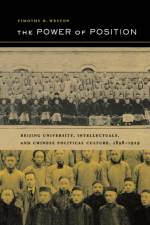
Throughout the twentieth century, Beijing University (or Beida) has been at the center of China's greatest political and cultural upheavals-from the May Fourth Movement of 1919 to the Cultural Revolution of the 1960s to the tragic events in Tiananmen Square in 1989. Why this should be-how Beida's historical importance has come to transcend that of a mere institution of higher learning--is a question at the heart of this book. A study of intellectuals and political culture during the past century's tumultuous early decades, The Power of Position is the first to focus on Beida, China's oldest and best-known national university.Timothy B. Weston portrays the university as a key locus used by intellectuals to increase their influence in society. Weston analyzes the links between intellectuals' political and cultural commitments and their specific manner of living. He also compares Beijing's intellectual culture with that of the rising metropolis of Shanghai. What emerges is a remarkably nuanced and complex picture of life at China's leading university, especially in the decades leading up to the May Fourth Movement.
In this provocative analysis of Beethoven's late style, Stephen Rumph demonstrates how deeply political events shaped the composer's music, from his early enthusiasm for the French Revolution to his later entrenchment during the Napoleonic era. Impressive in its breadth of research as well as for its devotion to interdisciplinary work in music history, Beethoven after Napoleon challenges accepted views by illustrating the influence of German Romantic political thought in the formation of the artist's mature style. Beethoven's political views, Rumph argues, were not quite as liberal as many have assumed. While scholars agree that the works of the Napoleonic era such as the Eroica Symphony or Fidelio embody enlightened, revolutionary ideals of progress, freedom, and humanism, Beethoven's later works have attracted less political commentary. Rumph contends that the later works show clear affinities with a native German ideology that exalted history, religion, and the organic totality of state and society. He claims that as the Napoleonic Wars plunged Europe into political and economic turmoil, Beethoven's growing antipathy to the French mirrored the experience of his Romantic contemporaries. Rumph maintains that Beethoven's turn inward is no pessimistic retreat but a positive affirmation of new conservative ideals.
In 1941, as a Red Army soldier fighting the Nazis on the Belarussian front, Janusz Bardach was arrested, court-martialed, and sentenced to ten years of hard labor. Twenty-two years old, he had committed no crime. He was one of millions swept up in the reign of terror that Stalin perpetrated on his own people. In the critically acclaimed Man Is Wolf to Man, Bardach recounted his horrific experiences in the Kolyma labor camps in northeastern Siberia, the deadliest camps in Stalin's gulag system.In this sequel Bardach picks up the narrative in March 1946, when he was released. He traces his thousand-mile journey from the northeastern Siberian gold mines to Moscow in the period after the war, when the country was still in turmoil. He chronicles his reunion with his brother, a high-ranking diplomat in the Polish embassy in Moscow; his experiences as a medical student in the Stalinist Soviet Union; and his trip back to his hometown, where he confronts the shattering realization of the toll the war has taken, including the deaths of his wife, parents, and sister. In a trenchant exploration of loss, post-traumatic stress syndrome, and existential loneliness, Bardach plumbs his ordeal with honesty and compassion, affording a literary window into the soul of a Stalinist gulag survivor. Surviving Freedom is his moving account of how he rebuilt his life after tremendous hardship and personal loss. It is also a unique portrait of postwar Stalinist Moscow as seen through the eyes of a person who is both an insider and outsider. Bardach's journey from prisoner back to citizen and from labor camp to freedom is an inspiring tale of the universal human story of suffering and recovery.
The nation--particularly in Exodus and Numbers--is not an abstract concept but rather a grand character whose history is fleshed out with remarkable literary power. In her innovative exploration of national imagination in the Bible, Pardes highlights the textual manifestations of the metaphor, the many anthropomorphisms by which a collective character named "e;Israel"e; springs to life. She explores the representation of communal motives, hidden desires, collective anxieties, the drama and suspense embedded in each phase of the nation's life: from birth in exile, to suckling in the wilderness, to a long process of maturation that has no definite end. In the Bible, Pardes suggests, history and literature go hand in hand more explicitly than in modern historiography, which is why the Bible serves as a paradigmatic case for examining the narrative base of national constructions. Pardes calls for a consideration of the Bible's penetrating renditions of national ambivalence. She reads the rebellious conduct of the nation against the grain, probing the murmurings of the people, foregrounding their critique of the official line. The Bible does not provide a homogeneous account of nation formation, according to Pardes, but rather reveals points of tension between different perceptions of the nation's history and destiny. This fresh and beautifully rendered portrayal of the history of ancient Israel will be of vital interest to anyone interested in the Bible, in the interrelations of literature and history, in nationhood, in feminist thought, and in psychoanalysis.
Just one hundred years ago, Americans almost universally condemned cremation. Today, nearly one-quarter of Americans choose to be cremated. The practice has gained wide acceptance as a funeral rite, in both our private and public lives, as the cremations of icons such as John Lennon and John F. Kennedy Jr. show. Purified by Fire tells the fascinating story of cremation's rise from notoriety to legitimacy and takes a provocative new look at important transformations in the American cultural landscape over the last 150 years.Stephen Prothero synthesizes a wide array of previously untapped source material, including newspapers, consumer guides, mortician trade journals, and popular magazines such as Reader's Digest to provide this first historical study of cremation in the United States. He vividly describes many noteworthy events-from the much-criticized first American cremation in 1876 to the death and cremation of Jerry Garcia in the late twentieth century. From the Gilded Age to the Progressive Era to the baby boomers of today, this book takes us on a tour through American culture and traces our changing attitudes toward death, religion, public health, the body, and the environment.
This provocative work provides a radical reassessment of the emergence and nature of Christian sexual morality, the dominant moral paradigm in Western society since late antiquity. While many scholars, including Michel Foucault, have found the basis of early Christian sexual restrictions in Greek ethics and political philosophy, Kathy L. Gaca demonstrates on compelling new grounds that it is misguided to regard Greek ethics and political theory-with their proposed reforms of eroticism, the family, and civic order-as the foundation of Christian sexual austerity. Rather, in this thoroughly informed and wide-ranging study, Gaca shows that early Christian goals to eradicate fornication were derived from the sexual rules and poetic norms of the Septuagint, or Greek Bible, and that early Christian writers adapted these rules and norms in ways that reveal fascinating insights into the distinctive and largely non-philosophical character of Christian sexual morality. Writing with an authoritative command of both Greek philosophy and early Christian writings, Gaca investigates Plato, the Stoics, the Pythagoreans, Philo of Alexandria, the apostle Paul, and the patristic Christians Clement of Alexandria, Tatian, and Epiphanes, freshly elucidating their ideas on sexual reform with precision, depth, and originality. Early Christian writers, she demonstrates, transformed all that they borrowed from Greek ethics and political philosophy to launch innovative programs against fornication that were inimical to Greek cultural mores, popular and philosophical alike. The Septuagint's mandate to worship the Lord alone among all gods led to a Christian program to revolutionize Gentile sexual practices, only for early Christians to find this virtually impossible to carry out without going to extremes of sexual renunciation. Knowledgeable and wide-ranging, this work of intellectual history and ethics cogently demonstrates why early Christian sexual restrictions took such repressive ascetic forms, and casts sobering light on what Christian sexual morality has meant for religious pluralism in Western culture, especially among women as its bearers.
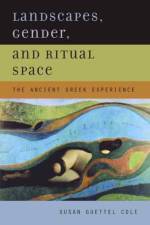
The division of land and consolidation of territory that created the Greek polis also divided sacred from productive space, sharpened distinctions between purity and pollution, and created a ritual system premised on gender difference. Regional sanctuaries ameliorated competition between city-states, publicized the results of competitive rituals for males, and encouraged judicial alternatives to violence. Female ritual efforts, focused on reproduction and the health of the family, are less visible, but, as this provocative study shows, no less significant. Taking a fresh look at the epigraphical evidence for Greek ritual practice in the context of recent studies of landscape and political organization, Susan Guettel Cole illuminates the profoundly gendered nature of Greek cult practice and explains the connections between female rituals and the integrity of the community. In a rich integration of ancient sources and current theory, Cole brings together the complex evidence for Greek ritual practice. She discusses relevant medical and philosophical theories about the female body; considers Greek ideas about purity, pollution, and ritual purification; and examines the cult of Artemis in detail. Her nuanced study demonstrates the social contribution of women's rituals to the sustenance of the polis and the identity of its people.
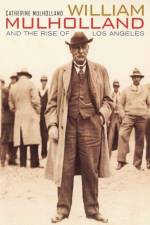
William Mulholland presided over the creation of a water system that forever changed the course of southern California's history. Mulholland, a self-taught engineer, was the chief architect of the Owens Valley Aqueduct-a project ranking in magnitude and daring with the Panama Canal-that brought water to semi-arid Los Angeles from the lush Owens Valley. The story of Los Angeles's quest for water is both famous and notorious: it has been the subject of the classic yet historically distorted movie Chinatown, as well as many other accounts. This first full-length biography of Mulholland challenges many of the prevailing versions of his life story and sheds new light on the history of Los Angeles and its relationship with its most prized resource: water. Catherine Mulholland, the engineer's granddaughter, provides insights into this story that family familiarity affords, and adds to our historical understanding with extensive primary research in sources such as Mulholland's recently uncovered office files, newspapers, and Department of Water and Power archives. She scrutinizes Mulholland's life-from his childhood in Ireland to his triumphant completion of the Owens Valley Aqueduct to the tragedy that ended his career. This vivid portrait of a rich chapter in the history of Los Angeles is enhanced with a generous selection of previously unpublished photographs. Los Angeles Times Best Nonfiction Book of 2000
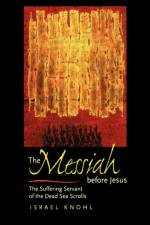
In a work that challenges notions that have dominated New Testament scholarship for more than a hundred years, Israel Knohl gives startling evidence for a messianic precursor to Jesus who is described as the "e;Suffering Servant"e; in recently published fragments of the Dead Sea Scrolls. The Messiah before Jesus clarifies many formerly incomprehensible aspects of Jesus' life and confirms the story in the New Testament about his messianic awareness. The book shows that, around the time of Jesus' birth, there came into being a conception of "e;catastrophic"e; messianism in which the suffering, humiliation, and death of the messiah were regarded as an integral part of the redemptive process. Scholars have long argued that Jesus could not have foreseen his suffering, death, and resurrection because the concept of a slain savior who rises from the dead was alien to the Judaism of his time. But, on the basis of hymns found at Qumran among the Dead Sea Scrolls, Knohl argues that, one generation before Jesus, a messianic leader arose in the Qumran sect who was regarded by his followers as ushering in an era of redemption and forgiveness. This messianic leader was killed by Roman soldiers in the course of a revolt that broke out in Jerusalem in 4 B.C.E. The Romans forbade his body to be buried and after the third day his disciples believed that he was resurrected and rose to heaven. This formed the basis for Jesus' messianic consciousness, Knohl argues; it was because of this model that Jesus anticipated he would suffer, die, and be resurrected after three days. Knohl takes his fascinating inquiry one step further by suggesting that this messiah was a figure known to us from historical sources of the period. This identification may shed new light on the mystery of the "e;Paraclete"e; in the Gospel of John. A pathbreaking study, The Messiah before Jesus will reshape our understanding of Christianity and its relationship to Judaism.
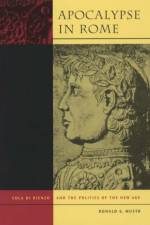
On May 20, 1347, Cola di Rienzo overthrew without violence the turbulent rule of Rome's barons and the absentee popes. A young visionary and the best political speaker of his time, Cola promised Rome a return to its former greatness. Ronald G. Musto's vivid biography of this charismatic leader-whose exploits have enlivened the work of poets, composers, and dramatists, as well as historians-peels away centuries of interpretation to reveal the realities of fourteenth-century Italy and to offer a comprehensive account of Cola's rise and fall.A man of modest origins, Cola gained a reputation as a talented professional with an unparalleled knowledge of Rome's classical remains. After earning the respect and friendship of Petrarch and the sponsorship of Pope Clement VI, Cola won the affections and loyalties of all classes of Romans. His buono stato established the reputation of Rome as the heralded New Jerusalem of the Apocalypse and quickly made the city a potent diplomatic and religious center that challenged the authority-and power-of both pope and emperor.At the height of Cola's rule, a conspiracy of pope and barons forced him to flee the city and live for years as a fugitive until he was betrayed and taken to Avignon to stand trial as a heretic. Musto relates the dramatic story of Cola's subsequent exoneration and return to central Italy as an agent of the new pope. But only weeks after he reestablished his government, he was slain by the Romans atop the Capitoline hill.In his exploration, Musto examines every known document pertaining to Cola's life, including papal, private, and diplomatic correspondence rarely used by earlier historians. With his intimate knowledge of historical Rome-its streets and ruins, its churches and palaces, from the busy Tiber riverfront to the lost splendor of the Capitoline-he brings a cinematic flair to this fascinating historical narrative.
Valentina Napolitano explores issues of migration, medicine, religion, and gender in this incisive analysis of everyday practices of urban living in Guadalajara, Mexico. Drawing on fieldwork over a ten-year period, Napolitano paints a rich and vibrant picture of daily life in a low-income neighborhood of Guadalajara. Migration, Mujercitas, and Medicine Men insightfully portrays the personal experiences of the neighborhood's residents while engaging with important questions about the nature of selfhood, subjectivity, and community identity as well as the tensions of modernity and its discontents in Mexican society.
Lofgren takes us on a tour of the Western holiday world and shows how two centuries of "e;learning to be a tourist"e; have shaped our own ways of vacationing. We see how fashions in destinations have changed through the years, with popular images (written, drawn, painted, and later photographed) teaching the tourist what to look for and how to experience it. Travelers present and future will never see their cruises, treks, ecotours, round-the-world journeys, or trips to the vacation cottage or condo in quite the same way again. All our land-, sea-, and mindscapes will be the richer for Lofgren's insights.
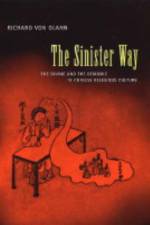
The most striking feature of Wutong, the preeminent God of Wealth in late imperial China, was the deity's diabolical character. Wutong was perceived not as a heroic figure or paragon of noble qualities but rather as an embodiment of humanity's basest vices, greed and lust, a maleficent demon who preyed on the weak and vulnerable. In The Sinister Way, Richard von Glahn examines the emergence and evolution of the Wutong cult within the larger framework of the historical development of Chinese popular or vernacular religion-as opposed to institutional religions such as Buddhism or Daoism. Von Glahn's study, spanning three millennia, gives due recognition to the morally ambivalent and demonic aspects of divine power within the common Chinese religious culture.
This incisive study adds a new dimension to discussions of Egypt's nationalist response to the phenomenon of colonialism as well as to discussions of colonialism and nationalism in general. Eve M. Troutt Powell challenges many accepted tenets of the binary relationship between European empires and non-European colonies by examining the triangle of colonialism marked by Great Britain, Egypt, and the Sudan. She demonstrates how central the issue of the Sudan was to Egyptian nationalism and highlights the deep ambivalence in Egyptian attitudes toward empire and the resulting ambiguities and paradoxes that were an essential component of the nationalist movement. A Different Shade of Colonialism enriches our understanding of nineteenth- and twentieth-century Egyptian attitudes toward slavery and race and expands our perspective of the "e;colonized colonizer."e;
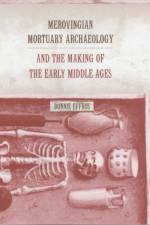
Clothing, jewelry, animal remains, ceramics, coins, and weaponry are among the artifacts that have been discovered in graves in Gaul dating from the fifth to eighth century. Those who have unearthed them, from the middle ages to the present, have speculated widely on their meaning. This authoritative book makes a major contribution to the study of death and burial in late antique and early medieval society with its long overdue systematic discussion of this mortuary evidence. Tracing the history of Merovingian archaeology within its cultural and intellectual context for the first time, Effros exposes biases and prejudices that have colored previous interpretations of these burial sites and assesses what contemporary archaeology can tell us about the Frankish kingdoms.Working at the intersection of history and archaeology, and drawing from anthropology and art history, Effros emphasizes in particular the effects of historical events and intellectual movements on French and German antiquarian and archaeological studies of these grave goods. Her discussion traces the evolution of concepts of nationhood, race, and culture and shows how these concepts helped shape an understanding of the past. Effros then turns to contemporary multidisciplinary methodologies and finds that we are still limited by the types of information that can be readily gleaned from physical and written sources of Merovingian graves. For example, since material evidence found in the graves of elite families and particularly elite men is more plentiful and noteworthy, mortuary goods do not speak as directly to the conditions in which women and the poor lived. The clarity and sophistication with which Effros discusses the methods and results of European archaeology is a compelling demonstration of the impact of nationalist ideologies on a single discipline and of the struggle toward the more pluralistic vision that has developed in the post-war years.
Abonner på vårt nyhetsbrev og få rabatter og inspirasjon til din neste leseopplevelse.
Ved å abonnere godtar du vår personvernerklæring.