







Gjør som tusenvis av andre bokelskere
Abonner på vårt nyhetsbrev og få rabatter og inspirasjon til din neste leseopplevelse.
Ved å abonnere godtar du vår personvernerklæring.Du kan når som helst melde deg av våre nyhetsbrev.

Philip Brett's groundbreaking writing on Benjamin Britten altered the course of music scholarship in the later twentieth century. This volume is the first to gather in one collection Brett's searching and provocative work on the great British composer. Some of the early essays opened the door to gay studies in music, while the discussions that Brett initiated reinvigorated the study of Britten's work and inspired a generation of scholars to imagine "e;the new musicology."e; Addressing urgent questions of how an artist's sexual, cultural, and personal identity feeds into specific musical texts, Brett examines most of Britten's operas as well as his role in the British cultural establishment of the mid-twentieth century. With some of the essays appearing here for the first time, this volume develops a complex understanding of Britten's musical achievement and highlights the many ways that Brett expanded the borders of his field.
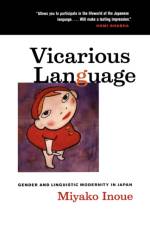
This highly original study provides an entirely new critical perspective on the central importance of ideas about language in the reproduction of gender, class, and race divisions in modern Japan. Focusing on a phenomenon commonly called "e;women's language,"e; in modern Japanese society, Miyako Inoue considers the history and social effects of this language form. Drawing on ethnographic fieldwork in a contemporary Tokyo corporation to study the everyday linguistic experience of white-collar females office workers and on historical research from the late nineteenth century to 1930, she calls into question the claim that "e;women's language"e; is a Japanese cultural tradition of ancient origin and offers a critical geneaology showing the extent to which this language form is, in fact, a cultural construct linked with Japan's national and capitalist modernity. Her theoretically sophisticated, empirically grounded, interdisciplinary work brilliantly illuminates the relationship between culture and language, the nature of power and subject formation in modernity, and how the complex nexus of gender, language, and political economy are experienced in everyday life.
Drawing on four decades of work and including new poems published here for the first time, this selection of Mei-mei Berssenbrugge's poetry displays the extraordinary luminosity characteristic of her style-its delicate, meticulous observation, great scenic imagination, and unusual degree of comfort with states of indetermination, contingency, and flux.
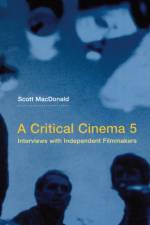
A Critical Cinema 5 is the fifth volume in Scott MacDonald's Critical Cinema series, the most extensive, in-depth exploration of independent cinema available in English. In this new set of interviews, MacDonald engages filmmakers in detailed discussions of their films and of the personal experiences and political and theoretical currents that have shaped their work. The interviews are arranged to express the remarkable diversity of modern independent cinema and the interactive community of filmmakers that has dedicated itself to producing forms of cinema that critique conventional media.
Laura Pulido traces the roots of third world radicalism in Southern California during the 1960s and 1970s in this accessible, wonderfully illustrated comparative study. Focusing on the Black Panther Party, El Centro de Accion Social y Autonomo (CASA), and East Wind, a Japanese American collective, she explores how these African American, Chicana/o, and Japanese American groups sought to realize their ideas about race and class, gender relations, and multiracial alliances. Based on thorough research as well as extensive interviews, Black, Brown, Yellow, and Left explores the differences and similarities between these organizations, the strengths and weaknesses of the third world left as a whole, and the ways that differential racialization led to distinct forms of radical politics. Pulido provides a masterly, nuanced analysis of complex political events, organizations, and experiences. She gives special prominence to multiracial activism and includes an engaging account of where the activists are today, together with a consideration of the implications for contemporary social justice organizing.
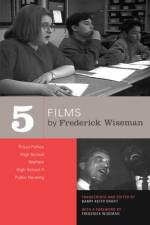
Frederick Wiseman is among America's foremost documentary filmmakers. The recipient of many awards, including three Emmys, Wiseman has made more than thirty feature-length documentaries during a career that has spanned five decades. Together, these films provide a fascinating chronicle of American social and institutional life. This book makes available for the first time transcriptions of five of Wiseman's most important films- Titicut Follies, High School, Welfare, High School II, Public Housing-providing all of the dialogue as well as annotations about other aspects of the soundtracks such as music and ambient noise, and notes about editing and camera movement. These scene-by-scene transcripts enable readers to scrutinize the films' complex structural patterns, recurring motifs, editing regimes, and the unscripted dialogue that makes Wiseman's cinema a rich repository of American speech. Editor Barry Keith Grant's critical introduction discusses the importance of sound in Wiseman's documentaries. Liberally illustrated with images from the films, these meticulous transcriptions are accompanied by a bibliography and filmography.
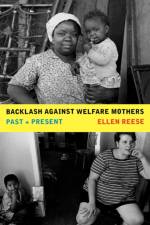
Backlash against Welfare Mothers is a forceful examination of how and why a state-level revolt against welfare, begun in the late 1940s, was transformed into a national-level assault that destroyed a critical part of the nation's safety net, with tragic consequences for American society. With a wealth of original research, Ellen Reese puts recent debates about the contemporary welfare backlash into historical perspective. She provides a closer look at these early antiwelfare campaigns, showing why they were more successful in some states than others and how opponents of welfare sometimes targeted Puerto Ricans and Chicanos as well as blacks for cutbacks. Her research reveals both the continuities and changes in American welfare opposition from the late 1940s to the present. Reese brings new evidence to light that reveals how large farmers and racist politicians, concerned about the supply of cheap labor, appealed to white voters' racial resentments and stereotypes about unwed mothers, blacks, and immigrants in the 1950s. She then examines congressional failure to replace the current welfare system with a more popular alternative in the 1960s and 1970s, which paved the way for national assaults on welfare. Taking a fresh look at recent debates on welfare reform, she explores how and why politicians competing for the white vote and right-wing think tanks promoting business interests appeased the Christian right and manufactured consent for cutbacks through a powerful, racially coded discourse. Finally, through firsthand testimonies, Reese vividly portrays the tragic consequences of current welfare policies and calls for a bold new agenda for working families.
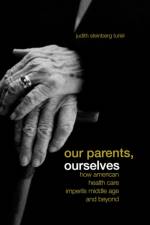
The prospect of caring for elderly relatives who may be too old, fragile, or forgetful to manage on their own looms large for millions of women and men who are unprepared for the difficulties such an experience can bring. Written by a daughter of aging parents, this book takes an honest, unflinching look at aging in America, weaving together personal stories with current medical information to trace exactly how social and health care policies are affecting daily lives. Judith Steinberg Turiel addresses such topics as healthy aging and independent living; mental impairment brought on by Alzheimer's, other dementias, and depression; women as caregivers; health care rationing; the power of prescription drug makers; end-of-life care; and prospects for Medicare. Her book clearly demonstrates the pressing need for quality health care for people of all ages-through universal, publicly funded health insurance.
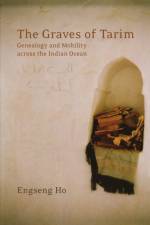
The Graves of Tarim narrates the movement of an old diaspora across the Indian Ocean over the past five hundred years. Ranging from Arabia to India and Southeast Asia, Engseng Ho explores the transcultural exchanges-in kinship and writing-that enabled Hadrami Yemeni descendants of the Muslim prophet Muhammad to become locals in each of the three regions yet remain cosmopolitans with vital connections across the ocean. At home throughout the Indian Ocean, diasporic Hadramis engaged European empires in surprising ways across its breadth, beyond the usual territorial confines of colonizer and colonized. A work of both anthropology and history, this book brilliantly demonstrates how the emerging fields of world history and transcultural studies are coming together to provide groundbreaking ways of studying religion, diaspora, and empire. Ho interprets biographies, family histories, chronicles, pilgrimage manuals and religious law as the unified literary output of a diaspora that hybridizes both texts and persons within a genealogy of Prophetic descent. By using anthropological concepts to read Islamic texts in Arabic and Malay, he demonstrates the existence of a hitherto unidentified canon of diasporic literature. His supple conceptual framework and innovative use of documentary and field evidence are elegantly combined to present a vision of this vital world region beyond the histories of trade and European empire.
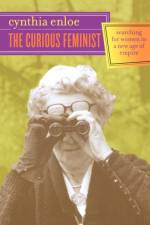
In this collection of lively essays, Cynthia Enloe makes better sense of globalization and international politics by taking a deep and personal look into the daily realities in a range of women's lives. She proposes a distinctively feminist curiosity that begins with taking women seriously, especially during this era of unprecedented American influence. This means listening carefully, digging deep, challenging assumptions, and welcoming surprises. Listening to women in Asian sneaker factories, Enloe reveals, enables us to bring down to earth the often abstract discussions of the global economy. Paying close attention to Iraqi women's organizing efforts under military occupation exposes the false global promises made by officials. Enloe also turns the beam of her inquiry inward. In a series of four candid interviews and a new set of autobiographical pieces, she reflects on the gradual development of her own feminist curiosity. Describing her wartime suburban girlhood and her years at Berkeley, she maps the everyday obstacles placed on the path to feminist consciousness-and suggests how those obstacles can be identified and overcome. The Curious Feminist shows how taking women seriously also challenges the common assumption that masculinities are trivial factors in today's international affairs. Enloe explores the workings of masculinity inside organizations as diverse as the American military, a Serbian militia, the UN, and Oxfam. A feminist curiosity finds all women worth thinking about, Enloe claims. She suggests that we pay thoughtful attention to women who appear complicit in violence or in the oppression of others, or too cozily wrapped up in their relative privilege to inspire praise or compassion. Enloe's vitality, passion, and incisive wit illuminate each essay. The Curious Feminist is an original and timely invitation to look at global politics in an entirely different way.
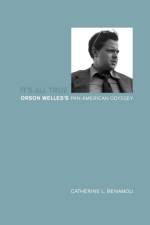
Variously described as a work of genius, a pretentious wreck, a crucially important film, and a victim of its director's ego, among other things, It's All True, shot in Mexico and Brazil between 1941 and 1942, is the legendary movie that Orson Welles never got to finish. In this book, the most comprehensive and authoritative assessment of It's All True available, Catherine Benamou synthesizes a wealth of new and little-known source material gathered on two continents, including interviews with key participants, to present a compelling original view of the film and its historical significance. Her book challenges much received wisdom about Orson Welles and illuminates the unique place he occupies in American culture, broadly defined.
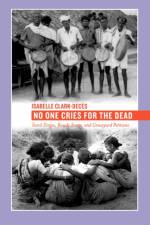
At South Indian village funerals, women cry and lament, men drink and laugh, and untouchables sing and joke to the beat of their drums. No One Cries for the Dead offers an original interpretation of these behaviors, which seem almost unrelated to the dead and to the funeral event. Isabelle Clark-Deces demonstrates that rather than mourn the dead, these Tamil funeral songs first and foremost give meaning to the caste, gender, and personal experiences of the performers.
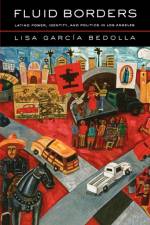
This provocative study of the Latino political experience offers a nuanced, in-depth, and often surprising perspective on the factors affecting the political engagement of a segment of the population that is now the nation's largest minority. Drawing from one hundred in-depth interviews, Lisa Garcia Bedolla compares the political attitudes and behavior of Latinos in two communities: working-class East Los Angeles and middle-class Montebello. Asking how collective identity and social context have affected political socialization, political attitudes and practices, and levels of political participation among the foreign born and native born, she offers new findings that are often at odds with the conventional wisdom emphasizing the role socioeconomic status plays in political involvement. Fluid Borders includes the voices of many individuals, offers exciting new research on Latina women indicating that they are more likely than men to vote and to participate in political activities, and considers how the experience of social stigma affects the collective identification and political engagement of members of marginal groups. This innovative study points the way toward a better understanding of the Latino political experience, and how it differs from that of other racial groups, by situating it at the intersection of power, collective identity, and place.
Ron Robin takes an intriguing look at the shifting nature of academic and public discourse in this incisive consideration of recent academic scandals-including charges of plagiarism against Stephen Ambrose, Derek Freeman's attempt to debunk Margaret Mead's research, Michael Bellesiles's alleged fabrication of an early America without weapons, Joseph Ellis's imaginary participation in major historical events of the 1960s, Napoleon Chagnon's creation and manipulation of a "e;Stone Age people,"e; and accusations that Nobel Peace Prize winner Rigoberta Menchu's testimony on the Maya holocaust was in part fiction. Scandals and Scoundrels makes the case that, contrary to popular imagery, we're not living in particularly deviant times and there is no fundamental flaw permeating a decadent academy. Instead, Robin argues, latter-day scandals are media events, tailored for the melodramatic and sensationalist formats of mass mediation. In addition, the contentious and uninhibited nature of cyberdebates fosters acrimonious exposure. Ron convincingly demonstrates that scandals are part of a necessary process of rule making and reinvention rather than a symptom of the bankruptcy of the scientific enterprise.
In this vibrant and pioneering book, Nadine Hubbs shows how a gifted group of Manhattan-based gay composers were pivotal in creating a distinctive "e;American sound"e; and in the process served as architects of modern American identity. Focusing on a talented circle that included Aaron Copland, Virgil Thomson, Leonard Bernstein, Marc Blitzstein, Paul Bowles, David Diamond, and Ned Rorem, The Queer Composition of America's Sound homes in on the role of these artists' self-identification-especially with tonal music, French culture, and homosexuality-in the creation of a musical idiom that even today signifies "e;America"e; in commercials, movies, radio and television, and the concert hall.
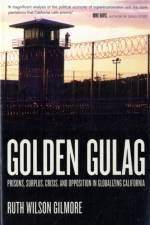
Since 1980, the number of people in U.S. prisons has increased more than 450%. Despite a crime rate that has been falling steadily for decades, California has led the way in this explosion, with what a state analyst called "e;the biggest prison building project in the history of the world."e; Golden Gulag provides the first detailed explanation for that buildup by looking at how political and economic forces, ranging from global to local, conjoined to produce the prison boom. In an informed and impassioned account, Ruth Wilson Gilmore examines this issue through statewide, rural, and urban perspectives to explain how the expansion developed from surpluses of finance capital, labor, land, and state capacity. Detailing crises that hit California's economy with particular ferocity, she argues that defeats of radical struggles, weakening of labor, and shifting patterns of capital investment have been key conditions for prison growth. The results-a vast and expensive prison system, a huge number of incarcerated young people of color, and the increase in punitive justice such as the "e;three strikes"e; law-pose profound and troubling questions for the future of California, the United States, and the world. Golden Gulag provides a rich context for this complex dilemma, and at the same time challenges many cherished assumptions about who benefits and who suffers from the state's commitment to prison expansion.
Israel's military court system, a centerpiece of Israel's apparatus of control in the West Bank and Gaza since 1967, has prosecuted hundreds of thousands of Palestinians. This authoritative book provides a rare look at an institution that lies both figuratively and literally at the center of the Israeli-Palestinian conflict. Lisa Hajjar has conducted in-depth interviews with dozens of Israelis and Palestinians-including judges, prosecutors, defense lawyers, defendants, and translators-about their experiences and practices to explain how this system functions, and how its functioning has affected the conflict. Her lucid, richly detailed, and theoretically sophisticated study highlights the array of problems and debates that characterize Israel's military courts as it asks how the law is deployed to protect and further the interests of the Israeli state and how it has been used to articulate and defend the rights of Palestinians living under occupation.
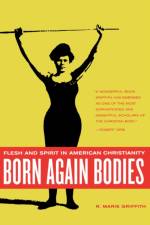
"e;Fat People Don't Go to Heaven!"e; screamed a headline in the tabloid Globe in November 2000. The story recounted the success of the Weigh Down Workshop, the nation's largest Christian diet corporation and the subject of extensive press coverage from Larry King Live to the New Yorker. In the United States today, hundreds of thousands of people are making diet a religious duty by enrolling in Christian diet programs and reading Christian diet literature like What Would Jesus Eat? and Fit for God. Written with style and wit, far ranging in its implications, and rich with the stories of real people, Born Again Bodies launches a provocative yet sensitive investigation into Christian fitness and diet culture. Looking closely at both the religious roots of this movement and its present-day incarnations, R. Marie Griffith vividly analyzes Christianity's intricate role in America's obsession with the body, diet, and fitness. As she traces the underpinning of modern-day beauty and slimness ideals-as well as the bigotry against people who are overweight-Griffith links seemingly disparate groups in American history including seventeenth-century New England Puritans, Progressive Era New Thought adherents, and late-twentieth-century evangelical diet preachers.
Arlene Davila brilliantly considers the cultural politics of urban space in this lively exploration of Puerto Rican and Latino experience in New York, the global center of culture and consumption, where Latinos are now the biggest minority group. Analyzing the simultaneous gentrification and Latinization of what is known as El Barrio or Spanish Harlem, Barrio Dreams makes a compelling case that-despite neoliberalism's race-and ethnicity-free tenets-dreams of economic empowerment are never devoid of distinct racial and ethnic considerations. Davila scrutinizes dramatic shifts in housing, the growth of charter schools, and the enactment of Empowerment Zone legislation that promises upward mobility and empowerment while shutting out many longtime residents. Foregrounding privatization and consumption, she offers an innovative look at the marketing of Latino space. She emphasizes class among Latinos while touching on black-Latino and Mexican-Puerto Rican relations. Providing a unique multifaceted view of the place of Latinos in the changing urban landscape, Barrio Dreams is one of the most nuanced and original examinations of the complex social and economic forces shaping our cities today.
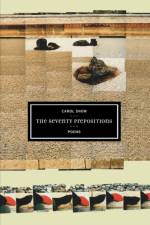
Carol Snow's award-winning poetry has been admired and celebrated as "e;work of difficult beauty"e; (Robert Hass), "e;ever restless, ever re-framing the frame of reference"e; (Boston Review), teaching us "e;how brutally self-transforming a verbal action can be when undertaken in good faith"e; (Jorie Graham). In this, her third volume, Snow continues to mine the language to its most mysterious depths and to explore the possibilities its meanings and mechanics hold for definition, transformation, and emotional truth. These poems place us before, and in, language--as we stand before, and in, the world. The Seventy Prepositions comprises three suites of poems. The first, "e;Vocabulary Sentences,"e; reflects on words and reality by taking as a formal motif the sort of sentences used to test vocabulary skills in elementary school. The poems of the second suite, "e;Vantage,"e; gather loosely around questions of perspective and perception. The closing suite finds its inspiration in the Japanese dry-landscape gardens known as karesansui, such as the famous rock garden at Ryoan-ji Temple in Kyoto. Here the poet approaches composition as one faces a "e;miniature Zen garden,"e; choosing and positioning words rather than stones, formally, precisely, evocatively.
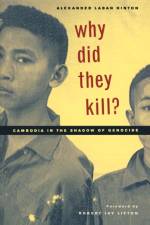
Of all the horrors human beings perpetrate, genocide stands near the top of the list. Its toll is staggering: well over 100 million dead worldwide. Why Did They Kill? is one of the first anthropological attempts to analyze the origins of genocide. In it, Alexander Hinton focuses on the devastation that took place in Cambodia from April 1975 to January 1979 under the Khmer Rouge in order to explore why mass murder happens and what motivates perpetrators to kill. Basing his analysis on years of investigative work in Cambodia, Hinton finds parallels between the Khmer Rouge and the Nazi regimes. Policies in Cambodia resulted in the deaths of over 1.7 million of that country's 8 million inhabitants-almost a quarter of the population--who perished from starvation, overwork, illness, malnutrition, and execution. Hinton considers this violence in light of a number of dynamics, including the ways in which difference is manufactured, how identity and meaning are constructed, and how emotionally resonant forms of cultural knowledge are incorporated into genocidal ideologies.
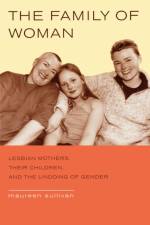
Amidst the shrill and discordant notes struck in debates over the make-up-or breakdown-of the American family, the family keeps evolving. This book offers a close and clear-eyed look into a form this change has taken most recently, the lesbian coparent family. Based on intensive interviews and extensive firsthand observation, The Family of Woman chronicles the experience of thirty-four families headed by lesbian mothers whose children were conceived by means of donor insemination.With its intimate perspective on the interior dynamics of these families and its penetrating view of their public lives, the book provides rare insight into the workings of emerging family forms and their significance for our understanding of "e;family"e;-and our culture itself.
Cinema is a truly global phenomenon and screenwriters who limit their ambitions to Hollywood can unnecessarily limit their careers. This book, loaded with information on every page, provides the practical know-how for breaking into the global marketplace. It is the first book to offer specific advice on writing for screens large and small, around the world from Hollywood to New Zealand, from Europe to Russia, and for alternative American markets including Native American, regional, and experimental. The book provides valuable insider information, such as * Twenty-five percent of German television is written by Hollywood writers. Screenwriters just need to know how to reach that market. * Many countries, including those in the European Union, have script development money available-to both foreign and local talent--from government-sponsored film funds. * The Web's influence on the film industry has been profound, and here you can find out how to network through the Web. The book also lists the key Web addresses for writers. Andrew Horton, author of two acclaimed books on screenwriting, includes personal essays by accomplished screenwriters from around the world and offers insightful case studies of several films and television scripts, among them My Big Fat Greek Wedding; Crouching Tiger, Hidden Dragon; and The Sopranos. Full of endless enthusiasm for great films and great scripts, this book will be an essential resource for both aspiring writers and accomplished writers hoping to expand their horizons, improve their skills, and increase their chances for success.Includes an interview with Terry Gilliam and contributions from Bernard Gordon, writer for The Day of the Triffids and The Thin Red Line; Lew Hunter, Chair of Screenwriting at UCLA; Karen Hall, writer/producer for Judging Amy and M*A*S*H; and other screenwriters
Focusing on gender and the family, this erudite and innovative history reconsiders the origins of Egyptian nationalism and the revolution of 1919 by linking social changes in class and household structure to the politics of engagement with British colonial rule. Lisa Pollard deftly argues that the Egyptian state's modernizing projects in the nineteenth century reinforced ideals of monogamy and bourgeois domesticity among Egypt's elite classes and connected those ideals with political and economic success. At the same time, the British used domestic and personal practices such as polygamy, the harem, and the veiling of women to claim that the ruling classes had become corrupt and therefore to legitimize an open-ended tenure for themselves in Egypt. To rid themselves of British rule, bourgeois Egyptian nationalists constructed a familial-political culture that trained new generations of nationalists and used them to demonstrate to the British that it was time for the occupation to end. That culture was put to use in the 1919 Egyptian revolution, in which the reformed, bourgeois family was exhibited as the standard for "e;modern"e; Egypt.
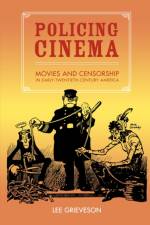
White slave films, dramas documenting sex scandals, filmed prize fights featuring the controversial African-American boxer Jack Johnson, D.W. Griffith's The Birth of a Nation-all became objects of public concern after 1906, when the proliferation of nickelodeons brought moving pictures to a broad mass public. Lee Grieveson draws on extensive original research to examine the controversies over these films and over cinema more generally. He situates these contestations in the context of regulatory concerns about populations and governance in an early-twentieth-century America grappling with the powerful forces of modernity, in particular, immigration, class formation and conflict, and changing gender roles.Tracing the discourses and practices of cultural and political elites and the responses of the nascent film industry, Grieveson reveals how these interactions had profound effects on the shaping of film content, form, and, more fundamentally, the proposed social function of cinema: how cinema should function in society, the uses to which it might be put, and thus what it could or would be. Policing Cinema develops new perspectives for the understanding of censorship and regulation and the complex relations between governance and culture. In this work, Grieveson offers a compelling analysis of the forces that shaped American cinema and its role in society.
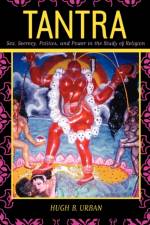
A complex body of religious practices that spread throughout the Hindu, Buddhist, and Jain traditions; a form of spirituality that seemingly combines sexuality, sensual pleasure, and the full range of physical experience with the religious life-Tantra has held a central yet conflicted role within the Western imagination ever since the first "e;discovery"e; of Indian religions by European scholars. Always radical, always extremely Other, Tantra has proven a key factor in the imagining of India. This book offers a critical account of how the phenomenon has come to be. Tracing the complex genealogy of Tantra as a category within the history of religions, Hugh B. Urban reveals how it has been formed through the interplay of popular and scholarly imaginations. Tantra emerges as a product of mirroring and misrepresentation at work between East and West--a dialectical category born out of the ongoing play between Western and Indian minds. Combining historical detail, textual analysis, popular cultural phenomena, and critical theory, this book shows Tantra as a shifting amalgam of fantasies, fears, and wish-fulfillment, at once native and Other, that strikes at the very heart of our constructions of the exotic Orient and the contemporary West.
A unique Israeli national culture-indeed, the very nature of "e;Israeliness"e;-remains a matter of debate, a struggle to blend vying memories and backgrounds, ideologies and wills. Identifying popular music as an important site in this wider cultural endeavor, this book focuses on the three major popular music cultures that are proving instrumental in attempts to invent Israeliness: the invented folk song repertoire known as Shirei Eretz Israel; the contemporary, global-cosmopolitan Israeli rock; and the ethnic-oriental musica mizrahit. The result is the first ever comprehensive study of popular music in Israel. Motti Regev, a sociologist, and Edwin Seroussi, an ethnomusicologist, approach their subject from alternative perspectives, producing a truly interdisciplinary, sociocultural account of music as a feature and a force in the shaping of Israeliness. A major ethnographic undertaking, describing and analyzing the particular history, characteristics, and practices of each music culture, Popular Music and National Culture in Israel maps not only the complex field of Israeli popular music but also Israeli culture in general.
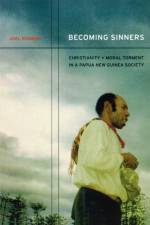
In a world of swift and sweeping cultural transformations, few have seen changes as rapid and dramatic as those experienced by the Urapmin of Papua New Guinea in the last four decades. A remote people never directly "e;missionized,"e; the Urapmin began in the 1960s to send young men to study with Baptist missionaries living among neighboring communities. By the late 1970s, the Urapmin had undergone a charismatic revival, abandoning their traditional religion for a Christianity intensely focused on human sinfulness and driven by a constant sense of millennial expectation. Exploring the Christian culture of the Urapmin, Joel Robbins shows how its preoccupations provide keys to understanding the nature of cultural change more generally. In so doing, he offers one of the richest available anthropological accounts of Christianity as a lived religion. Theoretically ambitious and engagingly written, his book opens a unique perspective on a Melanesian society, religious experience, and the very nature of rapid cultural change.
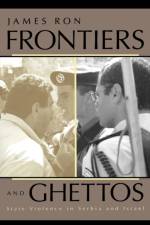
James Ron uses controversial comparisons between Serbia and Israel to present a novel theory of state violence. Formerly a research consultant to Human Rights Watch and the International Red Cross, Ron witnessed remarkably different patterns of state coercion. Frontiers and Ghettos presents an institutional approach to state violence, drawing on Ron's field research in the Middle East, Balkans, Chechnya, Turkey, and Africa, as well as dozens of rare interviews with military veterans, officials, and political activists on all sides. Studying violence from the ground up, the book develops an exciting new framework for analyzing today's nationalist wars.
This collection of new poems by one of the most respected poets in the United States uses motifs of advance and recovery, doubt and conviction-in an emotional relation to the known world. Heralded as "e;one of our most vital, unclassifiable writers"e; by the Voice Literary Supplement, Fanny Howe has published more than twenty books and is the recipient of the Gold Medal for Poetry from the Commonwealth Club of California. In addition, her Selected Poems received the 2001 Lenore Marshall Poetry Prize for the Most Outstanding Book of Poetry Published in 2000 from the Academy of American Poets.The poems in Gone describe the transit of a psyche, driven by uncertainty and by love, through various stations and experiences. This volume of short poems and one lyrical essay, all written in the last five years, is broken into five parts; and the longest of these, "e;The Passion,"e; consecrates the contradictions between these two emotions. The New York Times Book Review said, "e;Howe has made a long-term project of trying to determine how we fit into God's world, and her aim is both true and marvelously free of sentimental piety."e; With Gone, readers will have the opportunity to experience firsthand Howe's continuation of that elusive and fascinating endeavor.
Abonner på vårt nyhetsbrev og få rabatter og inspirasjon til din neste leseopplevelse.
Ved å abonnere godtar du vår personvernerklæring.