







Gjør som tusenvis av andre bokelskere
Abonner på vårt nyhetsbrev og få rabatter og inspirasjon til din neste leseopplevelse.
Ved å abonnere godtar du vår personvernerklæring.Du kan når som helst melde deg av våre nyhetsbrev.

Eating Spring Rice is the first major ethnographic study of HIV/AIDS in China. Drawing on more than a decade of ethnographic research (1995-2005), primarily in Yunnan Province, Sandra Teresa Hyde chronicles the rise of the HIV epidemic from the years prior to the Chinese government's acknowledgement of this public health crisis to post-reform thinking about infectious-disease management. Hyde combines innovative public health research with in-depth ethnography on the ways minorities and sex workers were marked as the principle carriers of HIV, often despite evidence to the contrary.Hyde approaches HIV/AIDS as a study of the conceptualization and the circulation of a disease across boundaries that requires different kinds of anthropological thinking and methods. She focuses on "e;everyday AIDS practices"e; to examine the links between the material and the discursive representations of HIV/AIDS. This book illustrates how representatives of the Chinese government singled out a former kingdom of Thailand, Sipsongpanna, and its indigenous ethnic group, the Tai-Lue, as carriers of HIV due to a history of prejudice and stigma, and to the geography of the borderlands. Hyde poses questions about the cultural politics of epidemics, state-society relations, Han and non-Han ethnic dynamics, and the rise of an AIDS public health bureaucracy in the post-reform era.
"e;I got my first job working in a toy store when I was 41 years old."e; So begins sociologist Christine Williams's description of her stint as a low-wage worker at two national toy store chains: one upscale shop and one big box outlet. In this provocative, perceptive, and lively book, studded with rich observations from the shop floor, Williams chronicles her experiences as a cashier, salesperson, and stocker and provides broad-ranging, often startling, insights into the social impact of shopping for toys. Taking a new look at what selling and buying for kids are all about, she illuminates the politics of how we shop, exposes the realities of low-wage retail work, and discovers how class, race, and gender manifest and reproduce themselves in our shopping-mall culture. Despite their differences, Williams finds that both toy stores perpetuate social inequality in a variety of ways. She observes that workers are often assigned to different tasks and functions on the basis of gender and race; that racial dynamics between black staff and white customers can play out in complex and intense ways; that unions can't protect workers from harassment from supervisors or demeaning customers even in the upscale toy store. And she discovers how lessons that adults teach to children about shopping can legitimize economic and social hierarchies. In the end, however, Inside Toyland is not an anticonsumer diatribe. Williams discusses specific changes in labor law and in the organization of the retail industry that can better promote social justice.
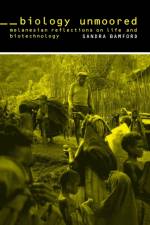
Biology Unmoored is an engaging examination of what it means to live in a world that is not structured in terms of biological thinking. Drawing upon three years of ethnographic research in the highlands of Papua New Guinea, Sandra Bamford describes a world in which physiological reproduction is not perceived to ground human kinship or human beings' relationship to the organic world. Bamford also exposes the ways in which Western ideas about relatedness do depend on a notion of physiological reproduction. Her innovative analysis includes a discussion of the advent of assisted reproductive technologies (ARTs), the mapping of the human genome, cloning, the commodification of biodiversity, and the manufacture and sale of genetically modified organisms (GMOs).
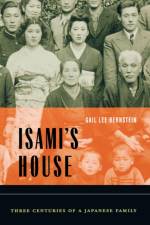
In this powerful and evocative narrative, Gail Lee Bernstein vividly re-creates the past three centuries of Japanese history by following the fortunes of a prominent Japanese family over fourteen generations. The first of its kind in English, this book focuses on Isami, the eleventh generation patriarch and hereditary village head. Weaving back and forth between Isami's time in the first half of the twentieth century and his ancestors' lives in the Tokugawa and Meiji eras, Bernstein uses family history to convey a broad panoply of social life in Japan since the late 1600s. As the story unfolds, she provides remarkable details and absorbing anecdotes about food, famines, peasant uprisings, agrarian values, marriage customs, child-rearing practices, divorces, and social networks. Isami's House describes the role of rural elites, the architecture of Japanese homes, the grooming of children for middle-class life in Tokyo, the experiences of the Japanese in Japan's wartime empire and on the homefront, the aftermath of the country's defeat, and, finally, the efforts of family members to rebuild their lives after the Occupation. The author's forty-year friendship with members of the family lends a unique intimacy to her portrayal of their history. Readers come away with an inside view of Japanese family life, a vivid picture of early modern and modern times, and a profound understanding of how villagers were transformed into urbanites and what was gained, and lost, in the process.
The political upheaval in Nicaragua, El Salvador, and Guatemala had a devastating human toll at the end of the twentieth century. A quarter of a million people died during the period 1974-1996. Many of those who survived the wars chose temporary refuge in neighboring countries such as Honduras and Costa Rica. Others traveled far north, to Mexico, the United States, and Canada in search of safety. Over two million of those who fled Central America during this period settled in these three countries. In this incisive book, Maria Cristina Garcia tells the story of that migration and how domestic and foreign policy interests shaped the asylum policies of Mexico, the United States, and Canada. She describes the experiences of the individuals and non-governmental organizations-primarily church groups and human rights organizations-that responded to the refugee crisis, and worked within and across borders to shape refugee policy. These transnational advocacy networks collected testimonies, documented the abuses of states, re-framed national debates about immigration, pressed for changes in policy, and ultimately provided a voice for the displaced. Garcia concludes by addressing the legacies of the Central American refugee crisis, especially recent attempts to coordinate a regional response to the unique problems presented by immigrants and refugees-and the challenges of coordinating such a regional response in the post-9/11 era.
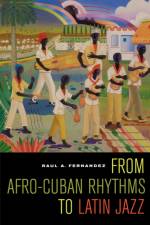
This book explores the complexity of Cuban dance music and the webs that connect it, musically and historically, to other Caribbean music, to salsa, and to Latin Jazz. Establishing a scholarly foundation for the study of this music, Raul A. Fernandez introduces a set of terms, definitions, and empirical information that allow for a broader, more informed discussion. He presents fascinating musical biographies of prominent performers Cachao Lopez, Mongo Santamaria, Armando Peraza, Patato Valdes, Francisco Aguabella, Candido Camero, Chocolate Armenteros, and Celia Cruz. Based on interviews that the author conducted over a nine-year period, these profiles provide in-depth assessments of the musicians' substantial contributions to both Afro-Cuban music and Latin Jazz. In addition, Fernandez examines the links between Cuban music and other Caribbean musics; analyzes the musical and poetic foundations of the Cuban son form; addresses the salsa phenomenon; and develops the aesthetic construct of sabor, central to Cuban music. Copub: Center for Black Music Research
Featuring more than two hundred in-depth winery profiles, this definitive guide is the best single source of information on world-renowned pinot noirs from California and Oregon. Drawing on his encyclopedic knowledge of a grape variety considered by many to produce the ultimate food wine, John Winthrop Haeger offers this expanded, updated companion volume to his award-winning North American Pinot Noir. Here, with three times the number of winery profiles, he focuses exclusively on what he calls the Pacific Pinot Zone, stretching from the mouth of the Columbia River in Oregon to Santa Barbara in California and extending up to thirty miles inland. An introductory essay provides an indispensable view of pinot noir in the United States-including the dramatic effect that the movie Sideways has had on its sales and production. Pacific Pinot Noir features: * Detailed descriptive tasting notes and selected vertical tastings* At-a-glance graphics conveying information on tasting rooms, prices, and production for each winery * Regional maps showing key viticultural areas * Contact information for each winery
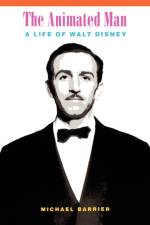
Walt Disney (1901-1966) was one of the most significant creative forces of the twentieth century, a man who made a lasting impact on the art of the animated film, the history of American business, and the evolution of twentieth-century American culture. He was both a creative visionary and a dynamic entrepreneur, roles whose demands he often could not reconcile. In his compelling new biography, noted animation historian Michael Barrier avoids the well-traveled paths of previous biographers, who have tended to portray a blemish-free Disney or to indulge in lurid speculation. Instead, he takes the full measure of the man in his many aspects. A consummate storyteller, Barrier describes how Disney transformed himself from Midwestern farm boy to scrambling young businessman to pioneering artist and, finally, to entrepreneur on a grand scale. Barrier describes in absorbing detail how Disney synchronized sound with animation in Steamboat Willie; created in Snow White and the Seven Dwarfs sympathetic cartoon characters whose appeal rivaled that of the best live-action performers; grasped television's true potential as an unparalleled promotional device; and-not least-parlayed a backyard railroad into the Disneyland juggernaut. Based on decades of painstaking research in the Disney studio's archives and dozens of public and private archives in the United States and Europe, The Animated Man offers freshly documented and illuminating accounts of Disney's childhood and young adulthood in rural Missouri and Kansas City. It sheds new light on such crucial episodes in Disney's life as the devastating 1941 strike at his studio, when his ambitions as artist and entrepreneur first came into serious conflict.Beginning in 1969, two and a half years after Disney's death, Barrier recorded long interviews with more than 150 people who worked alongside Disney, some as early as 1922. Now almost all deceased, only a few were ever interviewed for other books. Barrier juxtaposes Disney's own recollections against the memories of those other players to great effect. What emerges is a portrait of Walt Disney as a flawed but fascinating artist, one whose imaginative leaps allowed him to vault ahead of the competition and produce work that even today commands the attention of audiences worldwide.
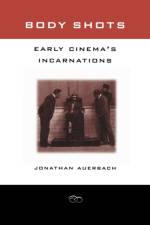
This original and compelling book places the body at the center of cinema's first decade of emergence and challenges the idea that for early audiences, the new medium's fascination rested on visual spectacle for its own sake. Instead, as Jonathan Auerbach argues, it was the human form in motion that most profoundly shaped early cinema. Situating his discussion in a political and historical context, Auerbach begins his analysis with films that reveal striking anxieties and preoccupations about persons on public display-both exceptional figures, such as 1896 presidential candidate William McKinley, and ordinary people caught by the movie camera in their daily routines. The result is a sharp, unique, and groundbreaking way to consider the turn-of-the-twentieth-century American incarnation of cinema itself.
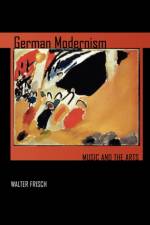
In this pioneering, erudite study of a pivotal era in the arts, Walter Frisch examines music and its relationship to early modernism in the Austro-German sphere. Seeking to explore the period on its own terms, Frisch questions the common assumption that works created from the later 1870s through World War I were transitional between late romanticism and high modernism. Drawing on a wide range of examples across different media, he establishes a cultural and intellectual context for late Richard Wagner, Richard Strauss, Gustav Mahler, and Arnold Schoenberg, as well as their less familiar contemporaries Eugen d'Albert, Hans Pfitzner, Max Reger, Max von Schillings, and Franz Schreker.Frisch explores "e;ambivalent"e; modernism in the last quarter of the nineteenth century as reflected in the attitudes of, and relationship between, Nietzsche and Wagner. He goes on to examine how naturalism, the first self-conscious movement of German modernism, intersected with musical values and practices of the day. He proposes convergences between music and the visual arts in the works of Brahms, Max Klinger, Schoenberg, and Kandinsky. Frisch also explains how, near the turn of the century, composers drew inspiration and techniques from music of the past-the Renaissance, Bach, Mozart, and Wagner. Finally, he demonstrates how irony became a key strategy in the novels and novellas of Thomas Mann, the symphonies of Mahler, and the operas of Strauss and Hofmannsthal.
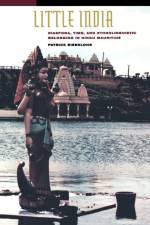
Little India is a rich historical and ethnographic examination of a fascinating example of linguistic plurality on the island of Mauritius, where more than two-thirds of the population is of Indian ancestry. Patrick Eisenlohr's groundbreaking study focuses on the formation of diaspora as mediated through the cultural phenomenon of Indian ancestral languages-principally Hindi, which is used primarily in religious contexts. Eisenlohr emphasizes the variety of cultural practices that construct and transform boundaries in communities in diaspora and illustrates different modes of experiencing the temporal relationships between diaspora and homeland.
In the Course of a Lifetime provides an unprecedented portrait of the dynamic role religion plays in the everyday experiences of Americans over the course of their lives. The book draws from a unique sixty-year-long study of close to two hundred mostly Protestant and Catholic men and women who were born in the 1920s and interviewed in adolescence, and again in the 1950s, 1970s, 1980s, and late 1990s. Woven throughout with rich, intimate life stories, the book presents and analyzes a wide range of data from this study on the participants' religious and spiritual journeys. A testament to the vibrancy of religion in the United States, In the Course of a Lifetime provides an illuminating and sometimes surprising perspective on how individual lives have intersected with cultural change throughout the decades of the twentieth century.
The first filmed prizefight, Veriscope's Corbett-Fitzsimmons Fight (1897) became one of cinema's first major attractions, ushering in an era in which hugely successful boxing films helped transform a stigmatized sport into legitimate entertainment. Exploring a significant and fascinating period in the development of modern sports and media, Fight Pictures is the first work to chronicle the mostly forgotten story of how legitimate bouts, fake fights, comic sparring matches, and more came to silent-era screens and became part of American popular culture.
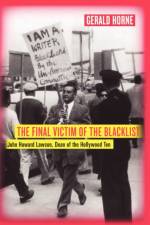
Before he attained notoriety as Dean of the Hollywood Ten-the blacklisted screenwriters and directors persecuted because of their varying ties to the Communist Party-John Howard Lawson had become one of the most brilliant, successful, and intellectual screenwriters on the Hollywood scene in the 1930s and 1940s, with several hits to his credit including Blockade, Sahara, and Action in the North Atlantic. After his infamous, almost violent, 1947 hearing before the House Un-American Activities Committee, Lawson spent time in prison and his lucrative career was effectively over. Studded with anecdotes and based on previously untapped archives, this first biography of Lawson brings alive his era and features many of his prominent friends and associates, including John Dos Passos, Theodore Dreiser, F. Scott Fitzgerald, Charles Chaplin, Gene Kelly, Edmund Wilson, Ernest Hemingway, Humphrey Bogart, Dalton Trumbo, Ring Lardner, Jr., and many others. Lawson's life becomes a prism through which we gain a clearer perspective on the evolution and machinations of McCarthyism and anti-Semitism in the United States, on the influence of the left on Hollywood, and on a fascinating man whose radicalism served as a foil for launching the political careers of two Presidents: Richard Nixon and Ronald Reagan. In vivid, marvelously detailed prose, Final Victim of the Blacklist restores this major figure to his rightful place in history as it recounts one of the most captivating episodes in twentieth century cinema and politics.
The University of California Press is delighted to announce the new publication of this three-act play by one of America's most important and well-loved writers. A highly entertaining comedy that has never appeared in print or on stage, Is He Dead? is finally available to the wide audience Mark Twain wished it to reach. Written in 1898 in Vienna as Twain emerged from one of the deepest depressions of his life, the play shows its author's superb gift for humor operating at its most energetic. The text of Is He Dead?, based on the manuscript in the Mark Twain Papers, appears here together with an illuminating essay by renowned Mark Twain scholar Shelley Fisher Fishkin and with Barry Moser's original woodcut illustrations in a volume that will surely become a treasured addition to the Mark Twain legacy. Richly intermingling elements of burlesque, farce, and social satire with a wry look at the world market in art, Is He Dead? centers on a group of poor artists in Barbizon, France, who stage the death of a friend to drive up the price of his paintings. In order to make this scheme succeed, the artists hatch some hilarious plots involving cross-dressing, a full-scale fake funeral, lovers' deceptions, and much more. Mark Twain was fascinated by the theater and made many attempts at playwriting, but this play is certainly his best. Is He Dead? may have been too "e;out there"e; for the Victorian 1890s, but today's readers will thoroughly enjoy Mark Twain's well-crafted dialogue, intriguing cast of characters, and above all, his characteristic ebullience and humor. In Shelley Fisher Fishkin's estimation, it is "e;a champagne cocktail of a play--not too dry, not too sweet, with just the right amount of bubbles and buzz."e;
Since Peter Stuyvesant greeted with enmity the first group of Jews to arrive on the docks of New Amsterdam in 1654, Jews have entwined their fate and fortunes with that of the United States-a project marked by great struggle and great promise. What this interconnected destiny has meant for American Jews and how it has defined their experience among the world's Jews is fully chronicled in this work, a comprehensive and finely nuanced history of Jews in the United States from 1654 through the end of the past century. Hasia R. Diner traces Jewish participation in American history-from the communities that sent formal letters of greeting to George Washington; to the three thousand Jewish men who fought for the Confederacy and the ten thousand who fought in the Union army; to the Jewish activists who devoted themselves to the labor movement and the civil rights movement. Diner portrays this history as a constant process of negotiation, undertaken by ordinary Jews who wanted at one and the same time to be Jews and full Americans. Accordingly, Diner draws on both American and Jewish sources to explain the chronology of American Jewish history, the structure of its communal institutions, and the inner dynamism that propelled it. Her work documents the major developments of American Judaism-he economic, social, cultural, and political activities of the Jews who immigrated to and settled in America, as well as their descendants-and shows how these grew out of both a Jewish and an American context. She also demonstrates how the equally compelling urges to maintain Jewishness and to assimilate gave American Jewry the particular character that it retains to this day in all its subtlety and complexity.
When Nietzsche dubbed Richard Wagner "e;the most enthusiastic mimomaniac"e; ever to exist, he was objecting to a hollowness he felt in the music, a crowding out of any true dramatic impulse by extravagant poses and constant nervous movements. Mary Ann Smart suspects that Nietzsche may have seen and heard more than he realized. In Mimomania she takes his accusation as an invitation to listen to Wagner's music-and that of several of his near-contemporaries-for the way it serves to intensify the visible and the enacted. As Smart demonstrates, this productive fusion of music and movement often arises when music forsakes the autonomy so prized by the Romantics to function mimetically, underlining the sighs of a Bellini heroine, for instance, or the authoritarian footsteps of a Verdi baritone. Mimomania tracks such effects through readings of operas by Auber, Bellini, Meyerbeer, Verdi, and Wagner.Listening for gestural music, we find resemblance in unexpected places: between the overwrought scenes of supplication in French melodrama of the 1820s and a cluster of late Verdi arias that end with the soprano falling to her knees, or between the mute heroine of Auber's La Muette de Portici and the solemn, almost theological pantomimic tableaux Wagner builds around characters such as Sieglinde or Kundry. Mimomania shows how attention to gesture suggests a new approach to the representation of gender in this repertoire, replacing aural analogies for voyeurism and objectification with a more specifically musical sense of how music can surround, propel, and animate the body on stage.
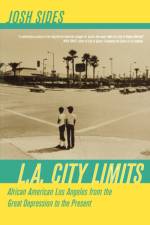
In 1964 an Urban League survey ranked Los Angeles as the most desirable city for African Americans to live in. In 1965 the city burst into flames during one of the worst race riots in the nation's history. How the city came to such a pass-embodying both the best and worst of what urban America offered black migrants from the South-is the story told for the first time in this history of modern black Los Angeles. A clear-eyed and compelling look at black struggles for equality in L.A.'s neighborhoods, schools, and workplaces from the Great Depression to our day, L.A. City Limits critically refocuses the ongoing debate about the origins of America's racial and urban crisis. Challenging previous analysts' near-exclusive focus on northern "e;rust-belt"e; cities devastated by de-industrialization, Josh Sides asserts that the cities to which black southerners migrated profoundly affected how they fared. He shows how L.A.'s diverse racial composition, dispersive geography, and dynamic postwar economy often created opportunities-and limits-quite different from those encountered by blacks in the urban North.
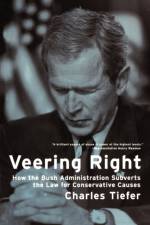
In this searing indictment of current administration policy, Charles Tiefer, a distinguished scholar of national legal affairs and former solicitor of the House of Representatives, argues that President George W. Bush methodically manipulates the law to promote right-wing causes. The beneficiaries of these machinations range from frontline pro-weapon and anti-women's rights groups to major industries that profit from lax environmental standards and military intervention in resource-rich regions. Accessibly written, legally rigorous, and meticulously documented, Veering Right demonstrates how the administration's already-ample arsenal for accomplishing ideological goals was expanded with weapons such as Attorney General John Ashcroft's social crusades and the polarizing 2004 election campaign. Tiefer lays out a compelling case for how the administration consistently erects barriers to media and congressional oversight that might expose covert motivations to public scrutiny. With an eye on the future, the White House is building a durable and potentially dominant machine for pursuing ideological goals by awarding lifetime judgeships and by exchanging favors for campaign funding. This book presents eye-opening evidence that ultra-conservatives could achieve previously unimaginable successes during a second Bush term.As a former Solicitor of the House of Representatives, Tiefer possesses a wealth of insight gleaned from decades of no-holds-barred investigations and judicial struggles. His wide-ranging perspective takes into account cultural changes, constitutional issues, partisan and electoral developments, and political personalities. The most exhaustive analysis to date of the Bush administration's real agenda, this book provides a rare insider's view of the strategic, devious, and potentially overpowering ways that presidents make ideological use of the law.Veering Right Documents How * President Bush's secrecy and deception undermined the democratic process by misleading Congress and the public about international and domestic matters ranging from doctored Iraq weapons intelligence to covered-up drugmaker subsidies paid for by seniors * Bush's first term lays the groundwork for even more extreme right wing policies if he is re-elected. This agenda includes tilting the nation's tax structure against the middle class in Democratic states, weakening traditional Medicare by concentrating rising costs on poorer and sicker seniors, and exporting jobs via the trade fast track * John Ashcroft used religiosity and race-baiting to build his political career and, after 9/11, blocked questioning of his abuses-ranging from concealed undermining of the Bill of Rights to promoting the intolerance of the religious right-by labeling it as suspicious and even treasonous * Bush turned the public's reaction after 9/11 away from the logical Saudi suspects and against Iraq in a spectacular double-play to push his agenda in the world's oil patch * Secretary of the Interior Gail Norton and her crew of lawyer-lobbyists ran the public's resources and its pollution controls like a candy store for pariah industries * Bush's domestic legal gambits around big money paid off in 2004 with a historical gross campaign war chest as a quid pro quo for favors rendered * The Bush Administration dismantled international legal regimes ranging from arms control and women's rights to global climate control and international tobacco regulation * Bush's unilateralist alienation of potential support abroad hobbled both the Iraq occupation and the effort against terrorism
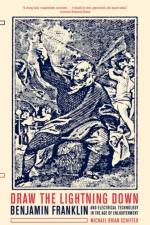
Most of us know-at least we've heard-that Benjamin Franklin conducted some kind of electrical experiment with a kite. What few of us realize-and what this book makes powerfully clear-is that Franklin played a major role in laying the foundations of modern electrical science and technology. This fast-paced book, rich with historical details and anecdotes, brings to life Franklin, the large international network of scientists and inventors in which he played a key role, and their amazing inventions. We learn what these early electrical devices-from lights and motors to musical and medical instruments-looked like, how they worked, and what their utilitarian and symbolic meanings were for those who invented and used them. Against the fascinating panorama of life in the eighteenth century, Michael Brian Schiffer tells the story of the very beginnings of our modern electrical world. The earliest electrical technologies were conceived in the laboratory apparatus of physicists; because of their surprising and diverse effects, however, these technologies rapidly made their way into many other communities and activities. Schiffer conducts us from community to community, showing how these technologies worked as they were put to use in public lectures, revolutionary experiments in chemistry and biology, and medical therapy. This story brings to light the arcane and long-forgotten inventions that made way for many modern technologies-including lightning rods (Franklin's invention), cardiac stimulation, xerography, and the internal combustion engine-and richly conveys the complex relationships among science, technology, and culture.
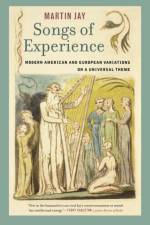
Few words in both everyday parlance and theoretical discourse have been as rhapsodically defended or as fervently resisted as "e;experience."e; Yet, to date, there have been no comprehensive studies of how the concept of experience has evolved over time and why so many thinkers in so many different traditions have been compelled to understand it. Songs of Experience is a remarkable history of Western ideas about the nature of human experience written by one of our best-known intellectual historians. With its sweeping historical reach and lucid comparative analysis-qualities that have made Martin Jay's previous books so distinctive and so successful-Songs of Experience explores Western discourse from the sixteenth century to the present, asking why the concept of experience has been such a magnet for controversy. Resisting any single overarching narrative, Jay discovers themes and patterns that transcend individuals and particular schools of thought and illuminate the entire spectrum of intellectual history. As he explores the manifold contexts for understanding experience-epistemological, religious, aesthetic, political, and historical-Jay engages an exceptionally broad range of European and American traditions and thinkers from the American pragmatists and British Marxist humanists to the Frankfurt School and the French poststructuralists, and he delves into the thought of individual philosophers as well, including Montaigne, Bacon, Locke, Hume and Kant, Oakeshott, Collingwood, and Ankersmit. Provocative, engaging, erudite, this key work will be an essential source for anyone who joins the ongoing debate about the material, linguistic, cultural, and theoretical meaning of "e;experience"e; in modern cultures.
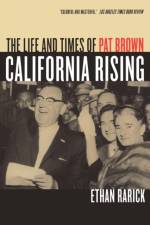
It is now commonplace to say that the future happens first in California, and this book, the first biography of legendary governor Edmund G. "e;Pat"e; Brown, tells the story of the pivotal era when that idea became a reality. Set against the riveting historical landscape of the late fifties and sixties, the book offers astute insights into history as well a fascinating glimpse of those who charted its course-including Ronald Reagan, John F. Kennedy, and the Brown family dynasty. Ethan Rarick mines an impressive array of untapped sources-such as Pat Brown's diary and love letters to his wife-to tell the unforgettable story of a true mover-and-shaker within his fascinating and turbulent political arena. California Rising illuminates a singular moment in time with surprising intimacy. John Kennedy laughs with Pat Brown. Richard Nixon offers the governor a schemer's deal. Lyndon Johnson sweet-talks the governor on the phone and then ridicules him behind his back. And as context for the human drama, key events of the era unfold in gripping prose. There is Brown's struggle with the fate of Caryl Chessman, the convicted kidnapper who gained international attention by writing best-selling books on death row. There is the tale of intrigue and politics surrounding the Free Speech Movement at the University of California, Berkeley, in 1964, and the violence and horror of the Watts Riots in 1965. Through the story of the life and times of Pat Brown, we witness an extraordinary period that changed the entire country's view of itself and its most famous state.
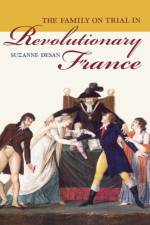
In a groundbreaking book that challenges many assumptions about gender and politics in the French Revolution, Suzanne Desan offers an insightful analysis of the ways the Revolution radically redefined the family and its internal dynamics. She shows how revolutionary politics and laws brought about a social revolution within households and created space for thousands of French women and men to reimagine their most intimate relationships. Families negotiated new social practices, including divorce, the reduction of paternal authority, egalitarian inheritance for sons and daughters alike, and the granting of civil rights to illegitimate children. Contrary to arguments that claim the Revolution bound women within a domestic sphere, The Family on Trial maintains that the new civil laws and gender politics offered many women unexpected opportunities to gain power, property, or independence. The family became a political arena, a practical terrain for creating the Republic in day-to-day life. From 1789, citizens across France-sons and daughters, unhappily married spouses and illegitimate children, pamphleteers and moralists, deputies and judges-all disputed how the family should be reformed to remake the new France. They debated how revolutionary ideals and institutions should transform the emotional bonds, gender dynamics, legal customs, and economic arrangements that structured the family. They asked how to bring the principles of liberty, equality, and regeneration into the home. And as French citizens confronted each other in the home, in court, and in print, they gradually negotiated new domestic practices that balanced Old Regime customs with revolutionary innovations in law and culture. In a narrative that combines national-level analysis with a case study of family contestation in Normandy, Desan explores these struggles to bring politics into households and to envision and put into practice a new set of familial relationships.
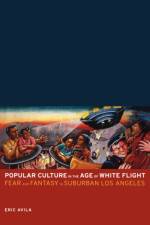
Los Angeles pulsed with economic vitality and demographic growth in the decades following World War II. This vividly detailed cultural history of L.A. from 1940 to 1970 traces the rise of a new suburban consciousness adopted by a generation of migrants who abandoned older American cities for Southern California's booming urban region. Eric Avila explores expressions of this new "e;white identity"e; in popular culture with provocative discussions of Hollywood and film noir, Dodger Stadium, Disneyland, and L.A.'s renowned freeways. These institutions not only mirrored this new culture of suburban whiteness and helped shape it, but also, as Avila argues, reveal the profound relationship between the increasingly fragmented urban landscape of Los Angeles and the rise of a new political outlook that rejected the tenets of New Deal liberalism and anticipated the emergence of the New Right. Avila examines disparate manifestations of popular culture in architecture, art, music, and more to illustrate the unfolding urban dynamics of postwar Los Angeles. He also synthesizes important currents of new research in urban history, cultural studies, and critical race theory, weaving a textured narrative about the interplay of space, cultural representation, and identity amid the westward shift of capital and culture in postwar America.
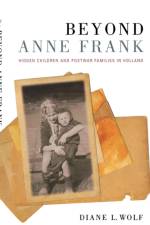
The image of the Jewish child hiding from the Nazis was shaped by Anne Frank, whose house-the most visited site in the Netherlands- has become a shrine to the Holocaust. Yet while Anne Frank's story continues to be discussed and analyzed, her experience as a hidden child in wartime Holland is anomalous-as this book brilliantly demonstrates. Drawing on interviews with seventy Jewish men and women who, as children, were placed in non-Jewish families during the Nazi occupation of Holland, Diane L. Wolf paints a compelling portrait of Holocaust survivors whose experiences were often diametrically opposed to the experiences of those who suffered in concentration camps. Although the war years were tolerable for most of these children, it was the end of the war that marked the beginning of a traumatic time, leading many of those interviewed here to remark, "e;My war began after the war."e; This first in-depth examination of hidden children vividly brings to life their experiences before, during, and after hiding and analyzes the shifting identities, memories, and family dynamics that marked their lives from childhood through advanced age. Wolf also uncovers anti-Semitism in the policies and practices of the Dutch state and the general population, which historically have been portrayed as relatively benevolent toward Jewish residents. The poignant family histories in Beyond Anne Frank demonstrate that we can understand the Holocaust more deeply by focusing on postwar lives.
Roy L. Brooks reframes one of the most important, controversial, and misunderstood issues of our time in this far-reaching reassessment of the growing debate on black reparation. Atonement and Forgiveness shifts the focus of the issue from the backward-looking question of compensation for victims to a more forward-looking racial reconciliation. Offering a comprehensive discussion of the history of the black redress movement, this book puts forward a powerful new plan for repairing the damaged relationship between the federal government and black Americans in the aftermath of 240 years of slavery and another 100 years of government-sanctioned racial segregation. Key to Brooks's vision is the government's clear signal that it understands the magnitude of the atrocity it committed against an innocent people, that it takes full responsibility, and that it publicly requests forgiveness-in other words, that it apologizes. The government must make that apology believable, Brooks explains, by a tangible act that turns the rhetoric of apology into a meaningful, material reality, that is, by reparation. Apology and reparation together constitute atonement. Atonement, in turn, imposes a reciprocal civic obligation on black Americans to forgive, which allows black Americans to start relinquishing racial resentment and to begin trusting the government's commitment to racial equality. Brooks's bold proposal situates the argument for reparations within a larger, international framework-namely, a post-Holocaust vision of government responsibility for genocide, slavery, apartheid, and similar acts of injustice. Atonement and Forgiveness makes a passionate, convincing case that only with this spirit of heightened morality, identity, egalitarianism, and restorative justice can genuine racial reconciliation take place in America.
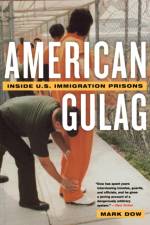
Before September 11, 2001, few Americans had heard of immigration detention, but in fact a secret and repressive prison system run by the U.S. Immigration and Naturalization Service has existed in this country for more than two decades. In American Gulag, prisoners, jailers, and whistle-blowing federal officials come forward to describe the frightening reality inside these INS facilities. Journalist Mark Dow's on-the-ground reporting brings to light documented cases of illegal beatings and psychological torment, prolonged detention, racism, and inhumane conditions. Intelligent, impassioned, and unlike anything that has been written on the topic, this gripping work of investigative journalism should be read by all Americans. It is a book that will change the way we see our country. American Gulag takes us inside prisons such as the Krome North Service Processing Center in Miami, the Corrections Corporation of America's Houston Processing Center, and county jails around the country that profit from contracts to hold INS prisoners. It contains disturbing in-depth profiles of detainees, including Emmy Kutesa, a defector from the Ugandan army who was tortured and then escaped to the United States, where he was imprisoned in Queens, and then undertook a hunger strike in protest. To provide a framework for understanding stories like these, Dow gives a brief history of immigration laws and practices in the United States-including the repercussions of September 11 and present-day policies. His book reveals that current immigration detentions are best understood not as a well-intentioned response to terrorism but rather as part of the larger context of INS secrecy and excessive authority. American Gulag exposes the full story of a cruel prison system that is operating today with an astonishing lack of accountability.
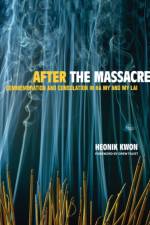
Though a generation has passed since the massacre of civilians at My Lai, the legacy of this tragedy continues to reverberate throughout Vietnam and the rest of the world. This engrossing study considers how Vietnamese villagers in My Lai and Ha My-a village where South Korean troops committed an equally appalling, though less well-known, massacre of unarmed civilians-assimilate the catastrophe of these mass deaths into their everyday ritual life.Based on a detailed study of local history and moral practices, After the Massacre focuses on the particular context of domestic life in which the Vietnamese villagers interact with their ancestors on one hand and the ghosts of tragic death on the other. Heonik Kwon explains what intimate ritual actions can tell us about the history of mass violence and the global bipolar politics that caused it. He highlights the aesthetics of Vietnamese commemorative rituals and the morality of their practical actions to liberate the spirits from their grievous history of death. The author brings these important practices into a critical dialogue with dominant sociological theories of death and symbolic transformation.
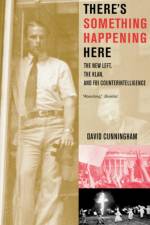
Using over twelve thousand previously classified documents made available through the Freedom of Information Act, David Cunningham uncovers the riveting inside story of the FBI's attempts to neutralize political targets on both the Right and the Left during the 1960s. Examining the FBI's infamous counterintelligence programs (COINTELPROs) against suspected communists, civil rights and black power advocates, Klan adherents, and antiwar activists, he questions whether such actions were aberrations or are evidence of the bureau's ongoing mission to restrict citizens' right to engage in legal forms of political dissent. At a time of heightened concerns about domestic security, with the FBI's license to spy on U.S. citizens expanded to a historic degree, the question becomes an urgent one. This book supplies readers with insights and information vital to a meaningful assessment of the current situation. There's Something Happening Here looks inside the FBI's COINTELPROs against white hate groups and the New Left to explore how agents dealt with the hundreds of individuals and organizations labeled as subversive threats. Rather than reducing these activities to a product of the idiosyncratic concerns of longtime director J. Edgar Hoover, Cunningham focuses on the complex organizational dynamics that generated literally thousands of COINTELPRO actions. His account shows how--and why--the inner workings of the programs led to outcomes that often seemed to lack any overriding logic; it also examines the impact the bureau's massive campaign of repression had on its targets. The lessons of this era have considerable relevance today, and Cunningham extends his analysis to the FBI's often controversial recent actions to map the influence of the COINTELPRO legacy on contemporary debates over national security and civil liberties.
The United States is facing a health crisis of epidemic proportions: children are gaining weight younger and faster than ever before. With the prospect of becoming the most obese generation of adults in history, they are already turning up with an alarming assortment of "e;grown-up"e; maladies, from type 2 diabetes to high blood pressure. This book takes a clear-eyed look at what's behind the statistics and diagnoses, and what can be done about the major health crisis among American children. Sharron Dalton begins with the basics: what obesity is, what causes it, and why it matters. Integrating information from scientific and popular sources, she reviews past remedies and their results and compares specific strategies and programs for children. When a third of our children are overweight or likely to become so, it's everyone's problem-and this book argues for a united approach, promoting the role of parents, health professionals, and school and community leaders. For each group, Dalton outlines actions to combat the epidemic. She suggests ways for parents to respond to their children in interactions centered on food and physical activities. And she illuminates a number of issues raised by childhood obesity, from the pain of fat discrimination to the economic, social, and political ramifications of an epidemic of obesity among the young. At once authoritative and nontechnical, no-nonsense and compassionate, Our Overweight Children is a clear call to action-a prescription for treating the most dire problem threatening our children's health and our nation's future. Our Overweight Children includes* A discussion of what obesity is, what causes it, and why it matters* A review of various remedies and their results* A comparison of specific strategies and programs for children* A plan for parents, health professionals, and school and community leaders to work together to confront childhood obesity
Abonner på vårt nyhetsbrev og få rabatter og inspirasjon til din neste leseopplevelse.
Ved å abonnere godtar du vår personvernerklæring.