













Gjør som tusenvis av andre bokelskere
Abonner på vårt nyhetsbrev og få rabatter og inspirasjon til din neste leseopplevelse.
Ved å abonnere godtar du vår personvernerklæring.Du kan når som helst melde deg av våre nyhetsbrev.

This path-breaking book examines the lives of five topless dancers in the economically devastated "e;rust belt"e; of upstate New York. With insight and empathy, Susan Dewey shows how these women negotiate their lives as parents, employees, and family members while working in a profession widely regarded as incompatible with motherhood and fidelity. Neither disparaging nor romanticizing her subjects, Dewey investigates the complicated dynamic of performance, resilience, economic need, and emotional vulnerability that comprises the life of a stripper. An accessibly written text that uses academic theories and methods to make sense of feminized labor, Neon Wasteland shows that sex work is part of the learned process by which some women come to believe that their self-esteem, material worth, and possibilities for life improvement are invested in their bodies.
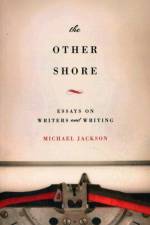
In this book, ethnographer and poet Michael Jackson addresses the interplay between modes of writing, modes of understanding, and modes of being in the world. Drawing on literary, anthropological and autobiographical sources, he explores writing as a technics akin to ritual, oral storytelling, magic and meditation, that enables us to reach beyond the limits of everyday life and forge virtual relationships and imagined communities. Although Maurice Blanchot wrote of the impossibility of writing, the passion and paradox of literature lies in its attempt to achieve the impossible--a leap of faith that calls to mind the mystic's dark night of the soul, unrequited love, nostalgic or utopian longing, and the ethnographer's attempt to know the world from the standpoint of others, to put himself or herself in their place. Every writer, whether of ethnography, poetry, or fiction, imagines that his or her own experiences echo the experiences of others, and that despite the need for isolation and silence his or her work consummates a relationship with them.
Sought after by European aristocrats and a favorite of Napoleon Bonaparte, the sweet wines of Constantia in the Cape Colony were considered to be among the world's best during the eighteenth and nineteenth centuries. During the first democratic elections in 1994, South Africa began to re-emerge onto the international wine scene. Tim James, an expert on South African wines, takes the reader on an information-packed tour of the region, showing us how and why the unique combination of terroir and climate, together with dramatic improvements in winemaking techniques, result in wines that are once again winning accolades. James describes important grape varieties and wine styles-from delicate sparkling, to rich fortified, and everything in between-including the varietal blends that produce some of the finest Cape wines. Anchoring his narrative in a rich historical context, James discusses all the major wine regions, from Cederberg to Walker Bay, complete with profiles of more than 150 of the country's finest producers.
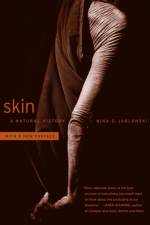
We expose it, cover it, paint it, tattoo it, scar it, and pierce it. Our intimate connection with the world, skin protects us while advertising our health, our identity, and our individuality. This dazzling synthetic overview is a complete guidebook to the pliable covering that makes us who we are. Skin: A Natural History celebrates the evolution of three unique attributes of human skin: its naked sweatiness, its distinctive sepia rainbow of colors, and its remarkable range of decorations. Jablonski places the rich cultural canvas of skin within its broader biological context for the first time, and the result is a tremendously engaging look at us.
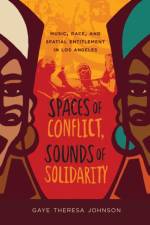
In Spaces of Conflict, Sounds of Solidarity, Gaye Theresa Johnson examines interracial anti-racist alliances, divisions among aggrieved minority communities, and the cultural expressions and spatial politics that emerge from the mutual struggles of Blacks and Chicanos in Los Angeles from the 1940s to the present. Johnson argues that struggles waged in response to institutional and social repression have created both moments and movements in which Blacks and Chicanos have unmasked power imbalances, sought recognition, and forged solidarities by embracing the strategies, cultures, and politics of each others' experiences. At the center of this study is the theory of spatial entitlement: the spatial strategies and vernaculars utilized by working class youth to resist the demarcations of race and class that emerged in the postwar era. In this important new book, Johnson reveals how racial alliances and antagonisms between Blacks and Chicanos in L.A. had spatial as well as racial dimensions.
What is it like for a convicted murderer who has spent decades behind bars to suddenly find himself released into a world he barely recognizes? What is it like to start over from nothing? To answer these questions Sabine Heinlein followed the everyday lives and emotional struggles of Angel Ramos and his friends Bruce and Adam-three men convicted of some of society's most heinous crimes-as they return to the free world.Heinlein spent more than two years at the Castle, a prominent halfway house in West Harlem, shadowing her protagonists as they painstakingly learn how to master their freedom. Having lived most of their lives behind bars, the men struggle to cross the street, choose a dish at a restaurant, and withdraw money from an ATM. Her empathetic first-person narrative gives a visceral sense of the men's inner lives and of the institutions they encounter on their odyssey to redemption. Heinlein follows the men as they navigate the subway, visit the barber shop, venture on stage, celebrate Halloween, and loop through the maze of New York's reentry programs. She asks what constitutes successful rehabilitation and how one faces the guilt and shame of having taken someone's life.With more than 700,000 people being released from prisons each year to a society largely unprepared-and unwilling-to receive them, this book provides an incomparable perspective on a pressing public policy issue. It offers a poignant view into a rarely seen social setting and into the hearts and minds of three unforgettable individuals who struggle with some of life's harshest challenges.
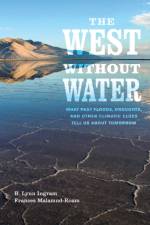
The West without Water documents the tumultuous climate of the American West over twenty millennia, with tales of past droughts and deluges and predictions about the impacts of future climate change on water resources. Looking at the region's current water crisis from the perspective of its climate history, the authors ask the central question of what is "e;normal"e; climate for the West, and whether the relatively benign climate of the past century will continue into the future.The West without Water merges climate and paleoclimate research from a wide variety of sources as it introduces readers to key discoveries in cracking the secrets of the region's climatic past. It demonstrates that extended droughts and catastrophic floods have plagued the West with regularity over the past two millennia and recounts the most disastrous flood in the history of California and the West, which occurred in 1861-62. The authors show that, while the West may have temporarily buffered itself from such harsh climatic swings by creating artificial environments and human landscapes, our modern civilization may be ill-prepared for the future climate changes that are predicted to beset the region. They warn that it is time to face the realities of the past and prepare for a future in which fresh water may be less reliable.
In the German states in the late eighteenth century, women flourished as musical performers and composers, their achievements measuring the progress of culture and society from barbarism to civilization. Female excellence, and related feminocentric values, were celebrated by forward-looking critics who argued for music as a fine art, a component of modern, polite, and commercial culture, rather than a symbol of institutional power. In the eyes of such critics, femininity-a newly emerging and primarily bourgeois ideal-linked women and music under the valorized signs of refinement, sensibility, virtue, patriotism, luxury, and, above all, beauty. This moment in musical history was eclipsed in the first decades of the nineteenth century, and ultimately erased from the music-historical record, by now familiar developments: the formation of musical canons, a musical history based on technical progress, the idea of masterworks, authorial autonomy, the musical sublime, and aggressively essentializing ideas about the relationship between sex, gender and art. In Sovereign Feminine, Matthew Head restores this earlier musical history and explores the role that women played in the development of classical music.
California is globally renowned for its biological diversity, including its wealth of unique, or endemic, species. Many reasons have been cited to explain this abundance: the complex geology and topography of its landscape, the special powers of its Mediterranean-type climate, and the historic and modern barriers to the wider dispersal of its flora and fauna. Plant and Animal Endemism in California compiles and synthesizes a wealth of data on this singular subject, providing new and updated lists of native species, comparing patterns and causes of both plant and animal endemism, and interrogating the classic explanations proposed for the state's special significance in light of new molecular evidence. Susan Harrison also offers a summary of the innovative tools that have been developed and used in California to conserve and protect this stunning and imperiled diversity.
For the city's first two hundred years, the story told at Washington DC's symbolic center, the National Mall, was about triumphant American leaders. Since 1982, when the Vietnam Veterans Memorial was dedicated, the narrative has shifted to emphasize the memory of American wars. In the last thirty years, five significant war memorials have been built on, or very nearly on, the Mall. The Vietnam Veterans Memorial, the Korean War Veterans Memorial, the Women in Military Service for America Memorial, The National Japanese American Memorial to Patriotism During WWII, and the National World War II Memorial have not only transformed the physical space of the Mall but have also dramatically rewritten ideas about U.S. nationalism expressed there. In Sacrificing Soldiers on the National Mall, Kristin Ann Hass examines this war memorial boom, the debates about war and race and gender and patriotism that shaped the memorials, and the new narratives about the nature of American citizenship that they spawned. Sacrificing Soldiers on the National Mall explores the meanings we have made in exchange for the lives of our soldiers and asks if we have made good on our enormous responsibility to them.
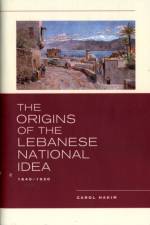
In this fascinating study, Carol Hakim presents a new and original narrative on the origins of the Lebanese national idea. Hakim's study reconsiders conventional accounts that locate the origins of Lebanese nationalism in a distant legendary past and then trace its evolution in a linear and gradual manner. She argues that while some of the ideas and historical myths at the core of Lebanese nationalism appeared by the mid-nineteenth century, a coherent popular nationalist ideology and movement emerged only with the establishment of the Lebanese state in 1920. Hakim reconstructs the complex process that led to the appearance of fluid national ideals among members of the clerical and secular Lebanese elite, and follows the fluctuations and variations of these ideals up until the establishment of a Lebanese state. The book is an essential read for anyone interested in the evolution of nationalism in the Middle East and beyond.
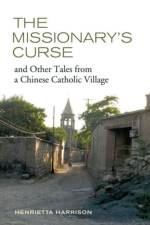
The Missionary's Curse tells the story of a Chinese village that has been Catholic since the seventeenth century, drawing direct connections between its history, the globalizing church, and the nation. Harrison recounts the popular folk tales of merchants and peasants who once adopted Catholic rituals and teachings for their own purposes, only to find themselves in conflict with the orthodoxy of Franciscan missionaries arriving from Italy. The village's long religious history, combined with the similarities between Chinese folk religion and Italian Catholicism, forces us to rethink the extreme violence committed in the area during the Boxer Uprising. The author also follows nineteenth century Chinese priests who campaigned against missionary control, up through the founding of the official church by the Communist Party in the 1950s. Harrison's in-depth study provides a rare insight into villager experiences during the Socialist Education Movement and Cultural Revolution, as well as the growth of Christianity in China in recent years. She makes the compelling argument that Catholic practice in the village, rather than adopting Chinese forms in a gradual process of acculturation, has in fact become increasingly similar to those of Catholics in other parts of the world.
In light of the widespread public perception of incompatibility between Islam and Christianity, this book provides a much-needed straightforward comparison of these two great faith traditions from a broad theological perspective. Award-winning scholar John Renard illuminates the similarities as well as the differences between Islam and Christianity through a clear exploration of four major dimensions-historical, creedal, institutional, and ethical and spiritual. Throughout, the book features comparisons between concrete elements such as creedal statements, prayer texts, and writings from major theologians and mystics. It also includes a glossary of technical theological terms. For western readers in particular, this balanced, authoritative work overturns some common stereotypes about Islam, especially those that have emerged in the decade since September 11, 2001.
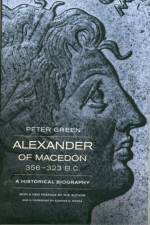
Until recently, popular biographers and most scholars viewed Alexander the Great as a genius with a plan, a romantic figure pursuing his vision of a united world. His dream was at times characterized as a benevolent interest in the brotherhood of man, sometimes as a brute interest in the exercise of power. Green, a Cambridge-trained classicist who is also a novelist, portrays Alexander as both a complex personality and a single-minded general, a man capable of such diverse expediencies as patricide or the massacre of civilians. Green describes his Alexander as "e;not only the most brilliant (and ambitious) field commander in history, but also supremely indifferent to all those administrative excellences and idealistic yearnings foisted upon him by later generations, especially those who found the conqueror, tout court, a little hard upon their liberal sensibilities."e;This biography begins not with one of the universally known incidents of Alexander's life, but with an account of his father, Philip of Macedonia, whose many-territoried empire was the first on the continent of Europe to have an effectively centralized government and military. What Philip and Macedonia had to offer, Alexander made his own, but Philip and Macedonia also made Alexander form an important context for understanding Alexander himself. Yet his origins and training do not fully explain the man. After he was named hegemon of the Hellenic League, many philosophers came to congratulate Alexander, but one was conspicuous by his absence: Diogenes the Cynic, an ascetic who lived in a clay tub. Piqued and curious, Alexander himself visited the philosopher, who, when asked if there was anything Alexander could do for him, made the famous reply, "e;Don't stand between me and the sun."e; Alexander's courtiers jeered, but Alexander silenced them: "e;If I were not Alexander, I would be Diogenes."e; This remark was as unexpected in Alexander as it would be in a modern leader.For the general reader, the book, redolent with gritty details and fully aware of Alexander's darker side, offers a gripping tale of Alexander's career. Full backnotes, fourteen maps, and chronological and genealogical tables serve readers with more specialized interests.
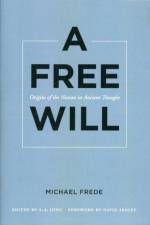
Where does the notion of free will come from? How and when did it develop, and what did that development involve? In Michael Frede's radically new account of the history of this idea, the notion of a free will emerged from powerful assumptions about the relation between divine providence, correctness of individual choice, and self-enslavement due to incorrect choice. Anchoring his discussion in Stoicism, Frede begins with Aristotle--who, he argues, had no notion of a free will--and ends with Augustine. Frede shows that Augustine, far from originating the idea (as is often claimed), derived most of his thinking about it from the Stoicism developed by Epictetus.
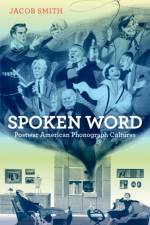
From the 1940s to the 1970s, the phonograph industry experienced phenomenal growth, both in sales and in cultural influence. Along with hugely popular music recordings, spoken word LPs served a multitude of functions and assumed an important place in the American home. In this book, Jacob Smith surveys a diverse range of spoken word genres-including readings of classic works of literature and drama, comedy albums, children's records, home therapy kits, even erotica-to illuminate this often overlooked aspect of the postwar entertainment industry and American culture. A viable alternative to mainstream broadcasting, records gave their listeners control over what they could hear at home. Smith shows how the savvy industry used spoken word records to develop markets for children, African Americans, women, and others not well served by radio and television.
Mahmoud Darwish is a literary rarity: at once critically acclaimed as one of the most important poets in the Arabic language, and beloved as the voice of his people. A legend in Palestine, his lyrics are sung by fieldworkers and schoolchildren. He has assimilated some of the world's oldest literary traditions while simultaneously struggling to open new possibilities for poetry. This collection spans Darwish's entire career, nearly four decades, revealing an impressive range of expression and form. A splendid team of translators has collaborated with the poet on these new translations, which capture Darwish's distinctive voice and spirit. Fady Joudah's foreword, new to this edition, addresses Darwish's enduring legacy following his death in 2008.
The California Naturalist Handbook provides a fun, science-based introduction to California's natural history with an emphasis on observation, discovery, communication, stewardship and conservation. It is a hands-on guide to learning about the natural environment of California. Subjects covered include California natural history and geology, native plants and animals, California's freshwater resources and ecosystems, forest and rangeland resources, conservation biology, and the effects of global warming on California's natural communities. The Handbook also discusses how to create and use a field notebook, natural resource interpretation, citizen science, and collaborative conservation and serves as the primary text for the California Naturalist Program.
One of the Arab world's greatest poets uses the 1982 Israeli invasion of Lebanon and the shelling of Beirut as the setting for this sequence of prose poems. Mahmoud Darwish vividly recreates the sights and sounds of a city under terrible siege. As fighter jets scream overhead, he explores the war-ravaged streets of Beirut on August 6th (Hiroshima Day).Memory for Forgetfulness is an extended reflection on the invasion and its political and historical dimensions. It is also a journey into personal and collective memory. What is the meaning of exile? What is the role of the writer in time of war? What is the relationship of writing (memory) to history (forgetfulness)? In raising these questions, Darwish implicitly connects writing, homeland, meaning, and resistance in an ironic, condensed work that combines wit with rage.Ibrahim Muhawi's translation beautifully renders Darwish's testament to the heroism of a people under siege, and to Palestinian creativity and continuity. Sinan Antoon's foreword, written expressly for this edition, sets Darwish's work in the context of changes in the Middle East in the past thirty years.
This volume presents a selection of 500 letters by Clarence Darrow, the pre-eminent courtroom lawyer of the late nineteenth and early twentieth century. Randall Tietjen selected these letters from over 2,200 letters in archives around the country, as well as from one remarkable find-the kind of thing historians dream about: a cache of about 330 letters by Darrow hidden away in the basement of Darrow's granddaughter's house. This collection provides the first scholarly edition of Darrow's letters, expertly annotated and including a large amount of previously unknown material and hard-to-locate letters. Because Darrow was a gifted writer and led a fascinating life, the letters are a delight to read. This volume also presents a major introduction by the editor, along with a chronology of Darrow's life, and brief biographical sketches of the important individuals who appear in the letters.
In this imaginative and comprehensive study, Edward Casey, one of the most incisive interpreters of the Continental philosophical tradition, offers a philosophical history of the evolving conceptualizations of place and space in Western thought. Not merely a presentation of the ideas of other philosophers, The Fate of Place is acutely sensitive to silences, absences, and missed opportunities in the complex history of philosophical approaches to space and place. A central theme is the increasing neglect of place in favor of space from the seventh century A.D. onward, amounting to the virtual exclusion of place by the end of the eighteenth century.Casey begins with mythological and religious creation stories and the theories of Plato and Aristotle and then explores the heritage of Neoplatonic, medieval, and Renaissance speculations about space. He presents an impressive history of the birth of modern spatial conceptions in the writings of Newton, Descartes, Leibniz, and Kant and delineates the evolution of twentieth-century phenomenological approaches in the work of Husserl, Merleau-Ponty, Bachelard, and Heidegger. In the book's final section, Casey explores the postmodern theories of Foucault, Derrida, Tschumi, Deleuze and Guattari, and Irigaray.
This book provides a fascinating look at the creation of contemporary Muslim jihadists. Basing the book on her long-term fieldwork in the disputed borderlands between Pakistan and India, Cabeiri deBergh Robinson tells the stories of people whose lives and families have been shaped by a long history of political conflict. Interweaving historical and ethnographic evidence, Robinson explains how refuge-seeking has become a socially and politically debased practice in the Kashmir region and why this devaluation has turned refugee men into potential militants. She reveals the fraught social processes by which individuals and families produce and maintain a modern jihad, and she shows how Muslim refugees have forged an Islamic notion of rights-a hybrid of global political ideals that adopts the language of human rights and humanitarianism as a means to rethink refugees' positions in transnational communities. Jihad is no longer seen as a collective fight for the sovereignty of the Islamic polity, but instead as a personal struggle to establish the security of Muslim bodies against political violence, torture, and rape. Robinson describes how this new understanding has contributed to the popularization of jihad in the Kashmir region, decentered religious institutions as regulators of jihad in practice, and turned the families of refugee youths into the ultimate mediators of entrance into militant organizations. This provocative book challenges the idea that extremism in modern Muslim societies is the natural by-product of a clash of civilizations, of a universal Islamist ideology, or of fundamentalist conversion.
Between extremes of climate farther north and south, the 38th North parallel line marks a temperate, middle latitude where human societies have thrived since the beginning of civilization. It divides North and South Korea, passes through Athens and San Francisco, and bisects Mono Lake in the eastern Sierra Nevada, where authors David and Janet Carle make their home. Former park rangers, the authors set out on an around-the-world journey in search of water-related environmental and cultural intersections along the 38th parallel. This book is a chronicle of their adventures as they meet people confronting challenges in water supply, pollution, wetlands loss, and habitat protection. At the heart of the narrative are the riveting stories of the passionate individuals-scientists, educators, and local activists-who are struggling to preserve some of the world's most amazing, yet threatened, landscapes.Traveling largely outside of cities, away from well-beaten tourist tracks, the authors cross Japan, Korea, China, Turkmenistan, Turkey, Greece, Sicily, Spain, Portugal, the Azores Islands, and the United States-from Chesapeake Bay to San Francisco Bay. The stories they gather provide stark contrasts as well as reaffirming similarities across diverse cultures. Generously illustrated with maps and photos, Traveling the 38th Parallel documents devastating environmental losses but also inspiring gains made through the efforts of dedicated individuals working against the odds to protect these fragile places.
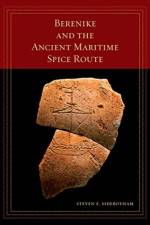
The legendary overland silk road was not the only way to reach Asia for ancient travelers from the Mediterranean. During the Roman Empire's heyday, equally important maritime routes reached from the Egyptian Red Sea across the Indian Ocean. The ancient city of Berenike, located approximately 500 miles south of today's Suez Canal, was a significant port among these conduits. In this book, Steven E. Sidebotham, the archaeologist who excavated Berenike, uncovers the role the city played in the regional, local, and "e;global"e; economies during the eight centuries of its existence. Sidebotham analyzes many of the artifacts, botanical and faunal remains, and hundreds of the texts he and his team found in excavations, providing a profoundly intimate glimpse of the people who lived, worked, and died in this emporium between the classical Mediterranean world and Asia.
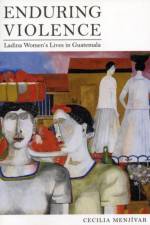
Drawing on revealing, in-depth interviews, Cecilia Menjivar investigates the role that violence plays in the lives of Ladina women in eastern Guatemala, a little-visited and little-studied region. While much has been written on the subject of political violence in Guatemala, Menjivar turns to a different form of suffering-the violence embedded in institutions and in everyday life so familiar and routine that it is often not recognized as such. Rather than painting Guatemala (or even Latin America) as having a cultural propensity for normalizing and accepting violence, Menjivar aims to develop an approach to examining structures of violence-profound inequality, exploitation and poverty, and gender ideologies that position women in vulnerable situations- grounded in women's experiences. In this way, her study provides a glimpse into the root causes of the increasing wave of feminicide in Guatemala, as well as in other Latin American countries, and offers observations relevant for understanding violence against women around the world today.
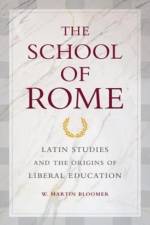
This fascinating cultural and intellectual history focuses on education as practiced by the imperial age Romans, looking at what they considered the value of education and its effect on children. W. Martin Bloomer details the processes, exercises, claims, and contexts of liberal education from the late first century b.c.e. to the third century c.e., the epoch of rhetorical education. He examines the adaptation of Greek institutions, methods, and texts by the Romans and traces the Romans' own history of education. Bloomer argues that whereas Rome's enduring educational legacy includes the seven liberal arts and a canon of school texts, its practice of competitive displays of reading, writing, and reciting were intended to instill in the young social as well as intellectual ideas.
In Experimental Otherwise, Benjamin Piekut takes the reader into the heart of what we mean by "e;experimental"e; in avant-garde music. Focusing on one place and time-New York City, 1964-Piekut examines five disparate events: the New York Philharmonic's disastrous performance of John Cage's Atlas Eclipticalis; Henry Flynt's demonstrations against the downtown avant-garde; Charlotte Moorman's Avant Garde Festival; the founding of the Jazz Composers Guild; and the emergence of Iggy Pop. Drawing together a colorful array of personalities, Piekut argues that each of these examples points to a failure and marks a limit or boundary of canonical experimentalism. What emerges from these marginal moments is an accurate picture of the avant-garde, not as a style or genre, but as a network defined by disagreements, struggles, and exclusions.
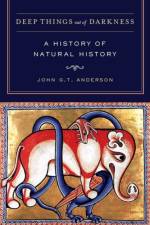
Natural history, the deliberate observation of the environment, is arguably the oldest science. From purely practical beginnings as a way of finding food and shelter, natural history evolved into the holistic, systematic study of plants, animals, and the landscape. Deep Things out of Darkness chronicles the rise, decline, and ultimate revival of natural history within the realms of science and public discourse. Ecologist John G. T. Anderson focuses his account on the lives and contributions of an eclectic group of men and women, from John Ray, John Muir, Charles Darwin, and Rachel Carson, who endured remarkable hardships and privations in order to learn more about their surroundings. Written in an engaging narrative style and with an extensive bibliography of primary sources, the book charts the journey of the naturalist's endeavor from prehistory to the present, underscoring the need for natural history in an era of dynamic environmental change.
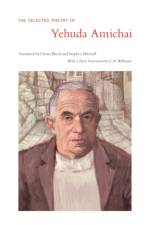
Yehuda Amichai (1924-2000) was Israel's most popular poet, as well as a literary figure of international reputation. In this collection, renowned translators Chana Bloch and Stephen Mitchell have selected Amichai's most beloved poems, including forty poems from his later work. A new foreword by C.K. Williams, written especially for this edition, addresses Amichai's enduring legacy and sets his poetry in the context of the new millennium.
Human civilizations' longest lasting artifacts are not the great Pyramids of Giza, nor the cave paintings at Lascaux, but the communications satellites that circle our planet. In a stationary orbit above the equator, the satellites that broadcast our TV signals, route our phone calls, and process our credit card transactions experience no atmospheric drag. Their inert hulls will continue to drift around Earth until the Sun expands into a red giant and engulfs them about 4.5 billion years from now.The Last Pictures, co-published by Creative Time Books, is rooted in the premise that these communications satellites will ultimately become the cultural and material ruins of the late 20th and early 21st centuries, far outlasting anything else humans have created. Inspired in part by ancient cave paintings, nuclear waste warning signs, and Carl Sagan's Golden Records of the 1970s, artist/geographer Trevor Paglen has developed a collection of one hundred images that will be etched onto an ultra-archival, golden silicon disc. The disc, commissioned by Creative Time, will then be sent into orbit onboard the Echostar XVI satellite in September 2012, as both a time capsule and a message to the future.The selection of 100 images, which are the centerpiece of the book, was influenced by four years of interviews with leading scientists, philosophers, anthropologists, and artists about the contradictions that characterize contemporary civilizations. Consequently, The Last Pictures engages some of the most profound questions of the human experience, provoking discourse about communication, deep time, and the economic, environmental, and social uncertainties that define our historical moment.Copub: Creative Time Books
Abonner på vårt nyhetsbrev og få rabatter og inspirasjon til din neste leseopplevelse.
Ved å abonnere godtar du vår personvernerklæring.