





















Gjør som tusenvis av andre bokelskere
Abonner på vårt nyhetsbrev og få rabatter og inspirasjon til din neste leseopplevelse.
Ved å abonnere godtar du vår personvernerklæring.Du kan når som helst melde deg av våre nyhetsbrev.

With New Orleans Suite, Eric Porter and Lewis Watts join the post-Katrina conversation about New Orleans and its changing cultural scene. Using both visual evidence and the written word, Watts and Porter pay homage to the city, its region, and its residents, by mapping recent and often contradictory social and cultural transformations, and seeking to counter inadequate and often pejorative accounts of the people and place that give New Orleans its soul. Focusing for the most part on the city's African American community, New Orleans Suite is a story about people: how bad things have happened to them in the long and short run, how they have persevered by drawing upon and transforming their cultural practices, and what they can teach us about citizenship, politics, and society.
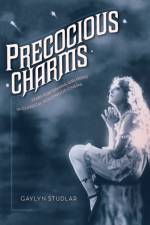
In Precocious Charms, Gaylyn Studlar examines how Hollywood presented female stars as young girls or girls on the verge of becoming women. Child stars are part of this study but so too are adult actresses who created motion picture masquerades of youthfulness. Studlar details how Mary Pickford, Shirley Temple, Deanna Durbin, Elizabeth Taylor, Jennifer Jones, and Audrey Hepburn performed girlhood in their films. She charts the multifaceted processes that linked their juvenated star personas to a wide variety of cultural influences, ranging from Victorian sentimental art to New Look fashion, from nineteenth-century children's literature to post-World War II sexology, and from grand opera to 1930s radio comedy. By moving beyond the general category of "e;woman,"e; Precocious Charms leads to a new understanding of the complex pleasures Hollywood created for its audience during the half century when film stars were a major influence on America's cultural imagination.
Wayward Shamans tells the story of an idea that humanity's first expression of art, religion and creativity found form in the figure of a proto-priest known as a shaman. Tracing this classic category of the history of anthropology back to the emergence of the term in Siberia, the work follows the trajectory of European knowledge about the continent's eastern frontier. The ethnographic record left by German natural historians engaged in the Russian colonial expansion project in the 18th century includes a range of shamanic practitioners, varied by gender and age. Later accounts by exiled Russian revolutionaries noted transgendered shamans. This variation vanished, however, in the translation of shamanism into archaeology theory, where a male sorcerer emerged as the key agent of prehistoric art. More recent efforts to provide a universal shamanic explanation for rock art via South Africa and neurobiology likewise gloss over historical evidence of diversity. By contrast this book argues for recognizing indeterminacy in the categories we use, and reopening them by recalling their complex history.
This book is an expanded version of the Clark Kerr Lectures of 2012, delivered by Neil Smelser at the University of California at Berkeley in January and February of that year. The initial exposition is of a theory of change-labeled structural accretion-that has characterized the history of American higher education, mainly (but not exclusively) of universities. The essence of the theory is that institutions of higher education progressively add functions, structures, and constituencies as they grow, but seldom shed them, yielding increasingly complex structures. The first two lectures trace the multiple ramifications of this principle into other arenas, including the essence of complexity in the academic setting, the solidification of academic disciplines and departments, changes in faculty roles and the academic community, the growth of political constituencies, academic administration and governance, and academic stratification by prestige. In closing, Smelser analyzes a number of contemporary trends and problems that are superimposed on the already-complex structures of higher education, such as the diminishing public support without alterations of governance and accountability, the increasing pattern of commercialization in higher education, the growth of distance-learning and for-profit institutions, and the spectacular growth of temporary and part-time faculty.
On August 17, 1945, Indonesia proclaimed its independence from Dutch colonial rule. Five years later, the Republic of Indonesia was recognized as a unified, sovereign state. The period in between was a time of aspiration, mobilization, and violence, in which nationalists fought to expel the Dutch while also trying to come to grips with the meaning of "e;independence."e; Rifle Reports is an ethnographic history of this extraordinary time as it was experienced on the outskirts of the nation among Karo Batak villagers in the rural highlands of North Sumatra. Based on extensive interviews and conversations with Karo veterans, Rifle Reports interweaves personal and family memories, songs and stories, memoirs and local histories, photographs and monuments, to trace the variously tangled and perhaps incompletely understood ways that Karo women and men contributed to the founding of the Indonesian nation. The routes they followed are divergent, difficult, sometimes wavering, and rarely obvious, but they are clearly marked with the signs of gender. This innovative historical study of nationalism and decolonization is an anthropological exploration of the gendering of wartime experience, as well as an inquiry into the work of storytelling as memory practice and ethnographic genre.
For the three forces competing for political authority in France during World War II, music became the site of a cultural battle that reflected the war itself. German occupying authorities promoted German music at the expense of French, while the Vichy administration pursued projects of national renewal through culture. Meanwhile, Resistance networks gradually formed to combat German propaganda while eyeing Vichy's efforts with suspicion. In The Musical Legacy of Wartime France, Leslie A. Sprout explores how each of these forces influenced the composition, performance, and reception of five well-known works: the secret Resistance songs of Francis Poulenc and those of Arthur Honegger; Olivier Messiaen's Quartet for the End of Time, composed in a German prisoner of war camp; Maurice Durufle's Requiem, one of sixty-five pieces commissioned by Vichy between 1940 and 1944; and Igor Stravinsky's Danses concertantes, which was met at its 1945 Paris premiere with protests that prefigured the aesthetic debates of the early Cold War. Sprout examines not only how these pieces were created and disseminated during and just after the war, but also how and why we still associate these pieces with the stories we tell-in textbooks, program notes, liner notes, historical monographs, and biographies-about music, France, and World War II.
We rely on environmental health scientists to document the presence of chemicals where we live, work, and play and to provide an empirical basis for public policy. In the last decades of the 20th century, environmental health scientists began to shift their focus deep within the human body, and to the molecular level, in order to investigate gene-environment interactions. In Exposed Science, Sara Shostak analyzes the rise of gene-environment interaction in the environmental health sciences and examines its consequences for how we understand and seek to protect population health. Drawing on in-depth interviews and ethnographic observation, Shostak demonstrates that what we know - and what we don't know - about the vulnerabilities of our bodies to environmental hazards is profoundly shaped by environmental health scientists' efforts to address the structural vulnerabilities of their field. She then takes up the political effects of this research, both from the perspective of those who seek to establish genomic technologies as a new basis for environmental regulation, and from the perspective of environmental justice activists, who are concerned that that their efforts to redress the social, political, and economical inequalities that put people at risk of environmental exposure will be undermined by molecular explanations of environmental health and illness. Exposed Science thus offers critically important new ways of understanding and engaging with the emergence of gene-environment interaction as a focal concern of environmental health science, policy-making, and activism.
A world-renowned Pomo basket weaver and medicine woman, Mabel McKay expressed her genius through her celebrated baskets, her Dreams, her cures, and the stories with which she kept her culture alive. She spent her life teaching others how the spirit speaks through the Dream, how the spirit heals, and how the spirit demands to be heard.Greg Sarris weaves together stories from Mabel McKay's life with an account of how he tried, and she resisted, telling her story straight-the white people's way. Sarris, an Indian of mixed-blood heritage, finds his own story in his search for Mabel McKay's. Beautifully narrated, Weaving the Dream initiates the reader into Pomo culture and demonstrates how a woman who worked most of her life in a cannery could become a great healer and an artist whose baskets were collected by the Smithsonian.Hearing Mabel McKay's life story, we see that distinctions between material and spiritual and between mundane and magical disappear. What remains is a timeless way of healing, of making art, and of being in the world. Sarris's new preface, written expressly for this edition, meditates on Mabel McKay's enduring legacy and the continued importance of her teachings.
The ant fauna of the Fijian archipelago is a diverse assemblage of endemic radiations, pan-Pacific species, and exotics introduced from around the world. The Ants of Fiji describes the entire Fijian ant fauna, and includes the results of a recently completed archipelago-wide biodiversity inventory. A total of 187 ant species representing 43 genera are recognized here with an illustrated key to genera, synopses of each species, keys to species of all genera, and a species list. The work is heavily illustrated with specimen images, distribution maps, and habitat elevation charts.
Dark archive: The purpose of a dark archive is to function as a repository for information that can be used as a failsafe during disaster recovery.Laura Mullen's fourth collection is a sequence of beautifully interrelated poems that explores how to accurately represent the reality of change and loss. Mullen pinpoints what is at stake: the possibility of communication and connection-and the hope of intimacy. Invoking Wordsworth's "e;I wandered lonely as a cloud,"e; she pushes experiments in consciousness against their boundaries in an array of poetic forms. Poetic tropes are measured against natural phenomena as Mullen examines what "e;witness"e; might mean in the context of the aftermath of Hurricane Katrina, the failures of capitalism to effect social justice, the murder of James Byrd in Texas, the personal loss of a mother figure, and a disintegrating love affair.
Srikanth Reddy's second book of poetry probes this world's cosmological relation to the plurality of all possible worlds. Drawing its name from the spacecraft currently departing our solar system on an embassy to the beyond, Voyager unfolds as three books within a book and culminates in a chilling Dantean allegory of leadership and its failure in the cause of humanity. At the heart of this volume lies the historical figure of Kurt Waldheim-Secretary-General of the U.N. from 1972-81 and former intelligence officer in Hitler's Wehrmacht-who once served as a spokesman for humanity while remaining silent about his role in the collective atrocities of our era. Resurrecting this complex figure, Reddy's universal voyager explores the garden of forking paths hidden within every totalizing dream of identity.
Life in Crisis tells the story of Medecins Sans Frontieres (Doctors Without Borders or MSF) and its effort to "e;save lives"e; on a global scale. Begun in 1971 as a French alternative to the Red Cross, the MSF has grown into an international institution with a reputation for outspoken protest as well as technical efficiency. It has also expanded beyond emergency response, providing for a wider range of endeavors, including AIDS care. Yet its seemingly simple ethical goal proves deeply complex in practice. MSF continually faces the problem of defining its own limits. Its minimalist form of care recalls the promise of state welfare, but without political resolution or a sense of well-being beyond health and survival. Lacking utopian certainty, the group struggles when the moral clarity of crisis fades. Nevertheless, it continues to take action and innovate. Its organizational history illustrates both the logic and the tensions of casting humanitarian medicine into a leading role in international affairs.
Geoffrey G. O'Brien's third collection opens with a set of lyric experiments whose music and mutable syntax explore the social relations concealed in material things. O'Brien's poems measure the "e;vague cadence"e; of daily life, testing both the value and limits of art in a time of vanishing publics and permanent war. The long title poem, written in a strict iambic prose, charts the disappearance of the poetic into the prosaic, of meter into the mundane, while reactivating the very possibilities it mourns: O'Brien's prosody invests the prose of things with the intensities of verse. In the charged space of this hybrid form, objects become subjects and sense pivots mid-sentence into song: "e;The sun revolves around the earth revolves around the sun."e;
The first major battle over school choice came out of struggles over equalizing and integrating schools in the civil rights era, when it became apparent that choice could be either a serious barrier or a significant tool for reaching these goals. The second large and continuing movement for choice was part of the very different anti-government, individualistic, market-based movement of a more conservative period in which many of the lessons of that earlier period were forgotten, though choice was once again presented as the answer to racial inequality. This book brings civil rights back into the center of the debate and tries to move from doctrine to empirical research in exploring the many forms of choice and their very different consequences for equity in U.S. schools. Leading researchers conclude that although helping minority children remains a central justification for choice proponents, ignoring the essential civil rights dimensions of choice plans risks compounding rather than remedying racial inequality.
The World of Sicilian Wine provides wine lovers with a comprehensive understanding of Sicilian wine, from its ancient roots to its modern evolution. Offering a guide and map to exploring Sicily, Bill Nesto, an expert in Italian wine, and Frances Di Savino, a student of Italian culture, deliver a substantive appreciation of a vibrant wine region that is one of Europe's most historic areas and a place where many cultures intersect. From the earliest Greek and Phoenician settlers who colonized the island in the eighth century B.C., the culture of wine has flourished in Sicily. A parade of foreign rulers was similarly drawn to Sicily's fertile land, sun-filled climate, and strategic position in the Mediterranean. The modern Sicilian quality wine industry was reborn in the 1980s and 1990s with the arrival of wines made with established international varieties and state-of-the-art enology. Sicily is only now rediscovering the quality of its indigenous grape varieties, such as Nero d'Avola, Nerello Mascalese, Frappato, Grillo, and distinctive terroirs such as the slopes of Mount Etna.
To Overcome Oneself offers a novel retelling of the emergence of the Western concept of "e;modern self,"e; demonstrating how the struggle to forge a self was enmeshed in early modern Catholic missionary expansion. Examining the practices of Catholics in Europe and New Spain from the 1520s through the 1760s, the book treats Jesuit techniques of self-formation, namely spiritual exercises and confessional practices, and the relationships between spiritual directors and their subjects. Catholics on both sides of the Atlantic were folded into a dynamic that shaped new concepts of self and, in the process, fueled the global Catholic missionary movement. Molina historicizes Jesuit meditation and narrative self-reflection as modes of self-formation that would ultimately contribute to a new understanding of religion as something private and personal, thereby overturning long-held concepts of personhood, time, space, and social reality. To Overcome Oneself demonstrates that it was through embodied processes that humans have come to experience themselves as split into mind and body. Notwithstanding the self-congratulatory role assigned to "e;consciousness"e; in the Western intellectual tradition, early moderns did not think themselves into thinking selves. Rather, "e;the self"e; was forged from embodied efforts to transcend self. Yet despite a discourse that situates self as interior, the actual fuel for continued self-transformation required an object-cum-subject-someone else to transform. Two constant questions throughout the book are: Why does the effort to know and transcend self require so many others? And what can we learn about the inherent intersubjectivity of missionary colonialism?
How can we account for the persistent appeal of glossy commercial pop music? Why do certain performers have such emotional power, even though their music is considered vulgar or second rate? In The Persistence of Sentiment, Mitchell Morris gives a critical account of a group of American popular music performers who have dedicated fan bases and considerable commercial success despite the critical disdain they have endured. Morris examines the specific musical features of some exemplary pop songs and draws attention to the social contexts that contributed to their popularity as well as their dismissal. These artists were all members of more or less disadvantaged social categories: members of racial or sexual minorities, victims of class and gender prejudices, advocates of populations excluded from the mainstream. The complicated commercial world of pop music in the 1970s allowed the greater promulgation of musical styles and idioms that spoke to and for exactly those stigmatized audiences. In more recent years, beginning with the "e;Seventies Revival"e; of the early 1990s, additional perspectives and layers of interpretation have allowed not only a deeper understanding of these songs' function than when they were first popular, but also an appreciation of how their significance has shifted for American listeners in the succeeding three decades.
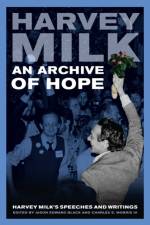
Harvey Milk was one of the first openly and politically gay public officials in the United States, and his remarkable activism put him at the very heart of a pivotal civil rights movement reshaping America in the 1970s. An Archive of Hope is Milk in his own words, bringing together in one volume a substantial collection of his speeches, columns, editorials, political campaign materials, open letters, and press releases, culled from public archives, newspapers, and personal collections. The volume opens with a foreword from Milk's friend, political advisor, and speech writer Frank Robinson, who remembers the man who "e;started as a Goldwater Republican and ended his life as the last of the store front politicians"e; who aimed to "e;give 'em hope"e; in his speeches. An illuminating introduction traces GLBTQ politics in San Francisco, situates Milk within that context, and elaborates the significance of his discourse and memories both to 1970s-era gay rights efforts and contemporary GLBTQ worldmaking.
This booklet provides the answers to the exercises in Introduction to Attic Greek, 2nd Edition by Donald J. Mastronarde, (UC Press, 2013, 978-0-520-27571-3). It is an invaluable guide for instructors and independent language students. Additional teaching resources are available at atticgreek.org.
In this first biography of Edmund Gerald Brown Jr. in more than thirty years, Chuck McFadden explores the unique persona of one of the most idiosyncratic politicians in California history. Son of California political royalty who forged his own political style against the tumultuous backdrop of a huge, balkanized state-and shoved to and fro by complex currents-Jerry Brown plumbed his visionary impulses as well as his grandiose ambitions. McFadden traces Brown's childhood in San Francisco, his time studying for the priesthood, his unusual political career, and his romances-including a long-term relationship with singer Linda Ronstadt. He describes Brown's first two terms as governor advocating for farm workers, women and minorities, his time roaming the world in a spiritual quest, and his return to the gritty world of politics as chairman of the California Democratic Party and then mayor of Oakland. Political experts weigh in with thoughts about the remarkable 2010 campaign that saw the 72-year-old Brown winning his third term in office while being vastly outspent by Republican Meg Whitman. Concise, insightful, and enlivened by the events and personalities that colored the history of California, Trailblazer provides an intimate portrait of the pugnacious, adept politician who has bucked national trends to become a leader of one of the largest economies in the world.
Thoroughly revised and expanded, Introduction to Attic Greek, 2nd Edition gives student and instructors the most comprehensive and accessible presentation of ancient Greek available. The text features:* Full exposure to the grammar and morphology that students will encounter in actual texts * Self-contained instructional chapters, with challenging, carefully tailored exercises* Progressively more complex chapters to build the student's knowledge of declensions, tenses, and constructions by alternating emphasis on morphology and syntax* Readings based on actual texts and include unadapted passages from Xenophon, Lysias, Plato, Aristophanes, and Thucydides.* Concise introduction to the history of the Greek language* Composite list of verbs with principal parts, and an appendix of all paradigms* Greek-English and English-Greek glossariesAdditional Resources:*Robust online supplements for teaching and learning available at atticgreek.org *Answer Key to exercises also available from UC Press (978-0-520-27574-4)
In this incisive examination of lead poisoning during the past half century, Gerald Markowitz and David Rosner focus on one of the most contentious and bitter battles in the history of public health. Lead Wars details how the nature of the epidemic has changed and highlights the dilemmas public health agencies face today in terms of prevention strategies and chronic illness linked to low levels of toxic exposure. The authors use the opinion by Maryland's Court of Appeals-which considered whether researchers at Johns Hopkins University's prestigious Kennedy Krieger Institute (KKI) engaged in unethical research on 108 African-American children-as a springboard to ask fundamental questions about the practice and future of public health. Lead Wars chronicles the obstacles faced by public health workers in the conservative, pro-business, anti-regulatory climate that took off in the Reagan years and that stymied efforts to eliminate lead from the environments and the bodies of American children.
Deceit and Denial details the attempts by the chemical and lead industries to deceive Americans about the dangers that their deadly products present to workers, the public, and consumers. Gerald Markowitz and David Rosner pursued evidence steadily and relentlessly, interviewed the important players, investigated untapped sources, and uncovered a bruising story of cynical and cruel disregard for health and human rights. This resulting expose is full of startling revelations, provocative arguments, and disturbing conclusions--all based on remarkable research and information gleaned from secret industry documents. This book reveals for the first time the public relations campaign that the lead industry undertook to convince Americans to use its deadly product to paint walls, toys, furniture, and other objects in America's homes, despite a wealth of information that children were at risk for serious brain damage and death from ingesting this poison. This book highlights the immediate dangers ordinary citizens face because of the relentless failure of industrial polluters to warn, inform, and protect their workers and neighbors. It offers a historical analysis of how corporate control over scientific research has undermined the process of proving the links between toxic chemicals and disease. The authors also describe the wisdom, courage, and determination of workers and community members who continue to voice their concerns in spite of vicious opposition. Readable, ground-breaking, and revelatory, Deceit and Denial provides crucial answers to questions of dangerous environmental degradation, escalating corporate greed, and governmental disregard for its citizens' safety and health. After eleven years, Markowitz and Rosner update their work with a new epilogue that outlines the attempts these industries have made to undermine and create doubt about the accuracy of the information in this book.
Amidst the revolutionary euphoria of August 1945, most Vietnamese believed that colonialism and war were being left behind in favor of independence and modernization. The late-September British-French coup de force in Saigon cast a pall over such assumptions. Ho Chi Minh tried to negotiate a mutually advantageous relationship with France, but meanwhile told his lieutenants to plan for a war in which the nascent state might have to survive without allies. In this landmark study, David Marr evokes the uncertainty and contingency as well as coherence and momentum of fast-paced events. Mining recently accessible sources in Aix-en-Provence and Hanoi, Marr explains what became the largest, most intense mobilization of human resources ever seen in Vietnam.
From History to Theory describes major changes in the conceptual language of the humanities, particularly in the discourse of history. In seven beautifully written, closely related essays, Kerwin Lee Klein traces the development of academic vocabularies through the dynamically shifting cultural, political, and linguistic landscapes of the twentieth century. He considers the rise and fall of "e;philosophy of history"e; and discusses past attempts to imbue historical discourse with scientific precision. He explores the development of the "e;meta-narrative"e; and the post-Marxist view of history and shows how the present resurgence of old words-such as "e;memory"e;-in new contexts is providing a way to address marginalized peoples. In analyzing linguistic changes in the North American academy, From History to Theory innovatively ties semantic shifts in academic discourse to key trends in American society, culture, and politics.
American Ethnographic Film and Personal Documentary is a critical history of American filmmakers crucial to the development of ethnographic film and personal documentary. The Boston and Cambridge area is notable for nurturing these approaches to documentary film via institutions such as the MIT Film Section and the Film Study Center, the Carpenter Center and the Visual and Environmental Studies Department at Harvard. Scott MacDonald uses pragmatism's focus on empirical experience as a basis for measuring the groundbreaking achievements of such influential filmmakers as John Marshall, Robert Gardner, Timothy Asch, Ed Pincus, Miriam Weinstein, Alfred Guzzetti, Ross McElwee, Robb Moss, Nina Davenport, Steve Ascher and Jeanne Jordan, Michel Negroponte, John Gianvito, Alexander Olch, Amie Siegel, Ilisa Barbash, and Lucien Castaing-Taylor. By exploring the cinematic, personal, and professional relationships between these accomplished filmmakers, MacDonald shows how a pioneering, engaged, and uniquely cosmopolitan approach to documentary developed over the past half century.
Set against the cultural and political backdrop of interwar Europe and the Americas, Poetry in Pieces is the first major study of the Peruvian poet Cesar Vallejo (1892-1938) to appear in English in more than thirty years. Vallejo lived and wrote in two distinct settings-Peru and Paris-which were continually crisscrossed by new developments in aesthetics, politics, and practices of everyday life; his poetry and prose therefore need to be read in connection with modernity in all its forms and spaces. Michelle Clayton combines close readings of Vallejo's writings with cultural, historical, and theoretical analysis, connecting Vallejo-and Latin American poetry-to the broader panorama of international modernism and the avant-garde, and to writers and artists such as Rainer Maria Rilke, James Joyce, Georges Bataille, and Charlie Chaplin. Poetry in Pieces sheds new light on one of the key figures in twentieth-century Latin American literature, while exploring ways of rethinking the parameters of international lyric modernity.
How does the constant presence of music in modern life-on iPods, in shops and elevators, on television-affect the way we listen? With so much of this sound, whether imposed or chosen, only partially present to us, is the act of listening degraded by such passive listening? In Ubiquitous Listening, Anahid Kassabian investigates the many sounds that surround us and argues that this ubiquity has led to different kinds of listening. Kassabian argues for a new examination of the music we do not normally hear (and by implication, that we do), one that examines the way it is used as a marketing tool and a mood modulator, and exploring the ways we engage with this music.
Michelangelo Antonioni, who died in 2007, was one of cinema's greatest modernist filmmakers. The films in his black and white trilogy of the early 1960s-L'avventura, La Notte, L'eclisse-are justly celebrated for their influential, gorgeously austere style. But in this book, Murray Pomerance demonstrates why the color films that followed are, in fact, Antonioni's greatest works. Writing in an accessible style that evokes Antonioni's expansive use of space, Pomerance discusses The Red Desert, Blow-Up, Professione: Reporter (The Passenger), Zabriskie Point, Identification of a Woman, The Mystery of Oberwald, Beyond the Clouds, and The Dangerous Thread of Things to analyze the director's subtle and complex use of color. Infusing his open-ended inquiry with both scholarly and personal reflection, Pomerance evokes the full range of sensation, nuance, and equivocation that became Antonioni's signature.
In considering medieval illustrated Buddhist manuscripts as sacred objects of cultic innovation, Receptacle of the Sacred explores how and why the South Asian Buddhist book-cult has survived for almost two millennia to the present. A book "e;manuscript"e; should be understood as a form of sacred space: a temple in microcosm, not only imbued with divine presence but also layered with the memories of many generations of users. Jinah Kim argues that illustrating a manuscript with Buddhist imagery not only empowered it as a three-dimensional sacred object, but also made it a suitable tool for the spiritual transformation of medieval Indian practitioners. Through a detailed historical analysis of Sanskrit colophons on patronage, production, and use of illustrated manuscripts, she suggests that while Buddhism's disappearance in eastern India was a slow and gradual process, the Buddhist book-cult played an important role in sustaining its identity. In addition, by examining the physical traces left by later Nepalese users and the contemporary ritual use of the book in Nepal, Kim shows how human agency was critical in perpetuating and intensifying the potency of a manuscript as a sacred object throughout time.
Abonner på vårt nyhetsbrev og få rabatter og inspirasjon til din neste leseopplevelse.
Ved å abonnere godtar du vår personvernerklæring.