





Gjør som tusenvis av andre bokelskere
Abonner på vårt nyhetsbrev og få rabatter og inspirasjon til din neste leseopplevelse.
Ved å abonnere godtar du vår personvernerklæring.Du kan når som helst melde deg av våre nyhetsbrev.

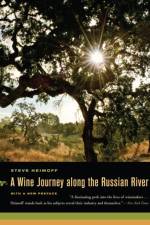
Steve Heimoff takes readers on an intimate and enlightening tour of one of California's most diverse and accomplished wine areas as he travels along the Russian River and talks with growers and vintners from the Cabernet country of the Alexander Valley to the Pinot Noir producers of the Sonoma coast. This first comprehensive look at the natural history and winemaking practices of the region by one of America's most respected wine critics brings the Russian into the exalted company of the great wine rivers of the world-the Loire, the Rhone, the Rhine, the Mosel, and the Douro. Part wine guidebook, part history and geology, and part travelogue of the author's adventures in wine country, A Wine Journey along the Russian River is essential reading for wine lovers-both those fortunate enough to be familiar with the region and those who have never been there. Heimoff guides readers along the length of the scenic river, from its warm, northern border with Mendocino out to foggy Jenner. He discusses the history and progress of Alexander Valley Zinfandel and Cabernet Sauvignon, Russian River Valley and Sonoma coast Pinot Noir, Sonoma County's Rhone-oriented wines, old-style field blends, and other interesting wines. In the process, he introduces readers to many of the growers and vintners who have made Sonoma County famous: Dick Arrowood, the Rochiolis, the Seghesios, Tom Jordon, Bob Cabral of Williams Selyem, Jess Jackson of Kendall-Jackson, Merry Edwards, and many others. Describing how the river's formation and evolution, both products of the planet's fiery tectonic past, as well as the region's complex climate, have created the potential for unparalleled viticultural enclaves, and recounting how a variety of people realized that potential, Heimoff provides a fascinating explanation of why the Russian River's reputation as a premium winegrowing region continues to grow.
Following the highly acclaimed Collected Poems of Ted Berrigan, poets Alice Notley, Anselm Berrigan, and Edmund Berrigan have collaborated again on this new selection of poems by one of the most influential and admired poets of his generation. Reflecting a new editorial approach, this volume demonstrates the breadth of Ted Berrigan's poetic accomplishments by presenting his most celebrated, interesting, and important work. This major second-wave New York School poet is often identified with his early poems, especially The Sonnets, but this selection encompasses his full poetic output, including the later sequences Easter Monday and A Certain Slant of Sunlight, as well as many of his uncollected poems. The Selected Poems of Ted Berrigan provides a new perspective for those already familiar with his remarkable wit and invention, and introduces new readers to what John Ashbery called the "e;crazy energy"e; of this iconoclastic, funny, brilliant, and highly innovative writer.Praise for The Collected Poems of Ted Berrigan:"e;This is a great, great book for all seasons of the mind and heart."e;-Robert Creeley"e;Thanks to this invaluable Collected Poems, one can hear, as never before, Ted Berrigan dreaming his dream."e;-The Nation"e;The Collected Poems of Ted Berrigan is not only one of the most strikingly attractive books recently published, but is also a major work of 20th-century poetry. . . . It is a book that will darken with the grease of my hands. There is no better way to praise it than by saying, 'If you enjoy poetry, you should have it.'"e; -Bloomsbury Review "e;It's a must-have, a poetic knockout."e;-Time Out New York
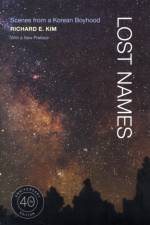
In this classic tale, Richard E. Kim paints seven vivid scenes from a boyhood and early adolescence in Korea at the height of the Japanese occupation, 1932 to 1945. Taking its title from the grim fact that the occupiers forced the Koreans to renounce their own names and adopt Japanese names instead, the book follows one Korean family through the Japanese occupation to the surrender of the Japanese empire. Lost Names is at once a loving memory of family and a vivid portrayal of life in a time of anguish.
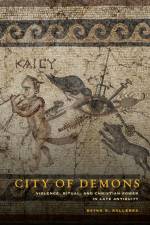
Although it would appear in studies of late antique ecclesiastical authority and power that scholars have covered everything, an important aspect of the urban bishop has long been neglected: his role as demonologist and exorcist. When the emperor Constantine made Christianity the official religion of the realm, bishops and priests everywhere struggled to "e;Christianize"e; the urban spaces still dominated by Greco-Roman monuments and festivals. During this period of upheaval, when congregants seemingly attended everything but their own "e;orthodox"e; church, many ecclesiastical leaders began simultaneously to promote aggressive and insidious depictions of the demonic. In City of Demons, Dayna S. Kalleres investigates this developing discourse and the church-sponsored rituals that went along with it, showing how shifting ecclesiastical demonologies and evolving practices of exorcism profoundly shaped Christian life in the fourth century.
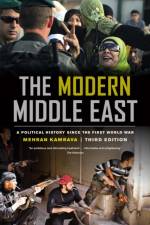
From the fall of the Ottoman Empire through the Arab Spring, this completely revised and updated edition of Mehran Kamrava's classic treatise on the making of the contemporary Middle East remains essential reading for students and general readers who want to gain a better understanding of this diverse region.
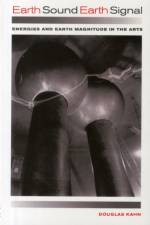
Earth Sound Earth Signal is a study of energies in aesthetics and the arts, from the birth of modern communications in the nineteenth century to the global transmissions of the present day. Douglas Kahn begins by evoking the Aeolian sphere music that Henry David Thoreau heard blowing along telegraph lines and the Aelectrosonic sounds of natural radio that Thomas Watson heard through the first telephone; he then traces the histories of science, media, music, and the arts to the 1960s and beyond. Earth Sound Earth Signal rethinks energy at a global scale, from brainwaves to outer space, through detailed discussions of musicians, artists and scientists such as Alvin Lucier, Edmond Dewan, Pauline Oliveros, John Cage, James Turrell, Robert Barry, Joyce Hinterding, and many others.
The Wherewithal of Life engages with current developments in the anthropology of ethics and migration studies to explore in empirical depth and detail the life experiences of three young men - a Ugandan migrant in Copenhagen, a Burkina Faso migrant in Amsterdam, and a Mexican migrant in Boston - in ways that significantly broaden our understanding of the existential situations and ethical dilemmas of those migrating from the global south. Michael Jackson offers the first biographically based phenomenological account of migration and mobility, providing new insights into the various motives, tactics, dilemmas, dreams, and disappointments that characterize contemporary migration. It is argued that the quandaries of African or Mexican migrants are not unique to people moving between 'traditional' and 'modern' worlds. While more intensely felt by the young, seeking to find a way out of a world of limited opportunity and circumscribed values, the experiences of transition are familiar to us all, whatever our age, gender, ethnicity or social status - namely, the impossibility of calculating what one may lose in leaving a settled life or home place; what one may gain by risking oneself in an alien environment; the difficulty of striking a balance between personal fulfillment and the moral claims of kinship; and the struggle to know the difference between 'concrete' and 'abstract' utopias (the first reasonable and worth pursuing; the second hopelessly unattainable).
Environmental Winds challenges the notion that globalized social formations emerged solely in the Global North prior to impacting the Global South. Instead, such formations have been constituted, transformed, and propelled through diverse, site-specific social interactions that complicate and defy divisions between 'global' and 'local.' The book brings the reader into the lives of Chinese scientists, officials, villagers, and expatriate conservationists who were caught up in environmental trends over the past 25 years. Hathaway reveals how global environmentalism has been enacted and altered in China, often with unanticipated effects, such as the rise of indigenous rights, or the reconfiguration of human/animal relationships, fostering what rural villagers refer to as "e;the revenge of wild elephants."e;
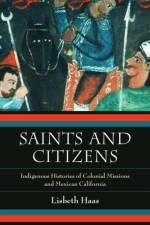
Saints and Citizens is a bold new excavation of the history of Indigenous people in California in the late eighteenth and nineteenth centuries, showing how the missions became sites of their authority, memory, and identity. Shining a forensic eye on colonial encounters in Chumash, Luiseno, and Yokuts territories, Lisbeth Haas depicts how native painters incorporated their cultural iconography in mission painting and how leaders harnessed new knowledge for control in other ways. Through her portrayal of highly varied societies, she explores the politics of Indigenous citizenship in the independent Mexican nation through events such as the Chumash War of 1824, native emancipation after 1826, and the political pursuit of Indigenous rights and land through 1848.
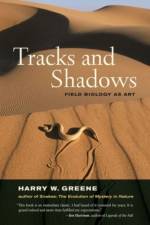
Intellectually rich, intensely personal, and beautifully written, Tracks and Shadows is both an absorbing autobiography of a celebrated field biologist and a celebration of beauty in nature. Harry W. Greene, award-winning author of Snakes: The Evolution of Mystery in Nature, delves into the poetry of field biology, showing how nature eases our existential quandaries. More than a memoir, the book is about the wonder of snakes, the beauty of studying and understanding natural history, and the importance of sharing the love of nature with humanity. Greene begins with his youthful curiosity about the natural world and moves to his stints as a mortician's assistant, ambulance driver, and army medic. In detailing his academic career, he describes how his work led him to believe that nature's most profound lessons lurk in hard-won details. He discusses the nuts and bolts of field research and teaching, contrasts the emotional impact of hot dry habitats with hot wet ones, imparts the basics of snake biology, and introduces the great explorers Charles Darwin and Alfred Russel Wallace. He reflects on friendship and happiness, tackles notions like anthropomorphism and wilderness, and argues that organisms remain the core of biology, science plays key roles in conservation, and natural history offers an enlightened form of contentment.
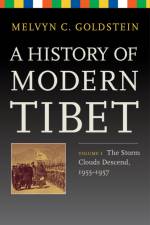
It is not possible to fully understand contemporary politics between China and the Dalai Lama without understanding what happened in the 1950's. The third volume in Melvyn Goldstein's History of Modern Tibet series, The Calm before the Storm, examines the critical years of 1955 through 1957. During this period, the Preparatory Committee for a Tibet Autonomous Region was inaugurated in Lhasa, and a major Tibetan uprising occurred in Sichuan Province. Jenkhentsisum, a Tibetan anti-communist emigre group, emerged as an important player with secret links to Indian Intelligence, the Dalai Lama's Lord Chamberlain, the United States, and Taiwan. And in Tibet, Fan Ming, the acting head of the CCP's office in Lhasa, launched the "e;Great Expansion,"e; which recruited many thousands of Han Cadres to Lhasa in preparation for beginning democratic reforms, only to be stopped decisively by Mao Zedong's "e;Great Contraction"e; which sent them back to China and ended talk of reforms in Tibet for the foreseeable future. In Volume III, Goldstein draws on never-before seen Chinese government documents, published and unpublished memoirs and diaries, and invaluable in-depth interviews with important Chinese and Tibetan participants (including the Dalai Lama) to offer a new level of insight into the events and principal players of the time. Goldstein corrects factual errors and misleading stereotypes in the history, and uncovers heretofore unknown information on the period to reveal in depth a nuanced portrait of Sino-Tibetan relations that goes far beyond anything previously imagined.
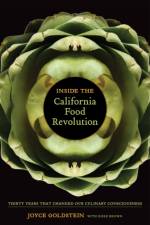
In this authoritative and immensely readable insider's account, celebrated cookbook author and former chef Joyce Goldstein traces the development of California cuisine from its formative years in the 1970s to 2000, when farm-to-table, foraging, and fusion cooking had become part of the national vocabulary. Interviews with almost two hundred chefs, purveyors, artisans, winemakers, and food writers bring to life an approach to cooking grounded in passion, bold innovation, and a dedication to "e;flavor first."e; Goldstein explains how the counterculture movement in the West gave rise to a restaurant culture characterized by open kitchens, women in leadership positions, and a surprising number of chefs and artisanal food producers who lacked formal training. The new cuisine challenged the conventional kitchen hierarchy and French dominance in fine dining, leading to a more egalitarian and informal food scene. In weaving Goldstein's views on California food culture with profiles of those who played a part in its development-from Alice Waters to Bill Niman to Wolfgang Puck-Inside the California Food Revolution demonstrates that, while fresh produce and locally sourced ingredients are iconic in California, what transforms these elements into a unique cuisine is a distinctly Western culture of openness, creativity, and collaboration. Engagingly written and full of captivating anecdotes, this book shows how the inspirations that emerged in California went on to transform the experience of eating throughout the United States and the world.
A foundation of Chinese life sciences and medicine, the Huang Di Nei Jing Su Wen is now available for the first time in a complete, fully annotated English translation. Also known as Su Wen, or The Yellow Emperor's Inner Classic, this influential work came into being over a long period reaching from the 2nd century bce to the 8th century ce. Combining the views of different schools, it relies exclusively on natural law as conceptualized in yin/yang and Five Agents doctrines to define health and disease, and repeatedly emphasizes personal responsibility for the length and quality of one's life. This two-volume edition includes excerpts from all the major commentaries on the Su Wen, and extensive annotation drawn from hundreds of monographs and articles by Chinese and Japanese authors produced over the past 1600 years and into the twentieth century.
Scholars have long recognized the relevance to Christianity of the many stories surrounding the life of Alexander the Great, who claimed to be the son of Zeus. But until now, no comprehensive effort has been made to connect the mythic life and career of Alexander to the stories about Jesus and to the earliest theology of the nascent Christian churches. Ory Amitay delves into a wide range of primary texts in Greek, Latin, and Hebrew to trace Alexander as a mythological figure, from his relationship to his ancestor and rival, Herakles, to the idea of his divinity as the son of a god. In compelling detail, Amitay illuminates both Alexander's links to Herakles and to two important and enduring ideas: that of divine sonship and that of reconciliation among peoples.
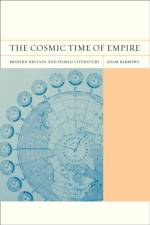
Combining original historical research with literary analysis, Adam Barrows takes a provocative look at the creation of world standard time in 1884 and rethinks the significance of this remarkable moment in modernism for both the processes of imperialism and for modern literature. As representatives from twenty-four nations argued over adopting the Prime Meridian, and thereby measuring time in relation to Greenwich, England, writers began experimenting with new ways of representing human temporality. Barrows finds this experimentation in works as varied as Victorian adventure novels, high modernist texts, and South Asian novels-including the work of James Joyce, Virginia Woolf, H. Rider Haggard, Bram Stoker, Rudyard Kipling, and Joseph Conrad. Demonstrating the investment of modernist writing in the problems of geopolitics and in the public discourse of time, Barrows argues that it is possible, and productive, to rethink the politics of modernism through the politics of time.
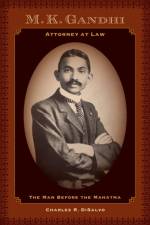
';...a must read for persons from all walks of life...interested in understanding the philosophical evolution of an ordinary man into the extraordinary.' --Indian Law Journal In 1888, at the age of eighteen, Mohandas Gandhi sets out from his modest home in India. Shy, timid, and soft-spoken, he embarks on what he believes will be a new life abroad. Twenty-seven years later, at the age of forty-five, he returnsthis time fearless, impassioned, and ready to lead his country to freedom. What transformed him? The law.M. K. Gandhi, Attorney at Law is the first biography of the Mahatma's early years as a lawyer. It follows Gandhi as he embarks on a personal journey of self-discovery: from his education in Britain, through the failure of his first law practice in India, to his eventual migration to South Africa. Though he found initial success representing wealthy Indian merchants, events on the ground would come to change him. Relentless attacks by the white colonial establishment on Indian civil rights prompted Gandhi to give up his lucrative business in favor of representing the oppressed in court. Gandhi had originally hoped that the South African legal system could be relied upon for justice. But when the courts failed to respond, he had no choice but to shift tactics, developing what would ultimately become his lasting legacythe philosophy and practice of nonviolent civil disobedience. As he took on the most powerful governmental, economic, and political forces of his day, Gandhi transformed himself from a modest civil rights lawyer into a tireless freedom fighter. Relying on never-before-seen archival materials, this book provides the reader with a front-row seat to the dramatic events that would alter Gandhiand historyforever.
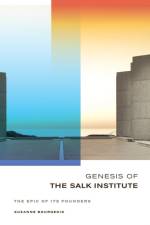
This work is a personal account of the origins and early years of the Salk Institute for Biological Studies. Bourgeois crafts an engaging study that draws on her involvement with the Institute and on related archives, interviews, and informal conversations.The volume discusses the people who founded the Institute and built a home for renowned research-leading scientists of the time as well as non-scientists of stature in finance, politics, philanthropy, publishing, and the humanities. The events that brought people together, the historic backdrop in which they worked, their personalities, their courage and their visions, their clash of egos and their personal vanities are woven together in a rich, engaging narrative about the founding of a world-premier research institution.
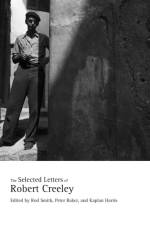
Robert Creeley is one of the most celebrated and influential American poets. A stylist of the highest order, Creeley imbued his correspondence with the literary artistry he brought to his poetry. Through his engagements with mentors such as William Carlos Williams and Ezra Pound, peers such as Charles Olson, Robert Duncan, Denise Levertov, Allen Ginsberg, and Jack Kerouac, and mentees such as Charles Bernstein, Anselm Berrigan, Ed Dorn, Susan Howe, and Tom Raworth, Creeley helped forge a new poetry that re-imagined writing for his and subsequent generations. This first-ever volume of his letters, written between 1945 and 2005, document the life, work, and times of one of our greatest writers, and represent a critical archive of the development of contemporary American poetry, as well as the changing nature of letter-writing and communication in the digital era.
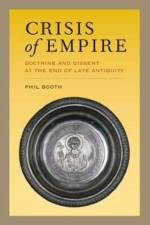
This book focuses on the attempts of three ascetics-John Moschus, Sophronius of Jerusalem, and Maximus Confessor-to determine the Church's power and place during a period of profound crisis, as the eastern Roman empire suffered serious reversals in the face of Persian and then Islamic expansion. By asserting visions which reconciled long-standing intellectual tensions between asceticism and Church, these authors established the framework for their subsequent emergence as Constantinople's most vociferous religious critics, their alliance with the Roman popes, and their radical rejection of imperial interference in matters of the faith. Situated within the broader religious currents of the fourth to seventh centuries, this book throws new light on the nature not only of the holy man in late antiquity, but also of the Byzantine Orthodoxy that would emerge in the Middle Ages, and which is still central to the churches of Greece and Eastern Europe.
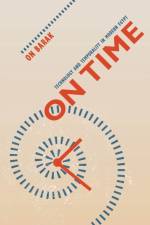
In this pioneering history of transportation and communication in the modern Middle East, On Barak argues that contrary to accepted wisdom technological modernity in Egypt did not drive a sense of time focused on standardization only. Surprisingly, the introduction of the steamer, railway, telegraph, tramway, and telephone in colonial Egypt actually triggered the development of unique timekeeping practices that resignified and subverted the typical modernist infatuation with expediency and promptness. These countertempos, predicated on uneasiness over "e;dehumanizing"e; European standards of efficiency, sprang from and contributed to non-linear modes of arranging time. Barak shows how these countertempos formed and developed with each new technological innovation during the nineteenth and early twentieth centuries, contributing to a particularly Egyptian sense of time that extends into the present day, exerting influence over contemporary political language in the Arab world. The universal notion of a modern mechanical standard time and the deviations supposedly characterizing non-Western settings "e;from time immemorial,"e; On Time provocatively argues, were in fact mutually constitutive and mutually reinforcing.
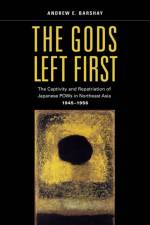
At the time of Japan's surrender to Allied forces on August 15, 1945, some six million Japanese were left stranded across the vast expanse of a vanquished Asian empire. Half civilian and half military, they faced the prospect of returning somehow to a Japan that lay prostrate, its cities destroyed, after years of warfare and Allied bombing campaigns. Among them were more than 600,000 soldiers of Japan's army in Manchuria, who had surrendered to the Red Army only to be transported to Soviet labor camps, mainly in Siberia. Held for between two and four years, and some far longer, amid forced labor and reeducation campaigns, they waited for return, never knowing when or if it would come. Drawing on a wide range of memoirs, art, poetry, and contemporary records, The Gods Left First reconstructs their experience of captivity, return, and encounter with a postwar Japan that now seemed as alien as it had once been familiar. In a broader sense, this study is a meditation on the meaning of survival for Japan's continental repatriates, showing that their memories of involvement in Japan's imperial project were both a burden and the basis for a new way of life.
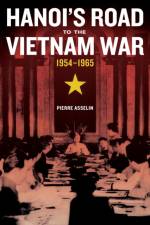
Hanoi's Road to the Vietnam War opens in 1954 with the signing of the Geneva accords that ended the eight-year-long Franco-Indochinese War and created two Vietnams. In agreeing to the accords, Ho Chi Minh and other leaders of the Democratic Republic of Vietnam anticipated a new period of peace leading to national reunification under their rule; they never imagined that within a decade they would be engaged in an even bigger feud with the United States. Basing his work on new and largely inaccessible Vietnamese materials as well as French, British, Canadian, and American documents, Pierre Asselin explores the communist path to war. Specifically, he examines the internal debates and other elements that shaped Hanoi's revolutionary strategy in the decade preceding U.S. military intervention, and resulting domestic and foreign programs. Without exonerating Washington for its role in the advent of hostilities in 1965, Hanoi's Road to the Vietnam War demonstrates that those who directed the effort against the United States and its allies in Saigon were at least equally responsible for creating the circumstances that culminated in arguably the most tragic conflict of the Cold War era.
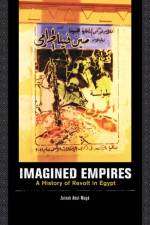
Through a microhistory of a small province in Upper Egypt, this book investigates the history of five world empires that assumed hegemony in Qina province over the last five centuries. Imagined Empires charts modes of subaltern rebellion against the destructive policies of colonial intruders and collaborating local elites in the south of Egypt. Abul-Magd vividly narrates stories of sabotage, banditry, flight, and massive uprisings of peasants and laborers, to challenge myths of imperial competence. The book depicts forms of subaltern discontent against "e;imagined empires"e; that failed in achieving their professed goals and brought about environmental crises to Qina province. As the book deconstructs myths about early modern and modern world hegemons, it reveals that imperial modernity and its market economy altered existing systems of landownership, irrigation, and trade- leading to such destructive occurrences as the plague and cholera epidemics. The book also deconstructs myths in Egyptian historiography, highlighting the problems of a Cairo-centered idea of the Egyptian nation-state. The book covers the Ottoman, French, Muhammad Ali's, and the British informal and formal empires. It alludes to the U.S. and its failed market economy in Upper Egypt, which partially resulted in Qina's participation in the 2011 revolution. Imagined Empires is a timely addition to Middle Eastern and world history.
In Someplace Like America, writer Dale Maharidge and photographer Michael S. Williamson take us to the working-class heart of America, bringing to life-through shoe leather reporting, memoir, vivid stories, stunning photographs, and thoughtful analysis-the deepening crises of poverty and homelessness. The story begins in 1980, when the authors joined forces to cover the America being ignored by the mainstream media-people living on the margins and losing their jobs as a result of deindustrialization. Since then, Maharidge and Williamson have traveled more than half a million miles to investigate the state of the working class (winning a Pulitzer Prize in the process). In Someplace Like America, they follow the lives of several families over the thirty-year span to present an intimate and devastating portrait of workers going jobless. This brilliant and essential study-begun in the trickle-down Reagan years and culminating with the recent banking catastrophe-puts a human face on today's grim economic numbers. It also illuminates the courage and resolve with which the next generation faces the future.
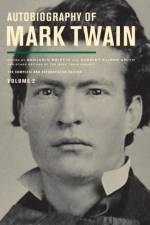
Mark Twain's complete, uncensored Autobiography was an instant bestseller when the first volume was published in 2010, on the centennial of the author's death, as he requested. Published to rave reviews, the Autobiography was hailed as the capstone of Twain's career. It captures his authentic and unsuppressed voice, speaking clearly from the grave and brimming with humor, ideas, and opinions. The eagerly-awaited Volume 2 delves deeper into Mark Twain's life, uncovering the many roles he played in his private and public worlds. Filled with his characteristic blend of humor and ire, the narrative ranges effortlessly across the contemporary scene. He shares his views on writing and speaking, his preoccupation with money, and his contempt for the politics and politicians of his day. Affectionate and scathing by turns, his intractable curiosity and candor are everywhere on view. Editors: Benjamin Griffin and Harriet E. Smith Associate Editors: Victor Fischer, Michael B. Frank, Sharon K. Goetz and Leslie Diane Myrick
One evening, while watching the news, Roger N. Lancaster was startled by a report that a friend, a gay male school teacher, had been arrested for a sexually based crime. The resulting hysteria threatened to ruin the life of an innocent man. In this passionate and provocative book, Lancaster blends astute analysis, robust polemic, ethnography, and personal narrative to delve into the complicated relationship between sexuality and punishment in our society. Drawing on classical social science, critical legal studies, and queer theory, he tracks the rise of a modern suburban culture of fear and develops new insights into the punitive logic that has put down deep roots in everyday American life.
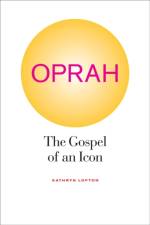
"e;Today on Oprah,"e; intoned the TV announcer, and all over America viewers tuned in to learn, empathize, and celebrate. In this book, Kathryn Lofton investigates the Oprah phenomenon and finds in Winfrey's empire-Harpo Productions, O Magazine, and her new television network-an uncanny reflection of religion in modern society. Lofton shows that when Oprah liked, needed, or believed something, she offered her audience nothing less than spiritual revolution, reinforced by practices that fuse consumer behavior, celebrity ambition, and religious idiom. In short, Oprah Winfrey is a media messiah for a secular age. Lofton's unique approach also situates the Oprah enterprise culturally, illuminating how Winfrey reflects and continues historical patterns of American religions.
As Eve Ensler says in her inspired foreword to this book, "e;Jody Williams is many things-a simple girl from Vermont, a sister of a disabled brother, a loving wife, an intense character full of fury and mischief, a great strategist, an excellent organizer, a brave and relentless advocate, and a Nobel Peace Prize winner. But to me Jody Williams is, first and foremost, an activist."e;From her modest beginnings to becoming the tenth woman-and third American woman-to receive the Nobel Peace Prize, Jody Williams takes the reader through the ups and downs of her tumultuous and remarkable life. In a voice that is at once candid, straightforward, and intimate, Williams describes her Catholic roots, her first step on a long road to standing up to bullies with the defense of her deaf brother Stephen, her transformation from good girl to college hippie at the University of Vermont, and her protest of the war in Vietnam. She relates how, in 1981, she began her lifelong dedication to global activism as she battled to stop the U.S.-backed war in El Salvador.Throughout the memoir, Williams underlines her belief that an "e;average woman"e;-through perseverance, courage and imagination-can make something extraordinary happen. She tells how, when asked if she'd start a campaign to ban and clear anti-personnel mines, she took up the challenge, and the International Campaign to Ban Landmines (ICBL) was born. Her engrossing account of the genesis and evolution of the campaign, culminating in 1997 with the Nobel Peace Prize, vividly demonstrates how one woman's commitment to freedom, self-determination, and human rights can have a profound impact on people all over the globe.
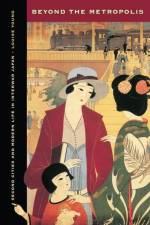
In Beyond the Metropolis, Louise Young looks at the emergence of urbanism in the interwar period, a global moment when the material and ideological structures that constitute "e;the city"e; took their characteristic modern shape. In Japan, as elsewhere, cities became the staging ground for wide ranging social, cultural, economic, and political transformations. The rise of social problems, the formation of a consumer marketplace, the proliferation of streetcars and streetcar suburbs, and the cascade of investments in urban development reinvented the city as both socio-spatial form and set of ideas. Young tells this story through the optic of the provincial city, examining four second-tier cities: Sapporo, Kanazawa, Niigata, and Okayama. As prefectural capitals, these cities constituted centers of their respective regions. All four grew at an enormous rate in the interwar decades, much as the metropolitan giants did. In spite of their commonalities, local conditions meant that policies of national development and the vagaries of the business cycle affected individual cities in diverse ways. As their differences reveal, there is no single master narrative of twentieth century modernization. By engaging urban culture beyond the metropolis, this study shows that Japanese modernity was not made in Tokyo and exported to the provinces, but rather co-constituted through the circulation and exchange of people and ideas throughout the country and beyond.
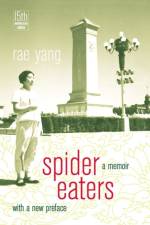
Spider Eaters is at once a moving personal story, a fascinating family history, and a unique chronicle of political upheaval told by a Chinese woman who came of age during the turbulent years of the Cultural Revolution. With stunning honesty and a lively, sly humor, Rae Yang records her life from her early years as the daughter of Chinese diplomats in Switzerland, to her girlhood at an elite middle school in Beijing, to her adolescent experience as a Red Guard and later as a laborer on a pig farm in the remote northern wilderness. She tells of her eventual disillusionment with the Maoist revolution, how remorse and despair nearly drove her to suicide, and how she struggled to make sense of conflicting events that often blurred the line between victim and victimizer, aristocrat and peasant, communist and counter-revolutionary. Moving gracefully between past and present, dream and reality, the author artfully conveys the vast complexity of life in China as well as the richness, confusion, and magic of her own inner life and struggle.Much of the power of the narrative derives from Yang's multi-generational, cross-class perspective. She invokes the myths, legends, folklore, and local customs that surrounded her and brings to life the many people who were instrumental in her life: her nanny, a poor woman who raised her from a baby and whose character is conveyed through the bedtime tales she spins; her father; and her beloved grandmother, who died as a result of the political persecution she suffered.Spanning the years from 1950 to 1980, Rae Yang's story is evocative, complex, and told with striking candor. It is one of the most immediate and engaging narratives of life in post-1949 China.
Abonner på vårt nyhetsbrev og få rabatter og inspirasjon til din neste leseopplevelse.
Ved å abonnere godtar du vår personvernerklæring.