




Gjør som tusenvis av andre bokelskere
Abonner på vårt nyhetsbrev og få rabatter og inspirasjon til din neste leseopplevelse.
Ved å abonnere godtar du vår personvernerklæring.Du kan når som helst melde deg av våre nyhetsbrev.

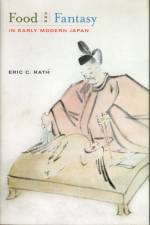
How did one dine with a shogun? Or make solid gold soup, sculpt with a fish, or turn seaweed into a symbol of happiness? In this fresh look at Japanese culinary history, Eric C. Rath delves into the writings of medieval and early modern Japanese chefs to answer these and other provocative questions, and to trace the development of Japanese cuisine from 1400 to 1868. Rath shows how medieval "e;fantasy food"e; rituals-where food was revered as symbol rather than consumed-were continued by early modern writers. The book offers the first extensive introduction to Japanese cookbooks, recipe collections, and gastronomic writings of the period and traces the origins of dishes like tempura, sushi, and sashimi while documenting Japanese cooking styles and dining customs.
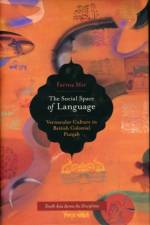
This rich cultural history set in Punjab examines a little-studied body of popular literature to illustrate both the durability of a vernacular literary tradition and the limits of colonial dominance in British India. Farina Mir asks how qisse, a vibrant genre of epics and romances, flourished in colonial Punjab despite British efforts to marginalize the Punjabi language. She explores topics including Punjabi linguistic practices, print and performance, and the symbolic content of qisse. She finds that although the British denied Punjabi language and literature almost all forms of state patronage, the resilience of this popular genre came from its old but dynamic corpus of stories, their representations of place, and the moral sensibility that suffused them. Her multidisciplinary study reframes inquiry into cultural formations in late-colonial north India away from a focus on religious communal identities and nationalist politics and toward a widespread, ecumenical, and place-centered poetics of belonging in the region.
Ancestral Leaves follows one family through six hundred years of Chinese history and brings to life the epic narrative of the nation, from the fourteenth century through the Cultural Revolution. The lives of the Ye family-"e;Ye"e; means "e;leaf"e; in Chinese-reveal the human side of the large-scale events that shaped modern China: the vast and destructive rebellions of the nineteenth century, the economic growth and social transformation of the republican era, the Japanese invasion during World War II, and the Cultural Revolution under the Chinese Communists. Joseph W. Esherick draws from rare manuscripts and archival and oral history sources to provide an uncommonly personal and intimate glimpse into Chinese family history, illuminating the changing patterns of everyday life during rebellion, war, and revolution.
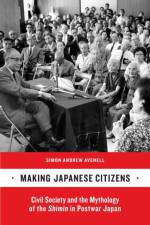
Making Japanese Citizens is an expansive history of the activists, intellectuals, and movements that played a crucial role in shaping civil society and civic thought throughout the broad sweep of Japan's postwar period. Weaving his analysis around the concept of shimin (citizen), Simon Avenell traces the development of a new vision of citizenship based on political participation, self-reliance, popular nationalism, and commitment to daily life. He traces civic activism through six phases: the cultural associations of the 1940s and 1950s, the massive U.S.-Japan Security Treaty protests of 1960, the anti-Vietnam War movement, the antipollution and antidevelopment protests of the 1960s and 1970s, movements for local government reform and the rise of new civic groups from the mid-1970s. This rich portrayal of activists and their ideas illuminates questions of democracy, citizenship, and political participation both in contemporary Japan and in other industrialized nations more generally.
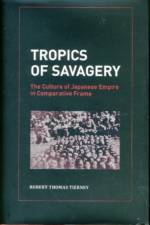
Tropics of Savagery is an incisive and provocative study of the figures and tropes of "e;savagery"e; in Japanese colonial culture. Through a rigorous analysis of literary works, ethnographic studies, and a variety of other discourses, Robert Thomas Tierney demonstrates how imperial Japan constructed its own identity in relation both to the West and to the people it colonized. By examining the representations of Taiwanese aborigines and indigenous Micronesians in the works of prominent writers, he shows that the trope of the savage underwent several metamorphoses over the course of Japan's colonial period--violent headhunter to be subjugated, ethnographic other to be studied, happy primitive to be exoticized, and hybrid colonial subject to be assimilated.
"e;To the barricades!"e; The cry conjures images of angry citizens, turmoil in the streets, and skirmishes fought behind hastily improvised cover. This definitive history of the barricade charts the origins, development, and diffusion of a uniquely European revolutionary tradition. Mark Traugott traces the barricade from its beginnings in the sixteenth century, to its refinement in the insurrectionary struggles of the long nineteenth century, on through its emergence as an icon of an international culture of revolution. Exploring the most compelling moments of its history, Traugott finds that the barricade is more than a physical structure; it is part of a continuous insurrectionary lineage that features spontaneous collaboration even as it relies on recurrent patterns of self-conscious collective action. A case study in how techniques of protest originate and evolve, The Insurgent Barricade tells how the French perfected a repertoire of revolution over three centuries, and how students, exiles, and itinerant workers helped it spread across Europe.
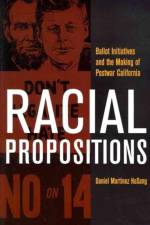
This book looks beyond the headlines to uncover the controversial history of California's ballot measures over the past fifty years. As the rest of the U.S. watched, California voters banned public services for undocumented immigrants, repealed public affirmative action programs, and outlawed bilingual education, among other measures. Why did a state with a liberal political culture, an increasingly diverse populace, and a well-organized civil rights leadership roll back civil rights and anti-discrimination gains? Daniel Martinez HoSang finds that, contrary to popular perception, this phenomenon does not represent a new wave of "e;color-blind"e; policies, nor is a triumph of racial conservatism. Instead, in a book that goes beyond the conservative-liberal divide, HoSang uncovers surprising connections between the right and left that reveal how racial inequality has endured. Arguing that each of these measures was a proposition about the meaning of race and racism, his deft, convincing analysis ultimately recasts our understanding of the production of racial identity, inequality, and power in the postwar era.
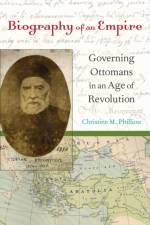
This vividly detailed revisionist history opens a new vista on the great Ottoman Empire in the early nineteenth century, a key period often seen as the eve of Tanzimat westernizing reforms and the beginning of three distinct histories-ethnic nationalism in the Balkans, imperial modernization from Istanbul, and European colonialism in the Middle East. Christine Philliou brilliantly shines a new light on imperial crisis and change in the 1820s and 1830s by unearthing the life of one man. Stephanos Vogorides (1780-1859) was part of a network of Christian elites known phanariots, institutionally excluded from power yet intimately bound up with Ottoman governance. By tracing the contours of the wide-ranging networks-crossing ethnic, religious, and institutional boundaries-in which the phanariots moved, Philliou provides a unique view of Ottoman power and, ultimately, of the Ottoman legacies in the Middle East and Balkans today. What emerges is a wide-angled analysis of governance as a lived experience at a moment in which there was no clear blueprint for power.
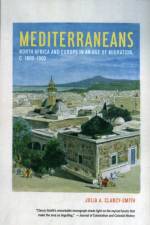
Today labor migrants mostly move south to north across the Mediterranean. Yet in the nineteenth century thousands of Europeans and others moved south to North Africa, Egypt, and the Levant. This study of a dynamic borderland, the Tunis region, offers the fullest picture to date of the Mediterranean before, and during, French colonialism. In a vibrant examination of people in motion, Julia A. Clancy-Smith tells the story of countless migrants, travelers, and adventurers who traversed the Mediterranean, changing it forever. Who were they? Why did they leave home? What awaited them in North Africa? And most importantly, how did an Arab-Muslim state and society make room for the newcomers? Combining fleeting facts, tales of success and failure, and vivid cameos, the book gives a groundbreaking view of one of the principal ways that the Mediterranean became modern.
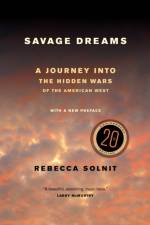
"e;A beautiful, absorbing, tragic book."e;-Larry McMurtryIn 1851, a war began in what would become Yosemite National Park, a war against the indigenous inhabitants. A century later-in 1951-and a hundred and fifty miles away, another war began when the U.S. government started setting off nuclear bombs at the Nevada Test Site. It was called a nuclear testing program, but functioned as a war against the land and people of the Great Basin.In this foundational book of landscape theory and environmental thinking, Rebecca Solnit explores our national Eden and Armageddon and offers a pathbreaking history of the west, focusing on the relationship between culture and its implementation as politics. In a new preface, she considers the continuities and changes of these invisible wars in the context of our current climate change crisis, and reveals how the long arm of these histories continue to inspire her writing and hope.
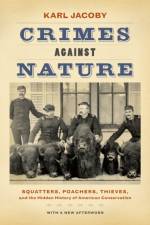
Crimes against Nature reveals the hidden history behind three of the nation's first parklands: the Adirondacks, Yellowstone, and the Grand Canyon. Focusing on conservation's impact on local inhabitants, Karl Jacoby traces the effect of criminalizing such traditional practices as hunting, fishing, foraging, and timber cutting in the newly created parks. Jacoby reassesses the nature of these "e;crimes"e; and provides a rich portrait of rural people and their relationship with the natural world in the late nineteenth and early twentieth centuries.
In 1895, Louis Lumiere supposedly said that cinema is "e;an invention without a future."e; James Naremore uses this legendary remark as a starting point for a meditation on the so-called death of cinema in the digital age, and as a way of introducing a wide-ranging series of his essays on movies past and present. These essays include discussions of authorship, adaptation, and acting; commentaries on Howard Hawks, Alfred Hitchcock, Orson Welles, Vincente Minnelli, John Huston, and Stanley Kubrick; and reviews of more recent work by non-Hollywood directors Pedro Costa, Abbas Kiarostami, Raul Ruiz, and Apichatpong Weerasethakul. Important themes recur: the relations between modernity, modernism, and postmodernism; the changing mediascape and death of older technologies; and the need for robust critical writing in an era when print journalism is waning and the humanities are devalued. The book concludes with essays on four major American film critics: James Agee, Manny Farber, Andrew Sarris, and Jonathan Rosenbaum.
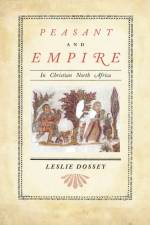
This remarkable history foregrounds the most marginal sector of the Roman population, the provincial peasantry, to paint a fascinating new picture of peasant society. Making use of detailed archaeological and textual evidence, Leslie Dossey examines the peasantry in relation to the upper classes in Christian North Africa, tracing that region's social and cultural history from the Punic times to the eve of the Islamic conquest. She demonstrates that during the period when Christianity was spreading to both city and countryside in North Africa, a convergence of economic interests narrowed the gap between the rustici and the urbani, creating a consumer revolution of sorts among the peasants. This book's postcolonial perspective points to the empowerment of the North African peasants and gives voice to lower social classes across the Roman world.
Hidden Truth takes the reader inside a Rhode Island juvenile prison to explore broader questions of how poor, disenfranchised young men come to terms with masculinity and identity. Adam D. Reich, who worked with inmates to produce a newspaper, writes vividly and memorably about the young men he came to know, and in the process extends theories of masculinity, crime, and social reproduction into a provocative new paradigm. Reich suggests that young men's participation in crime constitutes a game through which they achieve "e;outsider masculinity."e; Once in prison these same youths are forced to reconcile their criminal practices with a new game and new "e;insider masculinity"e; enforced by guards and administrators.
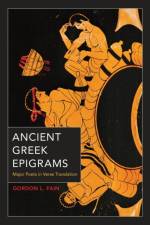
After Sappho but before the great Latin poets, the most important short poems in the ancient world were Greek epigrams. Beginning with simple expressions engraved on stone, these poems eventually encompassed nearly every theme we now associate with lyric poetry in English. Many of the finest are on love and would later exert a profound influence on Latin love poets and, through them, on all the poetry of Europe and the West. This volume offers a representative selection of the best Greek epigrams in original verse translation. It showcases the poetry of nine poets (including one woman), with many epigrams from the recently discovered Milan papyrus. Gordon L. Fain provides an accessible general introduction describing the emergence of the epigram in Hellenistic Greece, together with short essays on the life and work of each poet and brief explanatory notes for the poems, making this collection an ideal anthology for a wide audience of readers.
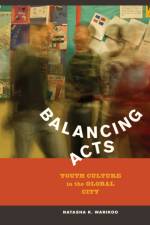
In this timely examination of children of immigrants in New York and London, Natasha Kumar Warikoo asks, Is there a link between rap/hip-hop-influenced youth culture and motivation to succeed in school? Warikoo challenges teachers, administrators, and parents to look beneath the outward manifestations of youth culture -- the clothing, music, and tough talk -- to better understand the internal struggle faced by many minority students as they try to fit in with peers while working to lay the groundwork for successful lives. Using ethnographic, survey, and interview data in two racially diverse, low-achieving high schools, Warikoo analyzes seemingly oppositional styles, tastes in music, and school behaviors and finds that most teens try to find a balance between success with peers and success in school.
Shadow Mothers shines new light on an aspect of contemporary motherhood often hidden from view: the need for paid childcare by women returning to the workforce, and the complex bonds mothers forge with the "e;shadow mothers"e; they hire. Cameron Lynne Macdonald illuminates both sides of an unequal and complicated relationship. Based on in-depth interviews with professional women and childcare providers- immigrant and American-born nannies as well as European au pairs-Shadow Mothers locates the roots of individual skirmishes between mothers and their childcare providers in broader cultural and social tensions. Macdonald argues that these conflicts arise from unrealistic ideals about mothering and inflexible career paths and work schedules, as well as from the devaluation of paid care work.
In How Chiefs Became Kings, Patrick Vinton Kirch addresses a central problem in anthropological archaeology: the emergence of "e;archaic states"e; whose distinctive feature was divine kingship. Kirch takes as his focus the Hawaiian archipelago, commonly regarded as the archetype of a complex chiefdom. Integrating anthropology, linguistics, archaeology, traditional history, and theory, and drawing on significant contributions from his own four decades of research, Kirch argues that Hawaiian polities had become states before the time of Captain Cook's voyage (1778-1779). The status of most archaic states is inferred from the archaeological record. But Kirch shows that because Hawai`i's kingdoms were established relatively recently, they could be observed and recorded by Cook and other European voyagers. Substantive and provocative, this book makes a major contribution to the literature of precontact Hawai`i and illuminates Hawai`i's importance in the global theory and literature about divine kingship, archaic states, and sociopolitical evolution.
Dreams that Matter explores the social and material life of dreams in contemporary Cairo. Amira Mittermaier guides the reader through landscapes of the imagination that feature Muslim dream interpreters who draw on Freud, reformists who dismiss all forms of divination as superstition, a Sufi devotional group that keeps a diary of dreams related to its shaykh, and ordinary believers who speak of moving encounters with the Prophet Muhammad. In close dialogue with her Egyptian interlocutors, Islamic textual traditions, and Western theorists, Mittermaier teases out the dream's ethical, political, and religious implications. Her book is a provocative examination of how present-day Muslims encounter and engage the Divine that offers a different perspective on the Islamic Revival. Dreams That Matter opens up new spaces for an anthropology of the imagination, inviting us to rethink both the imagined and the real.
Dacha Idylls is a lively account of dacha life and how Russians experience this deeply rooted tradition of the summer cottage amid the changing cultural, economic, and political landscape of postsocialist Russia. Simultaneously beloved and reviled, dachas wield a power that makes owning and caring for them an essential part of life. In this book, Melissa L. Caldwell captures the dacha's abiding traditions and demonstrates why Russians insist that these dwellings are key to understanding Russian life. She draws on literary texts as well as observations from dacha dwellers to highlight this enduring fact of Russian culture at a time when so much has changed. Caldwell presents the dacha world in all its richness and complexity-a "e;good life"e; that draws inspiration from the natural environment in which it is situated.
Friends-they are generous and cooperative with each other in ways that appear to defy standard evolutionary expectations, frequently sacrificing for one another without concern for past behaviors or future consequences. In this fascinating multidisciplinary study, Daniel J. Hruschka synthesizes an array of cross-cultural, experimental, and ethnographic data to understand the broad meaning of friendship, how it develops, how it interfaces with kinship and romantic relationships, and how it differs from place to place. Hruschka argues that friendship is a special form of reciprocal altruism based not on tit-for-tat accounting or forward-looking rationality, but rather on mutual goodwill that is built up along the way in human relationships.
The United States currently has the largest prison population on the planet. Over the last four decades, structural unemployment, concentrated urban poverty, and mass homelessness have also become permanent features of the political economy. These developments are without historical precedent, but not without historical explanation. In this searing critique, Jordan T. Camp traces the rise of the neoliberal carceral state through a series of turning points in U.S. history including the Watts insurrection in 1965, the Detroit rebellion in 1967, the Attica uprising in 1971, the Los Angeles revolt in 1992, and events in post-Katrina New Orleans in 2005. Incarcerating the Crisis argues that these dramatic events coincided with the emergence of neoliberal capitalism and the state's attempts to crush radical social movements. Through an examination of the poetic visions of social movementsincluding those by James Baldwin, Marvin Gaye, June Jordan, Jose Ramrez, and Sunni Pattersonit also suggests that alternative outcomes have been and continue to be possible.
Joy H. Calico examines the cultural history of postwar Europe through the lens of the performance and reception of Arnold Schoenberg's A Survivor from Warsaw-a short but powerful work, she argues, capable of irritating every exposed nerve in postwar Europe. Schoenberg, a Jewish composer whose oeuvre had been one of the Nazis' prime exemplars of entartete (degenerate) music, immigrated to the United States and became an American citizen. Both admired and reviled as a pioneer of dodecaphony, he wrote this twelve-tone piece about the Holocaust in three languages for an American audience. This book investigates the meanings attached to the work as it circulated through Europe during the early Cold War in a kind of symbolic musical remigration, focusing on six case studies: West Germany, Austria, Norway, East Germany, Poland, and Czechoslovakia. Each case is unique, informed by individual geopolitical concerns, but this analysis also reveals common themes in anxieties about musical modernism, Holocaust memory and culpability, the coexistence of Jews and former Nazis, anti-Semitism, dislocation, and the presence of occupying forces on both sides of the Cold War divide.
Once celebrated as a model development for its progressive social indicators, the southern Indian state of Kerala has earned the new distinction as the nation's suicide capital, with suicide rates soaring to triple the national average since 1990. Rather than an aberration on the path to development and modernity, Keralites understand this crisis to be the bitter fruit borne of these historical struggles and the aspirational dilemmas they have produced in everyday life. Suicide, therefore, offers a powerful lens onto the experiential and affective dimensions of development and global change in the postcolonial world.In the long shadow of fear and uncertainty that suicide casts in Kerala, living acquires new meaning and contours. In this powerful ethnography, Jocelyn Chua draws on years of fieldwork to broaden the field of vision beyond suicide as the termination of life, considering how suicide generates new ways of living in these anxious times.
In the late nineteenth and early twentieth centuries, working-class Americans had eating habits that were distinctly shaped by jobs, families, neighborhoods, and the tools, utilities, and size of their kitchens-along with their cultural heritage. How the Other Half Ate is a deep exploration by historian and lecturer Katherine Turner that delivers an unprecedented and thoroughly researched study of the changing food landscape in American working-class families from industrialization through the 1950s. Relevant to readers across a range of disciplines-history, economics, sociology, urban studies, women's studies, and food studies-this work fills an important gap in historical literature by illustrating how families experienced food and cooking during the so-called age of abundance. Turner delivers an engaging portrait that shows how America's working class, in a multitude of ways, has shaped the foods we eat today.
Miracles of Book and Body is the first book to explore the intersection of two key genres of sacred literature in medieval Japan: sutras, or sacred Buddhist texts, and setsuwa, or "e;explanatory tales,"e; used in sermons and collected in written compilations. For most of East Asia, Buddhist sutras were written in classical Chinese and inaccessible to many devotees. How, then, did such devotees access these texts? Charlotte D. Eubanks argues that the medieval genre of "e;explanatory tales"e; illuminates the link between human body (devotee) and sacred text (sutra). Her highly original approach to understanding Buddhist textuality focuses on the sensual aspects of religious experience and also looks beyond Japan to explore pre-modern book history, practices of preaching, miracles of reading, and the Mahayana Buddhist "e;cult of the book."e;
This powerful study weaves the story of Freemasonry into the narrative of American religious history. Freighted with the mythical legacies of stonemasons' guilds and the Newtonian revolution, English Freemasonry arrived in colonial America with a vast array of cultural baggage, which was drawn on, added to, and transformed during its sojourn through American culture. David G. Hackett argues that from the 1730s through the early twentieth century the religious worlds of an evolving American social order broadly appropriated the beliefs and initiatory practices of this all-male society. For much of American history, Freemasonry was both counter and complement to Protestant churches, as well as a forum for collective action among racial and ethnic groups outside the European American Protestant mainstream. Moreover, the cultural template of Freemasonry gave shape and content to the American "e;public sphere."e; By including a group not usually seen as a carrier of religious beliefs and rituals, Hackett expands and complicates the terrain of American religious history by showing how Freemasonry has contributed to a broader understanding of the multiple influences that have shaped religion in American culture.
Breaking Ranks brings a new and deeply personal perspective to the war in Iraq by looking into the lives of six veterans who turned against the war they helped to fight. Based on extensive interviews with each of the six, the book relates why they enlisted, their experiences in training and in early missions, their tours of combat, and what has happened to them since returning home. The compelling stories of this diverse cross section of the military recount how each journey to Iraq began with the sincere desire to do good. Matthew Gutmann and Catherine Anne Lutz show how each individual's experiences led to new moral and political understandings and ultimately to opposing the war.
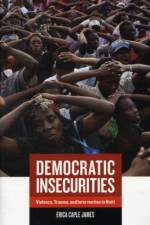
Democratic Insecurities focuses on the ethics of military and humanitarian intervention in Haiti during and after Haiti's 1991 coup. In this remarkable ethnography of violence, Erica Caple James explores the traumas of Haitian victims whose experiences were denied by U.S. officials and recognized only selectively by other humanitarian providers. Using vivid first-person accounts from women survivors, James raises important new questions about humanitarian aid, structural violence, and political insecurity. She discusses the politics of postconflict assistance to Haiti and the challenges of promoting democracy, human rights, and justice in societies that experience chronic insecurity. Similarly, she finds that efforts to promote political development and psychosocial rehabilitation may fail because of competition, strife, and corruption among the individuals and institutions that implement such initiatives.
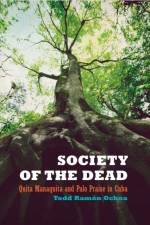
In a riveting first-person account, Todd Ramon Ochoa explores Palo, a Kongo-inspired "e;society of affliction"e; that is poorly understood at the margins of Cuban popular religion. Narrated as an encounter with two teachers of Palo, the book unfolds on the outskirts of Havana as it recounts Ochoa's attempts to assimilate Palo praise of the dead. As he comes to terms with a world in which everyday events and materials are composed of the dead, Ochoa discovers in Palo unexpected resources for understanding the relationship between matter and spirit, for rethinking anthropology's rendering of sorcery, and for representing the play of power in Cuban society. The first fully detailed treatment of the world of Palo, Society of the Dead draws upon recent critiques of Western metaphysics as it reveals what this little known practice can tell us about sensation, transformation, and redemption in the Black Atlantic.
Abonner på vårt nyhetsbrev og få rabatter og inspirasjon til din neste leseopplevelse.
Ved å abonnere godtar du vår personvernerklæring.