










Gjør som tusenvis av andre bokelskere
Abonner på vårt nyhetsbrev og få rabatter og inspirasjon til din neste leseopplevelse.
Ved å abonnere godtar du vår personvernerklæring.Du kan når som helst melde deg av våre nyhetsbrev.

Paleobiologist Anthony D. Barnosky weaves together evidence from the deep past and the present to alert us to the looming Sixth Mass Extinction and to offer a practical, hopeful plan for avoiding it. Writing from the front lines of extinction research, Barnosky tells the overarching story of geologic and evolutionary history and how it informs the way humans inhabit, exploit, and impact Earth today. He presents compelling evidence that unless we rethink how we generate the power we use to run our global ecosystem, where we get our food, and how we make our money, we will trigger what would be the sixth great extinction on Earth, with dire consequences. Optimistic that we can change this ominous forecast if we act now, Barnosky provides clear-cut strategies to guide the planet away from global catastrophe. In many instances the necessary technology and know-how already exist and are being applied to crucial issues around human-caused climate change, feeding the world's growing population, and exploiting natural resources. Deeply informed yet accessibly written, Dodging Extinction is nothing short of a guidebook for saving the planet.
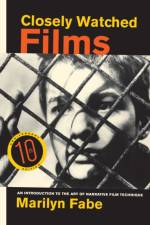
How do films work? How do they tell a story? How do they move us and make us think? Through detailed examinations of passages from classic films, Marilyn Fabe supplies the analytic tools and background in film history and theory to enable us to see more in every film we watch. Ranging from D. W. Griffith's The Birth of a Nation to James Cameron's Avatar, and ending with an epilogue on digital media, Closely Watched Films focuses on exemplary works of fourteen film directors whose careers together span the history of the narrative film. Lively and down-to-earth, this concise introduction provides a broad, complete, and yet specific picture of visual narrative techniques that will increase readers' excitement about and knowledge of the possibilities of the film medium. Shot-by-shot analyses of short passages from each film ground theory in concrete examples. Fabe includes original and well-informed discussions of Soviet montage, realism and expressionism in film form, classical and modern sound theory, the classic Hollywood film, Italian neorealism, the French New Wave, auteur theory, modernism and postmodernism in film, political cinema, feminist film theory and practice, and narrative experiments in new digital media. Encompassing the earliest silent films as well as those that exploit the most recent technological innovations, this book gives us the particulars of how film-arguably the most influential of contemporary forms of representation-constitutes our pleasure, influences our thoughts, and informs our daily reality. Updated to include a discussion of 3-D and advanced special effects, this tenth anniversary edition is an essential film studies text for students and professors alike.
This history of US-led international drug control provides new perspectives on the economic, ideological, and political foundations of a Cold War American empire. US officials assumed the helm of international drug control after World War II at a moment of unprecedented geopolitical influence embodied in the growing economic clout of its pharmaceutical industry.We Sell Drugs is a study grounded in the transnational geography and political economy of the coca-leaf and coca-derived commodities market stretching from Peru and Bolivia into the United States. More than a narrow biography of one famous plant and its equally famous derivative products-Coca-Cola and cocaine-this book situates these commodities within the larger landscape of drug production and consumption. Examining efforts to control the circuits through which coca traveled, Suzanna Reiss provides a geographic and legal basis for considering the historical construction of designations of legality and illegality. The book also argues that the legal status of any given drug is largely premised on who grew, manufactured, distributed, and consumed it and not on the qualities of the drug itself. Drug control is a powerful tool for ordering international trade, national economies, and society's habits and daily lives. In a historical landscape animated by struggles over political economy, national autonomy, hegemony, and racial equality, We Sell Drugs insists on the socio-historical underpinnings of designations of legality to explore how drug control became a major weapon in asserting control of domestic and international affairs.
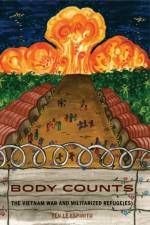
Body Counts: The Vietnam War and Militarized Refuge(es) examines how the Vietnam War has continued to serve as a stage for the shoring up of American imperialist adventure and for the (re)production of American and Vietnamese American identities. Focusing on the politics of war memory and commemoration, this book retheorizes the connections among history, memory, and power and refashions the fields of American studies, Asian American studies, and refugee studies not around the narratives of American exceptionalism, immigration, and transnationalism but around the crucial issues of war, race, and violence-and the history and memories that are forged in the aftermath of war. At the same time, the book moves decisively away from the "e;damage-centered"e; approach that pathologizes loss and trauma by detailing how first- and second-generation Vietnamese have created alternative memories and epistemologies that challenge the established public narratives of the Vietnam War and Vietnamese people. Explicitly interdisciplinary, Body Counts moves between the humanities and social sciences, drawing on historical, ethnographic, cultural, and virtual evidence in order to illuminate the places where Vietnamese refugees have managed to conjure up social, public, and collective remembering.
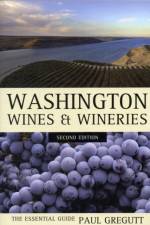
As the global wine industry reinvents itself for twenty first-century palates, Washington is poised to become as important and influential as California on the world stage. National and international attention has brought interest in the state's wines to an all-time high. Yet, in just the past few years, a tidal wave of change has rolled over the state's wine industry. To keep wine enthusiasts thoroughly up to date, Paul Gregutt has now completely revised and expanded his critically acclaimed guide to Washington's best grapes, vineyards, wines, winemakers, and wineries. With twice as many winery and vineyard profiles, updated tasting notes, and new recommended producers for each grape variety, this edition of Washington Wines and Wineries will continue to be the definitive reference on the subject.
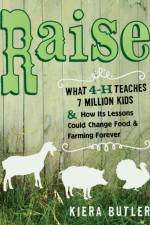
When city-dwelling journalist Kiera Butler visits a county fair for the first time, she is captivated by the white-uniformed members of the 4-H club and their perfectly groomed animals. She sets off on a search for a "e;real"e; 4-H'er, a hypothetical wholesome youth whom she imagines wearing cowboy boots and living on a ranch. Along the way, she meets five teenage 4-H'ers from diverse backgrounds and gets to know them as they prepare to compete at the fair. Butler's on-the-ground account of the teens' concerns with their goats, pigs, sheep, proms, and SAT scores is interwoven with a fascinating history of the century-old 4-H club as it solicits corporate donations from top agribusiness firms such as DuPont, Monsanto, and Cargill. Her quest takes her from California's cities and suburbs all the way to Ghana, where she investigates 4-H's unprecedented push to expand its programs in the developing world-and the corporate partnership that is supporting this expansion.Raise masterfully combines vivid accounts from a little-known subculture with a broader analysis of agriculture education today, using 4-H as a lens through which to view the changing landscape of farming in America and the rest of the world. Lively, deeply informed, and perceptive in its analysis, Raise provides answers to complex questions about our collective concern over the future of food. Photographs by Rafael Roy.
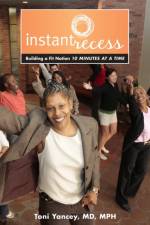
This lively, inspiring, and informative book zeroes in on the state of American fitness-persistently sedentary, plagued by obesity-and issues a clarion call to action that reaches across economic, racial, and educational lines. Toni Yancey finds that despite our best intentions and repeated resolutions to exercise, as well as a 40-year investment in fitness education and counseling, physical activity in all levels of society continues to plummet. In a warm, reader-friendly narrative that draws on solid scientific research, personal experience, and her own poetry, Yancey calls for a radically different approach: one that respects diversity and is grounded in the cultures of those most at risk. Instant Recess proposes regular ten-minute exercise breaks that utilize music and dance and are easily incorporated into school, work, and community life. Rather than encouraging unhealthful habits like cigarette breaks or high fat snacks, these "e;instant recesses"e; make the active choice the natural one. Here is a new paradigm for fitness and public health that promises vitality, well being, and a greater sense of community-demonstrating, as Yancey argues, that what's good for the waistline is good for the bottom line.
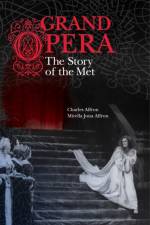
The Metropolitan has stood among the grandest of opera companies since its birth in 1883. Tracing the offstage/onstage workings of this famed New York institution, Charles Affron and Mirella Jona Affron tell how the Met became and remains a powerful actor on the global cultural scene. In this first new history of the company in thirty years, each of the chronologically sequenced chapters surveys a composer or a slice of the repertoire and brings to life dominant personalities and memorable performances of the time. From the opening night Faust to the recent controversial production of Wagner's "e;Ring,"e; Grand Opera is a remarkable account of management and audience response to the push and pull of tradition and reinvention. Spanning the decades between the Gilded Age and the age of new media, this story of the Met concludes by tipping its hat to the hugely successful "e;Live in HD"e; simulcasts and other twenty-first-century innovations. Grand Opera's appeal extends far beyond the large circle of opera enthusiasts. Drawing on unpublished documents from the Metropolitan Opera Archives, reviews, recordings, and much more, this richly detailed book looks at the Met in the broad context of national and international issues and events.
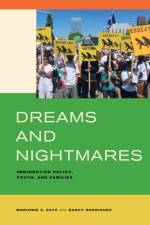
Dreams and Nightmares takes a critical look at the challenges and dilemmas of immigration policy and practice in the absence of comprehensive immigration reform. The experiences of children and youth provide a prism through which the interwoven dynamics and consequences of immigration policy become apparent. Using a unique sociolegal perspective, authors Zatz and Rodriguez examine the mechanisms by which immigration policies and practices mitigate or exacerbate harm to vulnerable youth. They pay particular attention to prosecutorial discretion, assessing its potential and limitations for resolving issues involving parental detention and deportation, unaccompanied minors, and Dreamers who came to the United States as young children. The book demonstrates how these policies and practices offer a means of prioritizing immigration enforcement in ways that alleviate harm to children, and why they remain controversial and vulnerable to political challenges.
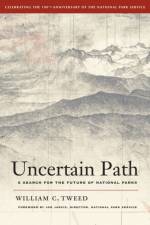
In this provocative walking meditation, writer and former park ranger William Tweed takes us to California's spectacular High Sierra to discover a new vision for our national parks as they approach their 100th anniversary. Tweed, who worked among the Sierra Nevada's big peaks and big trees for more than thirty years, has now hiked more than 200 miles along California's John Muir Trail in a personal search for answers: How do we address the climate change we are seeing even now-in melting glaciers in Glacier National Park, changing rainy seasons on Mt Rainer, and more fire in the West's iconic parks. Should we intervene where we can to preserve biodiversity? Should the parks merely become ecosystem museums that exhibit famous landscapes and species? Asking how we can make these magnificent parks relevant for the next generation, Tweed, through his journey, ultimately shows why we must do just that.
Migrants in Translation is an ethnographic reflection on foreign migration, mental health, and cultural translation in Italy. Its larger context is Europe and the rapid shifts in cultural and political identities that are negotiated between cultural affinity and a multicultural, multiracial Europe. The issue of migration and cultural difference figures as central in the process of forming diverse yet unified European identities. In this context, legal and illegal foreigners-mostly from Eastern Europe and Northern and Sub-Saharan Africa-are often portrayed as a threat to national and supranational identities, security, cultural foundations, and religious values. This book addresses the legal, therapeutic, and moral techniques of recognition and cultural translation that emerge in response to these social uncertainties. In particular, Migrants in Translation focuses on Italian ethno-psychiatry as an emerging technique that provides culturally appropriate therapeutic services exclusively to migrants, political refugees, and victims of torture and trafficking. Cristiana Giordano argues that ethno-psychiatry's focus on cultural identifications as therapeutic-inasmuch as it complies with current political desires for diversity and multiculturalism-also provides a radical critique of psychiatric, legal, and moral categories of inclusion, and allows for a rethinking of the politics of recognition.
Wye Jamison Allanbrook's The Secular Commedia is a stimulating and original rethinking of the music of the late eighteenth century. Hearing the symphonies and concertos of Haydn and Mozart with an ear tuned to operatic style, as their earliest listeners did, Allanbrook shows that this familiar music is built on a set of mimetic associations drawn from conventional modes of depicting character and emotion in opera buffa. Allanbrook mines a rich trove of writings by eighteenth-century philosophers and music theorists to show that vocal music was considered aesthetically superior to instrumental music and that listeners easily perceived the theatrical tropes that underpinned the style. Tracing Enlightenment notions of character and expression back to Greek and Latin writings about comedy and drama, she strips away preoccupations with symphonic form and teleology to reveal anew the kaleidoscopic variety and gestural vitality of the musical surface. In prose as graceful and nimble as the music she discusses, Allanbrook elucidates the idiom of this period for contemporary readers. With notes, musical examples, and a foreword by editors Mary Ann Smart and Richard Taruskin.
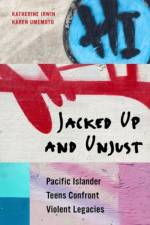
In the context of two hundred years of American colonial control in the Pacific, Katherine Irwin and Karen Umemoto shed light on the experiences of today's inner city and rural girls and boys in Hawai';i who face racism, sexism, poverty, and political neglect. Basing their book on nine years of ethnographic research, the authors highlight how legacies of injustice endure, prompting teens to fight for dignity and the chance to thrive in America, a nation that the youth describe as inherently ';jacked up'riggedand ';unjust.' While the story begins with the youth battling multiple contingencies, it ends on a hopeful note with many of the teens overcoming numerous hardships, often with the guidance of steadfast, caring adults.
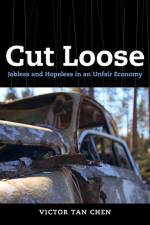
Years after the Great Recession, the economy is still weak, and an unprecedented number of workers have sunk into long spells of unemployment. Cut Loose provides a vivid and moving account of the experiences of some of these men and women, through the example of a historically important group: autoworkers. Their well-paid jobs on the assembly lines built a strong middle class in the decades after World War II. But today, they find themselves beleaguered in a changed economy of greater inequality and risk, one that favors the well-educated-or well-connected.Their declining fortunes in recent decades tell us something about what the white-collar workforce should expect to see in the years ahead, as job-killing technologies and the shipping of work overseas take away even more good jobs. Cut Loose offers a poignant look at how the long-term unemployed struggle in today's unfair economy to support their families, rebuild their lives, and overcome the shame and self-blame they deal with on a daily basis. It is also a call to action-a blueprint for a new kind of politics, one that offers a measure of grace in a society of ruthless advancement.
"e;How does one put into words the rage that workers feel when supervisors threaten to replace them with workers who will not go to the bathroom in the course of a fourteen-hour day of hard labor, even if it means wetting themselves on the line?"e;-From the Preface In this gutsy, eye-opening examination of the lives of workers in the New South, Vanesa Ribas, working alongside mostly Latino/a and native-born African American laborers for sixteen months, takes us inside the contemporary American slaughterhouse. Ribas, a native Spanish speaker, occupies an insider/outsider status there, enabling her to capture vividly the oppressive exploitation experienced by her fellow workers. She showcases the particular vulnerabilities faced by immigrant workers-a constant looming threat of deportation, reluctance to seek medical attention, and family separation-as she also illuminates how workers find connection and moments of pleasure during their grueling shifts. Bringing to the fore the words, ideas, and struggles of the workers themselves, On The Line underlines how deep racial tensions permeate the factory, as an overwhelmingly minority workforce is subject to white dominance. Compulsively readable, this extraordinary ethnography makes a powerful case for greater labor protection, especially for our nation's most vulnerable workers.
Amidst war, economic meltdown, and ecological crisis, a "e;new spirit of radicalism is blooming"e; from New York to Cairo, according to Chris Dixon. In Another Politics, he examines the trajectory of efforts that contributed to the radicalism of Occupy Wall Street and other recent movement upsurges. Drawing on voices of leading organizers across the United States and Canada, he delivers an engaging presentation of the histories and principles that shape many contemporary struggles. Dixon outlines the work of activists aligned with anti-authoritarian, anti-capitalist, and anti-oppression politics and discusses the lessons they are learning in their efforts to create social transformation. The book explores solutions to the key challenge for today's activists, organizers, fighters, and dreamers: building a substantive link between the work of "e;against,"e; which fights ruling institutions, and the work of "e;beyond,"e; which develops liberatory alternatives.
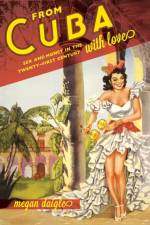
From Cuba with Love deals with love, sexuality, and politics in contemporary Cuba. In this beautiful narrative, Megan Daigle explores the role of women in Cuban political culture by examining the rise of economies of sex, romance, and money since the early 1990s. Daigle draws attention to the violence experienced by young women suspected of involvement with foreigners at the hands of a moralistic state, an opportunistic police force, and even their own families and partners. Investigating the lived realities of the Cuban women (and some men) who date tourists and offering a unique perspective on the surrounding debates, From Cuba with Love raises issues about women's bodies-what they can or should do and, equally, what can be done to them. Daigle's provocative perspective will make readers question how race and politics in Cuba are tied to women and sex, and the ways in which political power acts directly on the bodies of individuals through law, policing, institutional programs, and social norms.
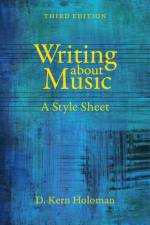
Where do you place the hyphen in "e;Beethoven"e; if it breaks between two lines? How do you cite John Coltrane's album A Love Supreme? Is it "e;premiere"e; or "e;premiere"e;? The answers and much more can be found in this definitive resource for authors, students, editors, concert producers-anyone who deals with music in print. Extending the principles devised for the classical repertoires, this revised and expanded edition now includes examples from world music, rock, jazz, popular music, and cinema. This essential volume covers some of the thorniest issues of musical discourse: how to go about describing musical works and procedures in prose, the rules for citations in notes and bibliography, and proper preparation of such materials as musical examples, tables, and illustrations. One section discusses program notes, while others explain the requirements for submitting manuscripts and electronic files, and outline best practices for student writers. An appendix lists common problem words. Updates include greatly simplified citations of Internet locators, the recognition of multiple platforms, and the expectation of paperless transmission and storage of work. Cited as the authority by The Chicago Manual of Style, this classic handbook is the go-to source for anyone writing about music.
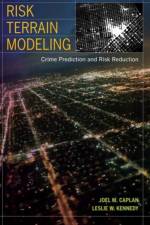
Imagine using an evidence-basedriskmanagementmodelthat enables researchers and practitioners alike to analyze the spatial dynamics of crime, allocate resources, and implement custom crime andriskreduction strategies that are transparent, measurable, and effective.RiskTerrainModeling(RTM) diagnoses the spatial attractors of criminal behavior and makes accurate forecasts of where crime will occur at the microlevel. RTM informs decisions about how the combined factors that contribute to criminal behavior can be targeted, connections to crime can be monitored, spatial vulnerabilities can be assessed, and actions can be taken to reduce worst effects. As a diagnostic method, RTM offers astatistically valid way to identify vulnerable places. To learn more, visithttp://www.riskterrainmodeling.comand begin using RTM with the many free tutorials and resources.
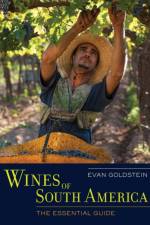
The most comprehensive guide to the wines of the entire continent, Wines of South America introduces readers to the astounding quality and variety of wines that until recently have been enjoyed, for the most part, only locally. Master Sommelier Evan Goldstein leads wine enthusiasts on an exciting geographical journey across ten countries, describing the wines, grapes, and regions of each. Goldstein begins the tour with a continental overview, discussing the arrival of the vine and wine culture, surveying the range of grapes planted and cultivated, and summarizing the development of modernday viticulture and winemaking. He explores the two giants of the continent, Argentina and Chile, in expansive chapters that cover their unique histories, wine regions, wine styles, prominent grapes, and leading producers. Goldstein covers the evolving industries of Brazil and Uruguay and discusses the modern-day activities in Bolivia, Colombia, Ecuador, Paraguay, Peru, and Venezuela. Up-to-date maps, several engaging photos, and pertinent statistics support each section, which also feature lively profiles of key individuals and wineries that have influenced the development of the craft. A closing chapter is devoted to food in South America, with specific information on wine country dining and leading chefs and restaurants. The author provides practical advice for travelers, an appendix of available resources for learning more about the wines of each region, and lists of 'top 10' wine recommendations for quick reference.
In the late seventeenth and early eighteenth centuries, more than a thousand pirates poured from the Atlantic into the Indian Ocean. There, according to Kevin P. McDonald, they helped launch an informal trade network that spanned the Atlantic and Indian Ocean worlds, connecting the North American colonies with the rich markets of the East Indies. Rather than conducting their commerce through chartered companies based in London or Lisbon, colonial merchants in New York entered into an alliance with Euro-American pirates based in Madagascar. Pirates, Merchants, Settlers, and Slaves explores the resulting global trade network located on the peripheries of world empires and shows the illicit ways American colonists met the consumer demand for slaves and East India goods. The book reveals that pirates played a significant yet misunderstood role in this period and that seafaring slaves were both commodities and essential components in the Indo-Atlantic maritime networks. Enlivened by stories of Indo-Atlantic sailors and cargoes that included textiles, spices, jewels and precious metals, chinaware, alcohol, and drugs, this book links previously isolated themes of piracy, colonialism, slavery, transoceanic networks, and cross-cultural interactions and extends the boundaries of traditional Atlantic, national, world, and colonial histories.
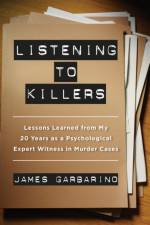
Listening to Killers offers an inside look at twenty years' worth of murder files from Dr. James Garbarino, a leading expert psychological witness who listens to killers so that he can testify in court. The author offers detailed accounts of how killers travel a path that leads from childhood innocence to lethal violence in adolescence or adulthood. He places the emotional and moral damage of each individual killer within a larger scientific framework of social, psychological, anthropological, and biological research on human development. By linking individual cases to broad social and cultural issues and illustrating the social toxicity and unresolved trauma that drive some people to kill, Dr. Garbarino highlights the humanity we share with killers and the role of understanding and empathy in breaking the cycle of violence.
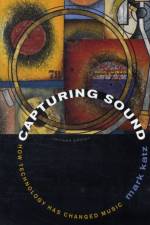
There is more to sound recording than just recording sound. Far from being simply a tool for the preservation of music, the technology is a catalyst. In this award-winning text, Mark Katz provides a wide-ranging, deeply informative, consistently entertaining history of recordings profound impact on the musical life of the past century, from Edison to the Internet. Fully revised and updated, this new edition adds coverage of mashups and Auto-Tune, explores recent developments in file-sharing, and includes an expanded conclusion and bibliography. Find illustrative sound and film clips on the new companion website at www.ucpress.edu/go/capturingsound
This essential collection of Michael McClure's poetry contains the most original, radical, and visionary work of a major poet who has been garnering acclaim and generating controversy for more than fifty years. Ranging from A Fist Full, published in 1957, through Swirls in Asphalt, a new poem sequence, Of Indigo and Saffron is both an excellent introduction to this unique American voice and an impressive selection from McClure's landmark volumes for those already familiar with his boldly inventive work. One of the five poets who heralded the Beat movement in the 1955 Six Gallery reading in San Francisco, McClure reveals in his poetry a close kinship to Romanticism, Modernism, Surrealism, and Japanese haiku. These poems-grounded in imagination and a profound regard for the natural world-chart a poetic landscape of utter originality.
The expansion of organized crime across national borders has become a key security concern for the international community. In this theoretically and empirically vibrant portrait of a global phenomenon, Jana Arsovska examines some of the most widespread myths about the so-called Albanian Mafia. Based on more than a decade of research, including interviews with victims, offenders, and law enforcement across ten countries, as well as court files and confidential intelligence reports, Decoding Albanian Organized Crime presents a comprehensive overview of the causes, codes of conduct, activities, migration, and structure of Albanian organized crime groups in the Balkans, Western Europe, and the United States. Paying particular attention to the dynamic relationships among culture, politics, and organized crime, the book develops a framework for understanding the global growth of the criminal underworld and provides a model for future comparative research.
Prodded by economists in the 1970s, corporate directors began adding stock options and bonuses to the already-generous salaries of CEOs with hopes of boosting their companies' fortunes. Guided by largely unproven assumptions, this trend continues today. So what are companies getting in return for all the extra money? Not much, according to the empirical data. In Indispensable and Other Myths: Why the CEO Pay Experiment Failed and How to Fix It, Michael Dorff explores the consequences of this development. He shows how performance pay has not demonstrably improved corporate performance and offers studies showing that performance pay cannot improve performance on the kind of tasks companies ask of their CEOs. Moreover, CEOs of large established companies do not typically have much impact on their companies' results. In this eye-opening expose, Dorff argues that companies should give up on the decades-long experiment to mold compensation into a corporate governance tool and maps out a rationale for returning to the era of guaranteed salaries.
Lawrence O. Gostin's seminalPublic Health Lawis widely acclaimed as the definitive statement on public health law at the turn of the twenty-first century. In this bold third edition, Gostin is joined by Lindsay F. Wiley to analyze major health threats of our time such as chronic diseases, emerging infectious diseases, antimicrobial resistance, bioterrorism, natural disasters, opiod overdose, and gun violence. The authors draw on constitutional law, administrative law, local government law, and tort law to develop their conception of law as a tool for protecting the public's health. The book creates an intellectual framework for modern public health law and supports that framework with illustrations of the scientific, political, and ethical issues involved. In proposing innovative solutions for the future of the public's health, Gostin and Wiley's essential study provides a blueprint for public and political debates to come. New issues covered in this edition: *; Corporate personhood rights raised in response to regulations of tobacco, food and beverages, alcohol, firearms, prescription drugs, and marijuana. *; Local government authority to protect the public's health. *; Deregulation and harm reduction as modes of public health law intervention. *; Taxation, spending, and alteration of the socioeconomic environment as modes of public health law intervention. *; Access to health care as a strategy for protecting the public's health. *; Taxation, spending, licensing, zoning, and shared-use strategies for chronic disease prevention. *; The public health law perspective on violence and injury prevention. *; Health justice as a framework for reducing health disparities and protecting the public's health.
Dengue fever is the world's most prevalent mosquito-borne illness, but Alex Nading argues that people in dengue-endemic communities do not always view humans and mosquitoes as mortal enemies. Drawing on two years of ethnographic research in urban Nicaragua and challenging current global health approaches to animal-borne illness, Mosquito Trails tells the story of a group of community health workers who struggle to come to terms with dengue epidemics amid poverty, political change, and economic upheaval. Blending theory from medical anthropology, political ecology, and science and technology studies, Nading develops the concept of "e;the politics of entanglement"e; to describe how Nicaraguans strive to remain alive to the world around them despite global health strategies that seek to insulate them from their environments. This innovative ethnography illustrates the continued significance of local environmental histories, politics, and household dynamics to the making and unmaking of a global pandemic.
Hollywood Vault is the story of how the business of film libraries emerged and evolved, spanning the silent era to the sale of feature libraries to television. Eric Hoyt argues that film libraries became valuable not because of the introduction of new technologies but because of the emergence and growth of new markets, and suggests that studying the history of film libraries leads to insights about their role in the contemporary digital marketplace. The history begins in the mid-1910s, when the star system and other developments enabled a market for old films that featured current stars. After the transition to films with sound, the reissue market declined but the studios used their libraries for the production of remakes and other derivatives. The turning point in the history of studio libraries occurred during the mid to late 1940s, when changes in American culture and an industry-wide recession convinced the studios to employ their libraries as profit centers through the use of theatrical reissues. In the 1950s, intermediary distributors used the growing market of television to harness libraries aggressively as foundations for cross-media expansion, a trend that continues today. By the late 1960s, the television marketplace and the exploitation of film libraries became so lucrative that they prompted conglomerates to acquire the studios. The first book to discuss film libraries as an important and often underestimated part of Hollywood history, Hollywood Vault presents a fascinating trajectory that incorporates cultural, legal, and industrial history.
Following independence, most countries in Africa sought to develop, but their governments pursued policies that actually undermined their rural economies. Examining the origins of Africa's "e;growth tragedy,"e; Markets and States in Tropical Africa has for decades shaped the thinking of practitioners and scholars alike. Robert H. Bates's analysis now faces a challenge, however: the revival of economic growth on the continent. In this edition, Bates provides a new preface and chapter that address the seeds of Africa's recovery and discuss the significance of the continent's success for the arguments of this classic work.
Abonner på vårt nyhetsbrev og få rabatter og inspirasjon til din neste leseopplevelse.
Ved å abonnere godtar du vår personvernerklæring.