




Gjør som tusenvis av andre bokelskere
Abonner på vårt nyhetsbrev og få rabatter og inspirasjon til din neste leseopplevelse.
Ved å abonnere godtar du vår personvernerklæring.Du kan når som helst melde deg av våre nyhetsbrev.

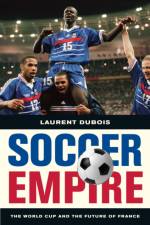
When France both hosted and won the World Cup in 1998, the face of its star player, Zinedine Zidane, the son of Algerian immigrants, was projected onto the Arc de Triomphe. During the 2006 World Cup finals, Zidane stunned the country by ending his spectacular career with an assault on an Italian player. In Soccer Empire, Laurent Dubois illuminates the connections between empire and sport by tracing the story of World Cup soccer, from the Cup's French origins in the 1930s to Africa and the Caribbean and back again. As he vividly recounts the lives of two of soccer's most electrifying players, Zidane and his outspoken teammate, Lilian Thuram, Dubois deepens our understanding of the legacies of empire that persist in Europe and brilliantly captures the power of soccer to change the nation and the world.
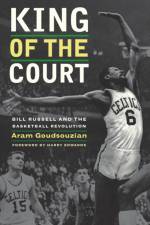
Bill Russell was not the first African American to play professional basketball, but he was its first black superstar. From the moment he stepped onto the court of the Boston Garden in 1956, Russell began to transform the sport in a fundamental way, making him, more than any of his contemporaries, the Jackie Robinson of basketball. In King of the Court, Aram Goudsouzian provides a vivid and engrossing chronicle of the life and career of this brilliant champion and courageous racial pioneer. Russell's leaping, wide-ranging defense altered the game's texture. His teams provided models of racial integration in the 1950s and 1960s, and, in 1966, he became the first black coach of any major professional team sport. Yet, like no athlete before him, Russell challenged the politics of sport. Instead of displaying appreciative deference, he decried racist institutions, embraced his African roots, and challenged the nonviolent tenets of the civil rights movement. This beautifully written book-sophisticated, nuanced, and insightful-reveals a singular individual who expressed the dreams of Martin Luther King Jr. while echoing the warnings of Malcolm X.
In Big Ecology, David C. Coleman documents his historically fruitful ecological collaborations in the early years of studying large ecosystems in the United States. As Coleman explains, the concept of the ecosystem-a local biological community and its interactions with its environment-has given rise to many institutions and research programs, like the National Science Foundation's program for Long Term Ecological Research. Coleman's insider account of this important and fascinating trend toward big science takes us from the paradigm of collaborative interdisciplinary research, starting with the International Geophysical Year (IGY) of 1957, through the International Biological Program (IBP) of the late 1960s and early 1970s, to the Long-Term Ecological Research (LTER) programs of the 1980s.
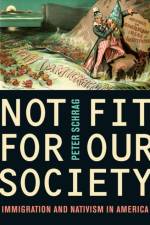
In a book of deep and telling ironies, Peter Schrag provides essential background for understanding the fractious debate over immigration. Covering the earliest days of the Republic to current events, Schrag sets the modern immigration controversy within the context of three centuries of debate over the same questions about who exactly is fit for citizenship. He finds that nativism has long colored our national history, and that the fear-and loathing-of newcomers has provided one of the faultlines of American cultural and political life. Schrag describes the eerie similarities between the race-based arguments for restricting Irish, German, Slav, Italian, Jewish, and Chinese immigrants in the past and the arguments for restricting Latinos and others today. He links the terrible history of eugenic "e;science"e; to ideas, individuals, and groups now at the forefront of the fight against rational immigration policies. Not Fit for Our Society makes a powerful case for understanding the complex, often paradoxical history of immigration restriction as we work through the issues that inform, and often distort, the debate over who can become a citizen, who decides, and on what basis.
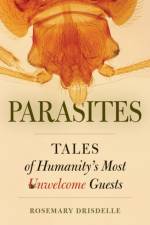
Hidden away within living tissues, parasites are all around us-and inside us. Yet, despite their unsavory characteristics, as we find in this compulsively readable book, parasites have played an enormous role in civilizations through time and around the globe. Parasites: Tales of Humanity's Most Unwelcome Guests puts amoebae, roundworms, tapeworms, mites, and others at the center of the action as human cultures have evolved and declined. It shows their role in exploration, war, and even terrorist plots, often through an unpredictable ripple effect. It reveals them as invisible threats in our food, water, and luggage; as invaders that have shaped behaviors and taboos; and as unexpected partners in such venues as crime scene investigations. Parasites also describes their evolution and life histories and considers their significant benefits. Deftly blending the sociological with the scientific, this natural and social history of parasites looks closely at a fascinating, often disgusting group of organisms and discovers that they are in fact an integral thread in the web of life.
The resurrection of former prisons as museums has caught the attention of tourists along with scholars interested in studying what is known as dark tourism. Unsurprisingly, due to their grim subject matter, prison museums tend to invert the "e;Disneyland"e; experience, becoming the antithesis of "e;the happiest place on earth."e; In Escape to Prison, the culmination of years of international research, noted criminologist Michael Welch explores ten prison museums on six continents, examining the complex interplay between culture and punishment. From Alcatraz to the Argentine Penitentiary, museums constructed on the former locations of surveillance, torture, colonial control, and even rehabilitation tell unique tales about the economic, political, religious, and scientific roots of each site's historical relationship to punishment.
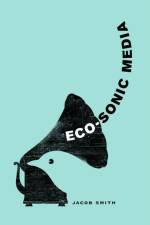
The negative environmental effects of media culture are not often acknowledged: the fuel required to keep huge server farms in operation, landfills full of high tech junk, and the extraction of rare minerals for devices reliant on them are just some of the hidden costs of the contemporary mediascape. Eco-Sonic Media brings an ecological critique to the history of sound media technologies in order to amplify the environmental undertones in sound studies and turn up the audio in discussions of greening the media. By looking at early and neglected forms of sound technology, Jacob Smith seeks to create a revisionist, ecologically aware history of sound media. Delving into the history of pre-electronic media like hand-cranked gramophones, comparatively eco-friendly media artifacts such as the shellac discs that preceded the use of petroleum-based vinyl, early forms of portable technology like divining rods, and even the use of songbirds as domestic music machines, Smith builds a scaffolding of historical case studies to demonstrate how "e;green media archaeology"e; can make sound studies vibrate at an ecological frequency while opening the ears of eco-criticism. Throughout this eye-opening and timely book he makes readers more aware of the costs and consequences of their personal media consumption by prompting comparisons with non-digital, non-electronic technologies and by offering different ways in which sound media can become eco-sonic media. In the process, he forges interdisciplinary connections, opens new avenues of research, and poses fresh theoretical questions for scholars and students of media, sound studies, and contemporary environmental history.
On Pain of Speech tracks the literary rant, an expression of provocation and resistance that imagines the power to speak in its own name where no such right is granted. Focusing on the "e;politics of address,"e; Dina Al-Kassim views the rant through the lens of Michel Foucault's notion of the biopolitical subject and finds that its abject address is an essential yet overlooked feature of modernism. Deftly approaching disparate fields-decadent modernism, queer studies, subjection, critical psychoanalysis, and postcolonial avant-garde-and encompassing both Euro-American and Francophone Arabic modernisms, she offers an ambitious theoretical perspective on the ongoing redefinition of modernism. She includes readings of Jane Bowles, Abdelwahab Meddeb, and Oscar Wilde, and invokes a wide range of ideas, including those of Theodor Adorno, Sigmund Freud, Jacques Lacan, Judith Butler, Jean Laplanche, and Eve Kosofsky Sedgwick.
This is a dictionary of Bole, a little documented language of the Chadic family, spoken in northeastern Nigeria. This is one of the most comprehensive dictionaries of any Chadic language other than Hausa. All entries for Bole are fully marked for tone and vowel length. The Bole-English-Hausa section has full definitions and explanations of meaning in English with numerous examples of use. Each entry has a Hausa gloss. The English-Bole section is intended mainly as an index to the Bole-English-Hausa section. There are appendices of flora and fauna terms, cultural terms, pronouns, and comprehensive paradigms of verb forms.
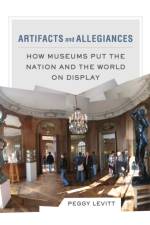
What can we learn about nationalism by looking at a country's cultural institutions? How do the history and culture of particular cities help explain how museums represent diversity? Artifacts and Allegiances takes us around the world to tell the compelling story of how museums today are making sense of immigration and globalization. Based on firsthand conversations with museum directors, curators, and policymakers; descriptions of current and future exhibitions; and inside stories about the famous paintings and iconic objects that define collections across the globe, this work provides a close-up view of how different kinds of institutions balance nationalism and cosmopolitanism. By comparing museums in Europe, the United States, Asia, and the Middle East, Peggy Levitt offers a fresh perspective on the role of the museum in shaping citizens. Taken together, these accounts tell the fascinating story of a sea change underway in the museum world at large.
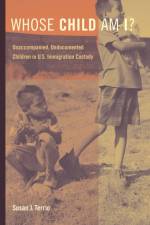
In 2014, the arrest and detention of thousands of desperate young migrants at the southwest border of the United States exposed the U.S. government's shadowy juvenile detention system, which had escaped public scrutiny for years. This book tells the story of six Central American and Mexican children who are driven from their homes by violence and deprivation, and who embark alone, risking their lives, on the perilous journey north. They suffer coercive arrests at the U.S. border, then land in detention, only to be caught up in the battle to obtain legal status. Whose Child Am I? looks inside a vast, labyrinthine system by documenting in detail the experiences of these youths, beginning with their arrest by immigration authorities, their subsequent placement in federal detention, followed by their appearance in deportation proceedings and release from custody, and, finally, ending with their struggle to build new lives in the United States. This book shows how the U.S. government got into the business of detaining children and what we can learn from this troubled history.
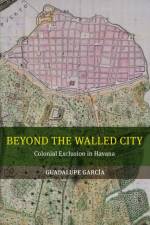
One of the earliest and most important port cities in the New World, Havana quickly became a model for the planning and construction of other colonial cities. Beyond the Walled City tells the story of how Havana was conceived, built, and managed. Examining imperial efforts to police urban space from the late sixteenth century onward, Guadalupe Garca shows how the production of urban space was explicitly centered on the politics of racial exclusion and social control. Connecting colonial governing practices to broader debates on urbanization, the regulation of public spaces, and the racial dislocation of urban populations, Beyond the Walled City points to the ways in which colonialism is inscribed on modern topographies.
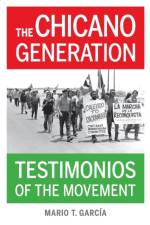
In The Chicano Generation, veteran Chicano civil rights scholar Mario T. Garcia provides a rare look inside the struggles of the 1960s and 1970s as they unfolded in Los Angeles. Based on in-depth interviews conducted with three key activists, this book illuminates the lives of Raul Ruiz, Gloria Arellanes, and Rosalio Munoz-their family histories and widely divergent backgrounds; the events surrounding their growing consciousness as Chicanos; the sexism encountered by Arellanes; and the aftermath of their political histories. In his substantial introduction, Garcia situates the Chicano movement in Los Angeles and contextualizes activism within the largest civil rights and empowerment struggle by Mexican Americans in US history-a struggle that featured Cesar Chavez and the farm workers, the student movement highlighted by the 1968 LA school blowouts, the Chicano antiwar movement, the organization of La Raza Unida Party, the Chicana feminist movement, the organizing of undocumented workers, and the Chicano Renaissance. Weaving this revolution against a backdrop of historic Mexican American activism from the 1930s to the 1960s and the contemporary black power and black civil rights movements, Garcia gives readers the best representations of the Chicano generation in Los Angeles.
This book explores the origins and significance of the French concept of terroir, demonstrating that the way the French eat their food and drink their wine today derives from a cultural mythology that developed between the Renaissance and the Revolution. Through close readings and an examination of little-known texts from diverse disciplines, Thomas Parker traces terroir's evolution, providing insight into how gastronomic mores were linked to aesthetics in language, horticulture, and painting and how the French used the power of place to define the natural world, explain comportment, and frame France as a nation.
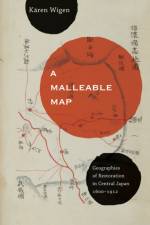
Karen Wigen probes regional cartography, choerography, and statecraft to redefine restoration (ishin) in modern Japanese history. As developed here, that term designates not the quick coup d'etat of 1868 but a three-centuries-long project of rehabilitating an ancient map for modern purposes. Drawing on a wide range of geographical documents from Shinano (present-day Nagano Prefecture), Wigen argues that both the founder of the Tokugawa Shogunate (1600-1868) and the reformers of the Meiji era (1868-1912) recruited the classical map to serve the cause of administrative reform. Nor were they alone; provincial men of letters played an equally critical role in bringing imperial geography back to life in the countryside. To substantiate these claims, Wigen traces the continuing career of the classical court's most important unit of governance-the province-in central Honshu.
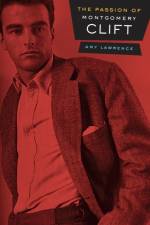
From his 1948 film debut in Red River through such classics as The Heiress, A Place in the Sun, and From Here to Eternity, Montgomery Clift exemplified a new masculinity and-leading the way for a generation of actors, including Marlon Brando and James Dean-epitomized the new naturalistic style of acting. Clift's impact was such that, both during his troubled life and after his untimely death, fans described the actor in religious terms, characterizing Clift as a vision, acolyte, and martyr. In The Passion of Montgomery Clift, Amy Lawrence challenges the myth of Clift as tragic victim by examining Clift's participation in the manipulation of his image, his collaborations with directors, his relationships with costars, and his interactions with writers.
Highly praised when published in Germany, The Quest for the Lost Nation is a brilliant chronicle of Germany's and Japan's struggles to reclaim a defeated national past. Sebastian Conrad compares the ways German and Japanese scholars revised national history after World War II in the shadows of fascism, surrender, and American occupation. Defeat in 1945 marked the death of the national past in both countries, yet, as Conrad proves, historians did not abandon national perspectives during reconstruction. Quite the opposite-the nation remained hidden at the center of texts as scholars tried to make sense of the past and searched for fragments of the nation they had lost. By situating both countries in the Cold War, Conrad shows that the focus on the nation can be understood only within a transnational context.
Since 2000, approximately 440,000 Mexicans have migrated to the United States every year. Tens of thousands have left children behind in Mexico to do so. For these parents, migration is a sacrifice. What do parents expect to accomplish by dividing their families across borders? How do families manage when they are living apart? More importantly, do parents' relocations yield the intended results? Probing the experiences of migrant parents, children in Mexico, and their caregivers, Joanna Dreby offers an up-close and personal account of the lives of families divided by borders. What she finds is that the difficulties endured by transnational families make it nearly impossible for parents' sacrifices to result in the benefits they expect. Yet, paradoxically, these hardships reinforce family members' commitments to each other. A story both of adversity and the intensity of family ties, Divided by Borders is an engaging and insightful investigation of the ways Mexican families struggle and ultimately persevere in a global economy.
Birthing a Mother is the first ethnography to probe the intimate experience of gestational surrogate motherhood. In this beautifully written and insightful book, Elly Teman shows how surrogates and intended mothers carefully negotiate their cooperative endeavor. Drawing on anthropological fieldwork among Jewish Israeli women, interspersed with cross-cultural perspectives of surrogacy in the global context, Teman traces the processes by which surrogates relinquish any maternal claim to the baby even as intended mothers accomplish a complicated transition to motherhood. Teman's groundbreaking analysis reveals that as surrogates psychologically and emotionally disengage from the fetus they carry, they develop a profound and lasting bond with the intended mother.
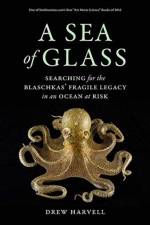
The author makes an eloquent plea for marine biodiversity conservation.Library JournalHarvell seems to channel the devotion that motivated the Blaschkas.The GuardianWinner of the 2016 National Outdoor Book Award, Environment Category It started with a glass octopus. Dusty, broken, and all but forgotten, it caught Drew Harvell's eye. Fashioned in intricate detail by the father-son glassmaking team of Leopold and Rudolf Blaschka, the octopus belonged to a menagerie of unusual marine creatures that had been packed away for decades in a storage unit. More than 150 years earlier, the Blaschkas had been captivated by marine invertebrates and spun their likenesses into glass, documenting the life of oceans untouched by climate change and human impacts. Inspired by the Blaschkas' uncanny replicas, Harvell set out in search of their living counterparts. In A Sea of Glass, she recounts this journey of a lifetime, taking readers along as she dives beneath the oceans surface to a rarely seen world, revealing the surprising and unusual biology of some of the most ancient animals on the tree of life. On the way, we glimpse a century of change in our ocean ecosystems and learn which of the living matches for the Blaschkas' creations are, indeed, as fragile as glass. Drew Harvell and the Blaschka menagerie are the subjects of the documentary Fragile Legacy, which won the Best Short Film award at the 2015 Blue Ocean Film Festival & Conservation Summit. Learn more about the film and check out the trailer here.
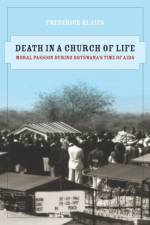
This deeply insightful ethnography explores the healing power of caring and intimacy in a small, closely bonded Apostolic congregation during Botswana's HIV/AIDS pandemic. Death in a Church of Life paints a vivid picture of how members of the Baitshepi Church make strenuous efforts to sustain loving relationships amid widespread illness and death. Over the course of long-term fieldwork, Frederick Klaits discovered Baitshepi's distinctly maternal ethos and the "e;spiritual"e; kinship embodied in the church's nurturing fellowship practice. Klaits shows that for Baitshepi members, Christian faith is a form of moral passion that counters practices of divination and witchcraft with redemptive hymn singing, prayer, and the use of therapeutic substances. An online audio annex makes available examples of the church members' preaching and song.
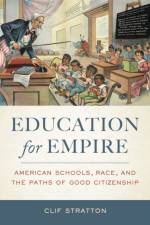
Education for Empirebrings together topics in American history often treated separately: schools, race, immigration, and empire building. During the Gilded Age and Progressive Era, American imperial ambitions abroad expanded as the countrys public school system grew. How did this imperialism affect public education?School officials, teachers, and textbook authors used public education to place children, both native and foreign-born, on multiple uneven paths to citizenship. Using case studies from around the country, Clif Stratton deftly shows that public schooling and colonialism were intimately intertwined. This book reveals how studentsfrom Asiansin the U.S. West and Hawai';i to blacks in the South, Mexicansin the Southwest, and Puerto Ricans in the Caribbean and New York Citygrappled withthe expectations of citizenship imposed bynationalist professionals at the helm of curriculum and policy. Students of American history, American studies, and the history of education will findEducation for Empirean eminently valuable book.
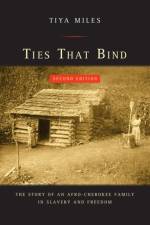
This beautifully written book, now in its second edition, tells the haunting saga of a quintessentially American family. In the late 1790s, Shoe Boots, a famed Cherokee warrior and successful farmer, acquired an African slave named Doll. Over the next thirty years, Shoe Boots and Doll lived together as master and slave and also as lifelong partners who, with their children and grandchildren, experienced key events in American history-including slavery, the Creek War, the founding of the Cherokee Nation and subsequent removal of Native Americans along the Trail of Tears, and the Civil War. This is the gripping story of their lives, in slavery and in freedom. Meticulously crafted from historical and literary sources, Ties That Bind vividly portrays the members of the Shoeboots family. Doll emerges as an especially poignant character, whose life is mostly known through the records of things done to her-her purchase, her marriage, the loss of her children-but also through her moving petition to the federal government for the pension owed to her as Shoe Boots's widow. A sensitive rendition of the hard realities of black slavery within Native American nations, the book provides the fullest picture we have of the myriad complexities, ironies, and tensions among African Americans, Native Americans, and whites in the first half of the nineteenth century. Updated with a new preface and an appendix of key primary sources, this remains an essential book for students of Native American history, African American history, and the history of race and ethnicity in the United States.
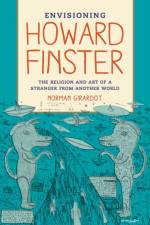
The Reverend Howard Finster (1916-2001) was called the "e;backwoods William Blake"e; and the "e;Andy Warhol of the South,"e; and he is considered the godfather of contemporary American folk and visionary art. This book is the first interpretive analysis of the intertwined artistic and religious significance of Finster's work within the context of the American "e;outsider art"e; tradition. Finster began preaching as a teenager in the South in the 1930s. But it was not until he received a revelation from God at the age of sixty that he began to make sacred art. A modern-day Noah who saw his art as a religious crusade to save the world before it was too late, Finster worked around the clock, often subsisting on a diet of peanut butter and instant coffee. He spent the last years of his life feverishly creating his environmental artwork called Paradise Garden and what would ultimately number almost fifty thousand works of "e;bad and nasty art."e; This was visionary work that obsessively combined images and text and featured apocalyptic biblical imagery, flying saucers from outer space, and popular cultural icons such as Elvis Presley, Marilyn Monroe, Henry Ford, Mona Lisa, and George Washington. In the 1980s and 90s, he developed cult celebrity status, and he appeared in the Venice Biennale and on the Tonight Show. His work graced the album covers of bands such as R.E.M. and Talking Heads. This book explores the life and religious-artistic significance of Finster and his work from the personal perspective of religion scholar Norman Girardot, friend to Finster and his family during the later years of the artist's life.
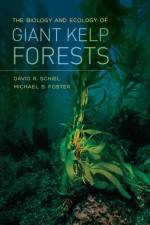
The largest seaweed, giant kelp (Macrocystis) is the fastest growing and most prolific of all plants found on earth. Growing from the seafloor and extending along the ocean surface in lush canopies, giant kelp provides an extensive vertical habitat in a largely two-dimensional seascape. It is the foundation for one of the most species-rich, productive, and widely distributed ecological communities in the world. Schiel and Foster's scholarly review and synthesis take the reader from Darwin's early observations to contemporary research, providing a historical perspective for the modern understanding of giant kelp evolution, biogeography, biology, and physiology. The authors furnish a comprehensive discussion of kelp species and forest ecology worldwide, with considerations of human uses and abuses, management and conservation, and the current and likely future impacts of global change. This volume promises to be the definitive treatise and reference on giant kelp and its forests for many years, and it will appeal to marine scientists and others who want a better appreciation and understanding of these wondrous forests of the sea.
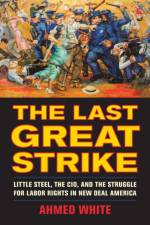
In May 1937, seventy thousand workers walked off their jobs at four large steel companies known collectively as ';Little Steel.' The strikers sought to make the companies retreat from decades of antiunion repression, abide by the newly enacted federal labor law, and recognize their union. For two months a grinding struggle unfolded, punctuated by bloody clashes in which police, company agents, and National Guardsmen ruthlessly beat and shot unionists. At least sixteen died and hundreds more were injured before the strike ended in failure. The violence and brutality of the Little Steel Strike became legendary. In many ways it was the last great strike in modern America. Traditionally the Little Steel Strike has been understood as a modest setback for steel workers, one that actually confirmed the potency of New Deal reforms and did little to impede the progress of the labor movement. However,The Last Great Striketells a different story about the conflict and its significance for unions and labor rights. More than any other strike, it laid bare the contradictions of the industrial labor movement, the resilience of corporate power, and the limits of New Deal liberalism at a crucial time in American history.
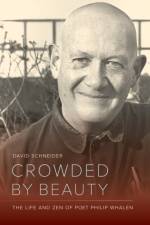
Philip Whalen was an American poet, Zen Buddhist, and key figure in the literary and artistic scene that unfolded in San Francisco in the 1950s and '60s. When the Beat writers came West, Whalen became a revered, much-loved member of the group. Erudite, shy, and profoundly spiritual, his presence not only moved his immediate circle of Beat cohorts, but his powerful, startling, innovative work would come to impact American poetry to the present day. Drawing on Whalen's journals and personal correspondence-particularly with Ginsberg, Kerouac, Snyder, Kyger, Welch, and McClure -David Schneider shows how deeply bonded these intimates were, supporting one another in their art and their spiritual paths. Schneider, himself an ordained priest, provides an insider's view of Whalen's struggles and breakthroughs in his thirty years as a Zen monk. When Whalen died in 2002 as the retired Abbot of the Hartford Street Zen Center, his own teacher referred to him as a patriarch of the Western lineage of Buddhism. Crowded by Beauty chronicles the course of Whalen's life, focusing on his unique, eccentric, humorous, and literary-religious practice.
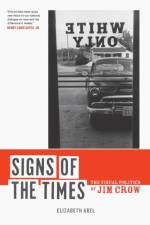
Signs of the Times traces the career of Jim Crow signs-simplified in cultural memory to the "e;colored/white"e; labels that demarcated the public spaces of the American South-from their intellectual and political origins in the second half of the nineteenth century through their dismantling by civil rights activists in the 1960s and '70s. In this beautifully written, meticulously researched book, Elizabeth Abel assembles a variegated archive of segregation signs and photographs that translated a set of regional practices into a national conversation about race. Abel also brilliantly investigates the semiotic system through which segregation worked to reveal how the signs functioned in particular spaces and contexts that shifted the grounds of race from the somatic to the social sphere.
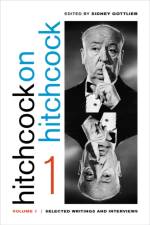
Gathered here for the first time are Alfred Hitchcock's reflections on his own life and work. In this ample selection of largely unknown and formerly inaccessible interviews and essays, Hitchcock provides an enlivening commentary on a career that spanned decades and transformed the history of the cinema. Bringing the same exuberance and originality to his writing as he did to his films, he ranges from accounts of his own life and experiences to techniques of filmmaking and ideas about cinema in general. Wry, thoughtful, witty, and humorous-as well as brilliantly informative-this selection reveals another side of the most renowned filmmaker of our time. Sidney Gottlieb not only presents some of Hitchcock's most important pieces, but also places them in their historical context and in the context of Hitchcock's development as a director. He reflects on Hitchcock's complicated, often troubled, and continually evolving relationships with women, both on and off the set. Some of the topics Hitchcock touches upon are the differences between English and American attitudes toward murder, the importance of comedy in film, and the uses and techniques of lighting. There are also many anecdotes of life among the stars, reminiscences from the sets of some of the most successful and innovative films of this century, and incisive insights into working method, film history, and the role of film in society. Unlike some of the complex critical commentary that has emerged on his life and work, the director's own writing style is refreshingly straightforward and accessible. Throughout the collection, Hitchcock reveals a delight and curiosity about his medium that bring all his subjects to life.
In this original study, Christopher Alan Reynolds examines the influence of Beethoven's Ninth Symphony on two major nineteenth-century composers, Richard Wagner and Robert Schumann. During 1845-46 the compositional styles of Schumann and Wagner changed in a common direction, toward a style that was more contrapuntal, more densely motivic, and engaged in processes of thematic transformation. Reynolds shows that the stylistic advances that both composers made in Dresden in 1845-46 stemmed from a deepened understanding of Beethoven's techniques and strategies in the Ninth Symphony. The evidence provided by their compositions from this pivotal year and the surrounding years suggests that they discussed Beethoven's Ninth with each other in the months leading up to the performance of this work, which Wagner conducted on Palm Sunday in 1846. Two primary aspects that appear to have interested them both are Beethoven's use of counterpoint involving contrary motion and his gradual development of the "e;Ode to Joy"e; melody through the preceding movements. Combining a novel examination of the historical record with careful readings of the music, Reynolds adds further layers to this argument, speculating that Wagner and Schumann may not have come to these discoveries entirely independently of each other. The trail of influences that Reynolds explores extends back to the music of Bach and ahead to Tristan and Isolde, as well as to Brahms's First Symphony.
Abonner på vårt nyhetsbrev og få rabatter og inspirasjon til din neste leseopplevelse.
Ved å abonnere godtar du vår personvernerklæring.