






Gjør som tusenvis av andre bokelskere
Abonner på vårt nyhetsbrev og få rabatter og inspirasjon til din neste leseopplevelse.
Ved å abonnere godtar du vår personvernerklæring.Du kan når som helst melde deg av våre nyhetsbrev.

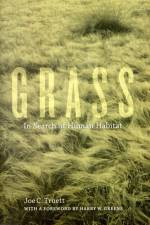
Part autobiography, part philosophical rumination, this evocative conservation odyssey explores the deep affinities between humans and our original habitat: grasslands. In a richly drawn, anecdotally driven narrative, Joe C. Truett, a grasslands ecologist who writes with a flair for language, traces the evolutionary, historical, and cultural forces that have reshaped North American rangelands over the past two centuries. He introduces an intriguing cast of characters-wildlife and grasslands biologists, archaeologists, ranchers, and petroleum geologists-to illuminate a wide range of related topics: our love affair with turf and how it manifests in lawns and sports, the ecological and economic dimensions of ranching, the glory of cowboy culture, grasslands and restoration ecology, and more. His book ultimately provides the background against which we can envision a new paradigm for restoring rangeland ecosystems-and a new paradigm for envisioning a more sustainable future.
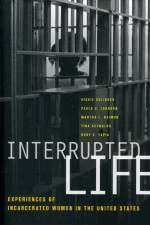
Interrupted Life is a gripping collection of writings by and about imprisoned women in the United States, a country that jails a larger percentage of its population than any other nation in the world. This eye-opening work brings together scores of voices from both inside and outside the prison system including incarcerated and previously incarcerated women, their advocates and allies, abolitionists, academics, and other analysts. In vivid, often highly personal essays, poems, stories, reports, and manifestos, they offer an unprecedented view of the realities of women's experiences as they try to sustain relations with children and family on the outside, struggle for healthcare, fight to define and achieve basic rights, deal with irrational sentencing systems, remake life after prison; and more. Together, these powerful writings are an intense and visceral examination of life behind bars for women, and, taken together, they underscore the failures of imagination and policy that have too often underwritten our current prison system.
The psychiatric emergency room, a fast-paced combat zone with pressure to match, thrusts its medical providers into the outland of human experience where they must respond rapidly and decisively in spite of uncertainty and, very often, danger. In this lively first-person narrative, Paul R. Linde takes readers behind the scenes at an urban psychiatric emergency room, with all its chaos and pathos, where we witness mental health professionals doing their best to alleviate suffering and repair shattered lives. As he and his colleagues encounter patients who are hallucinating, drunk, catatonic, aggressive, suicidal, high on drugs, paranoid, and physically sick, Linde examines the many ethical, legal, moral, and medical issues that confront today's psychiatric providers. He describes a profession under siege from the outside-health insurance companies, the pharmaceutical industry, government regulators, and even "e;patients' rights"e; advocates-and from the inside-biomedical and academic psychiatrists who have forgotten to care for the patient and have instead become checklist-marking pill-peddlers. While lifting the veil on a crucial area of psychiatry that is as real as it gets, Danger to Self also injects a healthy dose of compassion into the practice of medicine and psychiatry.
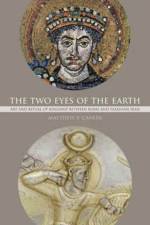
This pioneering study examines a pivotal period in the history of Europe and the Near East. Spanning the ancient and medieval worlds, it investigates the shared ideal of sacred kingship that emerged in the late Roman and Persian empires. This shared ideal, while often generating conflict during the four centuries of the empires' coexistence (224-642), also drove exchange, especially the means and methods Roman and Persian sovereigns used to project their notions of universal rule: elaborate systems of ritual and their cultures' visual, architectural, and urban environments. Matthew Canepa explores the artistic, ritual, and ideological interactions between Rome and the Iranian world under the Sasanian dynasty, the last great Persian dynasty before Islam. He analyzes how these two hostile systems of sacred universal sovereignty not only coexisted, but fostered cross-cultural exchange and communication despite their undying rivalry. Bridging the traditional divide between classical and Iranian history, this book brings to life the dazzling courts of two global powers that deeply affected the cultures of medieval Europe, Byzantium, Islam, South Asia, and China.
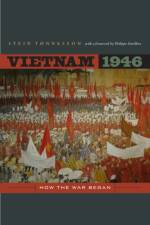
Based on multiarchival research conducted over almost three decades, this landmark account tells how a few men set off a war that would lead to tragedy for millions. Stein Tonnesson was one of the first historians to delve into scores of secret French, British, and American political, military, and intelligence documents. In this fascinating account of an unfolding tragedy, he brings this research to bear to disentangle the complex web of events, actions, and mentalities that led to thirty years of war in Indochina. As the story unfolds, Tonnesson challenges some widespread misconceptions, arguing that French general Leclerc fell into a Chinese trap in March 1946, and Vietnamese general Giap into a French trap in December. Taking us from the antechambers of policymakers in Paris to the docksides of Haiphong and the streets of Hanoi, Vietnam 1946 provides the most vivid account to date of the series of events that would make Vietnam the most embattled area in the world during the Cold War period.
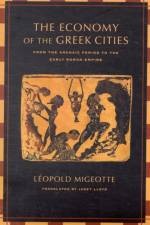
The Economy of the Greek Cities offers readers a clear and concise overview of ancient Greek economies from the archaic to the Roman period. Leopold Migeotte approaches Greek economic activities from the perspective of the ancient sources, situating them within the context of the city-state (polis). He illuminates the ways citizens intervened in the economy and considers such important sectors as agriculture, craft industries, public works, and trade. Focusing on how the private and public spheres impinged on each other, this book provides a broad understanding of the political and economic changes affecting life in the Greek city-states over a thousand-year period.
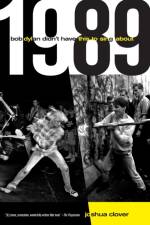
In a tour de force of lyrical theory, Joshua Clover boldly reimagines how we understand both pop music and its social context in a vibrant exploration of a year famously described as "e;the end of history."e; Amid the historic overturnings of 1989, including the fall of the Berlin Wall, pop music also experienced striking changes. Vividly conjuring cultural sensations and events, Clover tracks the emergence of seemingly disconnected phenomena--from grunge to acid house to gangsta rap--asking if "e;perhaps pop had been biding its time until 1989 came along to make sense of its sensibility."e; His analysis deftly moves among varied artists and genres including Public Enemy, N.W.A., Dr. Dre, De La Soul, The KLF, Nine Inch Nails, Nirvana, U2, Jesus Jones, the Scorpions, George Michael, Madonna, Roxette, and others. This elegantly written work, deliberately mirroring history as dialectical and ongoing, summons forth a new understanding of how "e;history had come out to meet pop as something more than a fairytale, or something less. A truth, a way of being."e;
What Is Medicine? Western and Eastern Approaches to Healing is the first comparative history of two millennia of Western and Chinese medicine from their beginnings in the centuries BCE through present advances in sciences like molecular biology and in Western adaptations of traditional Chinese medicine. In his revolutionary interpretation of the basic forces that undergird shifts in medical theory, Paul U. Unschuld relates the history of medicine in both Europe and China to changes in politics, economics, and other contextual factors. Drawing on his own extended research of Chinese primary sources as well as his and others' scholarship in European medical history, Unschuld argues against any claims of "e;truth"e; in former and current, Eastern and Western models of physiology and pathology. What Is Medicine? makes an eloquent and timely contribution to discussions on health care policies while illuminating the nature of cognitive dynamics in medicine, and it stimulates fresh debate on the essence and interpretation of reality in medicine's attempts to manage the human organism.
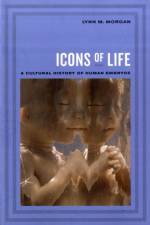
Icons of Life tells the engrossing and provocative story of an early twentieth-century undertaking, the Carnegie Institution of Washington's project to collect thousands of embryos for scientific study. Lynn M. Morgan blends social analysis, sleuthing, and humor to trace the history of specimen collecting. In the process, she illuminates how a hundred-year-old scientific endeavor continues to be felt in today's fraught arena of maternal and fetal politics. Until the embryo collecting project-which she follows from the Johns Hopkins anatomy department, through Baltimore foundling homes, and all the way to China-most people had no idea what human embryos looked like. But by the 1950s, modern citizens saw in embryos an image of "e;ourselves unborn,"e; and embryology had developed a biologically based story about how we came to be. Morgan explains how dead specimens paradoxically became icons of life, how embryos were generated as social artifacts separate from pregnant women, and how a fetus thwarted Gertrude Stein's medical career. By resurrecting a nearly forgotten scientific project, Morgan sheds light on the roots of a modern origin story and raises the still controversial issue of how we decide what embryos mean.
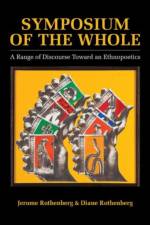
Symposium of the Whole traces a discourse on poetry and culture that has profoundly influenced the art of our time, with precedents going back two centuries and more. Beginning with a reassertion of the complexity of poetry among peoples long labeled ';primitive' and ';savage,' many recent poets have sought to base a new poetics over the fullest range of human cultures. The attempt to define an ethnopoetics has been significantly connected with the most experimental and future-directed side of Romantic and modern poetry, both in the Western world and, increasingly, outside it. As a visionary poetics and as a politics, this complex redefinition of cultural and intellectual values has involved a rarely acknowledged collaboration between poets and scholars, who together have challenged the narrow view of literature that has excluded so many traditions. In this gathering, the Rothenbergs follow the idea of an ethnopoetics from predecessors such as Vico, Blake, Thoreau, and Tzara to more recent essays and manifestos by poets and social thinkers such as Olson, Eliade, Snyder, Turner, and Baraka. The themes range widely, from the divergence of oral and written cultures to the shaman as proto-poet and the reemergence of suppressed and rejected forms and images: the goddess, the trickster, and the ';human universe.' The book's three ethnographic sections demonstrate how various poetries are structured and composed, how they reflect meaning and worldview, and how they are performed in cultures where all art may be thought of as art-in-motion. Among the poetries discussed are the language of magic; West African drum language and poetry; the Huichol Indian language of reversals; chance operations in African divination poetry; picture-writings and action-writings from Australia and Africa; and American Indian sacred-clown dramas and traditional trickster narratives. The cumulative effect is a new reading of the poetic past and presentin the editors' words, ';a changed paradigm of what poetry was or now could come to be.'
This groundbreaking study illuminates the Egyptian experience of modernity by critically analyzing the foremost medium through which it was articulated: history. The first comprehensive analysis of a Middle Eastern intellectual tradition, Gatekeepers of the Past examines a system of knowledge that replaced the intellectual and methodological conventions of Islamic historiography only at the very end of the nineteenth century. Covering more than one hundred years of mostly unexamined historucal literature in Arabic, Yoav Di-Capua explores Egyptian historical thought, examines the careers of numerous critical historians, and traces this tradition's uneasy relationship with colonial forms of knowledge as well as with the post-colonial state.
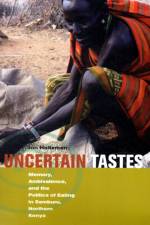
This richly drawn ethnography of Samburu cattle herders in northern Kenya examines the effects of an epochal shift in their basic diet-from a regimen of milk, meat, and blood to one of purchased agricultural products. In his innovative analysis, Jon Holtzman uses food as a way to contextualize and measure the profound changes occurring in Samburu social and material life. He shows that if Samburu reaction to the new foods is primarily negative-they are referred to disparagingly as "e;gray food"e; and "e;government food"e;-it is also deeply ambivalent. For example, the Samburu attribute a host of social maladies to these dietary changes, including selfishness and moral decay. Yet because the new foods save lives during famines, the same individuals also talk of the triumph of reason over an antiquated culture and speak enthusiastically of a better life where there is less struggle to find food. Through detailed analysis of a range of food-centered arenas, Uncertain Tastes argues that the experience of food itself-symbolic, sensuous, social, and material-is intrinsically characterized by multiple and frequently conflicting layers.
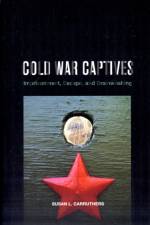
This provocative history of early cold war America recreates a time when World War III seemed imminent. Headlines were dominated by stories of Soviet slave laborers, brainwashed prisoners in Korea, and courageous escapees like Oksana Kasenkina who made a "e;leap for freedom"e; from the Soviet Consulate in New York. Full of fascinating and forgotten stories, Cold War Captives explores a central dimension of American culture and politics-the postwar preoccupation with captivity. "e;Menticide,"e; the calculated destruction of individual autonomy, struck many Americans as a more immediate danger than nuclear annihilation. Drawing upon a rich array of declassified documents, movies, and reportage-from national security directives to films like The Manchurian Candidate-his book explores the ways in which east-west disputes over prisoners, repatriation, and defection shaped popular culture. Captivity became a way to understand everything from the anomie of suburban housewives to the "e;slave world"e; of drug addiction. Sixty years later, this era may seem distant. Yet, with interrogation techniques derived from America's communist enemies now being used in the "e;war on terror,"e; the past remains powerfully present.
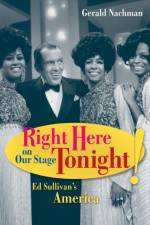
Before the advent of cable and its hundreds of channels, before iPods and the Internet, three television networks ruled America's evenings. And for twenty-three years, Ed Sullivan, the Broadway gossip columnist turned awkward emcee, ruled Sunday nights. It was Sullivan's genius to take a worn-out stage genre-vaudeville-and transform it into the TV variety show, a format that was to dominate for decades. Right Here on Our Stage Tonight! tells the complete saga of The Ed Sullivan Show and, through the voices of some 60 stars interviewed for the book, brings to life the most beloved, diverse, multi-cultural, and influential variety hour ever to air. Gerald Nachman takes us through those years, from the earliest dog acts and jugglers to Elvis Presley, the Beatles, and beyond. Sullivan was the first TV impresario to feature black performers on a regular basis-including Nat King Cole, Pearl Bailey, James Brown, and Richard Pryor-challenging his conservative audience and his own traditional tastes, and changing the face of American popular culture along the way. No other TV show ever cut such a broad swath through our national life or cast such a long shadow, nor has there ever been another show like it. Nachman's compulsively readable history, illustrated with classic photographs and chocked with colorful anecdotes, reanimates The Ed Sullivan Show for a new generation.
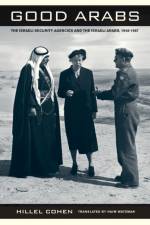
Based on his reading of top-secret files of the Israeli police and the prime minister's office, Hillel Cohen exposes the full extent of the crucial, and, until now, willfully hidden history of Palestinian collaboration with Israelis-and of the Arab resistance to it. Cohen's previous book, the highly acclaimed Army of Shadows,told how this hidden history played out from 1917 to 1948, and now, in Good Arabs he focuses on the system of collaborators established by Israel in each and every Arab community after the 1948 war. Covering a broad spectrum of attitudes and behaviors, Cohen brings together the stories of activists, mukhtars, collaborators, teachers, and sheikhs, telling how Israeli security agencies penetrated Arab communities, how they obtained collaboration, how national activists fought them, and how deeply this activity influenced daily life. When this book was first published in Hebrew, it became a bestseller and has evoked bitter memories and intense discussions among Palestinians in Israel and prompted the reclassification of many of the hundreds of documents Cohen viewed to uncover a story that continues to unfold to this day.
Flame and Fortune in the American West creatively and meticulously investigates the ongoing politics, folly, and avarice shaping the production of increasingly widespread yet dangerous suburban and exurban landscapes. The 1991 Oakland Hills Tunnel Fire is used as a starting point to better understand these complex social-environmental processes. The Tunnel Fire isthe most destructive firein terms of structures lostinCalifornia history. More than 3,000 residential structures burned and 25 lives were lost. Although this fire occurred in Oakland and Berkeley, others like it sear through landscapes in California and the American West that have experienced urban growth and development within areas historically prone to fire. Simon skillfully blends techniques from environmental history, political ecology, and science studies to closely examine the Tunnel Fire within a broader historical and spatial context of regional economic development and natural-resource management, such as the widespread planting of eucalyptus trees as an exotic lure for homeowners and the creation of hillside neighborhoods for tax revenuedecisions that produced communities with increased vulnerability to fire. Simon demonstrates how in Oaklanda drive for affluence led to a state of vulnerability for rich and poor alike that has only been exacerbated by the rebuilding of neighborhoods after the fire. Despite these troubling trends, Flame and Fortune in the American West illustrates how many popular and scientific debates on fire limit the scope and efficacy of policy responses. These risky yet profitable developments (what the author refers to as theIncendiary), as well as proposed strategies for challenging them, are discussed in the context of urbanizing areas around the American West and hold global applicability within hazard-prone areas.
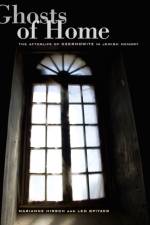
In modern-day Ukraine, east of the Carpathian Mountains, there is an invisible city. Known as Czernowitz, the "e;Vienna of the East"e; under the Habsburg empire, this vibrant Jewish-German Eastern European culture vanished after World War II-yet an idealized version lives on, suspended in the memories of its dispersed people and passed down to their children like a precious and haunted heirloom. In this original blend of history and communal memoir, Marianne Hirsch and Leo Spitzer chronicle the city's survival in personal, familial, and cultural memory. They find evidence of a cosmopolitan culture of nostalgic lore-but also of oppression, shattered promises, and shadows of the Holocaust in Romania. Hirsch and Spitzer present the first historical account of Jewish Czernowitz in the English language and offer a profound analysis of memory's echo across generations.
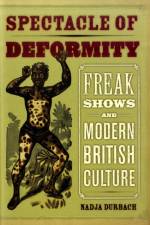
In 1847, during the great age of the freak show, the British periodical Punch bemoaned the public's "e;prevailing taste for deformity."e; This vividly detailed work argues that far from being purely exploitative, displays of anomalous bodies served a deeper social purpose as they generated popular and scientific debates over the meanings attached to bodily difference. Nadja Durbach examines freaks both well-known and obscure including the Elephant Man; "e;Lalloo, the Double-Bodied Hindoo Boy,"e; a set of conjoined twins advertised as half male, half female; Krao, a seven-year-old hairy Laotian girl who was marketed as Darwin's "e;missing link"e;; the "e;Last of the Mysterious Aztecs"e; and African "e;Cannibal Kings,"e; who were often merely Irishmen in blackface. Upending our tendency to read late twentieth-century conceptions of disability onto the bodies of freak show performers, Durbach shows that these spectacles helped to articulate the cultural meanings invested in otherness--and thus clarified what it meant to be British-at a key moment in the making of modern and imperial ideologies and identities.
This pathbreaking synthesis of history, anthropology, and linguistics gives an unprecedented view of the first two hundred years of the Spanish colonization of the Yucatec Maya. Drawing on an extraordinary range and depth of sources, William F. Hanks documents for the first time the crucial role played by language in cultural conquest: how colonial Mayan emerged in the age of the cross, how it was taken up by native writers to become the language of indigenous literature, and how it ultimately became the language of rebellion against the system that produced it. Converting Words includes original analyses of the linguistic practices of both missionaries and Mayas-as found in bilingual dictionaries, grammars, catechisms, land documents, native chronicles, petitions, and the forbidden Maya Books of Chilam Balam. Lucidly written and vividly detailed, this important work presents a new approach to the study of religious and cultural conversion that will illuminate the history of Latin America and beyond, and will be essential reading across disciplinary boundaries.
The ink our ancestors wrote with, the beeswax in altar candles, the honey on our toast, the silk we wear. This enchanting book is a highly entertaining exploration of the myriad ways insects have enriched our lives-culturally, economically, and aesthetically. Entomologist and writer Gilbert Waldbauer describes in loving, colorful detail how many of the valuable products insects have given us are made, how they were discovered, and how they have been used through time and across cultures. Along the way, he takes us on a captivating ramble through many far-flung corners of history, mythology, poetry, literature, medicine, ecology, forensics, and more. Enlivened with personal anecdotes from Waldbauer's distinguished career as an entomologist, the book also describes surprising everyday encounters we all experience that were made possible by insects. From butterfly gardens and fly-fishing to insects as jewelry and sex pheromones, this is an eye-opening ode to the wonder of insects that illuminates our extraordinary and essential relationship with the natural world.
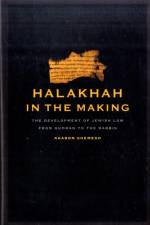
Halakhah in the Making offers the first comprehensive study of the legal material found in the Dead Sea Scrolls and its significance in the greater history of Jewish religious law (halakhah). Aharon Shemesh's pioneering study revives an issue long dormant in religious scholarship: namely, the relationship between rabbinic law, as written more than one hundred years after the destruction of the Second Temple, and Jewish practice during the Second Temple. The monumental discovery of the Dead Sea Scrolls in Qumran led to the revelation of this missing material and the closing of a two-hundred-year gap in knowledge, allowing work to begin comparing specific laws of the Qumran sect with rabbinic laws. With the publication of scroll 4QMMT-a polemical letter by Dead Sea sectarians concerning points of Jewish law-an effective comparison was finally possible. This is the first book-length treatment of the material to appear since the publication of 4QMMT and the first attempt to apply its discoveries to the work of nineteenth-century scholars. It is also the first work on this important topic written in plain language and accessible to nonspecialists in the history of Jewish law.
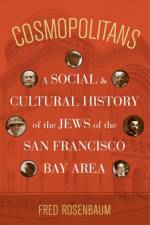
Levi Strauss, A.L. Gump, Yehudi Menuhin, Gertrude Stein, Adolph Sutro, Congresswoman Florence Prag Kahn--Jewish people have been so enmeshed in life in and around San Francisco that their story is a chronicle of the metropolis itself. Since the Gold Rush, Bay Area Jews have countered stereotypes, working as farmers and miners, boxers and mountaineers. They were Gold Rush pioneers, Gilded Age tycoons, and Progressive Era reformers. Told through an astonishing range of characters and events, Cosmopolitans illuminates many aspects of Jewish life in the area: the high profile of Jewish women, extraordinary achievements in the business world, the cultural creativity of the second generation, the bitter debate about the proper response to the Holocaust and Zionism, and much more. Focusing in rich detail on the first hundred years after the Gold Rush, the book also takes the story up to the present day, demonstrating how unusually strong affinities for the arts and for the struggle for social justice have characterized this community even as it has changed over time. Cosmopolitans, set in the uncommonly diverse Bay Area, is a truly unique chapter of the Jewish experience in America.
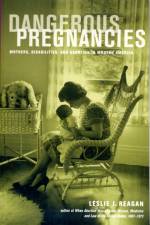
Dangerous Pregnancies tells the largely forgotten story of the German measles epidemic of the early 1960s and how it created national anxiety about dying, disabled, and "e;dangerous"e; babies. This epidemic would ultimately transform abortion politics, produce new science, and help build two of the most enduring social movements of the late twentieth century--the reproductive rights and the disability rights movements. At most a minor rash and fever for women, German measles (also known as rubella), if contracted during pregnancy, could result in miscarriages, infant deaths, and serious birth defects in the newborn. Award-winning writer Leslie J. Reagan chronicles for the first time the discoveries and dilemmas of this disease in a book full of intimate stories--including riveting courtroom testimony, secret investigations of women and doctors for abortion, and startling media portraits of children with disabilities. In exploring a disease that changed America, Dangerous Pregnancies powerfully illuminates social movements that still shape individual lives, pregnancy, medicine, law, and politics.
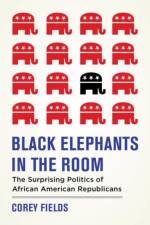
What do you think of when you hear about an African American Republican? Are they heroes fighting against the expectation that all blacks must vote democratic? Are they Uncle Toms or sellouts, serving as traitors to their race? What is it really like to be a black person in the Republican Party? Black Elephants in the Room considers how race structures the political behavior of African American Republicans and discusses the dynamic relationship between race and political behavior in the purported ';post-racial' context of US politics. Drawing on vivid first-person accounts, the book sheds light on the different ways black identity structures African Americans membership in the Republican Party. Moving past rhetoric and politics, we begin to see the everyday people working to reconcile their commitment to black identity with their belief in Republican principles. And at the end, we learn the importance of understanding both the meanings African Americans attach to racial identity and the political contexts in which those meanings are developed and expressed.
In the late 1970s, the adult film industry began the transition from celluloid to home video. Smutty Little Movies traces this change and examines the cultural and legal efforts to regulate, contain, limit, or eradicate pornography.Drawing on a wide variety of materials, Smutty Little Movies de-centers the film text in favor of industry histories and contexts. In so doing, the book argues that the struggles to contain and regulate pleasure represent a primary starting point for situating adult video's place in a larger history, not just of pornography, but of media history as a whole.
Daisetsu Teitaro Suzuki was a key figure in the introduction of Buddhism to the non-Asian world. Many outside Japan encountered Buddhism for the first time through his writings and teaching, and for nearly a century his work and legacy have contributed to the ongoing religious and cultural interchange between Japan and the rest of the world, particularly the United States and Europe. This third volume ofSelected Works of D. T. Suzukibrings together a diverse collection of Suzuki's letters, essays, and lectures about non-Buddhist religions and his thoughts on their relation to Buddhism, as well as his reflections on the nature of religion itself. Some of these writings have been translated into English for the first time in this volume. As a long-term resident of the United States, a world traveler, and a voracious consumer of information about all forms of religion, Suzuki was one of the foremost Japanese mediators of Eastern and Western religious cultures for nearly seven decades. An introduction by Jeff Wilson and Tomoe Moriya analyzes Suzuki's frequent encounters with texts and practitioners of many religions, considers how events in Suzuki's lifetime affected his interpretations of Christianity, Shinto, and other traditions, and demonstrates that his legacy as a scholar extends well beyond Buddhism.
American environmentalism historically has been associated with the interests of white elites. Yet religious leaders in the twenty-first century have helped instill concern about the earth among groups diverse in religion, race, ethnicity, and class. How did that happen and what are the implications? Building on scholarship that provides theological and ethical resources to support the ';greening' of religion, God and the Green Divide examines religious environmentalism as it actually happens in the daily lives of urban Americans. Baugh demonstrates how complex dynamics related to race, ethnicity, and class factor into decisions to ';go green.' By carefully examining negotiations of racial and ethnic identities as central to the history of religious environmentalism, this work complicates assumptions that religious environmentalism is a direct expression of theology, ethics, or religious beliefs.
"e;Pleasure,"e; Jennifer Moxley writes in her introduction to this volume, "e;is the word that first comes to mind at the mention of Nicole Brossard's poetry."e; This volume provides English-language readers with an overview of the life and work of Nicole Brossard, poet, novelist, and essayist, who is widely recognized in her native Quebec and throughout the French-speaking world as one of the greatest writers of her generation. Brossard's poetry is rooted in her investigations of language, her abiding commitment to a feminist consciousness, and her capacity for renewing meaning as a virtual space of desire. The reader enters a poetic world in which the aesthetic is joined with the political, and the meaning of both is enriched in the process. The selections in this volume include translations of some of Brossard's best-known works-Lovhers, Ultra Sounds, Museum of Bone and Water, Notebook of Roses and Civilization-along with short prose works, an interview with Brossard, and a bibliography of works in French and English, and constitute the most substantial English-language sampling published to date of one of Canada's greatest living poets.
Methamphetamine: A Love Storypresents an insider's view of the world of methamphetamine based on the life stories of thirty-three adults formerly immersed in using, dealing, and manufacturing meth in rural Oklahoma. Using a respectful tone towards her subjects,Shuklailluminates their often decades-long love affair with the drug, the attractions of the lifestyle, the eventual unsustainability of it, and the challenges of exiting the life. These personal stories reveal how and why people with limited economic means and inadequate resources become entrapped in the drug epidemic, while challenging longstanding societal views about addiction, drugs, drug policy, and public health.
In 1968, Mexico prepared to host the Olympic games amid growing civil unrest. The spectacular sports facilities and urban redevelopment projects built by the government in Mexico City mirrored the country's rapid but uneven modernization. In the same year, a street-savvy democratization movement led by students emerged in the city. Throughout the summer, the ';68 Movement staged protests underscoring a widespread sense of political disenfranchisement. Just ten days before the Olympics began, nearly three hundred student protestors were massacred by the military in a plaza at the core of a new public housing complex. In spite of institutional denial and censorship, the 1968 massacre remains a touchstone in contemporary Mexican culture thanks to the public memory work of survivors and Mexico's leftist intelligentsia. In this highly original study of the afterlives of the '68 Movement, George F. Flaherty explores how urban spacesmaterial but also literary, photographic, and cinematicbecame an archive of 1968, providing a framework for de facto modes of justice for years to come.
Abonner på vårt nyhetsbrev og få rabatter og inspirasjon til din neste leseopplevelse.
Ved å abonnere godtar du vår personvernerklæring.