






















Gjør som tusenvis av andre bokelskere
Abonner på vårt nyhetsbrev og få rabatter og inspirasjon til din neste leseopplevelse.
Ved å abonnere godtar du vår personvernerklæring.Du kan når som helst melde deg av våre nyhetsbrev.

For almost half a century, Amiri Baraka has ranked among the most important commentators on African American music and culture. In this brilliant assemblage of his writings on music, the first such collection in nearly twenty years, Baraka blends autobiography, history, musical analysis, and political commentary to recall the sounds, people, times, and places he's encountered. As in his earlier classics, Blues People and Black Music, Baraka offers essays on the famous-Max Roach, Charlie Parker, Miles Davis, John Coltrane-and on those whose names are known mainly by jazz aficionados-Alan Shorter, Jon Jang, and Malachi Thompson. Baraka's literary style, with its deep roots in poetry, makes palpable his love and respect for his jazz musician friends. His energy and enthusiasm show us again how much Coltrane, Albert Ayler, and the others he lovingly considers mattered. He brings home to us how music itself matters, and how musicians carry and extend that knowledge from generation to generation, providing us, their listeners, with a sense of meaning and belonging.
Richard Mendelson brings together his expertise as both a Napa Valley lawyer and a winemaker into this accessible overview of American wine law from colonial times to the present. It is a story of fits and starts that provides a fascinating chronicle of the history of wine in the United States told through the lens of the law. From the country's early support for wine as a beverage to the moral and religious fervor that resulted in Prohibition and to the governmental controls that followed Repeal, Mendelson takes us to the present day-and to the emergence of an authentic and significant wine culture. He explains how current laws shape the wine industry in such areas as pricing and taxation, licensing, appellations, health claims and warnings, labeling, and domestic and international commerce. As he explores these and other legal and policy issues, Mendelson lucidly highlights the concerns that have made wine alternatively the demon or the darling of American society-and at the same time illuminates the ways in which lives and livelihoods are affected by the rise and fall of social movements.
More than 12,000 years ago, in one of the greatest triumphs of prehistory, humans colonized North America, a continent that was then truly a new world. Just when and how they did so has been one of the most perplexing and controversial questions in archaeology. This dazzling, cutting-edge synthesis, written for a wide audience by an archaeologist who has long been at the center of these debates, tells the scientific story of the first Americans: where they came from, when they arrived, and how they met the challenges of moving across the vast, unknown landscapes of Ice Age North America. David J. Meltzer pulls together the latest ideas from archaeology, geology, linguistics, skeletal biology, genetics, and other fields to trace the breakthroughs that have revolutionized our understanding in recent years. Among many other topics, he explores disputes over the hemisphere's oldest and most controversial sites and considers how the first Americans coped with changing global climates. He also confronts some radical claims: that the Americas were colonized from Europe or that a crashing comet obliterated the Pleistocene megafauna. Full of entertaining descriptions of on-site encounters, personalities, and controversies, this is a compelling behind-the-scenes account of how science is illuminating our past.
"e;Sooner or later, nearly everyone who cares about wine and food comes to Sonoma"e;-so begins this lively excursion to a spectacular region that has become known internationally as a locavore's paradise. Part memoir, part vivid reportage, Field Days chronicles the renaissance in farming organically and eating locally that is unfolding in Northern California. Jonah Raskin tells of the year he spent on Oak Hill Farm-working the fields, selling produce at farmers' markets, and following it to restaurants. He also goes behind the scenes at Whole Foods. In this luminous account of his experiences, Raskin introduces a dynamic cast of characters-farmers, chefs, winemakers, farm workers, and environmentalists. They include such luminaries as Warren Weber at Star Route Farm, the oldest certified organic farm in Marin County; Bob Cannard, who has supplied Chez Panisse with vegetables for decades; Sharon Grossi, the owner of the largest organic farm in Sonoma; and Craig Stoll, the founder and executive chef at Delfina in San Francisco. Raskin also offers portraits of renowned historical figures, including Luther Burbank, Jack London, and M.F.K. Fisher. Field Days is a heartfelt celebration of the farm-to-table movement and its cultural reverberations.
At once uncompromising and highly inventive, David Lau's poems are imbued with a musicality that lightens the dark undertones of spoliation and entropy. Many of the poems embody a nexus of interaction with historical events, films, modernist poetic texts, and works of art-but from this allusion and evocation, a multifarious voice emerges. In these pages, the electric linguistic experiment meets a new urban, postnatural poetics, one in which poetry is not just a play of signs and seemings but also a prismatic investigation of our contemporary order: "e;Hurry up before our factory leaves. / The first column of the Freedom Tower / traduces its ensorcellment in the facade."e; Here is a poetry both deeply lyrical and resistant, a poetry relentless in its invention and its stance against the apathy of convention and consumption.
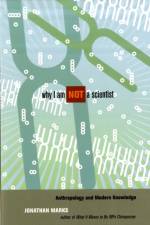
This lively and provocative book casts an anthropological eye on the field of science in a wide-ranging and innovative discussion that integrates philosophy, history, sociology, and auto-ethnography. Jonathan Marks examines biological anthropology, the history of the life sciences, and the literature of science studies while upending common understandings of science and culture with a mixture of anthropology, common sense, and disarming humor. Science, Marks argues, is widely accepted to be three things: a method of understanding and a means of establishing facts about the universe, the facts themselves, and a voice of authority or a locus of cultural power. This triple identity creates conflicting roles and tensions within the field of science and leads to its record of instructive successes and failures. Among the topics Marks addresses are the scientific revolution, science as thought and performance, creationism, scientific fraud, and modern scientific racism. Applying his considerable insight, energy, and wit, Marks sheds new light on the evolution of science, its role in modern culture, and its challenges for the twenty-first century.
This compelling selection of recent work by internationally celebrated poet Keith Waldrop presents three related poem sequences-"e;Shipwreck in Haven,"e; "e;Falling in Love through a Description,"e; and "e;The Plummet of Vitruvius"e;-in a virtuosic poetic triptych. In these quasi-abstract, experimental lines, collaged words torn from their contexts take on new meanings. Waldrop, a longtime admirer of such artists as the French poet Raymond Queneau and the American painter Robert Motherwell, imposes a tonal override on purloined materials, yet the originals continue to show through. These powerful poems, at once metaphysical and personal, reconcile Waldrop's romantic tendencies with formal experimentation, uniting poetry and philosophy and revealing him as a transcendentalist for the new millennium.
This powerful study immerses the reader in the world of homelessness and drug addiction in the contemporary United States. For over a decade Philippe Bourgois and Jeff Schonberg followed a social network of two dozen heroin injectors and crack smokers on the streets of San Francisco, accompanying them as they scrambled to generate income through burglary, panhandling, recycling, and day labor. Righteous Dopefiend interweaves stunning black-and-white photographs with vivid dialogue, detailed field notes, and critical theoretical analysis. Its gripping narrative develops a cast of characters around the themes of violence, race relations, sexuality, family trauma, embodied suffering, social inequality, and power relations. The result is a dispassionate chronicle of survival, loss, caring, and hope rooted in the addicts' determination to hang on for one more day and one more "e;fix"e; through a "e;moral economy of sharing"e; that precariously balances mutual solidarity and interpersonal betrayal.
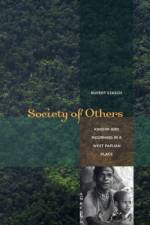
This important study upsets the popular assumption that human relations in small-scale societies are based on shared experience. In a theoretically innovative account of the lives of the Korowai of West Papua, Indonesia, Rupert Stasch shows that in this society, people organize their connections to each another around otherness. Analyzing the Korowai people's famous "e;tree house"e; dwellings, their patterns of living far apart, and their practices of kinship, marriage, and childbearing and rearing, Stasch argues that the Korowai actively make relations not out of what they have in common, but out of what divides them. Society of Others, the first anthropological book about the Korowai, offers a picture of Korowai lives sharply at odds with stereotypes of "e;tribal"e; societies.
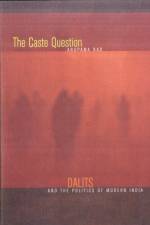
This innovative work of historical anthropology explores how India's Dalits, or ex-untouchables, transformed themselves from stigmatized subjects into citizens. Anupama Rao's account challenges standard thinking on caste as either a vestige of precolonial society or an artifact of colonial governance. Focusing on western India in the colonial and postcolonial periods, she shines a light on South Asian historiography and on ongoing caste discrimination, to show how persons without rights came to possess them and how Dalit struggles led to the transformation of such terms of colonial liberalism as rights, equality, and personhood. Extending into the present, the ethnographic analyses of The Caste Question reveal the dynamics of an Indian democracy distinguished not by overcoming caste, but by new forms of violence and new means of regulating caste.
For most Americans, September 11, 2001, symbolized the moment when their security was altered. For Middle Eastern and Muslim Americans, 9/11 also ushered in a backlash in the form of hate crimes, discrimination, and a string of devastating government initiatives. This book provides the first comprehensive analysis of the impact of the post-9/11 events on Middle Eastern and Muslim Americans as well as their organized response. Through fieldwork and interviews with community leaders, Anny Bakalian and Mehdi Bozorgmehr show how ethnic organizations mobilized to demonstrate their commitment to the United States while defending their rights and distancing themselves from the terrorists.
Even as they see their wages go down and their buying power decrease, many parents are still putting their kids' material desires first. These parents struggle with how to handle children's consumer wants, which continue unabated despite the economic downturn. And, indeed, parents and other adults continue to spend billions of dollars on children every year. Why do children seem to desire so much, so often, so soon, and why do parents capitulate so readily? To determine what forces lie behind the onslaught of Nintendo Wiis and Bratz dolls, Allison J. Pugh spent three years observing and interviewing children and their families. In Longing and Belonging: Parents, Children, and Consumer Culture, Pugh teases out the complex factors that contribute to how we buy, from lunchroom conversations about Game Boys to the stark inequalities facing American children. Pugh finds that children's desires stem less from striving for status or falling victim to advertising than from their yearning to join the conversation at school or in the neighborhood. Most parents respond to children's need to belong by buying the particular goods and experiences that act as passports in children's social worlds, because they sympathize with their children's fear of being different from their peers. Even under financial constraints, families prioritize children "e;feeling normal"e;. Pugh masterfully illuminates the surprising similarities in the fears and hopes of parents and children from vastly different social contexts, showing that while corporate marketing and materialism play a part in the commodification of childhood, at the heart of the matter is the desire to belong.
This multifaceted study of Syrian immigration to the United States places Syrians- and Arabs more generally-at the center of discussions about race and racial formation from which they have long been marginalized. Between Arab and White focuses on the first wave of Arab immigration and settlement in the United States in the years before World War II, but also continues the story up to the present. It presents an original analysis of the ways in which people mainly from current day Lebanon and Syria-the largest group of Arabic-speaking immigrants before World War II-came to view themselves in racial terms and position themselves within racial hierarchies as part of a broader process of ethnic identity formation.
In Who Is Knowledgeable Is Strong, Cyrus Schayegh tells two intertwined stories: how, in early twentieth-century Iran, an emerging middle class used modern scientific knowledge as its cultural and economic capital, and how, along with the state, it employed biomedical sciences to tackle presumably modern problems like the increasing stress of everyday life, people's defective willpower, and demographic stagnation. The book examines the ways by which scientific knowledge allowed the Iranian modernists to socially differentiate themselves from society at large and, at the very same time, to intervene in it. In so doing, it argues that both class formation and social reform emerged at the interstices of local Iranian and Western-dominated global contexts and concerns.
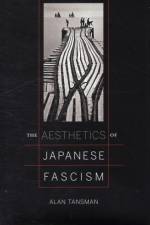
In this wide-ranging study of Japanese cultural expression, Alan Tansman reveals how a particular, often seemingly innocent aesthetic sensibility-present in novels, essays, popular songs, film, and political writings-helped create an "e;aesthetic of fascism"e; in the years leading up to World War II. Evoking beautiful moments of violence, both real and imagined, these works did not lead to fascism in any instrumental sense. Yet, Tansman suggests, they expressed and inspired spiritual longings quenchable only through acts in the real world. Tansman traces this lineage of aesthetic fascism from its beginnings in the 1920s through its flowering in the 1930s to its afterlife in postwar Japan.
This book examines changing perceptions of sex between men in early Victorian Britain, a significant yet surprisingly little explored period in the history of Western sexuality. Looking at the dramatic transformations of the era-changes in the family and in the law, the emergence of the world's first police force, the growth of a national media, and more-Charles Upchurch asks how perceptions of same-sex desire changed between men, in families, and in the larger society. To illuminate these questions, he mines a rich trove of previously unexamined sources, including hundreds of articles pertaining to sex between men that appeared in mainstream newspapers. The first book to relate this topic to broader economic, social, and political changes in the early nineteenth century, Before Wilde sheds new light on the central question of how and when sex acts became identities.
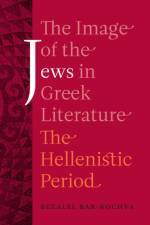
This landmark contribution to ongoing debates about perceptions of the Jews in antiquity examines the attitudes of Greek writers of the Hellenistic period toward the Jewish people. Among the leading Greek intellectuals who devoted special attention to the Jews were Theophrastus (the successor of Aristotle), Hecataeus of Abdera (the father of "e;scientific"e; ethnography), and Apollonius Molon (probably the greatest rhetorician of the Hellenistic world). Bezalel Bar-Kochva examines the references of these writers and others to the Jews in light of their literary output and personal background; their religious, social, and political views; their literary and stylistic methods; ethnographic stereotypes current at the time; and more.
Pericles, Greece's greatest statesman and the leader of its Golden Age, created the Parthenon and championed democracy in Athens and beyond. Centuries of praise have endowed him with the powers of a demigod, but what did his friends, associates, and fellow citizens think of him? In Pericles: A Sourcebook and Reader, Stephen V. Tracy visits the fifth century B.C. to find out. Tracy compiles and translates the scattered, elusive primary sources relating to Pericles. He brings Athens's political atmosphere to life with archaeological evidence and the accounts of those close to Pericles, including Thucydides, Aristophanes, Herodotus, Protagoras, Sophocles, Lysias, Xenophon, Plato, and Plutarch. Readers will discover Pericles as a formidable politician, a persuasive and inspiring orator, and a man full of human contradictions.
Frontier Constitutions is a pathbreaking study of the cultural transformations arrived at by Spanish colonists, native-born creoles, mestizos (Chinese and Spanish), and indigenous colonial subjects in the Philippines during the crisis of colonial hegemony in the nineteenth century, and the social anomie that resulted from this crisis in law and politics. John D. Blanco argues that modernity in the colonial Philippines should not be understood as an imperfect version of a European model but as a unique set of expressions emerging out of contradictions-expressions that sanctioned new political communities formed around the precariousness of Spanish rule. Blanco shows how artists and writers struggled to synthesize these contradictions as they attempted to secure the colonial order or, conversely, to achieve Philippine independence.
Rita M. Gross has long been acknowledged as a founder in the field of feminist theology. One of the earliest scholars in religious studies to discover how feminism affects that discipline, she is recognized as preeminent in Buddhist feminist theology. The essays in A Garland of Feminist Reflections represent the major aspects of her work and provide an overview of her methodology in women's studies in religion and feminism. The introductory article, written specifically for this volume, summarizes the conclusions Gross has reached about gender and feminism after forty years of searching and exploring, and the autobiography, also written for this volume, narrates how those conclusions were reached. These articles reveal the range of scholarship and reflection found in Rita M. Gross's work and demonstrate how feminist scholars in the 1970s shifted the paradigm away from an androcentric model of humanity and forever changed the way we study religion.
Insects boast incredible diversity, and this book treats an important component of the western insect biota that has not been summarized before-moths and their plant relationships. There are about 8,000 named species of moths in our region, and although most are unnoticed by the public, many attract attention when their larvae create economic damage: eating holes in woolens, infesting stored foods, boring into apples, damaging crops and garden plants, or defoliating forests. In contrast to previous North American moth books, this volume discusses and illustrates about 25% of the species in every family, including the tiny species, making this the most comprehensive volume in its field. With this approach it provides access to microlepidoptera study for biologists as well as amateur collectors. About 2,500 species are described and illustrated, including virtually all moths of economic importance, summarizing their morphology, taxonomy, adult behavior, larval biology, and life cycles.
Everyone knows the thrill of being transported by a film, but what is it that makes movie watching such a compelling emotional experience? In Moving Viewers, Carl Plantinga explores this question and the implications of its answer for aesthetics, the psychology of spectatorship, and the place of movies in culture. Through an in-depth discussion of mainstream Hollywood films, Plantinga investigates what he terms "e;the paradox of negative emotion"e; and the function of mainstream narratives as ritualistic fantasies. He describes the sensual nature of the movies and shows how film emotions are often elicited for rhetorical purposes. He uses cognitive science and philosophical aesthetics to demonstrate why cinema may deliver a similar emotional charge for diverse audiences.
In a book that challenges modernist ideas about the value and role of music in Western society, Composing the Citizen demonstrates how music can help forge a nation. Deftly exploring the history of Third Republic France, Jann Pasler shows how French people from all classes and political persuasions looked to music to revitalize the country after the turbulent crises of 1871. Embraced not as a luxury but for its "e;public utility,"e; music became an object of public policy as integral to modern life as power and water, a way to teach critical judgment and inspire national pride. It helped people to forget the past, voice conflicting aspirations, and imagine a shared future. Based on a dazzling survey of archival material, Pasler's rich interdisciplinary work looks beyond elites and the histories their agendas have dominated to open new windows onto the musical tastes and practices of amateurs as well as professionals. A fascinating history of the period emerges, one rooted in political realities and the productive tensions between the political and the aesthetic. Highly evocative and deeply humanistic, Composing the Citizen ignites broad debates about music's role in democracy and its meaning in our lives.
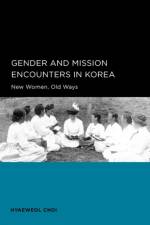
This book vividly traces the genealogy of modern womanhood in the encounters between Koreans and American Protestant missionaries in the early twentieth century, during Korea's colonization by Japan. Hyaeweol Choi shows that what it meant to be a "e;modern"e; Korean woman was deeply bound up in such diverse themes as Korean nationalism, Confucian gender practices, images of the West and Christianity, and growing desires for selfhood. Her historically specific, textured analysis sheds new light on the interplay between local and global politics of gender and modernity.
More than two centuries ago, William Paley introduced his famous metaphor of the universe as a watch made by the Creator. For Paley, the exquisite structure of the universe necessitated a designer. Today, some 150 years since Darwin's On the Origin of Species was published, the argument of design is seeing a revival. This provocative work tells how Darwin left the door open for this revival--and at the same time argues for a new conceptual framework that avoids the problematic teleology inherent in Darwin's formulation of natural selection. In a wide-ranging discussion of the historical and philosophical dimensions of evolutionary theory from the ancient Greeks to today, John Reiss argues that we should look to the principle of the conditions for existence, first formulated before On the Origin of Species by the French paleontologist Georges Cuvier, to clarify the relation of adaptation to evolution. Reiss suggests that Cuvier's principle can help resolve persistent issues in evolutionary biology, including the proper definition of natural selection, the distinction between natural selection and genetic drift, and the meaning of genetic load. Moreover, he shows how this principle can help unite diverse areas of biology, ranging from quantitative genetics and the theory of the levels of selection to evo-devo, ecology, physiology, and conservation biology.
How did our children end up eating nachos, pizza, and Tater Tots for lunch? Taking us on an eye-opening journey into the nation's school kitchens, this superbly researched book is the first to provide a comprehensive assessment of school food in the United States. Janet Poppendieck explores the deep politics of food provision from multiple perspectives--history, policy, nutrition, environmental sustainability, taste, and more. How did we get into the absurd situation in which nutritionally regulated meals compete with fast food items and snack foods loaded with sugar, salt, and fat? What is the nutritional profile of the federal meals? How well are they reaching students who need them? Opening a window onto our culture as a whole, Poppendieck reveals the forces--the financial troubles of schools, the commercialization of childhood, the reliance on market models--that are determining how lunch is served. She concludes with a sweeping vision for change: fresh, healthy food for all children as a regular part of their school day.
This captivating book, laced with evocative anecdotes from the field, gives the first holistic, up-to-date overview of dinosaurs and their world for a wide audience of readers. Situating these fascinating animals in a broad ecological and evolutionary context, leading dinosaur expert Scott D. Sampson fills us in on the exhilarating discoveries of the past twenty-five years, the most active period in the history of dinosaur paleontology, during which more "e;new"e; species were named than in all prior history. With these discoveries-and the most recent controversies-in mind, Sampson reconstructs the odyssey of the dinosaurs from their humble origins on the supercontinent Pangaea, to their reign as the largest animals the planet has ever known, and finally to their abrupt demise. Much more than the story of who ate whom way back when, Dinosaur Odyssey places dinosaurs in an expansive web of relationships with other organisms and demonstrates how they provide a powerful lens through which to observe the entire natural world. Addressing topics such as extinction, global warming, and energy flow, Dinosaur Odyssey finds that the dinosaurs' story is, in fact, a major chapter in our own story.
"e;Larvatus prodeo,"e; announced Rene Descartes at the beginning of the seventeenth century: "e;I come forward, masked."e; Deliberately disguising or silencing their most intimate thoughts and emotions, many early modern Europeans besides Descartes-princes, courtiers, aristocrats and commoners alike-chose to practice the shadowy art of dissimulation. For men and women who could not risk revealing their inner lives to those around them, this art of incommunicativity was crucial, both personally and politically. Many writers and intellectuals sought to explain, expose, justify, or condemn the emergence of this new culture of secrecy, and from Naples to the Netherlands controversy swirled for two centuries around the powers and limits of dissimulation, whether in affairs of state or affairs of the heart. This beautifully written work crisscrosses Europe, with a special focus on Italy, to explore attitudes toward the art of dissimulation in the sixteenth and seventeenth centuries. Discussing many canonical and lesser-known works, Jon R. Snyder examines the treatment of dissimulation in early modern treatises and writings on the court, civility, moral philosophy, political theory, and in the visual arts.
Longtime admirers of Mark Twain are aware of how integral animals were to his work as a writer, from his first stories through his final years, including many pieces that were left unpublished at his death. This beautiful volume, illustrated with 30 new images by master engraver Barry Moser, gathers writings from the full span of Mark Twain's career and elucidates his special attachment to and regard for animals. What may surprise even longtime readers and fans is that Twain was an early and ardent animal welfare advocate, the most prominent American of his day to take up that cause. Edited and selected by Shelley Fisher Fishkin, who has also supplied an introduction and afterword, Mark Twain's Book of Animals includes stories that are familiar along with those that are appearing in print for the first time.
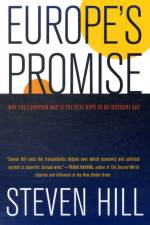
A quiet revolution has been occurring in post-World War II Europe. A world power has emerged across the Atlantic that is recrafting the rules for how a modern society should provide economic security, environmental sustainability, and global stability. In Europe's Promise, Steven Hill explains Europe's bold new vision. For a decade Hill traveled widely to understand this uniquely European way of life. He shatters myths and shows how Europe's leadership manifests in five major areas: economic strength, with Europe now the world's wealthiest trading bloc, nearly as large as the U.S. and China combined; the best health care and other workfare supports for families and individuals; widespread use of renewable energy technologies and conservation; the world's most advanced democracies; and regional networks of trade, foreign aid, and investment that link one-third of the world to the European Union. Europe's Promise masterfully conveys how Europe has taken the lead in this make-or-break century challenged by a worldwide economic crisis and global warming.
Abonner på vårt nyhetsbrev og få rabatter og inspirasjon til din neste leseopplevelse.
Ved å abonnere godtar du vår personvernerklæring.