







Gjør som tusenvis av andre bokelskere
Abonner på vårt nyhetsbrev og få rabatter og inspirasjon til din neste leseopplevelse.
Ved å abonnere godtar du vår personvernerklæring.Du kan når som helst melde deg av våre nyhetsbrev.

"e;Ghosts appear in place of whatever a given people will not face"e; (p. 65)The poems in Gravesend explore ghosts as instances of collective grief and guilt, as cultural constructs evolved to elide or to absorb a given society's actions, as well as, at times, to fill the gaps between such actions and the desires and intentions of its individual citizens. Tracing the changing nature of the ghostly in the western world from antiquity to today, the collection focuses particularly on the ghosts created by the European expansion of the 16th through 20th centuries, using the town of Gravesend, the seaport at the mouth of the Thames through which countless emigrants passed, as an emblem of theambiguous threshold between one life and another, in all the many meanings of that phrase.
Zen Buddhism is perhaps best known for its emphasis on meditation, and probably no figure in the history of Zen is more closely associated with meditation practice than the thirteenth-century Japanese master Dogen, founder of the Soto school. This study examines the historical and religious character of the practice as it is described in Dogen's own meditation texts, introducing new materials and original perspectives on one of the most influential spiritual traditions of East Asian civilization. The Soto version of Zen meditation is known as "e;just sitting,"e; a practice in which, through the cultivation of the subtle state of "e;nonthinking,"e; the meditator is said to be brought into perfect accord with the higher consciousness of the "e;Buddha mind"e; inherent in all beings. This study examines the historical and religious character of the practice as it is described in Dogen's own meditation texts, introducing new materials and original perspectives on one of the most influential spiritual traditions of East Asian civilization.
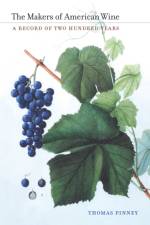
Americans learned how to make wine successfully about two hundred years ago, after failing for more than two hundred years. Thomas Pinney takes an engaging approach to the history of American wine by telling its story through the lives of 13 people who played significant roles in building an industry that now extends to every state. While some names-such as Mondavi and Gallo-will be familiar, others are less well known. These include the wealthy Nicholas Longworth, who produced the first popular American wine; the German immigrant George Husmann, who championed the native Norton grape in Missouri and supplied rootstock to save French vineyards from phylloxera; Frank Schoonmaker, who championed the varietal concept over wines with misleading names; and Maynard Amerine, who helped make UC Davis a world-class winemaking school.
This is the first month-by-month guide to gardening with native plants in a state that follows a unique, nontraditional seasonal rhythm. Beginning in October, when much of California leaves the dry season behind and prepares for its own green "e;spring,"e; Helen Popper provides detailed, calendar-based information for both beginning and experienced native gardeners. Each month's chapter lists gardening tasks, including repeated tasks and those specific to each season. Popper offers planting and design ideas, and explains core gardening techniques such as pruning, mulching, and propagating. She tells how to use native plants in traditional garden styles, including Japanese, herb, and formal gardens, and recommends places for viewing natives. An essential year-round companion, this beautifully written and illustrated book nurtures the twin delights of seeing wild plants in the garden and garden plants in the wild.
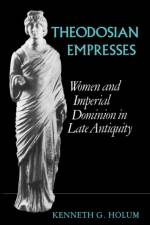
Theodosian Empresses sets a series of compelling women on the stage of history and offers new insights into the eastern court in the fifth century.
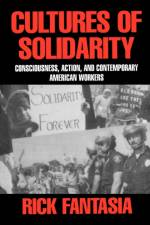
A commonplace assumption about American workers is that they lack class consciousness. This perception has baffled social scientists, demoralized activists, and generated a significant literature on American exceptionalism. In this provocative book, a young sociologist takes the prevailing assumptions to task and sheds new light upon this very important issue. In three vivid case studies Fantasia explores the complicated, multi-faceted dynamics of American working-class consciousness and collective action.
"e;Let me tell you a story,"e; each film seems to offer silently as its opening frames hit the screen. But sometimes the film finds a voice-an off-screen narrator-for all or part of the story. From Wuthering Heights and Double Indemnity to Annie Hall and Platoon, voice-over narration has been an integral part of American movies.Through examples from films such as How Green Was My Valley, All About Eve, The Naked City, and Barry Lyndon, Sarah Kozloff examines and analyzes voice-over narration. She refutes the assumptions that words should only play a minimal role in film, that "e;showing"e; is superior to "e;telling,"e; or that the technique is inescapably authoritarian (the "e;voice of god"e;). She questions the common conception that voice-over is a literary technique by tracing its origins in the silent era and by highlighting the influence of radio, documentaries, and television. She explores how first-person or third-person narration really affects a film, in terms of genre conventions, viewer identification, time and nostalgia, subjectivity, and reliability. In conclusion she argues that voice-over increases film's potential for intimacy and sophisticated irony.
Richard C. Atkinson was named president of the University of California in August 1995, barely four weeks after the UC Regents voted to end affirmative action. How he dealt with the admissions wars-the political, legal, and academic consequences of that historic and controversial decision, as well as the issue of governance-is discussed in this book. Another focus is the entrepreneurial university-the expansion of the University's research enterprise into new forms of scientific research with industry during Atkinson's presidency. The final crisis of his administration was the prolonged controversy over the University's management of the Los Alamos and Livermore nuclear weapons research laboratories that began with the arrest of Los Alamos scientist Wen Ho Lee on charges of espionage in 1999. Entrepreneurial President explains what was at stake during each of these episodes, how Atkinson addressed the issues, and why the outcomes matter to the University and to the people of California. Pelfrey's book provides an analysis of the challenges, perils, and limits of presidential leadership in the nation's leading public university, while bringing a historical perspective to bear on the current serious threats to its future as a university.
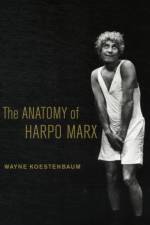
The Anatomy of Harpo Marx is a luxuriant, detailed play-by-play account of Harpo Marx's physical movements as captured on screen. Wayne Koestenbaum guides us through the thirteen Marx Brothers films, from The Cocoanuts in 1929 to Love Happy in 1950, to focus on Harpo's chief and yet heretofore unexplored attribute-his profound and contradictory corporeality. Koestenbaum celebrates the astonishing range of Harpo's body-its kinks, sexual multiplicities, somnolence, Jewishness, "e;cute"e; pathos, and more. In a virtuosic performance, Koestenbaum's text moves gracefully from insightful analysis to cultural critique to autobiographical musing, and provides Harpo with a host of odd bedfellows, including Walter Benjamin and Barbra Streisand.
Stephen Kunitz's work raises crucial issues for public policy in the medical field, and will be valuable for social scientists, physicians, and health professionals concerned with the social context of public health and other medical facilities.
Why has Egypt, a pioneer of organ transplantation, been reluctant to pass a national organ transplant law for more than three decades? This book analyzes the national debate over organ transplantation in Egypt as it has unfolded during a time of major social and political transformation-including mounting dissent against a brutal regime, the privatization of health care, advances in science, the growing gap between rich and poor, and the Islamic revival. Sherine Hamdy recasts bioethics as a necessarily political project as she traces the moral positions of patients in need of new tissues and organs, doctors uncertain about whether transplantation is a "e;good"e; medical or religious practice, and Islamic scholars. Her richly narrated study delves into topics including current definitions of brain death, the authority of Islamic fatwas, reports about the mismanagement of toxic waste predisposing the poor to organ failure, the Egyptian black market in organs, and more. Incorporating insights from a range of disciplines, Our Bodies Belong to God sheds new light on contemporary Islamic thought, while challenging the presumed divide between religion and science, and between ethics and politics.
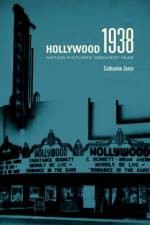
In Hollywood 1938, Catherine Jurca brings to light a tumultuous year of crisis that has been neglected in histories of the studio era. With attendance in decline, negative publicity about stars that were "e;poison at the box office,"e; and a spate of bad films, industry executives decided that the public was fed up with the movies. Jurca describes their desperate attempt to win back audiences by launching Motion Pictures' Greatest Year, a massive, and unsuccessful, public relations campaign conducted in theaters and newspapers across North America. Drawing on the records of studio personnel, independent exhibitors, moviegoers, and the motion pictures themselves, she analyzes what was wrong-and right-with Hollywood at the end of a heralded decade, and how the industry's troubles changed the making and marketing of films in 1938 and beyond.
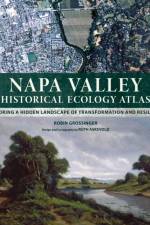
How has California's landscape changed? What did now-familiar places look like during prior centuries? What can the past teach us about designing future landscapes? The Napa Valley Historical Ecology Atlas explores these questions by taking readers on a dazzling visual tour of Napa Valley from the early 1800s onward-a forgotten land of brilliant wildflower fields, lush wetlands, and grand oak savannas. Robin Grossinger weaves together rarely-seen historical maps, travelers's accounts, photographs, and paintings to reconstruct early Napa Valley and document its physical transformation over the past two centuries. The Atlas provides a fascinating new perspective on this iconic landscape, showing the natural heritage that has enabled the agricultural success of the region today. The innovative research of Grossinger and his historical ecology team allows us to visualize the past in unprecedented detail, improving our understanding of the living landscapes we inhabit and suggesting strategies to increase their health and resilience in the future.
In Searching for Utopia, Hanna Holborn Gray reflects on the nature of the university from the perspective of today's research institutions. In particular, she examines the ideas of former University of California president Clark Kerr as expressed in The Uses of the University, written during the tumultuous 1960s. She contrasts Kerr's vision of the research-driven "e;multiveristy"e; with the traditional liberal educational philosophy espoused by Kerr's contemporary, former University of Chicago president Robert Maynard Hutchins. Gray's insightful analysis shows that both Kerr, widely considered a realist, and Hutchins, seen as an oppositional idealist, were utopians. She then surveys the liberal arts tradition and the current state of liberal learning in the undergraduate curriculum within research universities. As Gray reflects on major trends and debates since the 1960s, she illuminates the continuum of utopian thinking about higher education over time, revealing how it applies even in today's climate of challenge.
In 1938, at an age when most men are long retired, Douglas Hyde (1860-1949) was elected first president of modern Ireland. The unanimous choice of delegates from all political factions, he was no stranger to public life or to fame. Until now, however, there has been no full-scale biography of this important historical and literary figure.Known as a tireless nationalist, Hyde attracted attention on both sides of the Atlantic from a very early age. He was hailed by Yeats as a source of the Irish Literary Renaissance; earned international recognition for his contributions to the theory and methodology of folklore; joined Lady Gregory, W. B. Yeats, George Moore, and Edward Martyn in shaping an Irish theater; and as president of the Gaelic League worked for twenty-two years on behalf of Irish Ireland.Yet in spite of these and other accomplishments Hyde remained an enigmatic figure throughout his life. Why did he become an Irish nationalist? Why were his two terms as Irish Free State senator so curiously passive? Why, when he had threatened it earlier, did he oppose the use of physical force in 1916? How did he nevertheless retain the support of his countrymen and the trust and friendship of such a man as Eamon de Valera? Douglas Hyde: A Maker of Modern Ireland dispels for the first time the myths and misinformation that have obscured the private life of this extraordinary scholar and statesman.
The Life of a Text offers a vivid portrait of one community's interaction with its favorite text-the epic Ramcaritmanas-and the way in which performances of the epic function as a flexible and evolving medium for cultural expression. Anthropologists, historians of religion, and readers interested in the culture of North India and the performance arts will find breadth of subject, careful scholarship, and engaging presentation in this unique and beautifully illustrated examination of Hindi culture.The most popular and influential text of Hindi-speaking North India, the epic Ramcaritmanas is a sixteenth century retelling of the Ramayana story by the poet Tulsidas. This masterpiece of pre-modern Hindi literature has always reached its largely illiterate audiences primarily through oral performance including ceremonial recitation, folksinging, oral exegesis, and theatrical representation. Drawing on fieldwork in Banaras, Lutgendorf breaks new ground by capturing the range of performance techniques in vivid detail and tracing the impact of the epic in its contemporary cultural context.
For Karen Garthe, poetry is a Molotov cocktail. A master of radical invention, Garthe combines brio of conception with linguistic virtuosity, bringing language to new life from the inside at breakneck speed. The Banjo Clock, her second collection, cultivates a luxuriant sensibility even as it interrupts poetic continuity with cuts, ironies, sharp wit, and wild recklessness. In poems that consider poetry itself, Garthe writes about preparing the medium, the ink, "e;the motion of new utility."e; She then turns to America's psychic maladies and the need to rehabilitate our democracy, now floundering in the glare of TV's blue depressive light.
Meaning and Moral Order goes beyond classical, neoclassical, and poststructural theories of culture in its attempt to move away from problems of meaning to a more objective concept of culture. Innovative, controversial, challenging, it will compel scholars to rethink many of the assumptions on which the study of ideology, ritual, religion, science, and culture have been based.
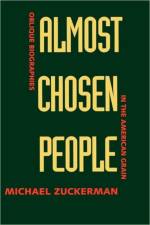
Few historians are bold enough to go after America's sacred cows in their very own pastures. But Michael Zuckerman is no ordinary historian, and this collection of his essays is no ordinary book.In his effort to remake the meaning of the American tradition, Zuckerman takes the entire sweep of American history for his province. The essays in this collection, including two never before published and a new autobiographical introduction, range from early New England settlements to the hallowed corridors of modern Washington. Among his subjects are Puritans and Southern gentry, Benjamin Franklin and Benjamin Spock, P. T. Barnum and Ronald Reagan. Collecting scammers and scoundrels, racists and rebels, as well as the purest genius, he writes to capture the unadorned American character.Recognized for his energy, eloquence, and iconoclasm, Zuckerman is known for provoking-and sometimes almost seducing-historians into rethinking their most cherished assumptions about the American past. Now his many fans, and readers of every persuasion, can newly appreciate the distinctive talents of one of America's most powerful social critics.
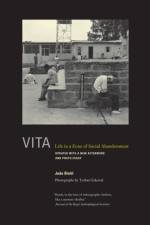
Zones of social abandonment are emerging everywhere in Brazil's big cities-places like Vita, where the unwanted, the mentally ill, the sick, and the homeless are left to die. This haunting, unforgettable story centers on a young woman named Catarina, increasingly paralyzed and said to be mad, living out her time at Vita. Anthropologist Joao Biehl leads a detective-like journey to know Catarina; to unravel the cryptic, poetic words that are part of the "e;dictionary"e; she is compiling; and to trace the complex network of family, medicine, state, and economy in which her abandonment and pathology took form.An instant classic, Vita has been widely acclaimed for its bold fieldwork, theoretical innovation, and literary force. Reflecting on how Catarina's life story continues, this updated edition offers the reader a powerful new afterword and gripping new photographs following Biehl and Eskerod's return to Vita. Anthropology at its finest, Vita is essential reading for anyone who is grappling with how to understand the conditions of life, thought, and ethics in the contemporary world.
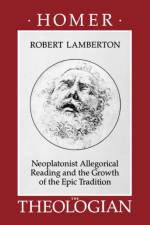
Here is the first survey of the surviving evidence for the growth, development, and influence of the Neoplatonist allegorical reading of the Iliad and Odyssey. Professor Lamberton argues that this tradition of reading was to create new demands on subsequent epic and thereby alter permanently the nature of European epic. The Neoplatonist reading was to be decisive in the birth of allegorical epic in late antiquity and forms the background for the next major extension of the epic tradition found in Dante.
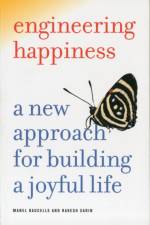
Manel Baucells and Rakesh Sarin have been conducting ground-breaking research on happiness for more than a decade, and in this book they distill their provocative findings into a lively, accessible guide for a wide audience of readers. Integrating their own research with the latest thinking in the behavioral and social sciences-including management science, psychology, and economics-they offer a new approach to the puzzle of happiness. Woven throughout with wisdom from the world's religions and literatures, Engineering Happiness has something to offer everyone-regardless of background, profession, or aspiration-who wants to better understand, control, and attain a more joyful life.* Shows how a few major principles can explain how happiness works and why it is so elusive* Demonstrates how the essence of attaining happiness is choice* Explores how to avoid happiness traps* Tells how to recognize happiness triggers in everyday life
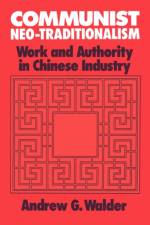
Based on official Chinese sources as well as intensive interviews with Hong Kong residents formerly employed in mainland factories, Andrew Walder's neo-traditional image of communist society in China will be of interest not only to those concerned with China and other communist countries, but also to students of industrial relations and comparative social science.
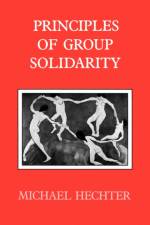
Social scientists have long recognized that solidarity is essential for such phenomena as social order, class, and ethnic consciousness, and the provision of collective goods. In presenting a new general theory of group solidarity, Michael Hechter here contends that it is indeed possible to build a theory of solidarity based on the action of rational individuals and in doing so he goes beyond the timeworn disciplinary boundaries separating the various social sciences.
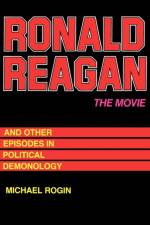
The fear of the subversive has governed American politics, from the racial conflicts of the early republic to the Hollywood anti-Communism of Ronald Reagan. Political monsters-the Indian cannibal, the black rapist, the demon rum, the bomb-throwing anarchist, the many-tentacled Communist conspiracy, the agents of international terrorism-are familiar figures in the dream life that so often dominates American political consciousness. What are the meanings and sources of these demons? Why does the American political imagination conjure them up? Michael Rogin answers these questions by examining the American countersubversive tradition.
The Golden Gate Bridge is one of the most beautiful and most photographed structures in the world. It's also the most deadly. Since it opened in 1937, more than 1,500 people have died jumping off the bridge, making it the top suicide site on earth. It's also the only international landmark without a suicide barrier. Weaving drama, tragedy, and politics against the backdrop of a world-famous city, The Final Leap is the first book ever written about Golden Gate Bridge suicides. John Bateson leads us on a fascinating journey that uncovers the reasons for the design decision that led to so many deaths, provides insight into the phenomenon of suicide, and examines arguments for and against a suicide barrier. He tells the stories of those who have died, the few who have survived, and those who have been affected-from loving families to the Coast Guard, from the coroner to suicide prevention advocates.
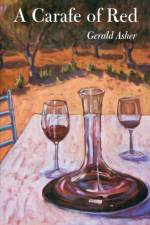
Every wine has a story. In this collection of elegantly written essays from the past thirty years, updated with a new introduction and endnotes, renowned author Gerald Asher informs wine enthusiasts with insightful, engrossing accounts of wines from Europe and America that offer just as much for those who simply enjoy vivid evocations of people and places. Asher puts wine in its context by taking the reader on a series of discursive journeys that start with the carafe at his elbow. In his introduction, Asher says, "e;Wine . . . draws on everything and leads everywhere."e; Whether the subject is a supposedly simple red wine shared in a Parisian cafe or a Napa Valley Cabernet tasted with its vintner, every essay in A Carafe of Red is as pleasurable as the wines themselves.
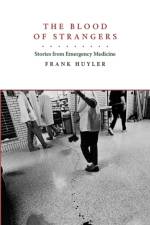
Reminiscent of Chekhov's stories, The Blood of Strangers is a visceral portrayal of a physician's encounters with the highly charged world of an emergency room. In this collection of spare and elegant stories, Dr. Frank Huyler reveals a side of medicine where small moments-the intricacy of suturing a facial wound, the bath a patient receives from her husband and daughter-interweave with the lives and deaths of the desperately sick and injured.The author presents an array of fascinating characters, both patients and doctors-a neurosurgeon who practices witchcraft, a trauma surgeon who unexpectedly commits suicide, a wounded murderer, a man chased across the New Mexico desert by a heat-seeking missile. At times surreal, at times lyrical, at times brutal and terrifying, The Blood of Strangers is a literary work that emerges from one of the most dramatic specialties of modern medicine. This deeply affecting first book has been described by one early reader as "e;the best doctor collection I have seen since William Carlos Williams's The Doctor Stories."e;
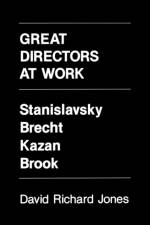
The subject of this book is theatre directing in four internationally famous instances. The four directorsKonstantin Stanislavsky, Bertolt Brecht, Elia Kazan, and Peter Brookall were monarchs of the profession in their time. Without their work, theatre in the twentieth centuryso often called the century of the director would have a radically different shape and meaning. The four men are also among the dozen or so modern directors whose theatrical achievements have become culture phenomena. In histories, theories, hagiographies, and polemics, these directors are conferred classic stature, as are the four plays on which they worked. Chekhovs The Seagull, Brechts Mother Courage and Her Children, and Williamss A Streetcar Named Desire have long been recognized, in the theatre and in the study, as masterpieces. They are anthologized, quoted, taught, parodied, read, and produced constantly and globally. The culturally conservative might question the presence of MaratiSade in such august company, but Peter Weisss play stands every chance of figuring in Western repertories, classroom study, and theatrical histories until well into the twenty-first century. In their quite different ways, these are all classics of that Western drama which is part of our immediate heritage.
How is religious experience to be identified, described, analyzed and explained? Is it independent of concepts, beliefs, and practices? How can we account for its authority? Under what conditions might a person identify his or her experience as religious? Wayne Proudfoot shows that concepts, beliefs, and linguistic practices are presupposed by the rules governing this identification of an experience as religious. Some of these characteristics can be understood by attending to the conditions of experience, among which are beliefs about how experience is to be explained.
Abonner på vårt nyhetsbrev og få rabatter og inspirasjon til din neste leseopplevelse.
Ved å abonnere godtar du vår personvernerklæring.