














Gjør som tusenvis av andre bokelskere
Abonner på vårt nyhetsbrev og få rabatter og inspirasjon til din neste leseopplevelse.
Ved å abonnere godtar du vår personvernerklæring.Du kan når som helst melde deg av våre nyhetsbrev.

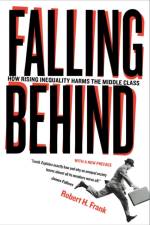
With a timely new foreword by Robert Frank, this groundbreaking book explores the very meaning of happiness and prosperity in America today. Although middle-income families don't earn much more than they did several decades ago, they are buying bigger cars, houses, and appliances. To pay for them, they spend more than they earn and carry record levels of debt. Robert Frank explains how increased concentrations of income and wealth at the top of the economic pyramid have set off "e;expenditure cascades"e; that raise the cost of achieving many basic goals for the middle class. Writing in lively prose for a general audience, Frank employs up-to-date economic data and examples drawn from everyday life to shed light on reigning models of consumer behavior. He also suggests reforms that could mitigate the costs of inequality. Falling Behind compels us to rethink how and why we live our economic lives the way we do.
Songs of Seoul is an ethnographic study of voice in South Korea, where the performance of Western opera, art songs, and choral music is an overwhelmingly Evangelical Christian enterprise. Drawing on fieldwork in churches, concert halls, and schools of music, Harkness argues that the European-style classical voice has become a specifically Christian emblem of South Korean prosperity. By cultivating certain qualities of voice and suppressing others, Korean Christians strive to personally embody the social transformations promised by their religion: from superstition to enlightenment; from dictatorship to democracy; from sickness to health; from poverty to wealth; from dirtiness to cleanliness; from sadness to joy; from suffering to grace. Tackling the problematic of voice in anthropology and across a number of disciplines, Songs of Seoul develops an innovative semiotic approach to connecting the materiality of body and sound, the social life of speech and song, and the cultural voicing of perspective and personhood.
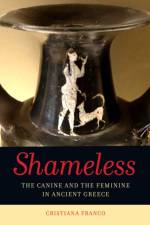
The figure of the dog is a paradox. As in so many cultures, past and present, the dog in ancient Greece was seen as the animal closest to humans, even as it elicited from them the most negative representations. Still a loaded term today, the word bitch not only signified shamelessness and a lack of self-control but was also exclusively figured as female. Woman and dogs in the Greek imagination were intimately intertwined, and in this careful, engaging analysis, Cristiana Franco explores the ancients' complex relationship with both. By analyzing the relationship between humans and dogs as depicted in a vast array of myths, proverbs, spontaneous metaphors, and comic jokes, Franco in particular shows how the symbolic overlap between dog and woman provided the conceptual tools to maintain feminine subordination. Intended for general readers as well as scholars, Shameless extends the boundaries of classics and anthropology, forming a model of the sensitive work that can be done to illuminate how deeply animals are imbricated in human history. The English translation has been revised and expanded from the original Italian edition, and it includes a new methodological appendix by the author that points the way toward future work in the emerging field of human-animal studies.
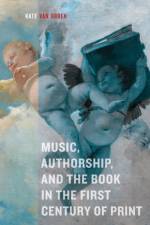
What does it mean to author a piece of music? What transforms the performance scripts written down by musicians into authored books? In this fascinating cultural history of Western music's adaptation to print, Kate van Orden looks at how musical authorship first developed through the medium of printing. When music printing began in the sixteenth century, publication did not always involve the composer: printers used the names of famous composers to market books that might include little or none of their music. Publishing sacred music could be career-building for a composer, while some types of popular song proved too light to support a reputation in print, no matter how quickly they sold. Van Orden addresses the complexities that arose for music and musicians in the burgeoning cultures of print, concluding that authoring books of polyphony gained only uneven cultural traction across a century in which composers were still first and foremost performers.
This volume is a comprehensive study of Vietnam's greatest and most controversial 20th century writer who died tragically in 1939 at the age of 28. Vu Trong Phung is known for a remarkable collection of politically provocative novels and sensational works of non-fiction reportage that were banned by the communist state from 1960 to 1986. Leading Vietnam scholar, Zinoman, resurrects the life and work of an important intellectual and author in order to reveal a neglected political project that is excluded from conventional accounts of modern Vietnamese political history. He sees Vu Trong Phung as a leading proponent of a localized republican tradition that opposed colonialism, communism, and unfettered capitalism-and that led both to the banning of his work and to the durability of his popular appeal in Vietnam today.
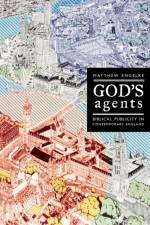
The British and Foreign Bible Society is one of the most illustrious Christian charities in the United Kingdom. Founded by evangelicals in the early nineteenth century and inspired by developments in printing technology, its goal has always been to make Bibles universally available. Over the past several decades, though, Bible Society has faced a radically different world, especially in its work in England. Where the Society once had a grateful and engaged reading public, it now faces apathy-even antipathy-for its cause. These days, it seems, no one in England wants a Bible, and no one wants other people telling them they should: religion is supposed to be a private matter. Undeterred, these Christians attempt to spark a renewed interest in the Word of God. They've turned away from publishing and toward publicity to "e;make the Bible heard."e; God's Agents is a study of how religion goes public in today's world. Based on over three years of anthropological research, Matthew Engelke traces how a small group of socially committed Christians tackle the challenge of publicity within what they understand to be a largely secular culture. In the process of telling their story, he offers an insightful new way to think about the relationships between secular and religious formations: our current understanding of religion needs to be complemented by greater attention to the process of generating publicity. Engelke argues that we are witnessing the dynamics of religious publicity, which allows us to see the ways in which conceptual divides such as public/private, religious/secular, and faith/knowledge are challenged and redefined by social actors on the ground.
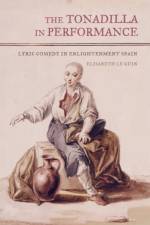
The tonadilla, a type of satiric musical skit popular on the public stages of Madrid during the late Enlightenment, has played a significant role in the history of music in Spain. This book, the first major study of the tonadilla in English, examines the musical, theatrical, and social worlds that the tonadilla brought together and traces the lasting influence this genre has had on the historiography of Spanish music. The tonadillas' careful constructions of musical populism provide a window onto the tensions among Enlightenment modernity, folkloric nationalism, and the politics of representation; their diverse, engaging, and cosmopolitan music is an invitation to reexamine tired old ideas of musical "e;Spanishness."e; Perhaps most radically of all, their satirical stance urges us to embrace the labile, paratextual nature of comic performance as central to the construction of history.
This engaging and easy-to-use natural history guidebook provides a thorough overview of native and honey bee biology and offers tools for identifying the most common bees of California and the Western United States. Full-color illustrations introduce readers to more than 30 genera of native bees, noting each one's needs and habits and placing them in their wider context. The author highlights bees' ties to our own lives, the food we eat, and the habitat we provide, and suggests ways to support bees in our own backyards. In addition to helping readers understand and distinguish among major groups of bees, this guide reveals how bees are an essential part of healthy ecosystem and how many plants, including important crop plants, depend on the pollination they provide. As growing evidence points to declining bee populations, this book offers critical information about the bond between plants and pollinators, and between humans and nature. Thoroughly researched and full of new insights into the ancient process of pollination, Field Guide to the Common Bees of California; Including Bees of the Western United States is invaluable for the window it opens onto the biodiversity, adaptive range, and complexity of invertebrate communities.
This book is an interdisciplinary primer on critical thinking and effective action for the future of our global agrifood system, based on an understanding of the system's biological and sociocultural roots. Key components of the book are a thorough analysis of the assumptions underlying different perspectives on problems related to food and agriculture around the world and a discussion of alternative solutions. David Cleveland argues that combining selected aspects of small-scale traditional agriculture with modern scientific agriculture can help balance our biological need for food with its environmental impact-and continue to fulfill cultural, social, and psychological needs related to food. Balancing on a Planet is based on Cleveland's research and engaging teaching about food and agriculture for more than three decades. It is a tool to help students, faculty, researchers, and interested readers understand debates about the current crisis and alternatives for the future.
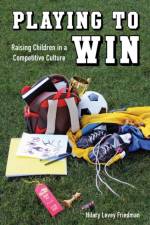
Playing to Win: Raising Children in a Competitive Culture follows the path of elementary school-age children involved in competitive dance, youth travel soccer, and scholastic chess. Why do American children participate in so many adult-run activities outside of the home, especially when family time is so scarce? By analyzing the roots of these competitive afterschool activities and their contemporary effects, Playing to Win contextualizes elementary school-age children's activities, and suggests they have become proving grounds for success in the tournament of life-especially when it comes to coveted admission to elite universities, and beyond. In offering a behind-the-scenes look at how "e;Tiger Moms"e; evolve, Playing to Win introduces concepts like competitive kid capital, the carving up of honor, and pink warrior girls. Perfect for those interested in childhood and family, education, gender, and inequality, Playing to Win details the structures shaping American children's lives as they learn how to play to win.
The capital of the U.S. Empire after World War II was not a city. It was an American suburb. In this innovative and timely history, Andrew Friedman chronicles how the CIA and other national security institutions created a U.S. imperial home front in the suburbs of Northern Virginia. In this covert capital, the suburban landscape provided a cover for the workings of U.S. imperial power, which shaped domestic suburban life. The Pentagon and the CIA built two of the largest office buildings in the country there during and after the war that anchored a new imperial culture and social world. As the U.S. expanded its power abroad by developing roads, embassies, and villages, its subjects also arrived in the covert capital as real estate agents, homeowners, builders, and landscapers who constructed spaces and living monuments that both nurtured and critiqued postwar U.S. foreign policy. Tracing the relationships among American agents and the migrants from Vietnam, El Salvador, Iran, and elsewhere who settled in the southwestern suburbs of D.C., Friedman tells the story of a place that recasts ideas about U.S. immigration, citizenship, nationalism, global interconnection, and ethical responsibility from the post-WW2 period to the present. Opening a new window onto the intertwined history of the American suburbs and U.S. foreign policy, Covert Capital will also give readers a broad interdisciplinary and often surprising understanding of how U.S. domestic and global histories intersect in many contexts and at many scales.American Crossroads, 37
In Seriously!, Cynthia Enloe, author of the groundbreaking analysis of globalization, Bananas, Beaches, and Bases, addresses two deeply gendered and contested questions: Who is taken seriously? And who gets to bestow the label "e;serious"e; on others? With a strategy of taking both women and gender dynamics seriously, Cynthia Enloe investigates the Dominique Strauss-Kahn affair and the banking crash of 2008, the subsequent recession, as well as UN peacekeeping and the ongoing Egyptian revolution. Each case study highlights the gritty experiences of women in diverse circumstances-in banks, on the job market, in war zones, and in revolutions. The results of taking women seriously are fresh insights into what fuels the cultures of hyper-risk taking, of sexual harassment, and the denial of women's post-war security.
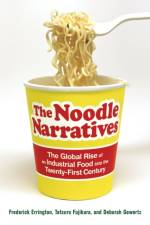
Tasty, convenient, and cheap, instant noodles are one of the most remarkable industrial foods ever. Consumed around the world by millions, they appeal to young and old, affluent and impoverished alike. The authors examine the history, manufacturing, marketing, and consumption of instant noodles. By focusing on three specific markets, they reveal various ways in which these noodles enable diverse populations to manage their lives. The first market is in Japan, where instant noodles have facilitated a major transformation of post-war society, while undergoing a seemingly endless tweaking in flavors, toppings, and packaging in order to entice consumers. The second is in the United States, where instant noodles have become important to many groups including college students, their nostalgic parents, and prison inmates. The authors also take note of "e;heavy users,"e; a category of the chronically hard-pressed targeted by U.S. purveyors. The third is in Papua New Guinea, where instant noodles arrived only recently and are providing cheap food options to the urban poor, all the while transforming them into aspiring consumers. Finally, this study examines the global "e;Big Food"e; industry. As one of the food system's singular achievements, the phenomenon of instant noodles provides insight into the pros and cons of global capitalist provisioning.
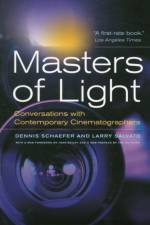
Through conversations held with fifteen of the most accomplished contemporary cinematographers, the authors explore the working world of the person who controls the visual look and style of a film. This reissue includes a new foreword by cinematographer John Bailey and a new preface by the authors, which bring this classic guide to cinematography, in print for more than twenty-five years, into the twenty-first century.
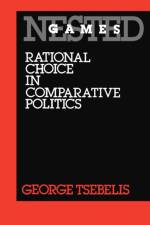
Clearly written and easily understood by the nonspecialist, Nested Games provides a systematic, empirically accurate, and theoretically coherent account of apparently irrational political actions.
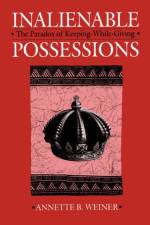
Inalienable Possessions tests anthropology's traditional assumptions about kinship, economics, power, and gender in an exciting challenge to accepted theories of reciprocity and marriage exchange. Focusing on Oceania societies from Polynesia to Papua New Guinea and including Australian Aborigine groups, Annette Weiner investigates the category of possessions that must not be given or, if they are circulated, must return finally to the giver. Reciprocity, she says, is only the superficial aspect of exchange, which overlays much more politically powerful strategies of "e;keeping-while-giving."e;The idea of keeping-while-giving places women at the heart of the political process, however much that process may vary in different societies, for women possess a wealth of their own that gives them power. Power is intimately involved in cultural reproduction, and Weiner describes the location of power in each society, showing how the degree of control over the production and distribution of cloth wealth coincides with women's rank and the development of hierarchy in the community. Other inalienable possessions, whether material objects, landed property, ancestral myths, or sacred knowledge, bestow social identity and rank as well. Calling attention to their presence in Western history, Weiner points out that her formulations are not limited to Oceania. The paradox of keeping-while-giving is a concept certain to influence future developments in ethnography and the theoretical study of gender and exchange.
The Pacific is not only the world's largest body of water; its vast expanse also includes an extraordinary number and diversity of oceanic islands, from Palau and the Marianas east of the Philippines to Cocos Island and the Galapagos west of the Americas. The isolation of these islands and the extreme distances between them long prevented scientists from studying their floras and faunas in a comparative context.But now George R. Zug, one of the world's foremost experts on the diverse reptiles and amphibians of the Pacific Basin, offers the first such systematic overview in more than half a century. Reptiles and Amphibians of the Pacific Islands is a compendium of frogs, lizards, snakes, and turtles living on these lands and in the adjacent waters of the oceanic islands in the tropical Pacific.The means to identify each species is included, along with entries that describe each animal's form, coloration, habitat, distribution, reproductive biology, and natural history. Color plates of more than 75 percent of the species also help to facilitate visual identification. This accessible and informative guide is the most comprehensive field guide available and will appeal to both novice sightseers and professional naturalists.
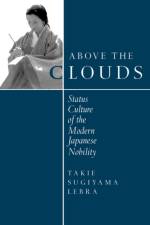
This latest work from Japanese-born anthropologist Takie Sugiyama Lebra is the first ethnographic study of the modern Japanese aristocracy. Established as a class at the beginning of the Meiji period, the kazoku ranked directly below the emperor and his family. Officially dissolved in 1947, this group of social elites is still generally perceived as nobility. Lebra gained entry into this tightly knit circle and conducted more than one hundred interviews with its members. She has woven together a reconstructive ethnography from their life histories to create an intimate portrait of a remote and archaic world.As Lebra explores the culture of the kazoku, she places each subject in its historical context. She analyzes the evolution of status boundaries and the indispensable role played by outsiders.But this book is not simply about the elite. It is also about commoners and how each stratum mirrors the other. Revealing previously unobserved complexities in Japanese society, it also sheds light on the universal problem of social stratification.
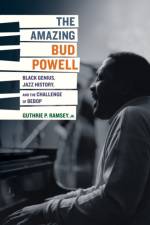
Bud Powell was not only one of the greatest bebop pianists of all time, he stands as one of the twentieth century's most dynamic and fiercely adventurous musical minds. His expansive musicianship, riveting performances, and inventive compositions expanded the bebop idiom and pushed jazz musicians of all stripes to higher standards of performance. Yet Powell remains one of American music's most misunderstood figures, and the story of his exceptional talent is often overshadowed by his history of alcohol abuse, mental instability, and brutalization at the hands of white authorities. In this first extended study of the social significance of Powell's place in the American musical landscape, Guthrie P. Ramsey, Jr. shows how the pianist expanded his own artistic horizons and moved his chosen idiom into new realms. Illuminating and multi-layered, The Amazing Bud Powell centralizes Powell's contributions as it details the collision of two vibrant political economies: the discourses of art and the practice of blackness.
No documentation of National Socialism can be undertaken without the explicit recognition that the "e;German Renaissance"e; promised by the Nazis culminated in unprecedented horror-World War II and the genocide of European Jewry. With The Third Reich Sourcebook, editors Anson Rabinbach and Sander L. Gilman present a comprehensive collection of newly translated documents drawn from wide-ranging primary sources, documenting both the official and unofficial cultures of National Socialist Germany from its inception to its defeat and collapse in 1945. Framed with introductions and annotations by the editors, the documents presented here include official government and party pronouncements, texts produced within Nazi structures, such as the official Jewish Cultural League, as well as documents detailing the impact of the horrors of National Socialism on those who fell prey to the regime, especially Jews and the handicapped. With thirty chapters on ideology, politics, law, society, cultural policy, the fine arts, high and popular culture, science and medicine, sexuality, education, and other topics, The Third Reich Sourcebook is the ultimate collection of primary sources on Nazi Germany.
Shenoute of Atripe: stern abbot, loquacious preacher, patron of the poor and scourge of pagans in fifth-century Egypt. This book studies his numerous Coptic writings and finds them to be the most important literary source for the study of society, economy and religion in late antique Egypt. The issues and concerns Shenoute grappled with on a daily basis, Ariel Lopez argues, were not local problems, unique to one small corner of the ancient world. Rather, they are crucial to interpreting late antiquity as a historical period-rural patronage, religious intolerance, the Christian care of the poor and the local impact of the late Roman state. His little known writings provide us not only with a rare opportunity to see the life of a holy man as he himself saw it, but also with a privileged window into his world. Lopez brings Shenoute to prominence as witness of and participant in the major transformations of his time.
The past two decades in the United States have seen an immense liberalization and expansion of women's roles in society. Recently, however, some women have turned away from the myriad, complex choices presented by modern life and chosen instead a Jewish orthodox tradition that sets strict and rigid guidelines for women to follow.Lynn Davidman followed the conversion to Orthodoxy of a group of young, secular Jewish women to gain insight into their motives. Living first with a Hasidic community in St. Paul, Minnesota, and then joining an Orthodox synagogue on the upper west side of Manhattan, Davidman pieced together a picture of disparate lives and personal dilemmas. As a participant observer in their religious resocialization and in interviews and conversations with over one hundred women, Davidman also sought a new perspective on the religious institutions that reach out to these women and usher them into the community of Orthodox Judaism.Through vivid and detailed personal portraits, Tradition in a Rootless World explores women's place not only in religious institutions but in contemporary society as a whole. It is a perceptive contribution that unites the study of religion, sociology, and women's studies.
Across the political spectrum, unwed fatherhood is denounced as one of the leading social problems of today. Doing the Best I Can is a strikingly rich, paradigm-shifting look at fatherhood among inner-city men often dismissed as "e;deadbeat dads."e; Kathryn Edin and Timothy J. Nelson examine how couples in challenging straits come together and get pregnant so quickly-without planning. The authors chronicle the high hopes for forging lasting family bonds that pregnancy inspires, and pinpoint the fatal flaws that often lead to the relationship's demise. They offer keen insight into a radical redefinition of family life where the father-child bond is central and parental ties are peripheral.Drawing on years of fieldwork, Doing the Best I Can shows how mammoth economic and cultural changes have transformed the meaning of fatherhood among the urban poor. Intimate interviews with more than 100 fathers make real the significant obstacles faced by low-income men at every step in the familial process: from the difficulties of romantic relationships, to decision-making dilemmas at conception, to the often celebratory moment of birth, and finally to the hardships that accompany the early years of the child's life, and beyond.
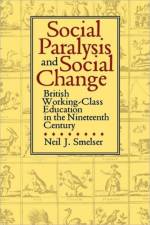
Neil Smelser's Social Paralysis and Social Change is one of the most comprehensive histories of mass education ever written. It tells the story of how working-class education in nineteenth-century Britain-often paralyzed by class, religious, and economic conflict-struggled forward toward change.This book is ambitious in scope. It is both a detailed history of educational development and a theoretical study of social change, at once a case study of Britain and a comparative study of variations within Britain. Smelser simultaneously meets the scholarly standards of historians and critically addresses accepted theories of educational change-"e;progress,"e; conflict, and functional theories. He also sheds new light on the process of secularization, the relations between industrialization and education, structural differentiation, and the role of the state in social change.This work marks a return for the author to the same historical arena-Victorian Britain-that inspired his classic work Social Change in the Industrial Revolution thirty-five years ago. Smelser's research has again been exhaustive. He has achieved a remarkable synthesis of the huge body of available materials, both primary and secondary.Smelser's latest book will be most controversial in its treatment of class as a primordial social grouping, beyond its economic significance. Indeed, his demonstration that class, ethnic, and religious groupings were decisive in determining the course of British working-class education has broad-ranging implications. These groupings remain at the heart of educational conflict, debate, and change in most societies-including our own-and prompt us to pose again and again the chronic question: who controls the educational terrain?
In his 1840 lectures on heroes, Thomas Carlyle, Victorian essayist and social critic, championed the importance of the individual in history. Published the following year and eventually translated into fifteen languages, this imaginative work of history, comparative religion, and literature is the most influential statement of a man who came to be thought of as a secular prophet and the "e;undoubted head of English letters"e; (Emerson). His vivid portraits of Muhammad, Dante, Luther, Napoleon-just a few of the individuals Carlyle celebrated for changing the course of world history-made On Heroes a challenge to the anonymous social forces threatening to control life during the Industrial Revolution.In eight volumes, The Strouse Edition will provide the texts of Carlyle's major works edited for the first time to contemporary scholarly standards. For the general reader, its detailed introductions and annotations will offer insight into the author's thought and a reconstruction of the diverse and often arcane Carlylean sources.
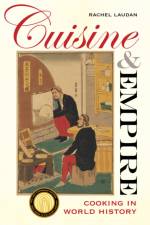
Rachel Laudan tells the remarkable story of the rise and fall of the world's great cuisines-from the mastery of grain cooking some twenty thousand years ago, to the present-in this superbly researched book. Probing beneath the apparent confusion of dozens of cuisines to reveal the underlying simplicity of the culinary family tree, she shows how periodic seismic shifts in "e;culinary philosophy"e;-beliefs about health, the economy, politics, society and the gods-prompted the construction of new cuisines, a handful of which, chosen as the cuisines of empires, came to dominate the globe. Cuisine and Empire shows how merchants, missionaries, and the military took cuisines over mountains, oceans, deserts, and across political frontiers. Laudan's innovative narrative treats cuisine, like language, clothing, or architecture, as something constructed by humans. By emphasizing how cooking turns farm products into food and by taking the globe rather than the nation as the stage, she challenges the agrarian, romantic, and nationalistic myths that underlie the contemporary food movement.
Neuropsychedelia examines the revival of psychedelic science since the "e;Decade of the Brain."e; After the breakdown of this previously prospering area of psychopharmacology, and in the wake of clashes between counterculture and establishment in the late 1960s, a new generation of hallucinogen researchers used the hype around the neurosciences in the 1990s to bring psychedelics back into the mainstream of science and society. This book is based on anthropological fieldwork and philosophical reflections on life and work in two laboratories that have played key roles in this development: a human lab in Switzerland and an animal lab in California. It sheds light on the central transnational axis of the resurgence connecting American psychedelic culture with the home country of LSD. In the borderland of science and religion, Neuropsychedelia explores the tensions between the use of hallucinogens to model psychoses and to evoke spiritual experiences in laboratory settings. Its protagonists, including the anthropologist himself, struggle to find a place for the mystical under conditions of late-modern materialism.
"e;Vivid, lively, and yet theoretically informed, a triumph of patient and sustained fieldwork. . . . Jankowski presents the gang and its members not as pathological departures from social norms, but as shrewd and resourceful operators."e;-Michael Lipsky, Massachusetts Institute of Technology"e;Islands in the Street fills a wide gap in the literature on gangs. Jankowski's innovative model of gang participation and organization is important and elegant, guaranteeing that this will be the book on gangs for the next ten years, if not longer."e;-Ruth Horowitz, University of Delaware
The Collected Poems of Philip Lamantia represents the lifework of the most visionary poet of the American postwar generation. Philip Lamantia (1927-2005) played a major role in shaping the poetics of both the Beat and the Surrealist movements in the United States. First mentored by the San Francisco poet Kenneth Rexroth, the teenage Lamantia also came to the attention of the French Surrealist leader Andre Breton, who, after reading Lamantia's youthful work, hailed him as a "e;voice that rises once in a hundred years."e; Later, Lamantia went "e;on the road"e; with Jack Kerouac and shared the stage with Allen Ginsberg at the famous Six Gallery reading in San Francisco, where Ginsburg first read "e;Howl."e; Throughout his life, Lamantia sought to extend and renew the visionary tradition of Romanticism in a distinctly American vernacular, drawing on mystical lore and drug experience in the process. The Collected Poems gathers not only his published work but also an extensive selection of unpublished or uncollected work; the editors have also provided a biographical introduction.
Human beings love to fictionalize evil--to terrorize each other with stories of defilement, horror, excruciating pain, and divine retribution. Beneath the surface of bewitchment and half-sick amusement, however, lies the realization that evil is real and that people must find a way to face and overcome it. What we require, Carl Jung suggested, is a morality of evil--a carefully thought out plan by which to manage the evil in ourselves, in others, and in whatever deities we posit. This book is not written from a Jungian perspective, but it is nonetheless an attempt to describe a morality of evil.One suspects that descriptions of evil and the so-called problem of evil have been thoroughly suffused with male interests and conditioned by masculine experience. This result could hardly have been avoided in a sexist culture, and recognizing the truth of such a claim does not commit us to condemn every male philosopher and theologian who has written on the problem. It suggests, rather, that we may get a clearer view of evil if we take a different standpoint. The standpoint I take here will be that of women; that is, I will attempt to describe evil from the perspective of womens experience.
Abonner på vårt nyhetsbrev og få rabatter og inspirasjon til din neste leseopplevelse.
Ved å abonnere godtar du vår personvernerklæring.