



















Gjør som tusenvis av andre bokelskere
Abonner på vårt nyhetsbrev og få rabatter og inspirasjon til din neste leseopplevelse.
Ved å abonnere godtar du vår personvernerklæring.Du kan når som helst melde deg av våre nyhetsbrev.

This beautifully written work sheds new light on the origins and nature of Mahayana Buddhism with close readings of four well-known texts-the Lotus Sutra, Diamond Sutra, Tathagatagarbha Sutra, and Vimalakirtinirdesa. Treating these sutras as literary works rather than as straightforward philosophic or doctrinal treatises, Alan Cole argues that these writings were carefully sculpted to undermine traditional monastic Buddhism and to gain legitimacy and authority for Mahayana Buddhism as it was veering away from Buddhism's older oral and institutional forms. His sophisticated and sustained analysis of the narrative structures and seductive literary strategies used in these sutras suggests that they were specifically written to encourage devotion to the written word instead of other forms of authority, be they human, institutional, or iconic.
In the year A.D. 8, Emperor Augustus sentenced the elegant, brilliant, and sophisticated Roman poet Ovid to exile-permanently, as it turned out-at Tomis, modern Constantza, on the Romanian coast of the Black Sea. The real reason for the emperor's action has never come to light, and all of Ovid's subsequent efforts to secure either a reprieve or, at the very least, a transfer to a less dangerous place of exile failed. Two millennia later, the agonized, witty, vivid, nostalgic, and often slyly malicious poems he wrote at Tomis remain as fresh as the day they were written, a testament for exiles everywhere, in all ages. The two books of the Poems of Exile, the Lamentations (Tristia) and the Black Sea Letters (Epistulae ex Ponto), chronicle Ovid's impressions of Tomis-its appalling winters, bleak terrain, and sporadic raids by barbarous nomads-as well as his aching memories and ongoing appeals to his friends and his patient wife to intercede on his behalf. While pretending to have lost his old literary skills and even to be forgetting his Latin, in the Poems of Exile Ovid in fact displays all his virtuoso poetic talent, now concentrated on one objective: ending the exile. But his rhetorical message falls on obdurately deaf ears, and his appeals slowly lose hope. A superb literary artist to the end, Ovid offers an authentic, unforgettable panorama of the death-in-life he endured at Tomis.
Drawing from engrossing survivors' accounts, many never before published, The Minsk Ghetto 1941-1943 recounts a heroic yet little-known chapter in Holocaust history. In vivid and moving detail, Barbara Epstein chronicles the history of a Communist-led resistance movement inside the Minsk ghetto, which, through its links to its Belarussian counterpart outside the ghetto and with help from others, enabled thousands of ghetto Jews to flee to the surrounding forests where they joined partisan units fighting the Germans. Telling a story that stands in stark contrast to what transpired across much of Eastern Europe, where Jews found few reliable allies in the face of the Nazi threat, this book captures the texture of life inside and outside the Minsk ghetto, evoking the harsh conditions, the life-threatening situations, and the friendships that helped many escape almost certain death. Epstein also explores how and why this resistance movement, unlike better known movements at places like Warsaw, Vilna, and Kovno, was able to rely on collaboration with those outside ghetto walls. She finds that an internationalist ethos fostered by two decades of Soviet rule, in addition to other factors, made this extraordinary story possible.
A surprising number of Jews lived, literally and figuratively, "e;beyond the Pale"e; of Jewish Settlement in tsarist Russia during the half-century before the Revolution of 1917. Thanks to the availability of long-closed Russian archives, along with a wide range of other sources, Benjamin Nathans reinterprets the history of the Russian-Jewish encounter.In the wake of Russia's "e;Great Reforms,"e; Nathans writes, a policy of selective integration stimulated social and geographic mobility among the empire's Jews. The reaction that culminated, toward the turn of the century, in ethnic restrictions on admission to universities, the professions, and other institutions of civil society reflected broad anxieties that Russians were being placed at a disadvantage in their own empire. Nathans's conclusions about the effects of selective integration and the Russian-Jewish encounter during this formative period will be of great interest to all students of modern Jewish and modern Russian history.
This innovative study sheds new light on one of the most spectacular changes to occur in late antiquity-the rise of pilgrimage all over the Christian world-by setting the phenomenon against the wide background of the political and theological debates of the time. Asking how the emerging notion of a sacred geography challenged the leading intellectuals and ecclesiastical authorities, Brouria Bitton-Ashkelony deftly reshapes our understanding of early Christian mentalities by unraveling the process by which a territory of grace became a territory of power. Examining ancient writers' responses to the rising practice of pilgrimage, Bitton-Ashkelony offers a nuanced reading of their thinking on the merits and the demerits of pilgrimage, revealing theological and ecclesiastical motivations that have been overlooked, and questioning the long-held assumption of scholars that pilgrimage was only a popular, not an elite, religious practice. In addition to Greek and Latin sources, she includes Syriac material, which allows her to build a rich picture of the emerging theology of landscape that took shape over the fourth to sixth centuries.
This authoritative and sweeping compendium, the second volume in Getzel Cohen's organized survey of the Greek settlements founded or refounded in the Hellenistic period, provides historical narratives, detailed references, citations, and commentaries on all the settlements in Syria, The Red Sea Basin, and North Africa from 331 to 31 BCE. Organized geographically, the volume pulls together discoveries and debates from dozens of widely scattered archaeological and epigraphic projects. Cohen's magisterial breadth of focus enables him to provide more than a compilation of information; the volume also contributes to ongoing questions and will point the way toward new avenues of inquiry.
Energy shortages, climate change, and the debate over national security have thrust oil policy to the forefront of American politics. How did Americans grow so dependent on petroleum, and what can we learn from our history that will help us craft successful policies for the future? In this timely and absorbing book, Paul Sabin challenges us to see politics and law as crucial forces behind the dramatic growth of the U.S. oil market during the twentieth century. Using pre-World War II California as a case study of oil production and consumption, Sabin demonstrates how struggles in the legislature and courts over property rights, regulatory law, and public investment determined the shape of the state's petroleum landscape. Sabin provides a powerful corrective to the enduring myth of "e;free markets"e; by demonstrating how political decisions affected the institutions that underlie California's oil economy and how the oil market and price structure depend significantly on the ways in which policy questions were answered before World War II. His concise and probing analysis casts fresh light on the historical relationship between business and government and on the origins of contemporary problems such as climate change and urban sprawl. Incisive, engaging, and meticulously researched, Crude Politics illuminates an important chapter in U.S. environmental, legal, business, and political history and the history of the American West.
In this impassioned and persuasive book, Bill Ivey, the former chairman of the National Endowment for the Arts, assesses the current state of the arts in America and finds cause for alarm. Even as he celebrates our ever-emerging culture and the way it enriches our lives here at home while spreading the dream of democracy around the world, he points to a looming crisis. The expanding footprint of copyright, an unconstrained arts industry marketplace, and a government unwilling to engage culture as a serious arena for public policy have come together to undermine art, artistry, and cultural heritage-the expressive life of America. In eight succinct chapters, Ivey blends personal and professional memoir, policy analysis, and deeply held convictions to explore and define a coordinated vision for art, culture, and expression in American life.
As a sustained analysis of the connections between narrative structure and meaning in the History of the Peloponnesian War, Carolyn Dewald's study revolves around a curious aspect of Thucydides' work: the first ten years of the war's history are formed on principles quite different from those shaping the years that follow. Although aspects of this change in style have been recognized in previous scholarship, Dewald has rigorously analyzed how its various elements are structured, used, and related to each other. Her study argues that these changes in style and organization reflect how Thucydides' own understanding of the war changed over time. Throughout, however, the History's narrative structure bears witness to Thucydides' dialogic efforts to depict the complexities of rational choice and behavior on the part of the war's combatants, as well as his own authorial interest in accuracy of representation. In her introduction and conclusion, Dewald explores some ways in which details of style and narrative structure are central to the larger theoretical issue of history's ability to meaningfully represent the past. She also surveys changes in historiography in the past quarter-century and considers how Thucydidean scholarship has reflected and responded to larger cultural trends.
This elegantly written book introduces a new perspective on Indic religious history by rethinking the role of mantra in Vedic ritual. In Bringing the Gods to Mind, Laurie Patton takes a new look at mantra as "e;performed poetry"e; and in five case studies draws a portrait of early Indian sacrifice that moves beyond the well-worn categories of "e;magic"e; and "e;magico-religious"e; thought in Vedic sacrifice. Treating Vedic mantra as a sophisticated form of artistic composition, she develops the idea of metonymy, or associational thought, as a major motivator for the use of mantra in sacrificial performance. Filling a long-standing gap in our understanding, her book provides a history of the Indian interpretive imagination and a study of the mental creativity and hermeneutic sophistication of Vedic religion.
Almost every day of the year a film festival takes place somewhere in the world--from sub-Saharan Africa to the Land of the Midnight Sun. Sundance to Sarajevo is a tour of the world's film festivals by an insider whose familiarity with the personalities, places, and culture surrounding the cinema makes him uniquely suited to his role. Kenneth Turan, film critic for the Los Angeles Times, writes about the most unusual as well as the most important film festivals, and the cities in which they occur, with an eye toward the larger picture. His lively narrative emphasizes the cultural, political, and sociological aspects of each event as well as the human stories that influence the various and telling ways the film world and the real world intersect.Of the festivals profiled in detail, Cannes and Sundance are obvious choices as the biggest, brashest, and most influential of the bunch. The others were selected for their ability to open a window onto a wider, more diverse world and cinema's place in it. Sometimes, as with Sarajevo and Havana, film is a vehicle for understanding the international political community's most vexing dilemmas. Sometimes, as with Burkina Faso's FESPACO and Pordenone's Giornate del Cinema Muto, it's a chance to examine the very nature of the cinematic experience. But always the stories in this book show us that film means more and touches deeper chords than anyone might have expected. No other book explores so many different festivals in such detail or provides a context beyond the merely cinematic.
In this pioneering study, David L. Howell looks beneath the surface structures of the Japanese state to reveal the mechanism by which markers of polity, status, and civilization came together over the divide of the Meiji Restoration of 1868. Howell illustrates how a short roster of malleable, explicitly superficial customs-hairstyle, clothing, and personal names- served to distinguish the "e;civilized"e; realm of the Japanese from the "e;barbarian"e; realm of the Ainu in the Tokugawa era. Within the core polity, moreover, these same customs distinguished members of different social status groups from one another, such as samurai warriors from commoners, and commoners from outcasts.
Marks presents the field of molecular anthropology-a synthesis of the holistic approach of anthropology with the reductive approach of molecular genetics-as a way of improving our understanding of the science of human evolution. This iconoclastic, witty, and extremely readable book illuminates the deep background of our place in nature and asks us to think critically about what science is, and what passes for it, in modern society.
David R. Roediger's powerful book argues that in its political workings, its distribution of advantages, and its unspoken assumptions, the United States is a "e;still white"e; nation. Race is decidedly not over. The critical portraits of contemporary icons that lead off the book--Rush Limbaugh, Bill Clinton, O.J. Simpson, and Rudolph Giuliani--insist that continuities in white power and white identity are best understood by placing the recent past in historical context. Roediger illuminates that history in an incisive critique of the current scholarship on whiteness and an account of race-transcending radicalism exemplified by vanguards such as W.E.B. Du Bois and John Brown. He shows that, for all of its staying power, white supremacy in the United States has always been a pursuit rather than a completed project, that divisions among whites have mattered greatly, and that "e;nonwhite"e; alternatives have profoundly challenged the status quo.Colored White reasons that, because race is a matter of culture and politics, racial oppression will not be solved by intermarriage or demographic shifts, but rather by political struggles that transform the meaning of race--especially its links to social and economic inequality. This landmark work considers the ways that changes in immigration patterns, the labor force, popular culture, and social movements make it possible--though far from inevitable--that the United States might overcome white supremacy in the twenty-first century. Roediger's clear, lively prose and his extraordinary command of the literature make this one of the most original and generative contributions to the study of race and ethnicity in the United States in many decades.
Radio Goes to War is the first comprehensive and in-depth look at the role of domestic radio in the United States during the Second World War. As this study convincingly demonstrates, radio broadcasting played a crucial role both in government propaganda and within the context of the broader cultural and political transformations of wartime America. Gerd Horten's absorbing narrative argues that no medium merged entertainment, propaganda, and advertising more effectively than radio. As a result, America's wartime radio propaganda emphasized an increasingly corporate and privatized vision of America's future, with important repercussions for the war years and the postwar era. Examining radio news programs, government propaganda shows, advertising, soap operas, and comedy programs, Horten situates radio wartime propaganda in the key shift from a Depression-era resentment of big business to the consumer and corporate culture of the postwar period.
This inspiring, engagingly written book, with its personal approach and global scope, is the first to explore women's increasingly influential role in the wine industry, traditionally a very male-dominated domain. Women of Wine draws on interviews with dozens of leading women winemakers, estate owners, professors, sommeliers, wine writers, and others in the United States, the United Kingdom, France, Italy, Australia, New Zealand, and elsewhere to create a fascinating mosaic of the women currently shaping the wine world that also offers a revealing insiders' look at the wine industry. To set the stage, Ann B. Matasar chronicles the historical barriers to women's participation in the industry, reviews post-World War II changes that created new opportunities for them, and pays tribute to a few extraordinary nineteenth-century women who left their mark on wine despite the odds against them. She then turns to her primary topic: an accessible discussion of women associated with some of the most prestigious wineries and institutions in both the Old and New Worlds that emphasizes their individual and collective contributions. Matasar also considers issues of importance to women throughout the business world including mentors, networking, marriage, family, education, self-employment versus the corporate life, and risk taking.
American Bison combines the latest scientific information and one man's personal experience in an homage to one of the most magnificent animals to have roamed America's vast, vanished grasslands. Dale F. Lott, a distinguished behavioral ecologist who was born on the National Bison Range and has studied the buffalo for many years, relates what is known about this iconic animal's life in the wild and its troubled history with humans. Written with unusual grace and verve, American Bison takes us on a journey into the bison's past and shares a compelling vision for its future, offering along the way a valuable introduction to North American prairie ecology. We become Lott's companions in the field as he acquaints us with the social life and physiology of the bison, sharing stories about its impressive physical prowess and fascinating relationships. Describing the entire grassland community in which the bison live, he writes about the wolves, pronghorn, prairie dogs, grizzly bears, and other animals and plants, detailing the interdependent relationships among these inhabitants of a lost landscape. Lott also traces the long and dramatic relationship between the bison and Native Americans, and gives a surprising look at the history of the hide hunts that delivered the coup de grace to the already dwindling bison population in a few short years. This book gives us a peek at the rich and unique ways of life that evolved in the heart of America. Lott also dismantles many of the myths we have created about these ways of life, and about the bison in particular, to reveal the animal itself: ruminating, reproducing, and rutting in its full glory. His portrait of the bison ultimately becomes a plea to conserve its wildness and an eloquent meditation on the importance of the wild in our lives.
This magnificently produced atlas provides a unique visual survey of the profound economic, political, and social changes taking place in China, as well as their implications for the world at large. China has the world's fastest-growing economy and is the second-largest trading nation. With its pro-entrepreneurial outlook and population of 1.3 billion, it offers unique opportunities for domestic and overseas investors. This dynamic volume provides an abundance of information on China's new wealth, growing unemployment, mass migration to the cities, and trade disputes. Completely Revised and Updated: * Vivid full-color maps convey a wealth of information quickly and efficiently * Comprehensive information on China's population, employment, agriculture, industry, and economics Copub: Myriad Editions Limited
This fast-paced and timely book from Vijay Prashad is the best critical primer to the Middle East conflicts today, from Syria and Saudi Arabia to the chaos in Turkey. Mixing thrilling anecdotes from street-level reporting that give readers a sense of what is at stake with a birds-eye view of the geopolitics of the region and the globe, Prashad guides us through the dramatic changes in players, politics, and economics in the Middle East over the last five years. ';The Arab Spring was defeated neither in the byways of Tahrir Square nor in the souk of Aleppo,' he explains. ';It was defeated roundly in the palaces of Riyadh and Ankara as well as in Washington, DC and Paris.' The heart of this book explores the turmoil in Iraq, Syria, and Lebanoncountries where ISIS emerged and is thriving. It is here that the story of the region rests. What would a post-ISIS Middle East look like? Who will listen to the grievances of the people? Can there be another future for the region that is not the return of the security state or the continuation of monarchies? Placing developments in the Middle East in the broader context of revolutionary history, The Death of the Nation tackles these critical questions.
At the turn of the twentieth century, two distinct, yet at times overlapping, male same-sex sexual subcultures had emerged in the Pacific Northwest: one among the men and boys who toiled in the region's logging, fishing, mining, farming, and railroad-building industries; the other among the young urban white-collar workers of the emerging corporate order. Boag draws on police logs, court records, and newspaper accounts to create a vivid picture of the lives of these men and youths--their sexual practices, cultural networks, cross-class relations, variations in rural and urban experiences, and ethnic and racial influences.
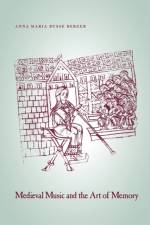
This bold challenge to conventional notions about medieval music disputes the assumption of pure literacy and replaces it with a more complex picture of a world in which literacy and orality interacted. Asking such fundamental questions as how singers managed to memorize such an enormous amount of music and how music composed in the mind rather than in writing affected musical style, Anna Maria Busse Berger explores the impact of the art of memory on the composition and transmission of medieval music. Her fresh, innovative study shows that although writing allowed composers to work out pieces in the mind, it did not make memorization redundant but allowed for new ways to commit material to memory. Since some of the polyphonic music from the twelfth century and later was written down, scholars have long assumed that it was all composed and transmitted in written form. Our understanding of medieval music has been profoundly shaped by German philologists from the beginning of the last century who approached medieval music as if it were no different from music of the nineteenth century. But Medieval Music and the Art of Memory deftly demonstrates that the fact that a piece was written down does not necessarily mean that it was conceived and transmitted in writing. Busse Berger's new model, one that emphasizes the interplay of literate and oral composition and transmission, deepens and enriches current understandings of medieval music and opens the field for fresh interpretations.
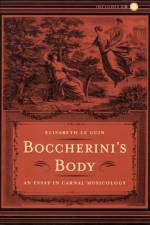
In this elegant study of the works of the undeservedly neglected composer Luigi Boccherini, Elisabeth Le Guin uses knowledge gleaned from her own playing of the cello as the keystone of her original approach to the relationship between music and embodiment. In analyzing the striking qualities of Boccherini's music-its virtuosity, repetitiveness, obsessively nuanced dynamics, delicate sonorities, and rich palette of melancholy affects-Le Guin develops a historicized critical method based on the embodied experience of the performer. In the process, she redefines the temperament of the musical Enlightenment as one characterized by urgent, volatile inquiries into the nature of the self. A CD of sound examples, performed by the author and her string quartet, is included with the book.
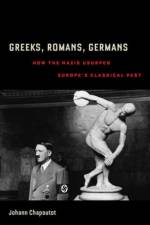
Much has been written about the conditions that made possible Hitlers rise and the Nazi takeover of Germany, but when we tell the story of the National Socialist Party, should we not also speak of Julius Caesar and Pericles? Greeks, Romans, Germans argues that to fully understand the racist, violent end of the Nazi regime, we must examine its appropriation of the heroes and lessons of the ancient world. When Hitler told the assembled masses that they were a people with no past, he meant that they had no past following their humiliation in World War I of which to be proud. The Nazis constant use of classical antiquityin official speeches, film, state architecture, the press, and state-sponsored festivitiesconferred on them the prestige and heritage of Greece and Rome that the modern German people so desperately needed. At the same time, the lessons of antiquity served as a warning: Greece and Rome fell because they were incapable of protecting the purity of their blood against mixing and infiltration. To regain their rightful place in the world, the Nazis had to make all-out war on Germanys enemies, within and without.
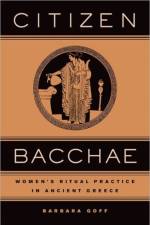
What activities did the women of ancient Greece perform in the sphere of ritual, and what were the meanings of such activities for them and their culture? By offering answers to these questions, this study aims to recover and reconstruct an important dimension of the lived experience of ancient Greek women. A comprehensive and sophisticated investigation of the ritual roles of women in ancient Greece, it draws on a wide range of evidence from across the Greek world, including literary and historical texts, inscriptions, and vase-paintings, to assemble a portrait of women as religious and cultural agents, despite the ideals of seclusion within the home and exclusion from public arenas that we know restricted their lives. As she builds a picture of the extent and diversity of women's ritual activity, Barbara Goff shows that they were entrusted with some of the most important processes by which the community guaranteed its welfare. She examines the ways in which women's ritual activity addressed issues of sexuality and civic participation, showing that ritual could offer women genuinely alternative roles and identities even while it worked to produce wives and mothers who functioned well in this male-dominated society. Moving to more speculative analysis, she discusses the possibility of a women's subculture focused on ritual and investigates the significance of ritual in women's poetry and vase-paintings that depict women. She also includes a substantial exploration of the representation of women as ritual agents in fifth-century Athenian drama.
By the second or third day that you're homeless, in the car with all your clothes, your pots and pans, everything, having to wash yourself in a public rest room, you logically start to feel dirty. You prefer to use the drive-through [at fast-food restaurants] where no one will see you. You begin to hide your family.Invisible NationMore than 2.5 million children are homeless in the United States every year. In every state, children are living packed in with relatives, or in cars, or motel rooms, or emergency shelters, the only constant being too many people in too little space. In a vividly-written narrative, experienced journalist RichardSchweidtakes us on a spirited journey through this invisiblenation, giving us front-row dispatches. Based on in-depth reporting from five major cities,InvisibleNationlooks backward at the historical context of family homelessness, as well as forward at what needs to be done to alleviate this widespread, although often hidden, poverty.InvisibleNationis a riveting must-read for anyone who wants to know what is happening to the millions of families living at the bottom of the economy.
Placing meanings of health and disease at the center of modern Chinese consciousness, Ruth Rogaski reveals how hygiene became a crucial element in the formulation of Chinese modernity in the nineteenth and twentieth centuries. Rogaski focuses on multiple manifestations across time of a single Chinese concept, weisheng-which has been rendered into English as "e;hygiene,"e; "e;sanitary,"e; "e;health,"e; or "e;public health"e;-as it emerged in the complex treaty-port environment of Tianjin. Before the late nineteenth century, weisheng was associated with diverse regimens of diet, meditation, and self-medication. Hygienic Modernity reveals how meanings of weisheng, with the arrival of violent imperialism, shifted from Chinese cosmology to encompass such ideas as national sovereignty, laboratory knowledge, the cleanliness of bodies, and the fitness of races: categories in which the Chinese were often deemed lacking by foreign observers and Chinese elites alike.
Presidential campaigns of the twenty-first century were not the first to mobilize an array of new media forms in efforts to gain electoral victory. In Politicking and Emergent Media, distinguished historian Charles Musserlooks at four US presidential campaigns during the long 1890s (18881900) as Republicans and Democrats deployed a variety of media forms to promote their candidates and platforms. New Yorkthe crucial swing state as well as the home of Wall Street, Tammany Hall, and prominent media industriesbecame the site of intense struggle as candidates argued over trade issues, currency standards, and a new overseas empire. If the city's leading daily newspapers were mostly Democratic as the decade began, Republicans eagerly exploited alternative media opportunities. Using the stereopticon (a modernized magic lantern), they developed the first campaign documentaries. Soon they were exploiting motion pictures, the phonograph, and telephone in surprising and often successful ways. Brimming with rich historical details, Musser's remarkable tale reveals the political forces driving the emergence of modern media.
Making Money, Making Musicoffers tools to encourage creative and adaptive entrepreneurship in the music business. Written for the classroom and the workplace, it introduces readers to core principles and processes and shows how to apply them adaptively to new contexts, facilitating a deeper understanding of how and why things work in the music business.By applying essential concepts to a variety of real-life situations, readers improve their capacity to critically analyze and solve problems and to predict where music and money will converge in a rapidly evolving culture and marketplace.
Making New Music in Cold War Poland presents a social analysis of new music dissemination at the Warsaw Autumn International Festival of Contemporary Music, one of the most important venues for East-West cultural contact during the Cold War. In this incisive study, Lisa Jakelski examines the festival's institutional organization, negotiations among its various actors, and its reception in Poland, while also considering the festival's worldwide ramifications, particularly the ways that it contributed to the cross-border movement of ideas, objects, and people (including composers, performers, official festival guests, and tourists). This book explores social interactions within institutional frameworks and how these interactions shaped the practices, values, and concepts associated with new music.
Part armchair travelogue, part guide book, this projected three-volume series-divided into the western, central, and eastern United States-will introduce readers to all 155 national forests across the country. This Land is the only comprehensive field guide that describes the natural features, wildernesses, scenic drives, campgrounds, and hiking trails of our national forests, many of which-while little known and sparsely visited-boast features as spectacular as those found in our national parks and monuments. Each entry includes logistical information about size and location, facilities, attractions, and associated wilderness areas. For about half of the forests, Robert H. Mohlenbrock has provided sidebars on the biological or geological highlights, drawn from the "e;This Land"e; column that he has written for Natural History magazine since 1984. Superbly illustrated with color photographs, botanical drawings, and maps, this book is loaded with information, clearly written, and easy to use. This volume covers national forests in: Alabama, Florida, Georgia, Illinois, Indiana, Kentucky, Maine, Michigan, Mississippi, New Hampshire, New York, North Carolina, Ohio, Pennsylvania, Puerto Rico, South Carolina, Tennessee, Vermont, Virginia, West Virginia, Wisconsin
Abonner på vårt nyhetsbrev og få rabatter og inspirasjon til din neste leseopplevelse.
Ved å abonnere godtar du vår personvernerklæring.