











Gjør som tusenvis av andre bokelskere
Abonner på vårt nyhetsbrev og få rabatter og inspirasjon til din neste leseopplevelse.
Ved å abonnere godtar du vår personvernerklæring.Du kan når som helst melde deg av våre nyhetsbrev.

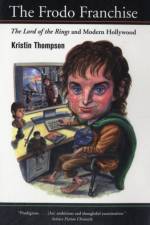
"e;Once in a lifetime."e; The phrase comes up over and over from the people who worked on Peter Jackson's The Lord of the Rings. The film's seventeen Oscars, record-setting earnings, huge fan base, and hundreds of ancillary products attest to its importance and to the fact that Rings is far more than a film. Its makers seized a crucial moment in Hollywood-the special effects digital revolution plus the rise of "e;infotainment"e; and the Internet-to satisfy the trilogy's fans while fostering a huge new international audience. The resulting franchise of franchises has earned billions of dollars to date with no end in sight. Kristin Thompson interviewed seventy-six people to examine the movie's scripting and design and the new technologies deployed to produce the films, video games, and DVDs. She demonstrates the impact Rings had on the companies that made it, on the fantasy genre, on New Zealand, and on independent cinema. In fast-paced, compulsively readable prose, she affirms Jackson's Rings as one the most important films ever made.
This thorough and meticulous study, the result of nearly a quarter-century of research, examines the island biogeography of plants on continental islands in Barkley Sound, British Columbia. Invaluable both because of its geographical setting and because of the duration of the study, Plants on Islands summarizes the diversity, dynamics, and distribution of the approximately three hundred species of plants on more than two hundred islands. Martin Cody uses his extensive data set to test various aspects of island biogeographic theory. His thoughtful analysis, constrained by taxon and region, elucidates and enhances the understanding of the biogeographic patterns and dynamics. He provides an overview of the basic theory, concepts, and analytical tools of island biogeography. Also discussed are island relaxation to lower equilibrium species numbers post-isolation, plant distributions variously limited by island area, isolation and climatic differences, adaptation to local abiotic and biotic environments within islands, and the evolution of different island phenotypes. The book concludes with a valuable consideration of equilibrium concepts and of the interplay of coexistence and competition. Certain to challenge, Plants on Islands is among the first books to critically analyze the central tenets of the theory of island biogeography.
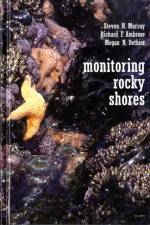
Monitoring changes in the intertidal zone of rocky shores has never been more critical. This sensitive habitat at the interface of land and ocean may well be the marine equivalent of the canary in a coal mine as we advance into an era of global climate change. This handbook describes effective methods and procedures for monitoring the ecological and environmental status of these areas. Written by three collaborating authors with extensive field experience, it provides critical discussions and evaluation of the various sampling techniques and field procedures for studies of intertidal macroinvertebrates, seaweeds, and seagrasses. Rather than prescribing standard protocols or procedures, the authors break down the decision-making process into various elements so investigators can become aware of the advantages and disadvantages of choosing a particular method or approach. Chapters discuss topics such as site selection, field sampling layouts and designs, selection of sampling units, nondestructive and destructive methods of quantifying abundance, and methods for measuring age, growth rates, size, structure, and reproductive condition.
Throughout his distinguished career, Philip Brett wrote about the music of the Tudor period. He carried out pathbreaking work on the life and music of William Byrd (c.1540-1623), both as an editor and a historian. He also studied other composers working during the period, including John Taverner, Thomas Tallis, Orlando Gibbons, and Thomas Weelkes. Collecting these influential essays together for the first time, this volume is a tribute to Brett's agile mind and to his incomparable skill at synthesizing history and musical analysis.Byrd was a prominent court composer, but also a Catholic. Besides important instrumental music and English songs, he wrote a great deal of sacred music, some for his Protestant patrons, and some for his fellow Catholics who celebrated mass in secret. Ranging from the report of Brett's findings on the Paston manuscripts, an unpublished round-table paper that he delivered a few months before his untimely death, to his monograph-length study of Byrd's magnum opus, Gradualia, the essays collected here consider both sacred and secular music, and vocal and instrumental traditions, providing an intimate glimpse into what was unique about Byrd and his music. Elegantly written, with the particular brilliance for which Brett was known, this book opens a fascinating window onto one of the most fruitful periods of English musical history.
This remarkable book shines a fierce light on the current state of liberty and shows how longstanding restraints against tyranny-and the rights of habeas corpus, trial by jury, and due process of law, and the prohibition of torture-are being abridged. In providing a sweeping history of Magna Carta, the source of these protections since 1215, this powerful book demonstrates how these ancient rights are repeatedly laid aside when the greed of privatization, the lust for power, and the ambition of empire seize a state. Peter Linebaugh draws on primary sources to construct a wholly original history of the Great Charter and its scarcely-known companion, the Charter of the Forest, which was created at the same time to protect the subsistence rights of the poor.
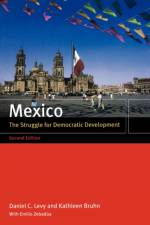
This engaging book provides a broad and accessible analysis of Mexico's contemporary struggle for democratic development. Now completely revised, it brings up to date issues ranging from electoral reform and accountability to drug trafficking, migration, and NAFTA. It also considers the rapidly changing role of Mexico's mass and elite groups, and its national institutions, including the media, the military, and the Church.
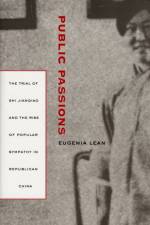
In 1935, a Chinese woman by the name of Shi Jianqiao murdered the notorious warlord Sun Chuanfang as he prayed in a Buddhist temple. This riveting work of history examines this well-publicized crime and the highly sensationalized trial of the killer. In a fascinating investigation of the media, political, and judicial records surrounding this cause celebre, Eugenia Lean shows how Shi Jianqiao planned not only to avenge the death of her father, but also to attract media attention and galvanize public support. Lean traces the rise of a new sentiment-"e;public sympathy"e;-in early twentieth-century China, a sentiment that ultimately served to exonerate the assassin. The book sheds new light on the political significance of emotions, the powerful influence of sensational media, modern law in China, and the gendered nature of modernity.
This vitally important expose shows how the Bush administration has systematically misled Americans on a wide range of scientific issues affecting public health, foreign policy, and the environment by ignoring, suppressing, manipulating, or even distorting scientific research. It is the first book to focus exclusively on how this explosive issue has played out during the Presidency of George W. Bush and the first to comprehensively document his administration's abuses of science. In 2001, a group of eminent American scientists affiliated with the Union of Concerned Scientists (UCS) contacted Seth Shulman, an experienced investigative journalist, to look into charges of serious mishandling of scientific information in the current administration. Shulman's investigation resulted in the groundbreaking report "e;Restoring Scientific Integrity in Policy Making,"e; which served as the basis for a highly publicized UCS scientists' statement accusing the Bush administration of a misuse of science that was signed by dozens of Nobel laureates, National Medal of Science recipients, and members of the National Academy of Sciences. To date, more than 8,000 scientists across the country have signed the statement based upon Shulman's reporting. This book, drawing upon scores of interviews and including never-released information, goes beyond the UCS report to document the Bush administration's suppression and distortion of science, bringing this issue to a wider audience.Undermining Science covers:* The Bush administration's abuse and misuse of science in areas including stem cell research, AIDS prevention, environmental protection, the Iraq war, the teaching of evolution, and global warming; * The administration's use of political litmus tests in selecting administrators for science-based agencies and in selecting scientists on federal advisory committees;* The dangerous consequences of the Bush administration's war on science for the caliber and integrity of the nation's scientific research. Shulman explains that, by knowingly misrepresenting and suppressing the truth, the Bush administration broke its covenant with its constituents in the most fundamental way possible, with consequences that reach far beyond the scientific community.
In the late 1920s outside a sleepy remote New Mexico village, prehistory was made. Spear points, found embedded between the ribs of an extinct Ice Age bison at the site of Folsom, finally resolved decades of bitter scientific controversy over whether the first Americans had arrived in the New World in Ice Age times. Although Folsom is justly famous in the history of archaeology for resolving that dispute, for decades little was known of the site except that it was very old. This book for the first time tells the full story of Folsom. David J. Meltzer deftly combines the results of extensive new excavations and laboratory analyses from the late 1990s, with the results of a complete examination and analysis of all the original artifacts and bison remains recovered in the 1920s - now scattered in museums and small towns across the country. Using the latest in archaeological method and technique, and bringing in data from geology and paleoecology, this interdisciplinary study provides a comprehensive look at the adaptations and environments of the late Ice Age Paleoindian hunters who killed a large herd of bison at this spot, as well as a measure of Folsom's pivotal role in American archaeology.
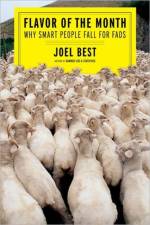
While fads such as hula hoops or streaking are usually dismissed as silly enthusiasms, trends in institutions such as education, business, medicine, science, and criminal justice are often taken seriously, even though their popularity and usefulness is sometimes short-lived. Institutional fads such as open classrooms, quality circles, and multiple personality disorder are constantly making the rounds, promising astonishing new developments-novel ways of teaching reading or arithmetic, better methods of managing businesses, or improved treatments for disease. Some of these trends prove to be lasting innovations, but others-after absorbing extraordinary amounts of time and money-are abandoned and forgotten, soon to be replaced by other new schemes. In this pithy, intriguing, and often humorous book, Joel Best-author of the acclaimed Damned Lies and Statistics-explores the range of institutional fads, analyzes the features of our culture that foster them, and identifies the major stages of the fad cycle-emerging, surging, and purging. Deconstructing the ways that this system plays into our notions of reinvention, progress, and perfectibility, Flavors of the Month examines the causes and consequences of fads and suggests ways of fad-proofing our institutions.
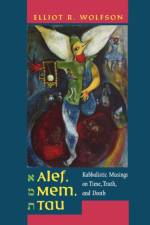
This highly original, provocative, and poetic work explores the nexus of time, truth, and death in the symbolic world of medieval kabbalah. Demonstrating that the historical and theoretical relationship between kabbalah and western philosophy is far more intimate and extensive than any previous scholar has ever suggested, Elliot R. Wolfson draws an extraordinary range of thinkers such as Frederic Jameson, Martin Heidegger, Franz Rosenzweig, William Blake, Julia Kristeva, Friedrich Schelling, and a host of kabbalistic figures into deep conversation with one another. Alef, Mem, Tau also discusses Islamic mysticism and Buddhist thought in relation to the Jewish esoteric tradition as it opens the possibility of a temporal triumph of temporality and the conquering of time through time.The framework for Wolfson's examination is the rabbinic teaching that the word emet, "e;truth,"e; comprises the first, middle, and last letters of the Hebrew alphabet, alef, mem, and tau, which serve, in turn, as semiotic signposts for the three tenses of time-past, present, and future. By heeding the letters of emet we discern the truth of time manifestly concealed in the time of truth, the beginning that cannot begin if it is to be the beginning, the middle that re/marks the place of origin and destiny, and the end that is the figuration of the impossible disclosing the impossibility of figuration, the finitude of death that facilitates the possibility of rebirth. The time of death does not mark the death of time, but time immortal, the moment of truth that bestows on the truth of the moment an endless beginning of a beginningless end, the truth of death encountered incessantly in retracing steps of time yet to be taken-between, before, beyond.
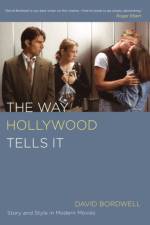
Hollywood moviemaking is one of the constants of American life, but how much has it changed since the glory days of the big studios? David Bordwell argues that the principles of visual storytelling created in the studio era are alive and well, even in today's bloated blockbusters. American filmmakers have created a durable tradition-one that we should not be ashamed to call artistic, and one that survives in both mainstream entertainment and niche-marketed indie cinema. Bordwell traces the continuity of this tradition in a wide array of films made since 1960, from romantic comedies like Jerry Maguire and Love Actually to more imposing efforts like A Beautiful Mind. He also draws upon testimony from writers, directors, and editors who are acutely conscious of employing proven principles of plot and visual style. Within the limits of the "e;classical"e; approach, innovation can flourish. Bordwell examines how imaginative filmmakers have pushed the premises of the system in films such as JFK, Memento, and Magnolia. He discusses generational, technological, and economic factors leading to stability and change in Hollywood cinema and includes close analyses of selected shots and sequences. As it ranges across four decades, examining classics like American Graffiti and The Godfather as well as recent success like The Lord of the Rings: The Two Towers, this book provides a vivid and engaging interpretation of how Hollywood moviemakers have created a vigorous, resourceful tradition of cinematic storytelling that continues to engage audiences around the world.
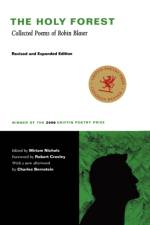
Robin Blaser, one of the key North American poets of the postwar period, emerged from the "e;Berkeley Renaissance"e; of the 1940s and 1950s as a central figure in that burgeoning literary scene. The Holy Forest, now spanning five decades, is Blaser's highly acclaimed lifelong serial poem. This long-awaited revised and expanded edition includes numerous published volumes of verse, the ongoing "e;Image-Nation"e; and "e;Truth Is Laughter"e; series, and new work from 1994 to 2004. Blaser's passion for world making draws inspiration from the major poets and philosophers of our time-from friends and peers such as Robert Duncan, Jack Spicer, Charles Olson, Charles Bernstein, and Steve McCaffery to virtual companions in thought such as Hannah Arendt, Maurice Merleau-Ponty, Michel Foucault, and Jacques Derrida, among others. This comprehensive compilation of Blaser's prophetic meditations on the histories, theories, emotions, experiments, and countermemories of the late twentieth century will stand as the definitive collection of his unique and luminous poetic oeuvre.
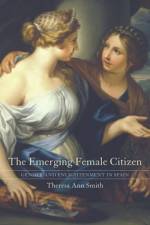
Eighteenth-century Spanish women were not idle bystanders during one of Europe's most dynamic eras. As Theresa Ann Smith skillfully demonstrates in this lively and absorbing book, Spanish intellectuals, calling for Spain to modernize its political, social, and economic institutions, brought the question of women's place to the forefront, as did women themselves. In explaining how both discourse and women's actions worked together to define women's roles in the nation, The Emerging Female Citizen not only illustrates the rising visibility of women, but also reveals the complex processes that led to women's relatively swift exit from most public institutions in the early 1800s. As artists, writers, and reformers, Spanish women took up pens, joined academies and economic societies, formed tertulias-similar to French salons-and became active in the burgeoning public discourse of Enlightenment. In analyzing the meaning of women's presence in diverse centers of Enlightenment, Smith offers a new interpretation of the dynamics among political discourse, social action, and gender ideologies.
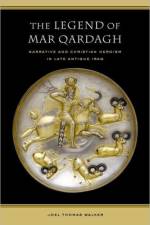
This pioneering study uses an early seventh-century Christian martyr legend to elucidate the culture and society of late antique Iraq. Translated from Syriac into English here for the first time, the legend of Mar Qardagh introduces a hero of epic proportions whose characteristics confound simple classification. During the several stages of his career, Mar Qardagh hunts like a Persian King, argues like a Greek philosopher, and renounces his Zoroastrian family to live with monks high in the mountains of Iraqi Kurdistan. Drawing on both literary and artistic sources, Joel Walker explores the convergence of these diverse themes in the Christian culture of the Sasanian Empire (224-642). Taking the Qardagh legend as its foundation, his study guides readers through the rich and complex world of late antique Iraq.
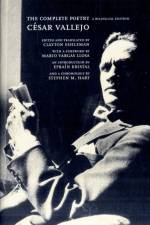
This first translation of the complete poetry of Peruvian Cesar Vallejo (1892-1938) makes available to English speakers one of the greatest achievements of twentieth-century world poetry. Handsomely presented in facing-page Spanish and English, this volume, translated by National Book Award winner Clayton Eshleman, includes the groundbreaking collections The Black Heralds (1918), Trilce (1922), Human Poems (1939), and Spain, Take This Cup from Me (1939). Vallejo's poetry takes the Spanish language to an unprecedented level of emotional rawness and stretches its grammatical possibilities. Striking against theology with the very rhetoric of the Christian faith, Vallejo's is a tragic vision-perhaps the only one in the canon of Spanish-language literature-in which salvation and sin are one and the same. This edition includes notes on the translation and a fascinating translation memoir that traces Eshleman's long relationship with Vallejo's poetry. An introduction and chronology provide further insights into Vallejo's life and work.
In this work of impressive scholarship, Sheldon Pollock explores the remarkable rise and fall of Sanskrit, India's ancient language, as a vehicle of poetry and polity. He traces the two great moments of its transformation: the first around the beginning of the Common Era, when Sanskrit, long a sacred language, was reinvented as a code for literary and political expression, the start of an amazing career that saw Sanskrit literary culture spread from Afghanistan to Java. The second moment occurred around the beginning of the second millennium, when local speech forms challenged and eventually replaced Sanskrit in both the literary and political arenas. Drawing striking parallels, chronologically as well as structurally, with the rise of Latin literature and the Roman empire, and with the new vernacular literatures and nation-states of late-medieval Europe, The Language of the Gods in the World of Men asks whether these very different histories challenge current theories of culture and power and suggest new possibilities for practice.
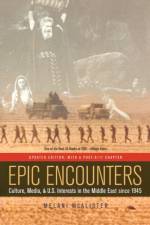
Epic Encounters examines how popular culture has shaped the ways Americans define their "e;interests"e; in the Middle East. In this innovative book-now brought up-to-date to include 9/11 and the Iraq war-Melani McAlister argues that U.S. foreign policy, while grounded in material and military realities, is also developed in a cultural context. American understandings of the region are framed by narratives that draw on religious belief, news media accounts, and popular culture. This remarkable and pathbreaking book skillfully weaves lively and accessible readings of film, media, and music with a rigorous analysis of U.S. foreign policy, race politics, and religious history. The new chapter, titled "e;9/11 and After: Snapshots on the Road to Empire,"e; considers and brilliantly analyzes five images that have become iconic: (1) New York City firemen raising the American flag out of the rubble of the World Trade Center, (2) the televised image of Osama bin-Laden, (3) Afghani women in burqas, (4) the statue of Saddam Hussein being toppled in Baghdad, and (5) the hooded and wired prisoner in Abu Ghraib. McAlister's singular achievement is to illuminate the contexts of these five images both at the time they were taken and as they relate to current events, an accomplishment all the more remarkable since-to paraphrase her new preface-we are today struggling to look backward at something that is still rushing ahead.
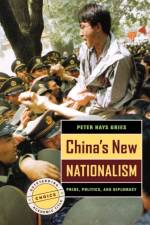
Three American missiles hit the Chinese embassy in Belgrade, and what Americans view as an appalling and tragic mistake, many Chinese see as a "e;barbaric"e; and intentional "e;criminal act,"e; the latest in a long series of Western aggressions against China. In this book, Peter Hays Gries explores the roles of perception and sentiment in the growth of popular nationalism in China. At a time when the direction of China's foreign and domestic policies have profound ramifications worldwide, Gries offers a rare, in-depth look at the nature of China's new nationalism, particularly as it involves Sino-American and Sino-Japanese relations-two bilateral relations that carry extraordinary implications for peace and stability in the twenty-first century. Through recent Chinese books and magazines, movies, television shows, posters, and cartoons, Gries traces the emergence of this new nationalism. Anti-Western sentiment, once created and encouraged by China's ruling PRC, has been taken up independently by a new generation of Chinese. Deeply rooted in narratives about past "e;humiliations"e; at the hands of the West and impassioned notions of Chinese identity, popular nationalism is now undermining the Communist Party's monopoly on political discourse, threatening the regime's stability. As readable as it is closely researched and reasoned, this timely book analyzes the impact that popular nationalism will have on twenty-first century China and the world.
British rule of India brought together two very different traditions of scholarship about language, whose conjuncture led to several intellectual breakthroughs of lasting value. Two of these were especially important: the conceptualization of the Indo-European language family by Sir William Jones at Calcutta in 1786-proposing that Sanskrit is related to Persian and languages of Europe-and the conceptualization of the Dravidian language family of South India by F.W. Ellis at Madras in 1816-the "e;Dravidian proof,"e; showing that the languages of South India are related to one another but are not derived from Sanskrit. These concepts are valid still today, centuries later. This book continues the examination Thomas R. Trautmann began in Aryans and British India (1997). While the previous book focused on Calcutta and Jones, the current volume examines these developments from the vantage of Madras, focusing on Ellis, Collector of Madras, and the Indian scholars with whom he worked at the College of Fort St. George, making use of the rich colonial record. Trautmann concludes by showing how elements of the Indian analysis of language have been folded into historical linguistics and continue in the present as unseen but nevertheless living elements of the modern.
Adventures in Yiddishland examines the transformation of Yiddish in the six decades since the Holocaust, tracing its shift from the language of daily life for millions of Jews to what the author terms a postvernacular language of diverse and expanding symbolic value. With a thorough command of modern Yiddish culture as well as its centuries-old history, Jeffrey Shandler investigates the remarkable diversity of contemporary encounters with the language. His study traverses the broad spectrum of people who engage with Yiddish-from Hasidim to avant-garde performers, Jews as well as non-Jews, fluent speakers as well as those who know little or no Yiddish-in communities across the Americas, in Europe, Israel, and other outposts of "e;Yiddishland."e;
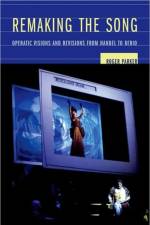
Opera performances are often radically inventive. Composers' revisions, singers' improvisations, and stage directors' re-imaginings continually challenge our visions of canonical works. But do they go far enough? This elegantly written, beautifully concise book, spanning almost the entire history of opera, reexamines attitudes toward some of our best-loved musical works. It looks at opera's history of multiple visions and revisions and asks a simple question: what exactly is opera? Remaking the Song, rich in imaginative answers, considers works by Handel, Mozart, Donizetti, Verdi, Wagner, Puccini, and Berio in order to challenge what many regard as sacroscant: the opera's musical text. Scholarly tradition favors the idea of great operatic texts permanently inscribed in the canon. Roger Parker, considering examples ranging from Cecilia Bartoli's much-criticized insistence on using Mozart's alternative arias in the Marriage of Figaro to Luciano Berio's new ending to Puccini's unfinished Turandot, argues that opera is an inherently mutable form, and that all of us-performers, listeners, scholars-should celebrate operatic revisions as a way of opening works to contemporary needs and new pleasures.
This book, the first full account of Japan's financial history and the Japanese gold standard in the pivotal years before World War II, provides a new perspective on the global political dynamics of the era by placing Japan, rather than Europe, at the center of the story. Focusing on the fall of liberalism in Japan in late 1931 and the global politics of money that were at the center of the crisis, Mark Metzler asks why successive Japanese governments from 1920 to 1931 carried out policies that deliberately induced deflation and depression. His search for answers stretches from Edo to London to the ragged borderlands of the Japanese empire and from the eighteenth century to the 1950s, integrating political and monetary analysis to shed light on the complex dynamics of money, empire, and global hegemony. His detailed and broad ranging account illuminates a range of issues including Japan's involvement in the economic dynamics that shook interwar Europe, the character of U.S. isolationism, and the rise of fascism as an international phenomenon.
David Houze was twenty-six and living in a single room occupancy hotel in Atlanta when he discovered that three little girls in an old photo he'd seen years earlier were actually his sisters. The girls had been left behind in South Africa when Houze and his mother fled the country in 1966, at the height of apartheid, to start a new life in Meridian, Mississippi, with Houze's American father. This revelation triggers a journey of self-discovery and reconnection that ranges from the shores of South Africa to the dirt roads of Mississippi-and back. Gripping, vivid, and poignant, this deeply personal narrative uses the unraveling mystery of Houze's family and his quest for identity as a prism through which to view the tumultuous events of the civil rights movement in Mississippi and the rise and fall of apartheid in South Africa. Twilight People is a stirring memoir that grapples with issues of family, love, abandonment, and ultimately, forgiveness and reconciliation. It is also a spellbinding detective story-steeped in racial politics and the troubled history of two continents-of one man's search for the truth behind the enigmas of his, and his mother's, lives.
Fear of mad cow disease, a lethal illness transmitted from infected beef to humans, has spread from Europe to the United States and around the world. Originally published to much acclaim in France, this scientific thriller, available in English for the first time and updated with a new chapter on developments in 2001, tells of the hunt for the cause of an enigmatic class of fatal brain infections, of which mad cow disease is the latest incarnation. In gripping, nontechnical prose, Maxime Schwartz details the deadly manifestations of these diseases throughout history, describes the major players and events that led to discoveries about their true nature, and outlines our current state of knowledge. The book concludes by addressing the question we all want answered: should we be afraid?The story begins in the eighteenth century with the identification of a mysterious illness called scrapie that was killing British sheep. It was not until the 1960s that scientists understood that several animal and human diseases, including scrapie, were identical, and together identified them as transmissible spongiform encephalopathy (TSE). The various guises assumed throughout history by TSE include an illness called kuru in a cannibalistic tribe in Papua New Guinea, an infectious disease that killed a group of children who had been treated for growth hormone deficiencies, and mad cow disease. Revealing the fascinating process of scientific discovery that led to our knowledge of TSE, Schwartz relates pivotal events in the history of biology, including the Pasteurian revolution, the birth of genetics, the emergence of molecular biology, and the latest developments in biotechnology. He also explains the Nobel Prize-winning prion hypothesis, which has rewritten the rules of biological heredity and is a key link between the distinctive diseases of TSE.Up-to-date, informative, and thoroughly captivating, How the Cows Turned Mad tells the story of a disease that continues to elude on many levels. Yet science has come far in understanding its origins, incubation, and transmission. This authoritative book is a stunning case history that illuminates the remarkable progression of science.
Pathologies of Power uses harrowing stories of life-and death-in extreme situations to interrogate our understanding of human rights. Paul Farmer, a physician and anthropologist with twenty years of experience working in Haiti, Peru, and Russia, argues that promoting the social and economic rights of the world's poor is the most important human rights struggle of our times. With passionate eyewitness accounts from the prisons of Russia and the beleaguered villages of Haiti and Chiapas, this book links the lived experiences of individual victims to a broader analysis of structural violence. Farmer challenges conventional thinking within human rights circles and exposes the relationships between political and economic injustice, on one hand, and the suffering and illness of the powerless, on the other. Farmer shows that the same social forces that give rise to epidemic diseases such as HIV and tuberculosis also sculpt risk for human rights violations. He illustrates the ways that racism and gender inequality in the United States are embodied as disease and death. Yet this book is far from a hopeless inventory of abuse. Farmer's disturbing examples are linked to a guarded optimism that new medical and social technologies will develop in tandem with a more informed sense of social justice. Otherwise, he concludes, we will be guilty of managing social inequality rather than addressing structural violence. Farmer's urgent plea to think about human rights in the context of global public health and to consider critical issues of quality and access for the world's poor should be of fundamental concern to a world characterized by the bizarre proximity of surfeit and suffering.
Between 300 and 600, Christianity experienced a momentous change from persecuted cult to state religion. One of the consequences of this shift was the evolution of the role of the bishop-as the highest Church official in his city-from model Christian to model citizen. Claudia Rapp's exceptionally learned, innovative, and groundbreaking work traces this transition with a twofold aim: to deemphasize the reign of the emperor Constantine, which has traditionally been regarded as a watershed in the development of the Church as an institution, and to bring to the fore the continued importance of the religious underpinnings of the bishop's role as civic leader. Rapp rejects Max Weber's categories of "e;charismatic"e; versus "e;institutional"e; authority that have traditionally been used to distinguish the nature of episcopal authority from that of the ascetic and holy man. Instead she proposes a model of spiritual authority, ascetic authority and pragmatic authority, in which a bishop's visible asceticism is taken as evidence of his spiritual powers and at the same time provides the justification for his public role. In clear and graceful prose, Rapp provides a wholly fresh analysis of the changing dynamics of social mobility as played out in episcopal appointments.
Colonized as early as 13,500 years ago, the Northern Channel Islands of California offer some of the earliest evidence of human habitation along the west coast of North America. The Chumash people who lived on these islands are considered to be among the most socially and politically complex hunter-gatherers in the world. This book provides a powerful and innovative synthesis of the cultural and environmental history of the chain of islands. Douglas J. Kennett shows that the trends in cultural elaboration were, in part, set into motion by a series of dramatic environmental events that were the catalyst for the unprecedented social and political complexity observed historically.
The American culture of death changed radically in the 1970s. For terminal illnesses, hidden decisions by physicians were rejected in favor of rational self-control by patients asserting their "e;right to die"e;-initially by refusing medical treatment and more recently by physician-assisted suicide. This new claim rested on two seemingly irrefutable propositions: first, that death can be a positive good for individuals whose suffering has become intolerable; and second, that death is an inevitable and therefore morally neutral biological event. Death Is That Man Taking Names suggests, however, that a contrary attitude persists in our culture-that death is inherently evil, not just in practical but also in moral terms. The new ethos of rational self-control cannot refute but can only unsuccessfully try to suppress this contrary attitude. The inevitable failure of this suppressive effort provokes ambivalence and clouds rational judgment in many people's minds and paradoxically leads to inflictions of terrible suffering on terminally ill people. Judicial reforms in the 1970s of abortion and capital punishment were driven by similarly high valuations of rationality and public decision-making-rejecting physician control over abortion in favor of individual self-control by pregnant women and subjecting unsupervised jury decisions for capital punishment to supposed rationally guided supervision by judges. These reforms also attempt to suppress persistently ambivalent attitudes toward death, and are therefore prone to inflicting unjustified suffering on pregnant women and death-sentenced prisoners. In this profound and subtle account of psychological and social forces underlying American cultural attitudes toward death, Robert A. Burt maintains that unacknowledged ambivalence is likely to undermine the beneficent goals of post-1970s reforms and harm the very people these changes were intended to help.
This study of the Employee Retirement Income Security Act of 1974 (ERISA) explains in detail how public officials in the executive branch and Congress overcame strong opposition from business and organized labor to pass landmark legislation regulating employer-sponsored retirement and health plans. Before Congress passed ERISA, federal law gave employers and unions great discretion in the design and operation of employee benefit plans. Most importantly, firms and unions could and often did establish pension plans that placed employees at great risk for not receiving any retirement benefits. In the early 1960s, officials in the executive branch proposed a number of regulatory initiatives to protect employees, but business groups and most labor unions objected to the key proposals. Faced with opposition from powerful interest groups, legislative entrepreneurs in Congress, chiefly New York Republican senator Jacob K. Javits, took the case for pension reform directly to voters by publicizing frightening statistics and "e;horror stories"e; about pension plans. This deft and successful effort to mobilize the media and public opinion overwhelmed the business community and organized labor and persuaded Javits's colleagues in Congress to support comprehensive pension reform legislation. The enactment of ERISA in September 1974 recast federal policy for private pension plans by making worker security an overriding objective of federal law.
Abonner på vårt nyhetsbrev og få rabatter og inspirasjon til din neste leseopplevelse.
Ved å abonnere godtar du vår personvernerklæring.