



















Gjør som tusenvis av andre bokelskere
Abonner på vårt nyhetsbrev og få rabatter og inspirasjon til din neste leseopplevelse.
Ved å abonnere godtar du vår personvernerklæring.Du kan når som helst melde deg av våre nyhetsbrev.

Flamboyant zoot suit culture, with its ties to fashion, jazz and swing music, jitterbug and Lindy Hop dancing, unique patterns of speech, and even risque experimentation with gender and sexuality, captivated the country's youth in the 1940s. The Power of the Zoot is the first book to give national consideration to this famous phenomenon. Providing a new history of youth culture based on rare, in-depth interviews with former zoot-suiters, Luis Alvarez explores race, region, and the politics of culture in urban America during World War II. He argues that Mexican American and African American youths, along with many nisei and white youths, used popular culture to oppose accepted modes of youthful behavior, the dominance of white middle-class norms, and expectations from within their own communities.
When does history begin? What characterizes it? This brilliant and beautifully written book dissolves the logic of a beginning based on writing, civilization, or historical consciousness and offers a model for a history that escapes the continuing grip of the Judeo-Christian time frame. Daniel Lord Smail argues that in the wake of the Decade of the Brain and the best-selling historical work of scientists like Jared Diamond, the time has come for fundamentally new ways of thinking about our past. He shows how recent work in evolution and paleohistory makes it possible to join the deep past with the recent past and abandon, once and for all, the idea of prehistory. Making an enormous literature accessible to the general reader, he lays out a bold new case for bringing neuroscience and neurobiology into the realm of history.
At the turn of the twentieth century, Japan embarked on a mission to modernize its society and industry. For the first time, young Japanese women were persuaded to leave their families and enter the factory. Managing Women focuses on Japan's interwar textile industry, examining how factory managers, social reformers, and the state created visions of a specifically Japanese femininity. Faison finds that female factory workers were constructed as "e;women"e; rather than as "e;workers"e; and that this womanly ideal was used to develop labor-management practices, inculcate moral and civic values, and develop a strategy for containing union activities and strikes. In an integrated analysis of gender ideology and ideologies of nationalism and ethnicity, Faison shows how this discourse on women's wage work both produced and reflected anxieties about women's social roles in modern Japan.
This study examines how the concept of "e;Korean woman"e; underwent a radical transformation in Korea's public discourse during the years of Japanese colonialism. Theodore Jun Yoo shows that as women moved out of traditional spheres to occupy new positions outside the home, they encountered the pervasive control of the colonial state, which sought to impose modernity on them. While some Korean women conformed to the dictates of colonial hegemony, others took deliberate pains to distinguish between what was "e;modern"e; (e.g., Western outfits) and thus legitimate, and what was "e;Japanese,"e; and thus illegitimate. Yoo argues that what made the experience of these women unique was the dual confrontation with modernity itself and with Japan as a colonial power.
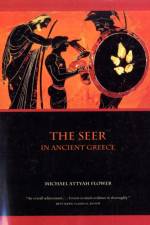
The seer (mantis), an expert in the art of divination, operated in ancient Greek society through a combination of charismatic inspiration and diverse skills ranging from examining the livers of sacrificed animals to spirit possession. Unlike the palm readers and mediums who exist on the fringe of modern society, many seers were highly paid, well respected, educated members of the elite who played an essential role in the conduct of daily life, political decisions, and military campaigns. Armies, for example, never went anywhere without one. This engaging book, the only comprehensive study of this fascinating figure, enters into the socioreligious world of ancient Greece to explore what seers did, why they were so widely employed, and how their craft served as a viable and useful social practice.
Forty years after Clark Kerr coined the term multiversity, the American research university has continued to evolve into a complex force for social and economic good. This volume provides a unique opportunity to explore the current state of the research university system. Charles M. Vest, one of the leading advocates for autonomy for American higher education, offers a multifaceted view of the university at the beginning of a new century. With a complex mission and funding structure, the university finds its international openness challenged by new security concerns and its ability to contribute to worldwide opportunity through sharing and collaboration dramatically expanded by the Internet. In particular, Vest addresses the need to nurture broad access to our universities and stay true to the fundamental mission of creating opportunity.
This momentous work offers a groundbreaking history of the early civil rights movement in the South with new material that situates the book in the context of subsequent movement literature.
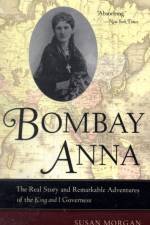
If you thought you knew the story of Anna in The King and I, think again. As this riveting biography shows, the real life of Anna Leonowens was far more fascinating than the beloved story of the Victorian governess who went to work for the King of Siam. To write this definitive account, Susan Morgan traveled around the globe and discovered new information that has eluded researchers for years. Anna was born a poor, mixed-race army brat in India, and what followed is an extraordinary nineteenth-century story of savvy self-invention, wild adventure, and far-reaching influence. At a time when most women stayed at home, Anna Leonowens traveled all over the world, witnessed some of the most fascinating events of the Age of Empire, and became a well-known travel writer, journalist, teacher, and lecturer. She remains the one and only foreigner to have spent significant time inside the royal harem of Siam. She emigrated to the United States, crossed all of Russia on her own just before the revolution, and moved to Canada, where she publicly defended the rights of women and the working class. The book also gives an engrossing account of how and why Anna became an icon of American culture in The King and I and its many adaptations.
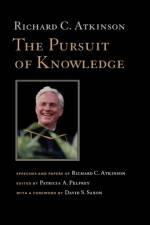
Richard C. Atkinson's eight-year tenure as president of the University of California (1995-2003) reflected the major issues facing California itself: the state's emergence as the world's leading knowledge-based economy and the rapidly expanding size and diversity of its population. As this selection of President Atkinson's speeches and papers reveals, his administration was marked by innovative approaches that deliberately shaped U.C.'s role in this changing California. These writings tell the story of the national controversy over the SAT and Atkinson's successful challenge to the dominance of the seventy-five-year-old college entrance examination. They also highlight other issues with national significance: U.C.'s experiments with race-neutral admissions programs; the challenges facing academic libraries and the University's pioneering activities with the California Digital Library; and the University's involvement in new paradigms of industry-university research. Together, these speeches and papers open a window on an eventful period in the history of the nation's leading public research university and the history of American higher education.
The genetic revolution has provided incredibly valuable information about our DNA, information that can be used to benefit and inform-but also to judge, discriminate, and abuse. An essential reference for living in today's world, this book gives the background information critical to understanding how genetics is now affecting our everyday lives. Written in clear, lively language, it gives a comprehensive view of exciting recent discoveries and explores the ethical, legal, and social issues that have arisen with each new development.
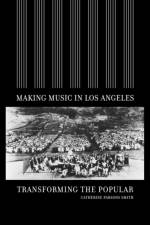
In this fascinating social history of music in Los Angeles from the 1880s to 1940, Catherine Parsons Smith ventures into an often neglected period to discover that during America's Progressive Era, Los Angeles was a center for making music long before it became a major metropolis. She describes the thriving music scene over some sixty years, including opera, concert giving and promotion, and the struggles of individuals who pursued music as an ideal, a career, a trade, a business--or all those things at once. Smith demonstrates that music making was closely tied to broader Progressive Era issues, including political and economic developments, the new roles played by women, and issues of race, ethnicity, and class.
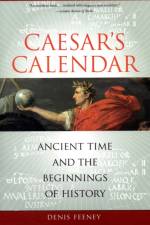
The ancient Romans changed more than the map of the world when they conquered so much of it; they altered the way historical time itself is marked and understood. In this brilliant, erudite, and exhilarating book Denis Feeney investigates time and its contours as described by the ancient Romans, first as Rome positioned itself in relation to Greece and then as it exerted its influence as a major world power. Feeney welcomes the reader into a world where time was movable and changeable and where simply ascertaining a date required a complex and often contentious cultural narrative. In a style that is lucid, fluent, and graceful, he investigates the pertinent systems, including the Roman calendar (which is still our calendar) and its near perfect method of capturing the progress of natural time; the annual rhythm of consular government; the plotting of sacred time onto sacred space; the forging of chronological links to the past; and, above all, the experience of empire, by which the Romans meshed the city state's concept of time with those of the foreigners they encountered to establish a new worldwide web of time. Because this web of time was Greek before the Romans transformed it, the book is also a remarkable study in the cross-cultural interaction between the Greek and Roman worlds. Feeney's skillful deployment of specialist material is engaging and accessible and ranges from details of the time schemes used by Greeks and Romans to accommodate the Romans' unprecedented rise to world dominance to an edifying discussion of the fixed axis of B.C./A.D., or B.C.E./C.E., and the supposedly objective "e;dates"e; implied. He closely examines the most important of the ancient world's time divisions, that between myth and history, and concludes by demonstrating the impact of the reformed calendar on the way the Romans conceived of time's recurrence. Feeney's achievement is nothing less than the reconstruction of the Roman conception of time, which has the additional effect of transforming the way the way the reader inhabits and experiences time.
In this erudite and elegantly composed argument, Karol Berger uses the works of Monteverdi, Bach, Mozart, and Beethoven to support two groundbreaking claims: first, that it was only in the later eighteenth century that music began to take the flow of time from the past to the future seriously; second, that this change in the structure of musical time was an aspect of a larger transformation in the way educated Europeans began to imagine and think about time with the onset of modernity, a part of a shift from the premodern Christian outlook to the modern post-Christian worldview. Until this historical moment, as Berger illustrates in his analysis of Bach's St. Matthew Passion, music was simply "e;in time."e; Its successive events unfolded one after another, but the distinction between past and future, earlier and later, was not central to the way the music was experienced and understood. But after the shift, as he finds in looking at Mozart's Don Giovanni, the experience of linear time is transformed into music's essential subject matter; the cycle of time unbends and becomes an arrow. Berger complements these musical case studies with a rich survey of the philosophical, theological, and literary trends influencing artists during this period.
Beginning with an Olympic ski race in northern Utah, this heartfelt book from award-winning writer and photographer Stephen Trimble takes a penetrating look at the battles raging over the land-and the soul-of the American West. Bargaining for Eden investigates the high-profile story of a reclusive billionaire who worked relentlessly to acquire public land for his ski resort and to host the Salt Lake City Winter Olympics. In a gripping, character-driven narrative, based on extensive interviews, Trimble tells of the land exchange deal that ensued, one of the largest and most controversial in U.S. history, as he deftly explores the inner conflicts, paradoxes, and greed at the heart of land-use disputes from the back rooms of Washington to the grassroots efforts of passionate citizens. Into this mix, Trimble weaves the personal story of how he, a lifelong environmentalist, ironically became a landowner and developer himself, and began to explore the ethics of ownership anew. We travel with Trimble in a fascinating journey that becomes, in the end, a hopeful credo to guide citizens and communities seeking to reinvent their relationship with the beloved American landscape.
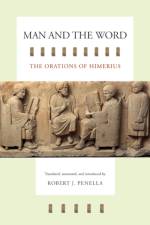
This fully annotated volume offers the first English translation of the orations of Himerius of Athens, a prominent teacher of rhetoric in the fourth century A.D. Man and the Word contains 79 surviving orations and fragments of orations in the grand tradition of imperial Greek rhetoric. The speeches, a rich source on the intellectual life of late antiquity, capture the flavor of student life in Athens, illuminate relations in the educated community, and illustrate the ongoing civic role of the sophist. This volume includes speeches given by Himerius in various cities as he traveled east to join the emperor Julian, customary declamations on imaginary topics, and a noteworthy monody on the death of his son. Extensive introductory notes and annotations place these translations in their literary and historical contexts.
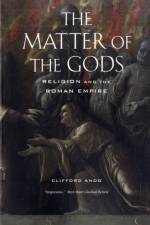
What did the Romans know about their gods? Why did they perform the rituals of their religion, and what motivated them to change those rituals? To these questions Clifford Ando proposes simple answers: In contrast to ancient Christians, who had faith, Romans had knowledge, and their knowledge was empirical in orientation. In other words, the Romans acquired knowledge of the gods through observation of the world, and their rituals were maintained or modified in light of what they learned. After a preface and opening chapters that lay out this argument about knowledge and place it in context, The Matter of the Gods pursues a variety of themes essential to the study of religion in history.
Jewish Identities mounts a formidable challenge to prevailing essentialist assumptions about "e;Jewish music,"e; which maintain that ethnic groups, nations, or religious communities possess an essence that must manifest itself in art created by members of that group. Klara Moricz scrutinizes concepts of Jewish identity and reorders ideas about twentieth-century "e;Jewish music"e; in three case studies: first, Russian Jewish composers of the first two decades of the twentieth century; second, the Swiss American Ernest Bloch; and third, Arnold Schoenberg. Examining these composers in the context of emerging Jewish nationalism, widespread racial theories, and utopian tendencies in modernist art and twentieth-century politics, Moricz describes a trajectory from paradigmatic nationalist techniques, through assumptions about the unintended presence of racial essences, to an abstract notion of Judaism.
Music Divided explores how political pressures affected musical life on both sides of the iron curtain during the early years of the cold war. In this groundbreaking study, Danielle Fosler-Lussier illuminates the pervasive political anxieties of the day through particular attention to artistic, music-theoretical, and propagandistic responses to the music of Hungary's most renowned twentieth-century composer, Bela Bartok. She shows how a tense period of political transition plagued Bartok's music and imperiled those who took a stand on its aesthetic value in the emerging socialist state. Her fascinating investigation of Bartok's reception outside of Hungary demonstrates that Western composers, too, formulated their ideas about musical style under the influence of ever-escalating cold war tensions.Music Divided surveys Bartok's role in provoking negative reactions to "e;accessible"e; music from Pierre Boulez, Hermann Scherchen, and Theodor Adorno. It considers Bartok's influence on the youthful compositions and thinking of Bruno Maderna and Karlheinz Stockhausen, and it outlines Bartok's legacy in the music of the Hungarian composers Andras Mihaly, Ferenc Szabo, and Endre Szervanszky. These details reveal the impact of local and international politics on the selection of music for concert and radio programs, on composers' choices about musical style, on government radio propaganda about music, on the development of socialist realism, and on the use of modernism as an instrument of political action.
This illuminating study explores a central but neglected aspect of modern Jewish history: the problem of abandoned Jewish wives, or agunes ("e;chained wives"e;)-women who under Jewish law could not obtain a divorce-and of the men who deserted them. Looking at seventeenth- and eighteenth-century Germany and then late nineteenth-century eastern Europe and twentieth-century United States, Enforced Marginality explores representations of abandoned wives while tracing the demographic movements of Jews in the West. Bluma Goldstein analyzes a range of texts (in Old Yiddish, German, Yiddish, and English) at the intersection of disciplines (history, literature, sociology, and gender studies) to describe the dynamics of power between men and women within traditional communities and to elucidate the full spectrum of experiences abandoned women faced.
The Persians of antiquity were renowned for their lavish cuisine and their never-ceasing fascination with the exotic. These traits still find expression in the cooking of India's rapidly dwindling Parsi population-descendants of Zoroastrians who fled Persia after the Sassanian empire fell to the invading Arabs. The first book published in the United States on Parsi food written by a Parsi, this beautiful volume includes 165 recipes and makes one of India's most remarkable regional cuisines accessible to Westerners. In an intimate narrative rich with personal experience, the author leads readers into a world of new ideas, tastes, ingredients, and techniques, with a range of easy and seductive menus that will reassure neophytes and challenge explorers.
This innovative work on Chinese concepts of the afterlife is the result of Stephen Bokenkamp's groundbreaking study of Chinese scripture and the incorporation of Indic concepts into the Chinese worldview. Here, he explores how Chinese authors, including Daoists and non-Buddhists, received and deployed ideas about rebirth from the third to the sixth centuries C.E. In tracing the antecedents of these scriptures, Bokenkamp uncovers a stunning array of non-Buddhist accounts that provide detail on the realms of the dead, their denizens, and human interactions with them. Bokenkamp demonstrates that the motive for the Daoist acceptance of Buddhist notions of rebirth lay not so much in the power of these ideas as in the work they could be made to do.
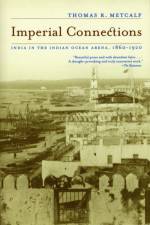
An innovative remapping of empire, Imperial Connections offers a broad-ranging view of the workings of the British Empire in the period when the India of the Raj stood at the center of a newly globalized system of trade, investment, and migration. Thomas R. Metcalf argues that India itself became a nexus of imperial power that made possible British conquest, control, and governance across a wide arc of territory stretching from Africa to eastern Asia. His book, offering a new perspective on how imperialism operates, emphasizes transcolonial interactions and webs of influence that advanced the interests of colonial India and Britain alike. Metcalf examines such topics as law codes and administrative forms as they were shaped by Indian precedents; the Indian Army's role in securing Malaya, Africa, and Mesopotamia for the empire; the employment of Indians, especially Sikhs, in colonial policing; and the transformation of East Africa into what was almost a province of India through the construction of the Uganda railway. He concludes with a look at the decline of this Indian Ocean system after 1920 and considers how far India's participation in it opened opportunities for Indians to be a colonizing as well as a colonized people.
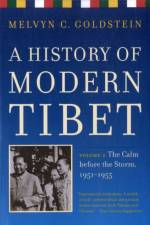
It is not possible to fully understand contemporary politics between China and the Dalai Lama without understanding what happened-and why-during the 1950s. In a book that continues the story of Tibet's history that he began in his acclaimed A History of Modern Tibet, 1913-1951: The Demise of the Lamaist State, Melvyn C. Goldstein critically revises our understanding of that key period in midcentury. This authoritative account utilizes new archival material, including never before seen documents, and extensive interviews with Tibetans, including the Dalai Lama, and with Chinese officials. Goldstein furnishes fascinating and sometimes surprising portraits of these major players as he deftly unravels the fateful intertwining of Tibetan and Chinese politics against the backdrop of the Korean War, the tenuous Sino-Soviet alliance, and American cold war policy.
Sometimes by accident and sometimes on purpose, humans have transported plants and animals to new habitats around the world. Arriving in ever-increasing numbers to American soil, recent invaders have competed with, preyed on, hybridized with, and carried diseases to native species, transforming our ecosystems and creating anxiety among environmentalists and the general public. But is American anxiety over this crisis of ecological identity a recent phenomenon? Charting shifting attitudes to alien species since the 1850s, Peter Coates brings to light the rich cultural and historical aspects of this story by situating the history of immigrant flora and fauna within the wider context of human immigration. Through an illuminating series of particular invasions, including the English sparrow and the eucalyptus tree, what he finds is that we have always perceived plants and animals in relation to ourselves and the polities to which we belong. Setting the saga of human relations with the environment in the broad context of scientific, social, and cultural history, this thought-provoking book demonstrates how profoundly notions of nationality and debates over race and immigration have shaped American understandings of the natural world.
It happens every day: we pick up a newspaper or magazine or turn on the television and are bombarded with urgent advice about how to stay healthy. Lose weight! Lower your cholesterol! Early detection saves lives! Sunscreen prevents cancer! But in many cases, pronouncements we rarely think to question turn out to be half-truths that are being pushed by various individuals or groups to advance their own agendas. The Healthy Skeptic explores who these health promoters are-from journalists and celebrities to industry-funded groups and consumer activists-what their motives are, and how they are spinning us in ways we often don't realize. This treasure trove of little-known facts, written by a seasoned health reporter, provides invaluable tips, tools, and resources to help readers think more critically about what they're being told. Becoming a healthy skeptic is vital, Davis argues, because following the right advice can have a profound impact on overall health and longevity. IN TEN ENTERTAINING CHAPTERS, ROBERT J. DAVIS DISCUSSES: * Diets and why they don't work* Dietary supplements * The campaign to reduce cholesterol * Celebrity exhortations to "e;get tested"e; * Sunscreen and its promoters' claims * The antichemical activists
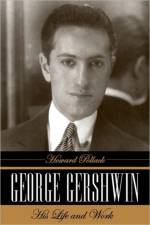
This comprehensive biography of George Gershwin (1898-1937) unravels the myths surrounding one of America's most celebrated composers and establishes the enduring value of his music. Gershwin created some of the most beloved music of the twentieth century and, along with Jerome Kern, Irving Berlin, and Cole Porter, helped make the golden age of Broadway golden. Howard Pollack draws from a wealth of sketches, manuscripts, letters, interviews, books, articles, recordings, films, and other materials-including a large cache of Gershwin scores discovered in a Warner Brothers warehouse in 1982-to create an expansive chronicle of Gershwin's meteoric rise to fame. He also traces Gershwin's powerful presence that, even today, extends from Broadway, jazz clubs, and film scores to symphony halls and opera houses.Pollack's lively narrative describes Gershwin's family, childhood, and education; his early career as a pianist; his friendships and romantic life; his relation to various musical trends; his writings on music; his working methods; and his tragic death at the age of 38. Unlike Kern, Berlin, and Porter, who mostly worked within the confines of Broadway and Hollywood, Gershwin actively sought to cross the boundaries between high and low, and wrote works that crossed over into a realm where art music, jazz, and Broadway met and merged. The author surveys Gershwin's entire oeuvre, from his first surviving compositions to the melodies that his brother and principal collaborator, Ira Gershwin, lyricized after his death. Pollack concludes with an exploration of the performances and critical reception of Gershwin's music over the years, from his time to ours.
This first Western-language translation of one of the great books of the Daoist religious tradition, the Taiping jing, or "e;Scripture on Great Peace,"e; documents early Chinese medieval thought and lays the groundwork for a more complete understanding of Daoism's origins. Barbara Hendrischke, a leading expert on the Taiping jing in the West, has spent twenty-five years on this magisterial translation, which includes notes that contextualize the scripture's political and religious significance. Virtually unknown to scholars until the 1970s, the Taiping jing raises the hope for salvation in a practical manner by instructing men and women how to appease heaven and satisfy earth and thereby reverse the fate that thousands of years of human wrongdoing has brought about. The scripture stems from the beginnings of the Daoist religious movement, when ideas contained in the ancient Laoziwere spread with missionary fervor among the population at large. The Taiping jing demonstrates how early Chinese medieval thought arose from the breakdown of the old imperial order and replaced it with a vision of a new, more diverse and fair society that would integrate outsiders-in particular women and people of a non-Chinese background.
Tom Waldman's lively and sweeping assessment of the state of American liberalism begins with the political turbulence of 1968 and culminates with the 2006 takeover of Congress by the Democratic Party. Not Much Left: The Fate of Liberalism in America vividly demonstrates how the progressive and liberal wing of the Democratic Party helped end a war, won the civil rights battle, and paved the way for blacks, women, gays, and other minorities to achieve full citizenship. Through reportage, anecdotes, and analysis-particularly of the disastrous defeat of Democrat George McGovern in 1972-Waldman chronicles how the grand coalition that achieved so much in the 1960s began to self-destruct in the early 1970s. Citing the Republican recovery from Barry Goldwater's 1964 defeat, Waldman demonstrates how the two parties' very different reactions to electoral debacle account for recent Republican dominance and Democratic impotence. Assessing liberalism's fate through the Carter and Reagan presidencies, the defeat of Michael Dukakis in the 1988 presidential election, and the on-again, off-again liberalism of the Clinton years, Waldman then brings the discussion up to date with analysis of the 2008 presidential campaign.
Sexuality and the occult arts have long been associated in the western imagination, but it was not until the nineteenth century that a large and sophisticated body of literature on sexual magic-the use of sex as a source of magical power-emerged. This book, the first history of western sexual magic as a modern spiritual tradition, places these practices in the context of the larger discourse surrounding sexuality in American and European society over the last 150 years to discover how sexual magic was transformed from a terrifying medieval nightmare of heresy and social subversion into a modern ideal of personal empowerment and social liberation. Focusing on a series of key figures including American spiritualist Paschal Beverly Randolph, Aleister Crowley, Julius Evola, Gerald Gardner, and Anton LaVey, Hugh Urban traces the emergence of sexual magic out of older western esoteric traditions including Gnosticism and Kabbalah, which were progressively fused with recently-discovered eastern traditions such as Hindu and Buddhist Tantra. His study gives remarkable new insight into sexuality in the modern era, specifically on issues such as the politics of birth control, the classification of sexual "e;deviance,"e; debates over homosexuality and feminism, and the role of sexuality in our own new world of post-modern spirituality, consumer capitalism, and the Internet.
Trained as a printer when still a boy, and thrilled throughout his life by the automation of printing and the headlong expansion of American publishing, Mark Twain wrote about the consequences of this revolution for culture and for personal identity. Printer's Devil is the first book to explore these themes in some of Mark Twain's best-known literary works, and in his most daring speculations-on American society, the modern condition, and the nature of the self. Playfully and anxiously, Mark Twain often thought about typeset words and published images as powerful forces-for political and moral change, personal riches and ruin, and epistemological turmoil. In his later years, Mark Twain wrote about the printing press as a center of metaphysical power, a force that could alter the fabric of reality. Studying these themes in Mark Twain's writings, Bruce Michelson also provides a fascinating overview of technological changes that transformed the American printing and publishing industries during Twain's lifetime, changes that opened new possibilities for content, for speed of production, for the size and diversity of a potential audience, and for international fame. The story of Mark Twain's life and art, amid this media revolution, is a story with powerful implications for our own time, as we ride another wave of radical change: for printed texts, authors, truth, and consciousness.
Abonner på vårt nyhetsbrev og få rabatter og inspirasjon til din neste leseopplevelse.
Ved å abonnere godtar du vår personvernerklæring.