



Gjør som tusenvis av andre bokelskere
Abonner på vårt nyhetsbrev og få rabatter og inspirasjon til din neste leseopplevelse.
Ved å abonnere godtar du vår personvernerklæring.Du kan når som helst melde deg av våre nyhetsbrev.

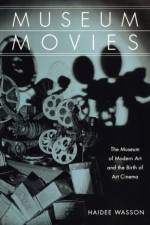
Haidee Wasson provides a rich cultural history of cinema's transformation from a passing amusement to an enduring art form by mapping the creation of the Film Library of the Museum of Modern Art (MoMA), New York, established in 1935. The first North American film archive and museum, the film library pioneered an expansive moving image network, comprising popular, abstract, animated, American, Canadian, and European films. More than a repository, MoMA circulated these films nationally and internationally, connecting the modern art museum to universities, libraries, women's clubs, unions, archives, and department stores. Under the aegis of the museum, cinema also changed. Like books, paintings, and photographs, films became discrete objects, integral to thinking about art, history, and the politics of modern life.
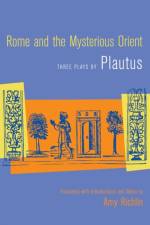
Still funny after two thousand years, the Roman playwright Plautus wrote around 200 B.C.E., a period when Rome was fighting neighbors on all fronts, including North Africa and the Near East. These three plays-originally written for a wartime audience of refugees, POWs, soldiers and veterans, exiles, immigrants, people newly enslaved in the wars, and citizens-tap into the mix of fear, loathing, and curiosity with which cultures, particularly Western and Eastern cultures, often view each other, always a productive source of comedy. These current, accessible, and accurate translations have replaced terms meaningful only to their original audience, such as references to Roman gods, with a hilarious, inspired sampling of American popular culture-from songs to movie stars to slang. Matching the original Latin line for line, this volume captures the full exuberance of Plautus's street language, bursting with puns, learned allusions, ethnic slurs, dirty jokes, and profanities, as it brings three rarely translated works-Weevil (Curculio), Iran Man (Persa), and Towelheads (Poenulus)-to a wide contemporary audience. Richlin's erudite introduction sets these plays within the context of the long history of East-West conflict and illuminates the role played by comedy and performance in imperialism and colonialism. She has also provided detailed and wide-ranging contextual introductions to the individual plays, as well as extensive notes, which, together with these superb and provocative translations, will bring Plautus alive for a new generation of readers and actors.
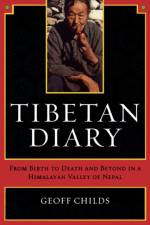
In this rich and deeply personal account of life in the highlands of Nepal, Geoff Childs chronicles the daily existence of a range of people, from venerated lamas to humble householders. Offering insights into the complex dynamics of the ethnically Tibetan enclave of Nubri, Childs provides a vivid and compelling portrait of the ebb and flow of life and death, of communal harmony and discord, and of personal conflicts and social resolutions. Part ethnography, part travelogue, and part biography, Tibetan Diary is a one-of-a-kind book that conveys the tangled intricacies of a Tibetan society. Childs's immensely readable and informative narrative incorporates contemporary observations as well as vignettes culled from first-person testaments including oral histories and autobiographies. Examining the tensions between cultural ideals and individual aspirations, he explores certain junctures in the course of life: how the desire to attain religious knowledge or to secure a caretaker in old age contrasts with social expectations and familial obligation, for example. The result is a vivid and unparalleled view of the quest for both spiritual meaning and mundane survival that typifies life in an unpredictable Himalayan environment.
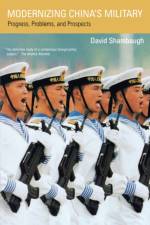
David Shambaugh, a leading international authority on Chinese strategic and military affairs, offers the most comprehensive and insightful assessment to date of the Chinese military. The result of a decade's research, Modernizing China's Military comes at a crucial moment in history, one when international attention is increasingly focused on the rise of Chinese military power. Basing his analysis on an unprecedented use of Chinese military publications and interviews with People's Liberation Army (PLA) officers, Shambaugh addresses important questions about Chinese strategic intentions and military capabilities--questions that are of key concern for government policymakers as well as strategic analysts and a concerned public.
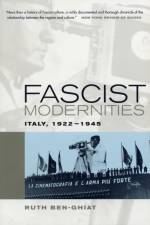
Ruth Ben-Ghiat's innovative cultural history of Mussolini's dictatorship is a provocative discussion of the meanings of modernity in interwar Italy. Eloquent, pathbreaking, and deft in its use of a broad range of materials, this work argues that fascism appealed to many Italian intellectuals as a new model of modernity that would resolve the contemporary European crisis as well as long-standing problems of the national past. Ben-Ghiat shows that-at a time of fears over the erosion of national and social identities-Mussolini presented fascism as a movement that would allow economic development without harm to social boundaries and national traditions. She demonstrates that although the regime largely failed in its attempts to remake Italians as paragons of a distinctly fascist model of mass society, twenty years of fascism did alter the landscape of Italian cultural life. Among younger intellectuals in particular, the dictatorship left a legacy of practices and attitudes that often continued under different political rubrics after 1945.
This timely and critically important work does what hostilities in the Middle East have made nearly impossible: it offers a measured, internal perspective on Palestinian politics, viewing emerging political patterns from the Palestinian point of view rather than through the prism of the Arab-Israeli conflict. Based on groundbreaking fieldwork, interviews with Palestinian leaders, and an extensive survey of Arabic-language writings and documents, Palestinian Politics after the Oslo Accords presents the meaning of state building and self-reliance as Palestinians themselves have understood them in the years between 1993 and 2002.Nathan J. Brown focuses his work on five areas: legal development, constitution drafting, the Palestinian Legislative Council, civil society, and the effort to write a new curriculum. His book shows how Palestinians have understood efforts at building institutions as acts of resumption rather than creation-with activists and leaders seeing themselves as recovering from an interrupted past, Palestinians seeking to rejoin the Arab world by building their new institutions on Arab models, and many Palestinian reformers taking the Oslo Accords as an occasion to resume normal political life. Providing a clear and urgently needed vantage point on most of the issues of Palestinian reform and governance that have emerged in recent policy debates-issues such as corruption, constitutionalism, democracy, and rule of law-Brown's book helps to put Palestinian aspirations and accomplishments in their proper context within a long and complex history and within the larger Arab world.
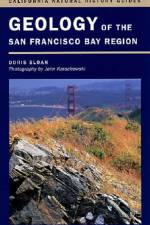
Why does a bit of ocean floor lie on top of Mt. Diablo? Why is Red Rock, that small, knobby island in San Francisco Bay, red? Why is Loma Prieta high? This book is for San Francisco Bay Area residents and visitors who want to explore the geologic world of this spectacular area, to learn about its shapes, colors, and rocky foundations. Doris Sloan illuminates the colorful geologic mosaic that surrounds San Francisco Bay and lucidly explains the complex and fascinating processes that have forged it over millions of years. In a lively and engaging style, Sloan describes forces such as the movement of tectonic plates, erosion, the waves on the coast, and human activity. She provides background information on the processes, time frame, and rocks that are the key to understanding the Bay Area landscape and geologic history, then turns to distinct regions of the Bay Area and to San Francisco Bay itself. * Superbly illustrated with 139 color photographs, 41 drawings, and 29 maps * Covers Alameda, Contra Costa, Marin, Napa, San Francisco, San Mateo, Santa Clara, Solano, and Sonoma counties * Gives clear, nontechnical explanations of complex topics including plate tectonics and the Bay Area's fault systems * Suggests locales in parks and open space preserves to view Bay Area geology in action
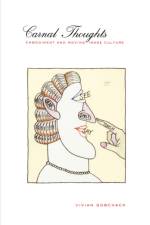
In these innovative essays, Vivian Sobchack considers the key role our bodies play in making sense of today's image-saturated culture. Emphasizing our corporeal rather than our intellectual engagements with film and other media, Carnal Thoughts shows how our experience always emerges through our senses and how our bodies are not just visible objects but also sense-making, visual subjects. Sobchack draws on both phenomenological philosophy and a broad range of popular sources to explore bodily experience in contemporary, moving-image culture. She examines how, through the conflation of cinema and surgery, we've all "e;had our eyes done"e;; why we are "e;moved"e; by the movies; and the different ways in which we inhabit photographic, cinematic, and electronic space. Carnal Thoughts provides a lively and engaging challenge to the mind/body split by demonstrating that the process of "e;making sense"e; requires an irreducible collaboration between our thoughts and our senses.
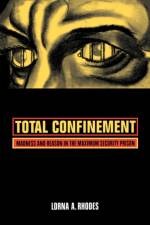
In this rare firsthand account, Lorna Rhodes takes us into a hidden world that lies at the heart of the maximum security prison. Focusing on the "e;supermaximums"e;-and the mental health units that complement them-Rhodes conveys the internal contradictions of a system mandated to both punish and treat. Her often harrowing, sometimes poignant, exploration of maximum security confinement includes vivid testimony from prisoners and prison workers, describes routines and practices inside prison walls, and takes a hard look at the prison industry. More than an expose, Total Confinement is a theoretically sophisticated meditation on what incarceration tells us about who we are as a society. Rhodes tackles difficult questions about the extreme conditions of confinement, the treatment of the mentally ill in prisons, and an ever-advancing technology of isolation and surveillance. Using her superb interview skills and powers of observation, she documents how prisoners, workers, and administrators all struggle to retain dignity and a sense of self within maximum security institutions. In settings that place in question the very humanity of those who live and work in them, Rhodes discovers complex interactions-from the violent to the tender-among prisoners and staff. Total Confinement offers an indispensable close-up of the implications of our dependence on prisons to solve long-standing problems of crime and injustice in the United States.
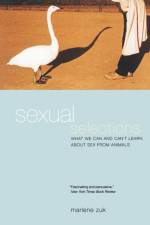
Scientific discoveries about the animal kingdom fuel ideological battles on many fronts, especially battles about sex and gender. We now know that male marmosets help take care of their offspring. Is this heartening news for today's stay-at-home dads? Recent studies show that many female birds once thought to be monogamous actually have chicks that are fathered outside the primary breeding pair. Does this information spell doom for traditional marriages? And bonobo apes take part in female-female sexual encounters. Does this mean that human homosexuality is natural? This highly provocative book clearly shows that these are the wrong kinds of questions to ask about animal behavior. Marlene Zuk, a respected biologist and a feminist, gives an eye-opening tour of some of the latest developments in our knowledge of animal sexuality and evolutionary biology. Sexual Selections exposes the anthropomorphism and gender politics that have colored our understanding of the natural world and shows how feminism can help move us away from our ideological biases.As she tells many amazing stories about animal behavior--whether of birds and apes or of rats and cockroaches--Zuk takes us to the places where our ideas about nature, gender, and culture collide. Writing in an engaging, conversational style, she discusses such politically charged topics as motherhood, the genetic basis for adultery, the female orgasm, menstruation, and homosexuality. She shows how feminism can give us the tools to examine sensitive issues such as these and to enhance our understanding of the natural world if we avoid using research to champion a feminist agenda and avoid using animals as ideological weapons. Zuk passionately asks us to learn to see the animal world on its own terms, with its splendid array of diversity and variation. This knowledge will give us a better understanding of animals and can ultimately change our assumptions about what is natural, normal, and even possible.
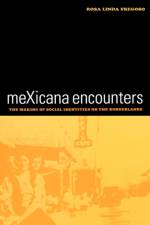
meXicana Encounters charts the dynamic and contradictory representation of Mexicanas and Chicanas in culture. Rosa Linda Fregoso's deft analysis of the cultural practices and symbolic forms that shape social identities takes her across a wide and varied terrain. Among the subjects she considers are the recent murders and disappearances of women in Ciudad Juarez; transborder feminist texts that deal with private, domestic forms of violence; how films like John Sayles's Lone Star re-center white masculinity; and the significance of la familia to the identity of Chicanas/os and how it can subordinate gender and sexuality to masculinity and heterosexual roles. Fregoso's self-reflexive approach to cultural politics embraces the movement for social justice and offers new insights into the ways that racial and gender differences are inscribed in cultural practices.
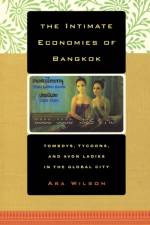
Bangkok has been at the frontier of capitalism's drive into the global south for three decades. Rapid development has profoundly altered public and private life in Thailand. In her provocative study of contemporary commerce in Bangkok, Ara Wilson captures the intimate effects of the global economy in this vibrant city. The Intimate Economies of Bangkok is a multifaceted portrait of the intertwining of identities, relationships, and economics during Bangkok's boom years. Using innovative case studies of women's and men's participation in a range of modern markets-department stores, go-go bars, a popular downtown mall, a telecommunications company, and the direct sales corporations Amway and Avon-Wilson chronicles the powerful expansion of capitalist exchange into further reaches of Thai society. She shows how global economies have interacted with local systems to create new kinds of lifestyles, ranging from "e;tomboys"e; to corporate tycoons to sex workers. Combining feminist theory with classic anthropological understandings of exchange, this historically grounded ethnography maps the reverberations of gender, sexuality, and ethnicity at the hub of Bangkok's modern economy.
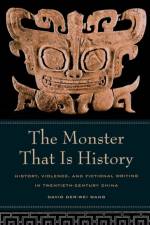
In ancient China a monster called Taowu was known for both its vicious nature and its power to see the past and the future. Over the centuries Taowu underwent many incarnations until it became identifiable with history itself. Since the seventeenth century, fictive accounts of history have accommodated themselves to the monstrous nature of Taowu. Moving effortlessly across the entire twentieth-century literary landscape, David Der-wei Wang delineates the many meanings of Chinese violence and its literary manifestations. Taking into account the campaigns of violence and brutality that have rocked generations of Chinese-often in the name of enlightenment, rationality, and utopian plenitude-this book places its arguments along two related axes: history and representation, modernity and monstrosity. Wang considers modern Chinese history as a complex of geopolitical, ethnic, gendered, and personal articulations of bygone and ongoing events. His discussion ranges from the politics of decapitation to the poetics of suicide, and from the typology of hunger and starvation to the technology of crime and punishment.
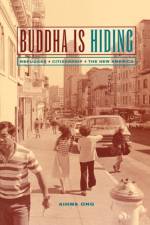
Fleeing the murderous Pol Pot regime, Cambodian refugees arrive in America as at once the victims and the heroes of America's misadventures in Southeast Asia; and their encounters with American citizenship are contradictory as well. Service providers, bureaucrats, and employers exhort them to be self-reliant, individualistic, and free, even as the system and the culture constrain them within terms of ethnicity, race, and class. Buddha Is Hiding tells the story of Cambodian Americans experiencing American citizenship from the bottom-up. Based on extensive fieldwork in Oakland and San Francisco, the study puts a human face on how American institutions-of health, welfare, law, police, church, and industry-affect minority citizens as they negotiate American culture and re-interpret the American dream.In her earlier book, Flexible Citizenship, anthropologist Aihwa Ong wrote of elite Asians shuttling across the Pacific. This parallel study tells the very different story of "e;the other Asians"e; whose route takes them from refugee camps to California's inner-city and high-tech enclaves. In Buddha Is Hiding we see these refugees becoming new citizen-subjects through a dual process of being-made and self-making, balancing religious salvation and entrepreneurial values as they endure and undermine, absorb and deflect conflicting lessons about welfare, work, medicine, gender, parenting, and mass culture. Trying to hold on to the values of family and home culture, Cambodian Americans nonetheless often feel that "e;Buddha is hiding."e; Tracing the entangled paths of poor and rich Asians in the American nation, Ong raises new questions about the form and meaning of citizenship in an era of globalization.
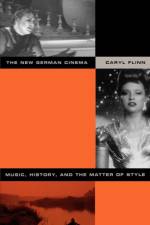
When New German cinema directors like R. W. Fassbinder, Ulrike Ottinger, and Werner Schroeter explored issues of identity-national, political, personal, and sexual-music and film style played crucial roles. Most studies of the celebrated film movement, however, have sidestepped the role of music, a curious oversight given its importance to German culture and nation formation. Caryl Flinn's study reverses this trend, identifying styles of historical remembrance in which music participates. Flinn concentrates on those styles that urge listeners to interact with difference-including that embodied in Germany's difficult history-rather than to "e;master"e; or "e;get past"e; it. Flinn breaks new ground by considering contemporary reception frameworks of the New German Cinema, a generation after its end. She discusses transnational, cultural, and historical contexts as well as the sexual, ethnic, national, and historical diversity of audiences. Through detailed case studies, she shows how music helps filmgoers engage with a range of historical subjects and experiences. Each chapter of The New German Cinema examines a particular stylistic strategy, assessing music's role in each. The study also examines queer strategies like kitsch and camp and explores the movement's charged construction of human bodies on which issues of ruination, survival, memory, and pleasure are played out.
In times of great uncertainty, the urgency of the artist's task is only surpassed by its difficulty. Ours is such a time, and rising to the challenge, novelist and poet Fanny Howe suggests new and fruitful ways of thinking about both the artist's role and the condition of doubt. In these original meditations on bewilderment, motherhood, imagination, and art-making, Howe takes on conventional systems of belief and argues for another, brave way of proceeding. In the essays "e;Immanence"e; and "e;Work and Love"e; and those on writers such as Carmelite nun Edith Stein, French mystic Simone Weil, Thomas Hardy, and Ilona Karmel-who were particularly affected by political, philosophical, and existential events in the twentieth century--she directly engages questions of race, gender, religion, faith, language, and political thought and, in doing so, expands the field of the literary essay. A richly evocative memoir, "e;Seeing Is Believing,"e; situates Howe's own domestic and political life in Boston in the late '60s and early '70s within the broader movement for survival and social justice in the face of that city's racism. Whether discussing Weil, Stein, Meister Eckhart, Saint Teresa, Samuel Beckett, or Lady Wilde, Howe writes with consummate authority and grace, turning bewilderment into a lens and a light for finding our way.
From Sacagawea's travels with Lewis and Clark to rock groupie Pamela Des Barres's California trips, women have moved across the American West with profound consequences for the people and places they encounter. Virginia Scharff revisits a grand theme of United States history-our restless, relentless westward movement--but sets out in new directions, following women's trails from the early nineteenth to the late twentieth centuries. In colorful, spirited stories, she weaves a lyrical reconsideration of the processes that created, gave meaning to, and ultimately shattered the West.Twenty Thousand Roads introduces a cast of women mapping the world on their own terms, often crossing political and cultural boundaries defined by male-dominated institutions and perceptions. Scharff examines the faint traces left by Sacagawea and revisits Susan Magoffin's famed honeymoon journey down the Santa Fe Trail. We also meet educated women like historian Grace Hebard and government extension agent Fabiola Cabeza de Baca, who mapped the West with different voyages and visions. Scharff introduces women whose lives gave shape to the forces of gender, race, region, and modernity; participants in exploration, war, politics, empire, and struggles for social justice; and movers and shakers of everyday family life.This book powerfully and poetically shows us that to understand the American West, we must examine the lives of women who both built and resisted American expansion. Scharff remaps western history as she reveals how moving women have shaped our past, present, and future.
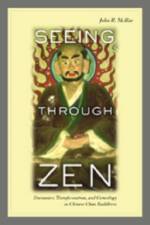
The tradition of Chan Buddhism-more popularly known as Zen-has been romanticized throughout its history. In this book, John R. McRae shows how modern critical techniques, supported by recent manuscript discoveries, make possible a more skeptical, accurate, and-ultimately-productive assessment of Chan lineages, teaching, fundraising practices, and social organization. Synthesizing twenty years of scholarship, Seeing through Zen offers new, accessible analytic models for the interpretation of Chan spiritual practices and religious history. Writing in a lucid and engaging style, McRae traces the emergence of this Chinese spiritual tradition and its early figureheads, Bodhidharma and the "e;sixth patriarch"e; Huineng, through the development of Zen dialogue and koans. In addition to constructing a central narrative for the doctrinal and social evolution of the school, Seeing through Zen examines the religious dynamics behind Chan's use of iconoclastic stories and myths of patriarchal succession. McRae argues that Chinese Chan is fundamentally genealogical, both in its self-understanding as a school of Buddhism and in the very design of its practices of spiritual cultivation. Furthermore, by forgoing the standard idealization of Zen spontaneity, we can gain new insight into the religious vitality of the school as it came to dominate the Chinese religious scene, providing a model for all of East Asia-and the modern world. Ultimately, this book aims to change how we think about Chinese Chan by providing new ways of looking at the tradition.
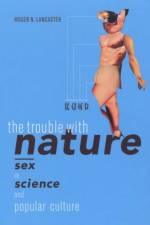
Roger N. Lancaster provides the definitive rebuttal of evolutionary just-so stories about men, women, and the nature of desire in this spirited expose of the heterosexual fables that pervade popular culture, from prime-time sitcoms to scientific theories about the so-called gay gene. Lancaster links the recent resurgence of biological explanations for gender norms, sexual desires, and human nature in general with the current pitched battles over sexual politics. Ideas about a "e;hardwired"e; and immutable human nature are circulating at a pivotal moment in human history, he argues, one in which dramatic changes in gender roles and an unprecedented normalization of lesbian and gay relationships are challenging received notions and commonly held convictions on every front.The Trouble with Nature takes on major media sources-the New York Times, Newsweek-and widely ballyhooed scientific studies and ideas to show how journalists, scientists, and others invoke the rhetoric of science to support political positions in the absence of any real evidence. Lancaster also provides a novel and dramatic analysis of the social, historical, and political backdrop for changing discourses on "e;nature,"e; including an incisive critique of the failures of queer theory to understand the social conflicts of the moment. By showing how reductivist explanations for sexual orientation lean on essentialist ideas about gender, Lancaster invites us to think more deeply and creatively about human acts and social relations.
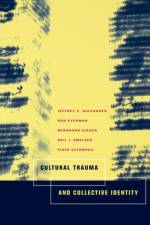
In this collaboratively authored work, five distinguished sociologists develop an ambitious theoretical model of "e;cultural trauma"e;-and on this basis build a new understanding of how social groups interact with emotion to create new and binding understandings of social responsibility. Looking at the "e;meaning making process"e; as an open-ended social dialogue in which strikingly different social narratives vie for influence, they outline a strongly constructivist approach to trauma and apply this theoretical model in a series of extensive case studies, including the Nazi Holocaust, slavery in the United States, and September 11, 2001.
Chicago's Southwest Side is one of the last remaining footholds for the city's white working class, a little-studied and little-understood segment of the American population. This book paints a nuanced and complex portrait of the firefighters, police officers, stay-at-home mothers, and office workers living in the stable working-class community known as Beltway. Building on the classic Chicago School of urban studies and incorporating new perspectives from cultural geography and sociology, Maria Kefalas considers the significance of home, community, and nation for Beltway residents.
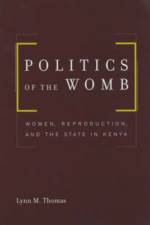
In more than a metaphorical sense, the womb has proven to be an important site of political struggle in and about Africa. By examining the political significance-and complex ramifications-of reproductive controversies in twentieth-century Kenya, this book explores why and how control of female initiation, abortion, childbirth, and premarital pregnancy have been crucial to the exercise of colonial and postcolonial power. This innovative book enriches the study of gender, reproduction, sexuality, and African history by revealing how reproductive controversies challenged long-standing social hierarchies and contributed to the construction of new ones that continue to influence the fraught politics of abortion, birth control, female genital cutting, and HIV/AIDS in Africa.
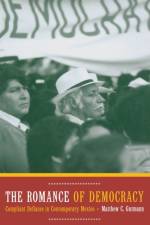
The Romance of Democracy gives a unique insider perspective on contemporary Mexico by examining the meaning of democracy in the lives of working-class residents in Mexico City today. A highly absorbing and vividly detailed ethnographic study of popular politics and official subjugation, the book provides a detailed, bottom-up exploration of what men and women think about national and neighborhood democracy, what their dreams are for a better society, and how these dreams play out in their daily lives. Based on extensive fieldwork in the same neighborhood he discussed in his acclaimed book The Meanings of Macho, Matthew C. Gutmann now explores the possibilities for political and social change in the world's most populous city. In the process he provides a new perspective on many issues affecting Mexicans countrywide.
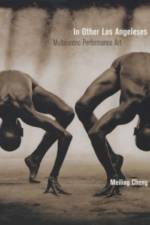
Performance art and Los Angeles, two subjects spectacularly resistant to definitions, illuminate each other in this searching study by Meiling Cheng. A marginal artistic pursuit by choice as well as necessity, performance art has flourished in and about "e;multicentric"e; Los Angeles for nearly four decades, finding its own centers of activity, moving and changing as the margins have reconstituted themselves. The notion of multicentricity serves, somewhat paradoxically, as the unifying motif in Cheng's imaginative views of center and periphery, self and other, and "e;mainstream"e; and "e;marginal"e; cultures. She analyzes individual artists and performances in detail, bringing her own "e;center"e; gracefully and unmistakably into contact with all those others. Without suggesting that her approach is definitive, she offers a way of thinking and talking coherently about particularly elusive, ephemeral artwork.Cheng describes performance art as "e;an intermedia visual art form that uses theatrical elements in presentation."e; Performance art, which uses the living body as its central medium, occurs only "e;here"e; and only "e;now."e; Because it is intentionally volatile, highly adaptable, and often site-specific, with emphasis on audience interaction, context is inseparable from the work itself. When Cheng writes about Suzanne Lacy or Tim Miller, Johanna Went or Oguri and Renzoku, Sacred Naked Nature Girls or osseus labyrint, she is conscious of her role in extending their creative expression.As members of the "e;virtual audience,"e; readers and viewers of other documentation concerning performance art are arrayed outside the center represented by a given artist and the circle represented by the immediate witnesses to a performance, but all may entertain what Cheng calls a conceptual ownership of the work. A person who reads about a performance, she says, may feel more affected by this virtual encounter than a person who has seen it live, and may reimagine it as a "e;prosthetic performance."e; Cheng's writing draws us into the many centers where a vibrant contemporary art phenomenon and a fascinating urban environment interact.Published in association with the Southern California Studies Center at the University of Southern California
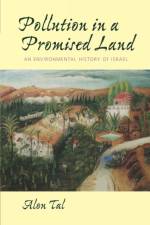
Virtually undeveloped one hundred years ago, Israel, the promised "e;land of milk and honey,"e; is in ecological disarray. In this gripping book, Alon Tal provides--for the first time ever--a history of environmentalism in Israel, interviewing hundreds of experts and activists who have made it their mission to keep the country's remarkable development sustainable amid a century of political and cultural turmoil.The modern Zionist vision began as a quest to redeem a land that bore the cumulative effects of two thousand years of foreign domination and neglect. Since then, Israel has suffered from its success. A tenfold increase in population and standard of living has polluted the air. The deserts have bloomed but groundwater has become contaminated. Urban sprawl threatens to pave over much of the country's breathtaking landscape. Yet there is hope. Tal's account considers the ecological and tactical lessons that emerge from dozens of cases of environmental mishaps, from habitat loss to river reclamation. Pollution in a Promised Land argues that the priorities and strategies of Israeli environmental advocates must address issues beyond traditional green agendas.
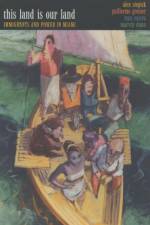
For those opposed to immigration, Miami is a nightmare. Miami is the de facto capital of Latin America; it is a city where immigrants dominate, Spanish is ubiquitous, and Denny's is an ethnic restaurant. Are Miami's immigrants representative of a trend that is undermining American culture and identity? Drawing from in-depth fieldwork in the city and looking closely at recent events such as the Elian Gonzalez case, This Land Is Our Land examines interactions between immigrants and established Americans in Miami to address fundamental questions of American identity and multiculturalism. Rather than focusing on questions of assimilation, as many other studies have, this book concentrates on interethnic relations to provide an entirely new perspective on the changes wrought by immigration in the United States. A balanced analysis of Miami's evolution over the last forty years, This Land Is Our Land is also a powerful demonstration that immigration in America is not simply an "e;us versus them"e; phenomenon.
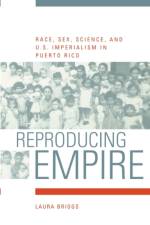
Original and compelling, Laura Briggs's Reproducing Empire shows how, for both Puerto Ricans and North Americans, ideologies of sexuality, reproduction, and gender have shaped relations between the island and the mainland. From science to public policy, the "e;culture of poverty"e; to overpopulation, feminism to Puerto Rican nationalism, this book uncovers the persistence of concerns about motherhood, prostitution, and family in shaping the beliefs and practices of virtually every player in the twentieth-century drama of Puerto Rican colonialism. In this way, it sheds light on the legacies haunting contemporary debates over globalization.Puerto Rico is a perfect lens through which to examine colonialism and globalization because for the past century it has been where the United States has expressed and fine-tuned its attitudes toward its own expansionism. Puerto Rico's history holds no simple lessons for present-day debate over globalization but does unearth some of its history. Reproducing Empire suggests that interventionist discourses of rescue, family, and sexuality fueled U.S. imperial projects and organized American colonialism.Through the politics, biology, and medicine of eugenics, prostitution, and birth control, the United States has justified its presence in the territory's politics and society. Briggs makes an innovative contribution to Puerto Rican and U.S. history, effectively arguing that gender has been crucial to the relationship between the United States and Puerto Rico, and more broadly, to U.S. expansion elsewhere.
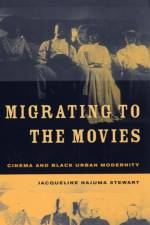
The rise of cinema as the predominant American entertainment around the turn of the last century coincided with the migration of hundreds of thousands of African Americans from the South to the urban "e;land of hope"e; in the North. This richly illustrated book, discussing many early films and illuminating black urban life in this period, is the first detailed look at the numerous early relationships between African Americans and cinema. It investigates African American migrations onto the screen, into the audience, and behind the camera, showing that African American urban populations and cinema shaped each other in powerful ways. Focusing on Black film culture in Chicago during the silent era, Migrating to the Movies begins with the earliest cinematic representations of African Americans and concludes with the silent films of Oscar Micheaux and other early "e;race films"e; made for Black audiences, discussing some of the extraordinary ways in which African Americans staked their claim in cinema's development as an art and a cultural institution.
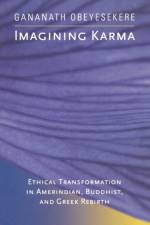
With Imagining Karma, Gananath Obeyesekere embarks on the very first comparison of rebirth concepts across a wide range of cultures. Exploring in rich detail the beliefs of small-scale societies of West Africa, Melanesia, traditional Siberia, Canada, and the northwest coast of North America, Obeyesekere compares their ideas with those of the ancient and modern Indic civilizations and with the Greek rebirth theories of Pythagoras, Empedocles, Pindar, and Plato. His groundbreaking and authoritative discussion decenters the popular notion that India was the origin and locus of ideas of rebirth. As Obeyesekere compares responses to the most fundamental questions of human existence, he challenges readers to reexamine accepted ideas about death, cosmology, morality, and eschatology.Obeyesekere's comprehensive inquiry shows that diverse societies have come through independent invention or borrowing to believe in reincarnation as an integral part of their larger cosmological systems. The author brings together into a coherent methodological framework the thought of such diverse thinkers as Weber, Wittgenstein, and Nietzsche. In a contemporary intellectual context that celebrates difference and cultural relativism, this book makes a case for disciplined comparison, a humane view of human nature, and a theoretical understanding of "e;family resemblances"e; and differences across great cultural divides.
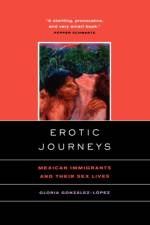
Erotic Journeys is a fascinating, revealing, and respectful examination of the romantic relationships and sex lives of the fastest-growing minority group in the nation. In a series of in-depth interviews, Gloria Gonzalez-Lopez investigates the ways in which sixty heterosexual Mexican women and men living in Los Angeles reinvent their sex lives as part of their immigration and settlement experiences. Defying a broad spectrum of preconceived notions, these immigrants confirm in their vivid narratives that sexuality-far from being culturally determined-is fluid and complex. Gonzalez-Lopez explains that these Mexicans enter the United States with particular sexual ideologies and practices that, while diverse, are regulated by family ethics and regional patriarchies. After migration, a range of factors-including employment, the risks and dangers of resettlement, social networking with other immigrants, and the new demands of a fast-paced industrialized metropolis-begin to transform the immigrants' intimate lives in deep and unexpected ways. The remarkably candid interviews show that these men and women are skillful negotiating agents of their own sexuality. The author's incisive analysis of their narratives sets the stage for a nuanced and compelling understanding of this complex topic and its many social implications.
Abonner på vårt nyhetsbrev og få rabatter og inspirasjon til din neste leseopplevelse.
Ved å abonnere godtar du vår personvernerklæring.