




Gjør som tusenvis av andre bokelskere
Abonner på vårt nyhetsbrev og få rabatter og inspirasjon til din neste leseopplevelse.
Ved å abonnere godtar du vår personvernerklæring.Du kan når som helst melde deg av våre nyhetsbrev.

Immanuel Wallerstein's world-systems theory can help to better understand and describe developments of the 21st century. The contributors address the possibilities to reread Wallerstein's theoretical thoughts and ideas that are related to different disciplines in the humanities and social sciences. The presented interdisciplinary approach of this anthology thereby intends to highlight the broader value of Wallerstein's ideas, even almost five decades after the famous sociologist and economic historian first expressed them.
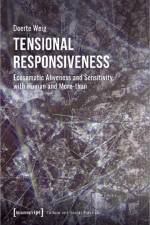
How we sense and move our bodies shapes how we relate with each other. Current socio-economic practices are reducing generative qualities of relating. Doerte Weig shows how bodily capacities for sensitive tensional responsiveness are relevant to (re)generative cultures, the future of work, lifelong learning, sharing, healing and well-being. She draws together her own experience of living with Baka egalitarian foragers in North-Eastern Gabon, her corporate experience, and her studies on bodying, somatics and our connective tissue-system fascia. Interweaving neurophysiological shifting-sliding with a radically different ecosystemic awareness opens up potentials for bodying beyond current legal and political limits into enchantingly vibrant and ecosomatically alive futures.
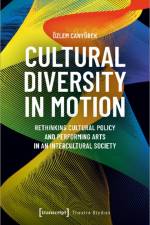
What does migration-generated diversity mean for cultural policy and the performing arts scene in Germany and how is it promoted? Through bridging theory and practice, Özlem Canyürek introduces the concept of >thinking and acting interculturally< and proposes a set of criteria as a stepping stone for a semantic shift in cultural policy towards achieving a fair and accessible performing arts scene for all. She delineates the framework conditions of a receptive cultural policy to envision cultural diversity in motion to enable the production and dissemination of multiplicity of thoughts, experiences, knowledge, worldviews, and aesthetics of an intercultural society.
Prenatal diagnosis, especially noninvasive prenatal testing (NIPT), has changed the experience of pregnancy, prenatal care and responsibilities in Israel and Germany in different ways. These differences reflect the countries' historical legacies, medico-legal policies, normative and cultural identities. Building on this observation, the contributors of this book present conversations between leading scholars from Israel and Germany based on an empirical bioethical perspective, analyses about the reshaping of 'life' by biomedicine, and philosophical reflections on socio-cultural claims and epistemic horizons of responsibilities. Practices and discussions of reproductive medicine transform the concepts of responsibility and irresponsibility.
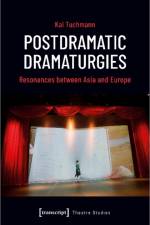
This book compiles lectures by the world's leading practitioners of postdramatic theatre from East Asia and the German-speaking world, which were given at Asia's only dramaturgy degree program at The Central Academy of Drama in Beijing 2018/19. It includes first-time English-language scripts of the discussed plays. The material is complemented by contextualizing essays by the program founder Li Yinan and its co-developer Kai Tuchmann. Hans-Thies Lehmann contributes the foreword to this volume. This rare compilation enables the reader to gain a unique insider's impression of postdramatic theatre's artistic thinking and working methods and informs about its manifold manifestations.With contributions from Hans-Werner Kroesinger, Lee Kyung-Sung, Li Yinan, Boris Nikitin, Kai Tuchmann, Wang Mengfan, Wen Hui, Zhao Chuan and Zhuang Jiayun.
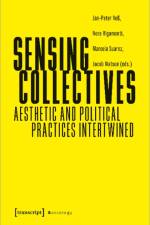
Are aesthetics and politics really two different things? The book takes a new look at how they intertwine, by turning from theory to practice. Case studies trace how sensory experiences are created and how collective interests are shaped. They investigate how aesthetics and politics are entangled, both in building and disrupting collective orders, in governance and innovation. This ranges from populist rallies and artistic activism over alternative lifestyles and consumer culture to corporate PR and governmental policies. Authors are academics and artists. The result is a new mapping of the intermingling and co-constitution of aesthetics and politics in engagements with collective orders.
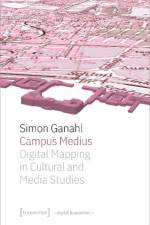
Campus Medius explores and expands the possibilities of digital cartography in cultural and media studies. Simon Ganahl documents the development of the project from a historical case study to a mapping platform. Based on the question of what a media experience is, the concepts of the apparatus (dispositif) and the actor-network are translated into a data model. A time-space of twenty-four hours in Vienna in May 1933, marked by a so-called »Turks Deliverance Celebration« (Türkenbefreiungsfeier), serves as an empirical laboratory. This Austrofascist rally is mapped from multiple perspectives and woven into media-historical networks, spanning from the seventeenth century up to the present day.
What steps are needed to make life better and more convivial? The Second Convivialist Manifesto (2020) has presented a short diagnosis of the current crises and sketches of a possible and desirable future. It has been a necessary work of theoretical synthesis, but preserving a viable world also requires passion. It is thus urgent to show what people would gain from a shift to a post-neoliberal and post-growth convivialist future. This volume includes a theoretical debate on convivialism which reflects dystopias and shows the multiple and major obstacles that convivialism will have to face. Mainly, however, the contributors to this volume create sketches of a convivial future and collect accounts of another future world which is attractive for as many as possible.
This new go-to reference book for global melodrama assembles contributions by experts from a wide range of disciplines, including cultural studies, film and media studies, gender and queer studies, political science, and postcolonial studies. The melodramas covered in this volume range from early 20th century silent movies to contemporary films, from independent >arthouse< productions to Hollywood blockbusters. The comprehensive overview of global melodramatic film in the Lexicon constitutes a valuable resource for scholars and practitioners of film, teachers, film critics, and anyone who is interested in the past and present of melodramatic film on a global scale. The Lexicon of Global Melodrama includes essays on All That Heaven Allows, Bombay, Casablanca, Die Büchse der Pandora, In the Mood for Love, Nosotros los Pobres, Terra Sonâmbula, and Tokyo Story.
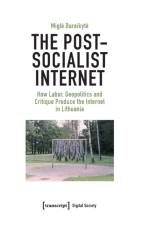
How is the Internet produced as an infrastructure in post-socialist Lithuania? Migle Bareikyte contributes to the growing field of STS and media studies with a distinct focus on Eastern Europe. She situates the Internet development in Lithuania's telecom industry with the exploration of its labor practices, geopolitical imaginaries, and critical negotiations from a bottom-up perspective. Bareikyte further explores how fieldwork-based research can foster new theorizations of media infrastructures. Finally, she argues for a situated investigation of new places and actors beyond the United States and Western Europe-such as post-socialist regions-in order to explore the diversity of media infrastructures.
Living with an infected planet has led to an unprecedented crisis of care. Since the outbreak of the coronavirus, life-making and death-making are at the center of global attention. Pandemic terms include COVID-19 response, frontline work, genocidal pandemic, lockdown, mask mandate, shadow pandemic, social distancing, vaccine wars, or virus racism. Elke Krasny presents a feminist mapping of key terms and key images defining the >pandemicscape
What is the subject of video?Charlotte Klink traces the development of electromagnetism in the pursuit of »Electric Seeing« that emerged in the 19th century as well as its curious relation to psychoanalysis and the contemporary discovery of the structure of the human psyche. In doing so, she exposes how this development laid the foundation of what we know today as »video«. This comprehensive theory of video entails a discussion of the technological, historical, and etymological roots, the media-theoretical concepts of medium and index, the philosophical and art-theoretical environment in which video emerged in the 1960s, the psychoanalytic concept of the phantasm, and artworks by artists such as Yael Bartana, Hito Steyerl, and Bjørn Melhus.
Rivers, landscapes, whole territories: these are the latest entities environmental activists have fought hard to include in the relentless expansion of rights in our world. But what does it mean for a landscape to have rights? Why would anyone want to create such rights, and to what end? Is it a good idea, and does it come with risks? This book presents the logic behind giving nature rights and discusses the most important cases in which this has happened, ranging from constitutional rights of nature in Ecuador to rights for rivers in New Zealand, Colombia, and India. Mihnea Tanasescu offers clear answers to the thorny questions that the intrusion of nature into law is sure to raise.
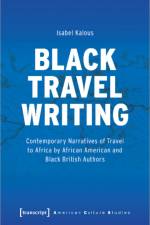
What does it mean for Black diasporic writers to travel to Africa? Focusing on the period between the 1990s and 2010s, Isabel Kalous examines autobiographical narratives of travel to Africa by African American and Black British authors. She places the texts within the long tradition of Black diasporic engagement with the continent, scrutinizes the significance of Black mobility, and demonstrates that travel writing serves as a means to negotiate questions of identity, belonging, history, and cultural memory. To provide a framework for the analyses of contemporary narratives, her study outlines the emergence, development, and key characteristics of the multifaceted genre of Black travel writing. Authors discussed include, among others, Saidiya Hartman, Barack Obama, and Caryl Phillips.
Algorithms are not to be regarded as a technical structure but as a social phenomenon - they embed themselves, currently still very subtle, into our political and social system. Algorithms shape human behavior on various levels: they influence not only the aesthetic reception of the world but also the well-being and social interaction of their users. They act and intervene in a political and social context. As algorithms influence individual behavior in these social and political situations, their power should be the subject of critical discourse - or even lead to active disobedience and to the need for appropriate tools and methods which can be used to break the algorithmic power.
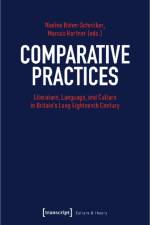
Comparisons not only prove fundamental in the epistemological foundation of modernity (Foucault, Luhmann), but they fulfil a central function in social life and the production of art. Taking a cue from the Practice Turn in sociology, the contributors are investigating the role of comparative practices in the formation of eighteenth-century literature and culture. The book conceives of social practices of comparing as being entrenched in networks of circulation of bodies, artefacts, discourses, and ideas, and aims to investigate how such practices ordered and changed British literature and culture during the long eighteenth century.
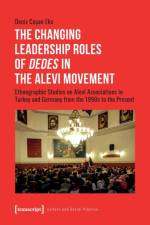
What is the function of clerical leadership in Alevism based on sociocultural and political understandings? To answer that complex question, Deniz Cosan Eke examines the political, cultural, and religious debates surrounding Alevis and the Alevi movement in relation to the ideas and claims of the Turkish state, Alevi communities in Turkey, and migrant Alevi communities in Germany. The book, which focuses on the emergence of collective emotions in religious rituals, the struggle of religious groups in migration processes, and the leadership role of clergy in social movements, is of great interest to a wide readership.
Western humanism has established a reifying and predatory relation to the world. While its collateral visual regime, the perspectival image, is still saturating our screens, this relation has reached a dead end. Rather than desperately turning towards transhumanism and geoengineering, we need to readjust our position within community Earth. Facing this predicament, Ingrid Hoelzl and Rémi Marie develop the notion of the common image - understood as a multisensory perception across species; and common ethics - a comportment that transcends species-bound ways of living. Highlighting the notion of the common as opposed to the immune, the authors ultimately advocate otherness as a common ground for a larger than human communism.
If pictures can be sexist, can analyzing sound reveal sexism, too? Where is the language to discuss sexism in music? LJ Müller tackles these important questions in their 2018 German book titled Sound und Sexismus, which was awarded the IASPM 2019 book prize. Analyzing the voices of Kurt Cobain, Kate Bush, Björk and others, Müller demonstrates how gender is performed vocally and interacts with gendered aspects of embodiment and affect. The book is written from a strongly positioned and personal feminist perspective and is appealing to readers from various backgrounds - singers, producers, music lovers, as well as academics and anyone with an interest in feminist takes on pop culture.
Abonner på vårt nyhetsbrev og få rabatter og inspirasjon til din neste leseopplevelse.
Ved å abonnere godtar du vår personvernerklæring.