






Gjør som tusenvis av andre bokelskere
Abonner på vårt nyhetsbrev og få rabatter og inspirasjon til din neste leseopplevelse.
Ved å abonnere godtar du vår personvernerklæring.Du kan når som helst melde deg av våre nyhetsbrev.

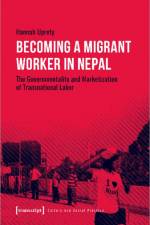
High-profile events such as the 2022 FIFA World Cup in Qatar have made one thing abundantly clear: Much of today's economic growth would be unthinkable without the low-wage employment of migrant workers. But which cultural, economic, and political infrastructures in the »source« countries make these types of migration possible in the first place? Based on multi-sensory ethnographic research in Nepal, Hannah Uprety retraces the practices of recruitment and instruction that - step by step - transform Nepali labor into an internationally marketable commodity. In doing so, she uncovers a migration regime that effectively turns local men and women into »migrant workers« before they even leave the country.
Studying the entangled histories of the areas conceptualized as Middle Eastern and North Atlantic World in the interwar years is crucial to understanding the two areas' respective and common histories until today. However, many of the manifold connections, exchanges, and entanglements between the areas have not received thorough scholarly attention yet. The contributors to this volume address this by bringing together various innovative and interdisciplinary approaches to the topic. They thereby further the understanding of the two areas' entangled histories and diversify prevailing concepts and narratives. Through this, the volume also offers enriching insights into the global history of the early 20th century.
In the Hobsbawmian long 19th century, gender and processes of sexualization and feminization have been crucial in the construction of the »Jewish Other«. Ulrike Brunotte explores how these processes came about by addressing imaginative, aesthetic, and epistemological questions. She analyzes how literature, psychoanalysis and the performing arts traverse and react to the ambivalence of racialized stereotypes. The »femininity puzzle« presents itself in two ways: first in the role of effeminization of the male Jew in antisemitic discourse, and then in the transgressive forms of femininity connected to Jewish women, especially the allosemitic orientalization in the figure of the »Beautiful Jewess«.
Hysteria, a mysterious disease known since antiquity, is said to have ceased to exist. Challenging this commonly held view, this is the first cross-disciplinary study to examine the current functional neuroimaging research into hysteria and compare it to the nineteenth-century image-based research into the same disorder. Paula Muhr's central argument is that, both in the nineteenth-century and the current neurobiological research on hysteria, images have enabled researchers to generate new medical insights. Through detailed case studies, Muhr traces how different images, from photography to functional brain scans, have reshaped the historically situated medical understanding of this disorder that defies the mind-body dualism.
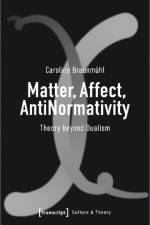
Dualistic thinking has been questioned by some writers associated with the material, ontological, and affective turns. Yet, these and other writers linked to the >turns< have themselves reproduced dualistic theorizing. Caroline Braunmühl also shows that there are dualistic patterns in significant contributions to queer theory as well as Foucauldian diagnoses of the present. From a perspective sympathetic to the critical efforts made by poststructuralist and related theorists, she analyzes works by Sara Ahmed, Karen Barad, Michael Hardt, Antonio Negri, Michel Foucault, and others. The book suggests specific alternatives to dualistic as well as identitarian ways of framing conceptual pairs such as matter/mind, affect/discourse and negativity/affirmation.
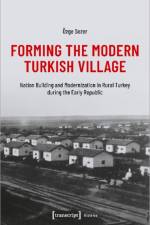
During the early republican period, architectural interventions in rural Turkey took the form of social engineering as part of the state's modernization and nationalization policies. Özge Sezer demonstrates how the state's particular programs had a powerful effect on rural life in the countryside. She examines the regime's goals and strategies for controlling the rural people through development projects and demographic shaping to create a strong Turkish identity and a loyal citizenry. The book outlines the implementation of new rural settlements, particularly following the 1934 Settlement Law, with a geographic focus on two cities - Izmir and Elazig - with varied socio-economic and ethnic standing in the state program.
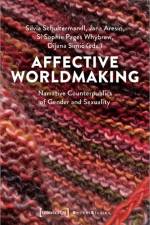
What makes up a public, what governs dominant discourses, and in which ways can counterpublics be created through narrative? This edited collection brings together essays on affect and narrative theory with a focus on the topics of gender and sexuality. It explores the power of narrative in literature, film, art, performance, and mass media, the construction of subjectivities of gender and sexuality, and the role of affect in times of crisis. By combining theoretical, literary, and analytical texts, the contributors offer methodological impulses and reflect on the possibilities and limitations of affect theory in cultural studies.
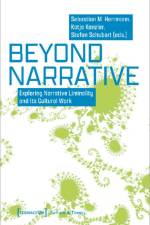
This book calls for an investigation of the >borderlands of narrativity< - the complex and culturally productive area where the symbolic form of narrative meets other symbolic logics, such as data(base), play, spectacle, or ritual. It opens up a conversation about the >beyond< of narrative, about the myriad constellations in which narrativity interlaces with, rubs against, or morphs into the principles of other forms. To conceptualize these borderlands, the book introduces the notion of »narrative liminality,« which the 16 articles utilize to engage literature, popular culture, digital technology, historical artifacts, and other kinds of texts from a time span of close to 200 years.
Across the globe, a growing number of social movements, such as demonstrations in support of equal civil status or reproductive freedom and against sexualized violence, show that women's and gender rights are highly contested. Against the backdrop of a long history of unequal rights implementation, the contributors to this volume deal with the questions of why and in which ways gender equality has become contested in various political contexts. Local case studies examine the relevant structural, institutional, and socio-cultural causes of the global challenges to equality. This book follows an interdisciplinary approach and unites scholars from law, linguistics, cultural studies, history, social sciences, and gender studies in diverse contexts.
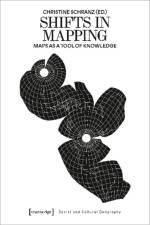
Depicting the world, territory, and geopolitical realities involves a high degree of interpretation and imagination. It is never neutral. Cartography originated in ancient times to represent the world and to enable circulation, communication, and economic exchange. Today, IT companies are a driving force in this field and change our view of the world; how we communicate, navigate, and consume globally. Questions of privacy, authorship, and economic interests are highly relevant to cartography's practices. So how to deal with such powers and what is the critical role of cartography in it? How might a bottom-up perspective (and actions) in map-making change the conception of a geopolitical space?
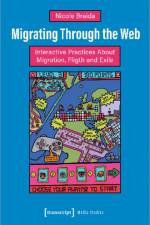
How to study a media object on the web that is at the same time a documentary, a reportage, and a game which combines both fiction and non-fiction elements? Nicole Braida digs into the discursive and material structures and infrastructures of serious games, text-adventures, newsgames, interactive maps, and data visualizations, in which refugees and migrants become the subject of humanitarian discourse. Although the goal is to arouse empathy towards migrants, these »interactive practices« distinguish who is vulnerable and who is not. It supports the idea of a »migratory crisis«, which, the author argues, is actually the symptom of a deeper crisis of the humanitarian system itself.
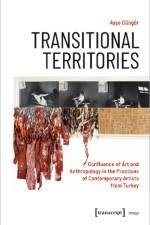
Ayse Güngör investigates art practices between art and anthropology in Turkey, as well as the implications of contemporary art for those disciplines. She discusses various approaches based on anthropological theories on the forms of relation and theories of artistic practices on socio-political issues. Based on long-term research with contemporary artists such as Nil Yalter, Gülsün Karamustafa, Esra Ersen, Kutlug Ataman, Tayfun Serttas, Köken Ergun, Dilek Winchester and Artikisler Collective, this book analyzes the objectives of art and anthropology in order to determine new possibilities and divergences arising from this interdisciplinary confluence.
The increasing platformization of urban life needs critical perspectives to examine changing everyday practices and power shifts brought about by the expansion of digital platforms mediating care-services, housing, and mobility. This book addresses new modes of producing urban spaces and societies. It brings both platform researchers and activists from various fields related to critical urban studies and labour activism into dialogue. The contributors engage with the socio-spatial and normative implications of platform-mediated urban everyday life and urban futures, going beyond a rigid techno-dystopian stance in order to include an understanding of platforms as sites of social creativity and exchange.
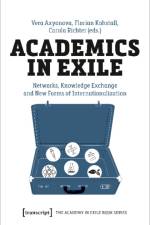
Restrictions on academic freedom, persecution and armed conflict have forced many scholars into exile. So far, the professional trajectories of these scholars and their contributions to knowledge exchange have not been studied comprehensively. The contributors to this volume address the situations and networks of scholars in exile, the challenges they face in their host countries and the opportunities they use. These issues are highly relevant to discussions about the moral economies of higher education institutions and support programs. Although the contributions largely focus on Germany as a host country, they also offer telling examples of forced mobility in the Global South, including both contemporary and historical perspectives.
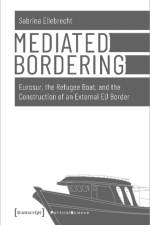
The external border of the EU remains under permanent construction. Sabrina Ellebrecht engages with two of its primary building sites - the European Border Surveillance System (Eurosur) and the Refugee Boat. She analyzes how the function and quality of the EU's current political border is crafted, shaped, produced and eventually stabilized through these two mediators. Eurosur and the Refugee Boat mediate a level of Europeanization which has hitherto - and would otherwise have - been impossible. While Eurosur mobilizes the limits of border policing in various ways, the Refugee Boat functions as the vacillating European Other to legitimize both control and humanitarian interventions. The study shows the specific, if not constitutive, ambivalences of EU border policies, and explores the emergence of viapolitics.
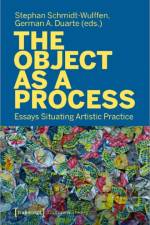
How does artistic practice lead to the production of knowledge? How does, in turn, artistic knowledge relate to its material base? How does contingent materiality guide the artist towards finding form and developing a statement? This volume is dedicated to the object as a process in order to offer new insights into the ways the object - broadly construed, comprising digital and other non-classical objects - becomes an active element in artistic practice.
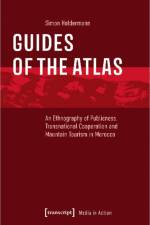
How do digital media technologies shape or restructure social practice? And which transitions and demarcations of different forms of publicness arise in this context? Simon Holdermann examines this question in his ethnography of everyday life in the High Atlas Mountains of Morocco. In order to approach the ongoing, historically situated social transformations of the region, he analyses a variety of media practices concerning the organizational work and transnational cooperation that take place there - in particular at the intersection of mountain tourism, NGO work, and local self-government.
The radical novelty of modern society consists of the global autonomy and dynamics of communication systems such as the economy, polity, science, law, health, the arts, sport, and intimacy. They are at the core of our living environment. With this systematic study of functional differentiation in sociology, Rudolf Stichweh fills an astonishing gap in sociological research. To do so, he combines essays and case studies instructive for both practicing social scientists and the general public interested in a sociological understanding of modernity.
This book is a critical study of Iranian dance and the works of Iranian-American female dancers in exile. Focusing on the study of contemporary Iranian dance through analysis of the choreographies of three female dancers in diaspora (namely Aisan Hoss, Shahrzad Khorsandi, and Banafsheh Sayyad), this research is among the first of its kind. Elaheh Hatami investigates the transformation of professional Iranian dance and discusses the role of relocation and displacement in its performance. She argues that Iranian dance and Iranian female dancers have always been in exile - not only in a physical sense, but also in the metaphorical sense of >exile< implying foreignness, exclusion, and marginalization.
The planetary instantaneity that digital technologies have enabled is leading to an effacement of the divisions that separate the past from the future, ensuring that the present is ubiquitous. While contemporary architecture seems to have lost the capacity to conceive of the past as a transformative force, this book stresses the need to rethink today's complex temporal mechanisms through the notion of the untimely. This concept opens up a whole spectrum of possibilities to go beyond what seems predictable. The contributors to this book employ critical concepts and architectural design tools in order to offer experimental and speculative approaches for unknown futures of architecture.
This comparative ethnography of a Muslim and a Christian Palestinian refugee camp in Lebanon focuses on contrasting social belonging processes through a ritualization approach. Leonardo Schiocchet argues that contrasts emerge out of the intersectionality of religiosity, nationhood, refugeeness and politics, and synthesizes academic research on piety and moral self-cultivation and on the everyday life of religious communities. He contributes to the literature on refugees at large, and Palestinian refugees in particular, with the unique dense socio-historical portrait of two refugee camps for which there is almost no recorded literature.
Abonner på vårt nyhetsbrev og få rabatter og inspirasjon til din neste leseopplevelse.
Ved å abonnere godtar du vår personvernerklæring.